
REVIEW · OBSERVATORY & TELESCOPE TOURS
Solar Explorer in Akaroa – Sun-Viewing Tour with Telescopes
The Sun becomes a living, changing world at Akaroa Lighthouse. Through a specialist solar telescope, you can see sunspots, flares, and surface activity that are invisible to the naked eye. The guide explains what you are seeing and lets you use a smartphone adapter to capture your own images.
I like the short, focused format, which fits neatly into an Akaroa day trip. I also like the mix of old-school telescope viewing and live digital images from the ZWO Seestar S50. The main thing to consider is the weather: clouds can delay or cancel the viewing, and the Sun’s activity will not look exactly the same on every visit.
Key points at a glance
- See the Sun safely through a specialist telescope: Look for sunspots, solar flares, and changing surface detail without attempting unsafe direct viewing.
- Receive live solar images: The ZWO Seestar S50 captures high-resolution photos during your visit and shares them with you.
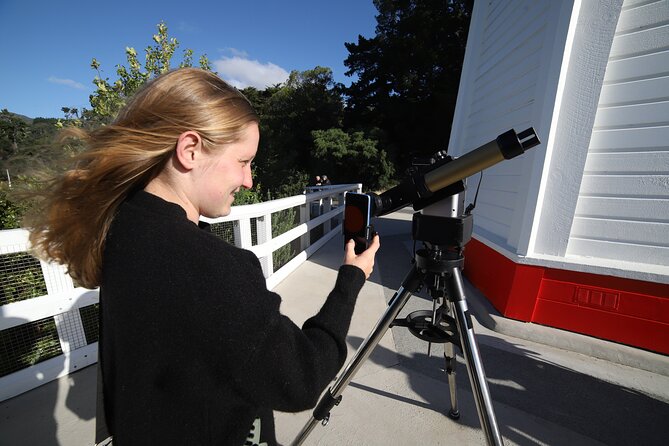
- Use your own smartphone: A phone adapter lets you photograph the view through the telescope.
- Meet at historic Akaroa Lighthouse: The tour takes place at 145 Beach Road, with no separate transport included.
- A compact 30-minute activity: It is easy to fit around other Akaroa plans, though weather may affect the timing.
- Small groups and personal guidance: The maximum group size is eight, and guide Luca has received special praise for his clear communication and enthusiasm.
Seeing a star in daylight at Akaroa Lighthouse
Most astronomy activities wait for darkness. Solar Explorer turns the idea around by making the Sun the main event in daylight. From the historic Akaroa Lighthouse, you spend about 30 minutes examining our nearest star through equipment designed for safe solar viewing.
That short time is enough to give you a real introduction without taking over your whole day. You do not need to set aside an evening, stay up late, or know anything about astronomy before you arrive. The guide takes you from the basics to the live view in the telescope, explaining what appears in front of you.
The most rewarding part is the change in scale. The Sun can look like a bright, featureless disc from the ground. Through the telescope, you might see dark sunspots, bursts of activity, and fine detail around the solar surface. The exact view depends on the Sun’s activity that day, so each session has its own character.
You should never look directly at the Sun through an ordinary telescope, camera, or phone. This experience uses specialized solar equipment, which is the important safety detail. Follow the guide’s instructions and use only the provided viewing setup.
More Observatory and Telescope Tours in New Zealand:
- Mount John Observatory Stargazing Experience, Tekapo
★ 4.5 · 160 reviews - Stargazing Experience at Cowan’s Private Observatory
★ 4.0 · 85 reviews - Lake Tekapo: Stargazing Experience at Cowan’s Observatory
★ 4.7 · 52 reviews
What happens during the 30-minute session
Your meeting point is the Akaroa Lighthouse at 145 Beach Road. The tour begins and ends there, so you do not need to arrange a transfer between locations. Private transportation is not included, but the meeting point is near public transportation.
The session centers on the telescope rather than a long walk or a set of separate attractions. Your guide positions the equipment, explains the safe way to view the Sun, and points out visible features. You may then have a chance to look through the telescope yourself.
That hands-on element matters. You are not simply listening to a talk while an expert does all the work. The supplied smartphone adapter allows you to place your phone over the telescope and take your own solar photographs. It is a useful feature for families, keen photographers, and anyone who wants a souvenir beyond a standard holiday snapshot.
The ZWO Seestar S50 adds another layer. It captures high-resolution images of the Sun live, and those digital photos are shared with you instantly. This gives you a record of the session even if taking a steady phone picture proves fiddly.
The format is compact, so expect an introduction rather than an advanced astronomy course. The guide’s commentary gives you context for the spots and eruptions you see, but the experience is built around observation and conversation rather than a long classroom presentation.
Why the small group size helps
The maximum group size is eight people. That is a useful limit for a telescope activity because everyone needs a reasonable chance to look through the equipment and ask questions.
A small group also makes the session feel more personal. If you are curious about a feature on the Sun, you can ask about it as it appears rather than waiting through a large presentation. Parents can also ask for explanations suited to children, while adults with a stronger interest in space can ask more detailed questions.
The guide is a key part of the experience. Luca has been especially good at keeping people informed when clouds affect the schedule and at rearranging a visit for a clearer time. That kind of communication is important here because the tour depends on conditions outside anyone’s control.
You should still keep your expectations sensible. A group of eight is small, but it does not mean a private tour. If the full group is present, you may need to take turns at the telescope. The 30-minute duration also means the viewing moves at a steady pace.
Weather is part of the booking decision
Good weather is required. Cloud can block the Sun, making even excellent equipment useless for the session. This is not a minor technical issue, so check the forecast before you set your plans in stone.
The operator may offer another date or a full refund if poor weather forces a cancellation. In practice, a change of time can be worthwhile. One visit was shifted until the sky cleared, and the improved conditions made it possible to see solar flares and sunspots properly.
This also explains why it is wise not to schedule the activity immediately before a nonrefundable connection or a tightly timed excursion. Leave some flexibility in your Akaroa plans if solar viewing is a priority.
The tour is available daily, but daily operation does not mean every session will have perfect viewing conditions. The Sun itself is always there. Your ability to see its detail depends on cloud cover and the activity visible on that day.
More Stargazing Tours in New Zealand:
- Lake Tekapo: Alpine Stargazing Experience with a Guide
★ 4.5 · 626 reviews - Lake Tekapo: Stargazing Experience
★ 4.9 · 607 reviews - Chameleon Stargazing Shared Tour
★ 5.0 · 181 reviews - Lake Tekapo: Mountaintop Stargazing at Mount John Summit
★ 4.5 · 176 reviews
The value of the $24.20 price
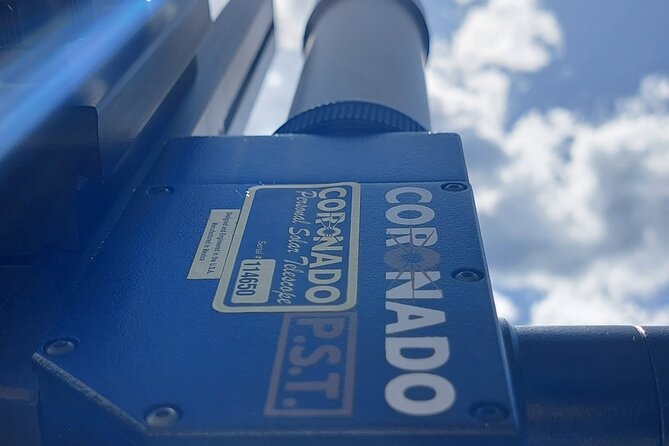
At $24.20 per person, this is a modestly priced activity for a guided experience using specialist equipment. You are paying for more than a view through a telescope. The price includes the solar telescope, expert guidance, the smartphone adapter, and instant digital images from the ZWO Seestar S50.
That makes the cost easier to justify if you enjoy hands-on attractions or want something different from Akaroa’s usual sightseeing. A short session can also be good value when you have a packed day and do not want to commit to a longer tour.
The value depends partly on your interest. If you want a major attraction lasting several hours, this will feel brief. If you are curious about space, traveling with children, or looking for a compact activity between other plans, the price is more appealing.
The free entry to the lighthouse location is not the same as free entry to the tour. Your payment covers the guided solar session and equipment rather than a separate admission charge to the site.
Taking your own solar photograph
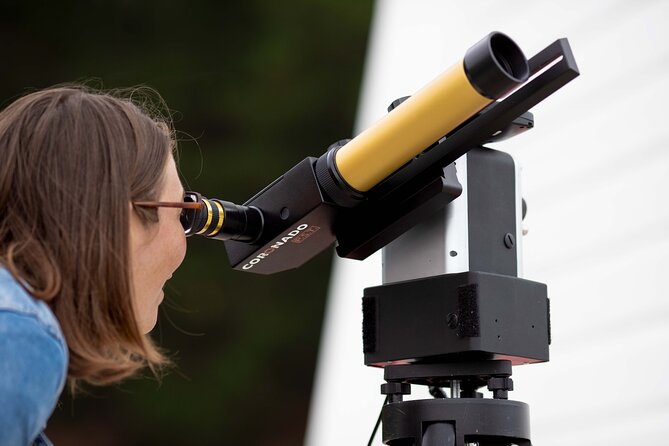
The smartphone adapter is one of the strongest practical features. Solar photography normally requires specialist filters, careful alignment, and equipment that most people do not carry on holiday. Here, you can use your phone with the telescope setup provided.
Do not expect every image to be perfect on the first attempt. Holding a phone in the right position over an eyepiece can take a little care, especially if several people are waiting. The guide can help you use the setup, and the live digital images give you a reliable alternative.
The photos are also unusual holiday souvenirs. A lighthouse picture is easy to find in a photo gallery. A close view of the Sun showing a spot or flare is far more personal, particularly when you captured it during your visit.
The instant images from the smart telescope are useful for sharing as well. They give you a sharper record of what the group saw and help you remember the details after the session ends.
A good choice for families and space fans
This is designed for all ages. Children can see an object they usually encounter only in schoolbooks, while adults get a chance to ask questions and learn how solar activity works. The visual nature of the experience helps keep the subject grounded in something you can actually see.
It also works well for two different kinds of visitors. A first-time astronomy participant can enjoy the surprise of seeing the Sun’s surface in detail. Someone who already likes space can focus on the telescope, solar activity, and photography.
The session is not aimed only at serious hobbyists. You do not need prior astronomy knowledge, special clothing, or your own equipment. The expert guide supplies the explanation and the viewing tools.
Most people can participate, and service animals are allowed. The activity is near public transportation, which helps if you are exploring Akaroa without a private car. You should still allow time to reach the lighthouse and confirm your route before the start time.
Pairing Solar Explorer with an Akaroa day
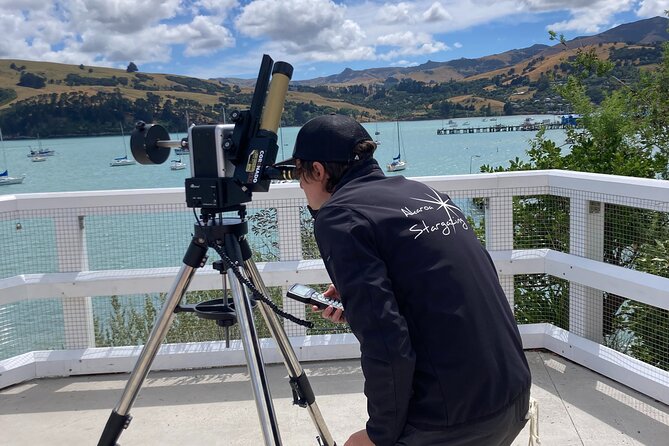
Akaroa is about a 90-minute scenic drive from Christchurch, so this tour makes the most sense as part of a wider visit rather than a quick detour from central Christchurch. You can build it into a day in Akaroa, leaving time for other local activities and a meal.
The 30-minute length gives you flexibility. You could place it early in the day, leave it between other bookings, or use it as a short change of pace after sightseeing. Just remember that weather changes may require you to move the session.
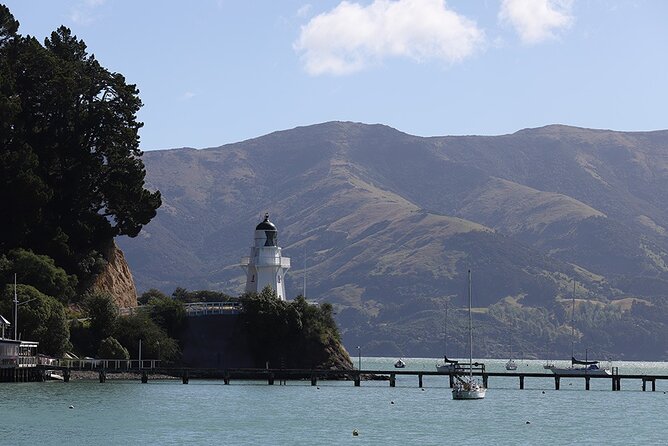
The lighthouse setting adds a sense of place without turning the activity into a long historical tour. You meet at an identifiable Akaroa landmark, then focus on the sky above it. That contrast is part of the charm: a historic coastal setting paired with modern imaging equipment.
If you are coming from Christchurch, consider how much time the full drive will take. The solar tour itself is short, but the overall outing is not a quick city attraction.
Booking, cancellation, and practical details
You receive confirmation when you book, and the ticket is mobile, so there is no need to print a voucher. The activity begins and ends at the Akaroa Lighthouse.
You can cancel for a full refund up to 24 hours before the start time. Cancellations or changes made less than 24 hours ahead are not accepted for a refund. The cut-off follows local time.
Since weather is central to the experience, keep an eye on messages from the operator. Luca has shown a willingness to communicate and shift plans when clouds interfere, but you should not assume every late change will be possible.
The tour is often booked about 23 days ahead on average. That does not guarantee every date will sell out, but it is a useful sign that you should reserve ahead if your Akaroa visit has fixed dates.
Who should book this experience?
I would choose Solar Explorer if you want a short, unusual activity with a clear visual payoff. It is especially suitable for families, space fans, photographers, and anyone who wants an activity that does not depend on a full evening.
I would also recommend it if you appreciate a guide who can explain what you are seeing rather than simply pointing a telescope at the sky. Luca’s handling of weather changes is another reason to value the personal communication.
I would hesitate only if your schedule cannot tolerate a weather change, or if you want a long, detailed astronomy lesson. The tour is brief, and the quality of the viewing depends on cloud cover and the Sun’s activity on the day.
Should you book Solar Explorer in Akaroa?
Book it if the idea of seeing sunspots and solar flares in daylight sounds more appealing than another standard sightseeing stop. The specialist telescope, live digital images, and phone adapter give you several ways to experience the Sun, while the small group keeps the session manageable.
At $24.20, it is a reasonable add-on to an Akaroa day, provided you allow for weather and remember that the tour lasts only about 30 minutes. If you can keep your timing flexible, this is a memorable and refreshingly different way to look up.
FAQ
Where does Solar Explorer begin?
The tour begins at Akaroa Lighthouse, 145 Beach Road, Akaroa 7520, New Zealand.
Where does the activity end?
The activity ends back at the Akaroa Lighthouse meeting point.
How long does the tour last?
The tour lasts approximately 30 minutes.
How much does the tour cost?
The listed price is $24.20 per person.
Is transportation included?
No. Private transportation is not included. The meeting point is near public transportation.
What can I see through the telescope?
You may see sunspots, solar flares, and other surface activity on the Sun, depending on conditions and the Sun’s activity that day.
Can I take photographs?
Yes. A smartphone adapter is included so you can photograph the Sun through the telescope.
Do I receive photos from the tour?
Yes. The ZWO Seestar S50 captures high-resolution digital images of the Sun live, and these images are shared with you instantly.
Does the tour operate in poor weather?
The experience requires good weather. If poor weather causes a cancellation, you are offered a different date or a full refund.
What is the cancellation policy?
You can cancel at least 24 hours before the start time for a full refund. Cancellations or changes made less than 24 hours before the start time are not accepted.
How many people can join the tour?
The maximum group size is eight people.
Is the tour suitable for most people?
Yes. Most people can participate, and service animals are allowed.
Just added around New Zealand
- Star Safari Stargazing Experience, Martinborough★ 5.0 · 6 reviews
- Private Stargazing at Star Safari near Martinborough★ 5.0 · 3 reviews
- Twizel Stargazing Experience with a Guide (Carbon Positive)★ 4.0 · 2 reviews
- Lake Tekapo Ultimate Stargazing Experience★ 5.0 · 3 reviews
- Virtual Stargazing & Astronomy Experience in Lake Tekapo★ 3.0 · 2 reviews
- Hanmer Springs Star Tours at Manuka Skies★ 5.0 · 11 reviews
- Lake Tekapo Stargazing & Mount Cook 2-Day Tour from Christchurch★ 5.0 · 4 reviews
- Nocturnal Wonders Tawharanui Kiwi Spotting and Stargazing Tour★ 5.0 · 23 reviews
Observatory & Telescope Tours, compared.
Teide by Night: Sunset & Stargazing with Telescopes Experience
Read our review →
Miami: Frost Museum of Science and Planetarium Entry Ticket
Read our review →
National Park Astronomy Tour with Telescope and Photo
Read our review →
Teide National Park: Guided Large Telescope Stargazing Tour
Read our review →
Levi: Northern Lights Tour and Stargazing by Telescope
Read our review →
Mount John Observatory Stargazing Experience, Tekapo
Read our review →
Houston Museum of Natural Sciences: Planetarium Ticket
Read our review →Browse the lists this tour appears in