
REVIEW · LAKE TEKAPO
Virtual Stargazing & Astronomy Experience in Lake Tekapo
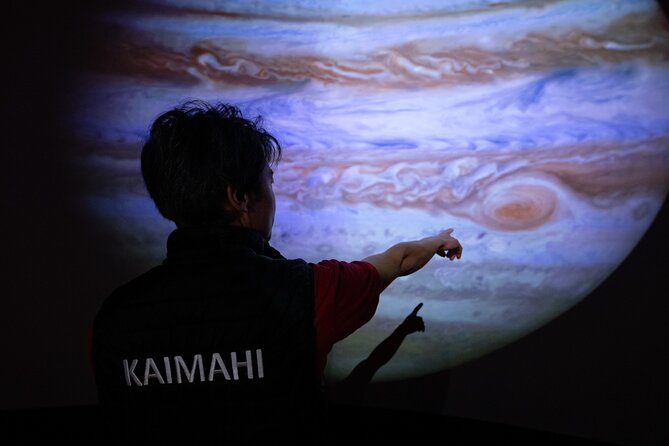
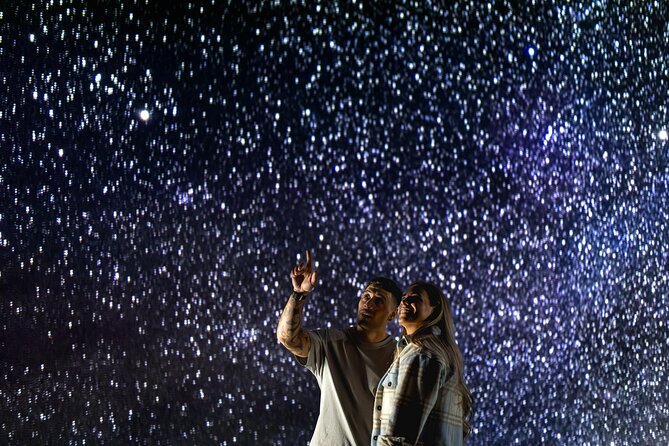
The most useful feature here is simple: you can explore the night sky without needing clear weather. Inside Dark Sky Project, an astronomy guide uses space-rendering technology to show the Southern Cross, the solar system, Saturn’s rings, and objects far beyond it.
I like the all-weather setting, especially in a place where clouds can spoil outdoor stargazing. I also like the Southern Hemisphere focus, since this gives you a better grip on stars and constellations you may not know from home. The main caution is that this is an educational presentation, not an outdoor stargazing session, and one visitor found the talk too much like school and difficult to follow because of the speaker’s English.
Key points
- Indoor and weatherproof: You stay inside Dark Sky Project at 1 Motuariki Lane in Lake Tekapo.
- Southern Hemisphere focus: Learn how to find the Southern Cross and understand the sky above New Zealand.
- Virtual journey through space: The presentation moves from the night sky to the solar system and beyond.
- About 45 minutes of core content: Plan on roughly one hour for the full experience.
- Small maximum group: The session is limited to 26 people, though a private tour can sometimes occur.
- Free cancellation up to 24 hours ahead: Changes or cancellations made inside 24 hours are not refunded.
Seeing Saturn without waiting for the weather
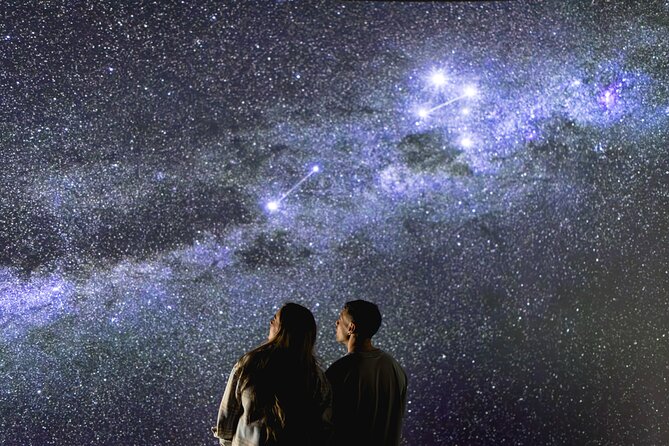
Lake Tekapo is famous for dark skies, but nature does not take bookings. Clouds, rain, wind, or a bright moon can all affect an outdoor astronomy plan. This indoor experience gives you a dependable way to spend time with the sky even when outdoor viewing is off the table.
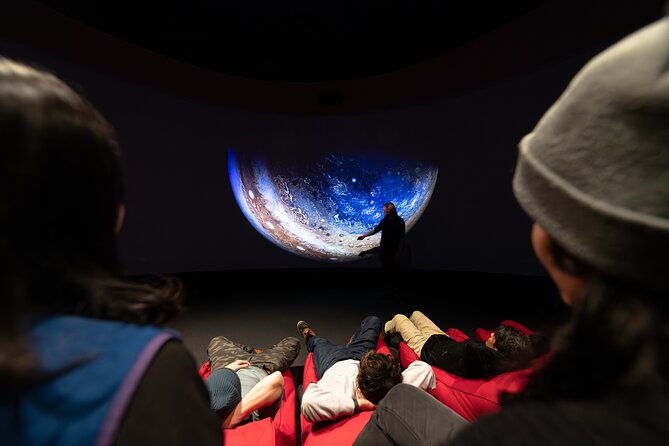
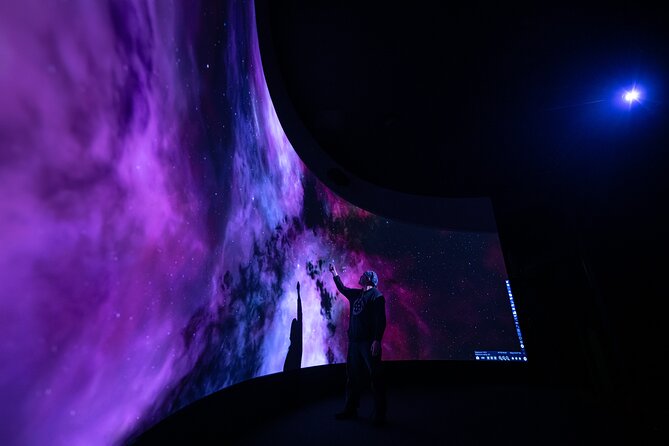
The central idea is not simply to show you pictures of stars. The guide uses state-of-the-art space-rendering technology to place you inside a digital version of the universe. You may find yourself looking at Saturn from an angle that would be impossible in ordinary stargazing, including the famous rings that are hard to grasp from a small telescope image.
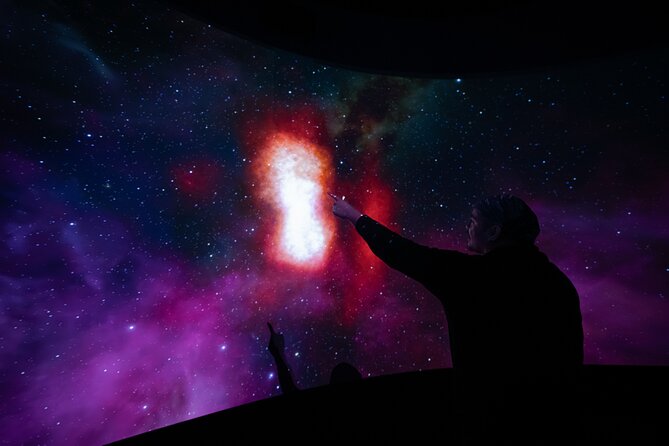
That makes this a useful introduction for people who want the big picture. Instead of staring at one patch of sky and trying to identify a few points of light, you can move from Earth to the solar system and then farther out into space. The presentation aims to connect what you see above Lake Tekapo with the larger structure of the universe.
The format is educational, but it is meant to be entertaining as well. That balance matters. If you enjoy facts, visual explanation, and a guided lesson, the technology should help you understand scale and position. If you want a quiet, natural night beneath the stars, you may find the indoor format less satisfying.
More Stargazing Tours in Lake Tekapo:
- Lake Tekapo: Alpine Stargazing Experience with a Guide
★ 4.5 · 626 reviews - Lake Tekapo: Stargazing Experience
★ 4.9 · 607 reviews - Chameleon Stargazing Shared Tour
★ 5.0 · 181 reviews
Inside Dark Sky Project at 1 Motuariki Lane
You meet at Dark Sky Project, 1 Motuariki Lane, Lake Tekapo 7999. The activity ends at the same point, so there is no separate drop-off to arrange. The supplied information does not list transport, so you should plan to make your own way to the meeting point.
The setting is purpose-built for astronomy rather than a general sightseeing stop. That gives the session a clear focus from the moment you arrive. You are not waiting for darkness or walking out into a field. You are entering an indoor presentation space where the guide controls the view and pace.
The maximum group size is 26 people. That is not a private lesson, but it is small enough to keep the session from feeling like a huge auditorium event. Group size can affect how much you want to ask questions, and the experience may feel more personal when fewer people are booked.
A private tour has occurred at least once, with Kate serving as the guide. Her ability to answer questions and explain what people had already seen outdoors was especially useful. You cannot count on a private booking or on Kate leading every session, but her example shows how much the quality of the guide shapes the experience.
A virtual route from the Southern Cross to the outer universe
The session takes about 45 minutes according to the detailed experience description, while the overall booking is listed at roughly one hour. I would leave a little extra time around the start and finish rather than treating the presentation as a precise 45-minute appointment.
The first useful step is getting oriented in the Southern Hemisphere. The Southern Cross is one of the key visual markers for the New Zealand sky, yet it can be unfamiliar if you come from the Northern Hemisphere. A guide can show you how the constellation fits into the night sky and help you understand what makes Southern Hemisphere stargazing different.
That orientation is more valuable than it may sound. Once you know what you are looking at, outdoor stargazing becomes less like searching randomly and more like following a map. The presentation gives you a foundation for recognizing southern constellations and objects, even if you later need time outside to pick them out for yourself.
The experience then moves across the solar system. The virtual technology allows the guide to explain planets and their positions in a way that a normal view from Earth cannot. This is where the presentation can help children and adults alike. A planet seen as a bright point in the sky becomes part of a larger system with distance, movement, and scale.
The final reach is beyond the solar system. The supplied details do not promise a fixed list of stars, galaxies, or deep-space objects, so you should not book expecting a specific catalogue of targets. Instead, expect a guided look at the wider universe and a broader understanding of where Earth fits within it.
Why the digital view can add real value
A virtual astronomy presentation has one major advantage over ordinary stargazing: it can show relationships that are difficult to see from the ground. From Lake Tekapo, you may see stars and planets, but you cannot physically move around Saturn or pull back from Earth to view the solar system as a whole.
The technology also gives the guide control over the story. A real sky changes with season, weather, moonlight, and visibility. A digital sky can pause, move, enlarge, and place an object in context. For a first-time astronomy visitor, that can make complicated ideas easier to follow.
I especially like this as a companion to outdoor stargazing. One visitor had done both, and the indoor session helped make sense of what had been seen outside. That is a strong use of the experience. You first look at real stars, then use the presentation to understand their place and meaning.
Still, the digital approach is not a substitute for being outside. You will not feel cold air, see the actual sky over Lake Tekapo, or experience the surprise of finding a star with your own eyes. The virtual setting trades natural atmosphere for clarity and reliability.
Same dark skies, a different way to see them:
- Lake Tekapo: Mountaintop Stargazing at Mount John Summit
★ 4.5 · 176 reviews - Mount John Observatory Stargazing Experience, Tekapo
★ 4.5 · 160 reviews - Tekapo Star Gazing Tour – Soak in the Stars
★ 4.5 · 109 reviews - Silver River Stargazing Experience in Lake Tekapo
★ 4.5 · 106 reviews
The guide matters more than the technology
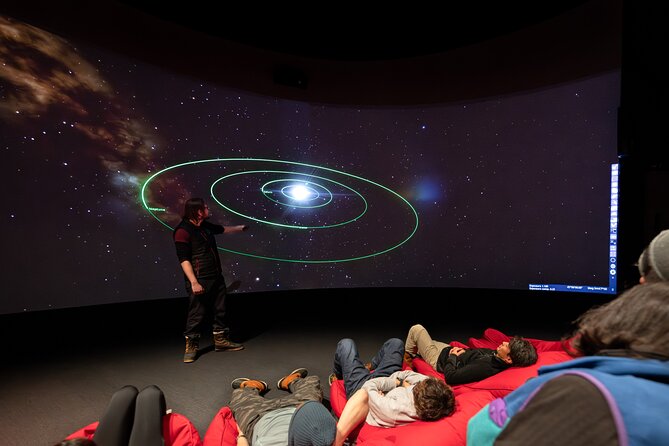
The guide is the human center of the experience. The presentation can render space in impressive ways, but someone still needs to explain what you are seeing, answer questions, and keep the pace comfortable.
Kate received particularly warm praise for her astronomy knowledge and her willingness to answer questions. If she leads your session, you may find the experience especially rewarding, but guide assignments can change. The general promise is an astronomy guide, not a guaranteed named host.
There is also an important limitation to consider. One visitor found the presentation too much like being back at school and had trouble understanding the speaker’s English. That does not mean every session will have the same issue, but it is a fair reminder that an educational talk depends heavily on communication style and clarity.
If you prefer lively demonstrations and open conversation, ask questions when the guide invites them. If you need a more relaxed pace, the virtual images may help, but the session is still structured as a presentation. This is not a free-roaming exhibit where you set your own route.
Is $55.07 a fair price?
At $55.07 per person, this is not a casual five-minute stop. You are paying for a guided, technology-based astronomy session at a specialist venue, with a reliable indoor setting and a focus on the Southern Hemisphere sky.
The price makes the most sense if you value explanation. You are not only paying to see stars. You are paying for someone to connect the Southern Cross, the solar system, Saturn, and the wider universe into one understandable story.
The value is stronger when weather threatens your outdoor plans. A clear-sky forecast might make a real night outside your first choice, but clouds can quickly change that calculation. This experience provides a scheduled astronomy activity that does not depend on conditions outdoors.
The value is also good for families and first-time stargazers who may not know where to begin. A guided explanation can prevent the common problem of looking at a dark sky and seeing only random points of light. You leave with a better sense of what to look for.
The price is harder to justify if you already have strong astronomy knowledge and mainly want a natural night under the stars. In that case, you may prefer outdoor viewing, and this indoor format could feel basic or too classroom-like.
Who should book this experience?
I would consider this a good fit for several kinds of visitors:
- First-time stargazers who want a clear introduction to southern constellations.
- Families who benefit from visual explanations and a controlled indoor setting.
- Visitors with limited time who want an astronomy activity lasting about an hour.
- People visiting in poor weather who do not want to lose their chance to learn about the sky.
- Those combining indoor and outdoor astronomy, since the virtual session can explain what you see outside.
- Curious adults who want to understand scale, planets, and the place of Earth in space.
You may want to think twice if your ideal evening means standing outdoors in silence, waiting for a real star to appear. The technology is the point here, not a backup detail.
Most people can participate, and service animals are allowed. The available information does not describe special seating, audio support, or other accessibility features, so contact the provider directly if you need details beyond the stated participation information.
Booking timing and cancellation details
The activity is often booked well ahead, with an average booking lead time of 59 days. That suggests you should reserve early if your Lake Tekapo dates are fixed, especially if you want a particular time.
Your mobile ticket is confirmed at booking. The maximum group size is 26, and the activity starts and finishes at Dark Sky Project.
You can cancel for a full refund up to 24 hours before the local start time. Inside that 24-hour window, the payment is not refunded, and changes are not accepted. Keep that cutoff in mind if your South Island plans depend on weather or road conditions.
Should you book the Virtual Stargazing Experience?
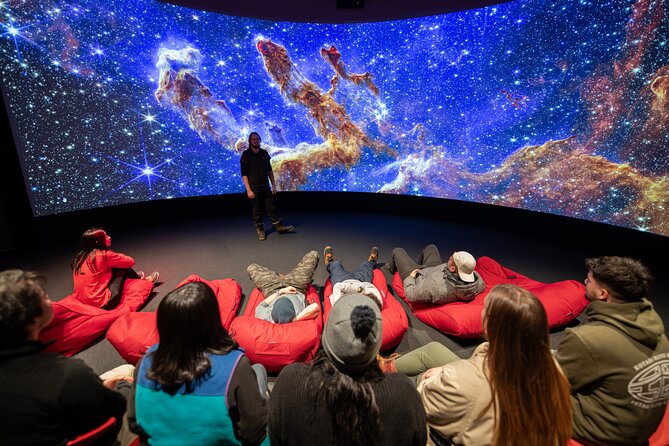
Book it if you want a clear, dependable introduction to the Southern Hemisphere sky, especially when outdoor conditions are uncertain. The Southern Cross, the solar system, Saturn’s rings, and the wider universe are easier to understand when a guide can control the view and explain the connections.
I would pair it with outdoor stargazing if possible. The indoor presentation can give you the map, while the real sky gives you the feeling of using it. If your only goal is outdoor darkness and natural silence, save the $55.07 for another activity. If you want astronomy explained through visual technology and a structured guide, this is a sensible Lake Tekapo choice, with the quality of the session depending heavily on your guide and your comfort with a classroom-style format.
FAQ
Where does the Virtual Stargazing Experience take place?
It takes place at Dark Sky Project, 1 Motuariki Lane, Lake Tekapo 7999, New Zealand.
How long does the experience last?
The booking is listed as approximately one hour. The detailed description identifies the virtual tour itself as lasting about 45 minutes.
Is the experience indoors?
Yes. It is an indoor astronomy experience designed to operate in all weather conditions.
What will I learn about?
You will learn about the Southern Hemisphere night sky, including constellations such as the Southern Cross, the solar system, and objects farther out in the universe.
Does the experience include outdoor stargazing?
The Virtual Stargazing Experience itself is indoors. Outdoor stargazing is not listed as part of this activity.
How many people can join the session?
The maximum group size is 26 people.
Is the activity suitable for most people?
Yes. Most people can participate, and service animals are allowed.
Can I cancel for a full refund?
Yes. You can cancel at least 24 hours before the local start time for a full refund. Cancellations or changes made less than 24 hours before the start are not accepted or refunded.
Just added around Lake Tekapo
- Lake Tekapo Ultimate Stargazing Experience★ 5.0 · 3 reviews
- Lake Tekapo: Virtual Stargazing and Astronomy Experience★ 4.5 · 8 reviews
- Lake Tekapo: Ultimate Stargazing Experience★ 4.3 · 12 reviews
- Lake Tekapo: 1.5-Hour Hot Pools & Stargazing Experience★ 4.0 · 45 reviews
- Lake Tekapo: Indoor Māori Cultural Astronomy Experience★ 4.5 · 43 reviews
- Lake Tekapo: Stargazing Experience at Cowan’s Observatory★ 4.7 · 52 reviews
- Stargazing Experience at Cowan’s Private Observatory★ 4.0 · 85 reviews
- Dark Sky Indoor Maori Cultural Astronomy Experience★ 4.5 · 70 reviews
Lake Tekapo Stargazing Tours, compared.
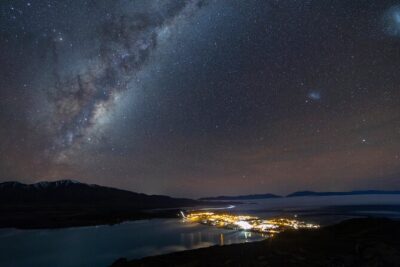
Mount John Observatory Stargazing Experience, Tekapo
Read our review →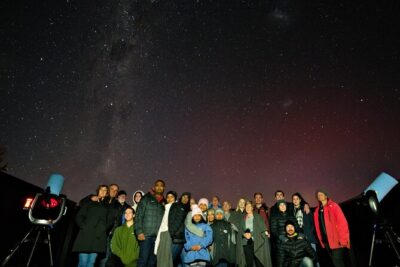
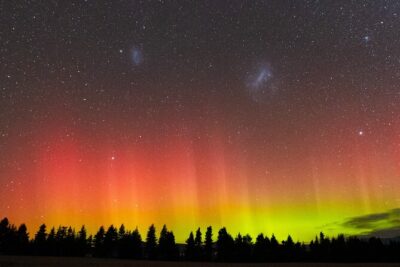
Silver River Stargazing Experience in Lake Tekapo
Read our review →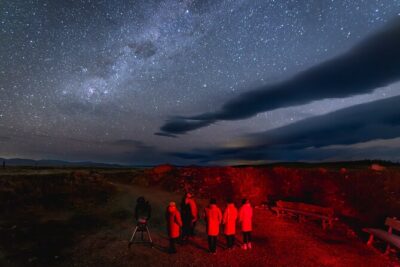
Stargazing Experience at Cowan’s Private Observatory
Read our review →Browse the lists this tour appears in