
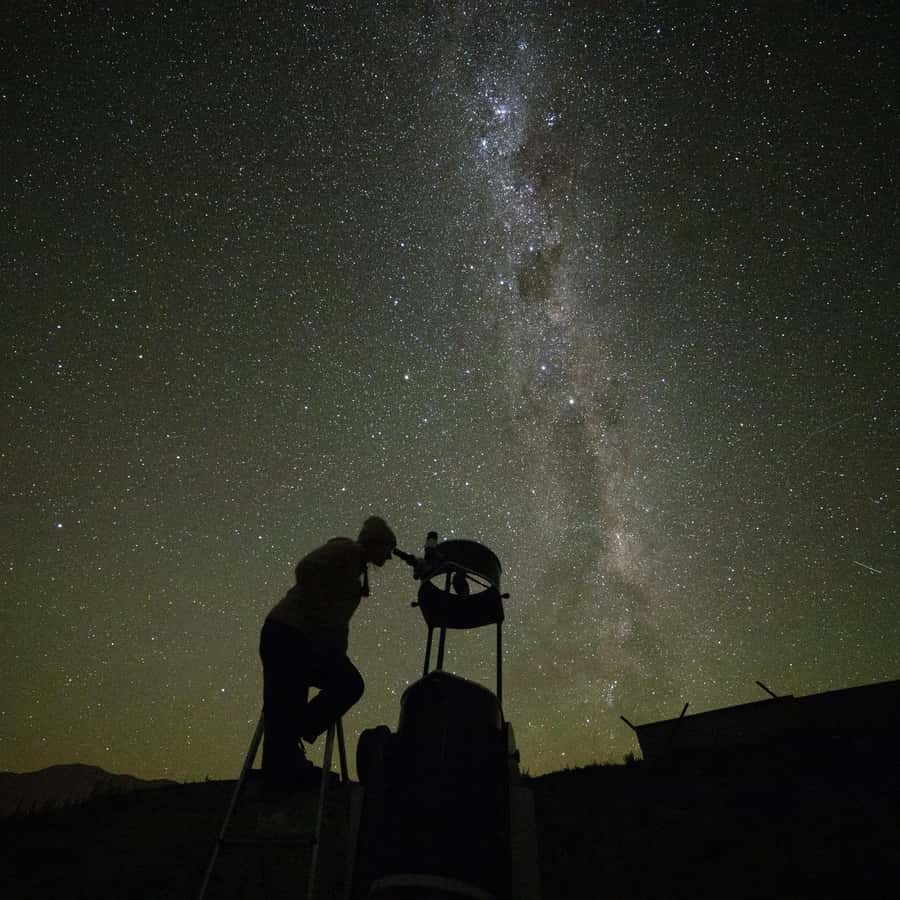
REVIEW · LAKE TEKAPO
Lake Tekapo: Alpine Stargazing Experience with a Guide
Lake Tekapo is one of the rare places where the Milky Way can look extraordinary even before you touch a telescope. This 75-minute outing takes you away from town lights to a private 50,000-acre farm, where a guide points out southern constellations, planets, star clusters, and nebulae.
I like the small groups capped at 10, which gives you a fair chance at the telescope. I also like the warm down jackets and the complimentary photo, two practical touches that matter when you are standing outdoors at night. The main drawback is simple: clouds, wind, moonlight, and cold can limit what you see.
The quality of the evening also depends on your guide. Sam, Tara, Nicole, JoJo, Marcus, and several others are praised for clear explanations and good humor. If the sky is open, this is a strong value at $59 per person. If the weather turns bad, the guide can explain the heavens, but no telescope can negotiate with clouds.
Key points at a glance
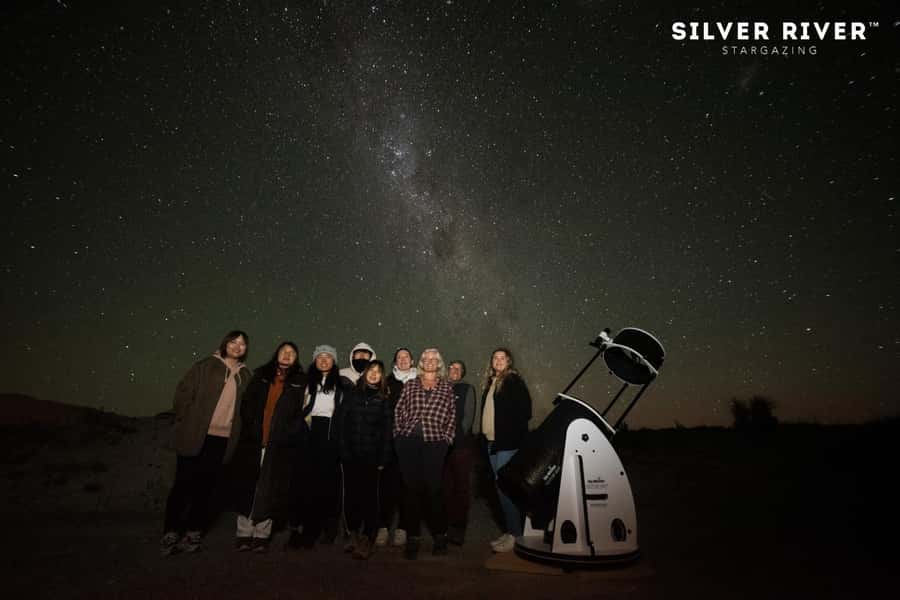
- A 14-inch telescope: Use modern equipment to view objects such as the Moon, Jupiter, Saturn, star clusters, galaxies, and nebulae when conditions allow.
- Private farmland away from town lights: The site sits on a 50,000-acre farm inside the Aoraki Mackenzie International Dark Sky Reserve.
- Small groups of up to 10: You get more telescope time and a closer connection with the guide than on a large coach tour.
- Warm jackets included: Long down coats are available for the cold and wind, though you should still dress in layers.
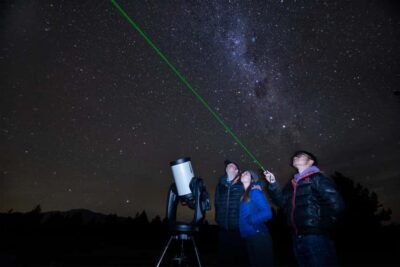
- Southern-sky instruction: Guides use special laser pointers to show constellations and explain why the southern sky differs from what you may know at home.
- A night-sky photo: You receive a digital group photo, normally by email within 48 hours, subject to weather.
Why Lake Tekapo is such a good place for stargazing
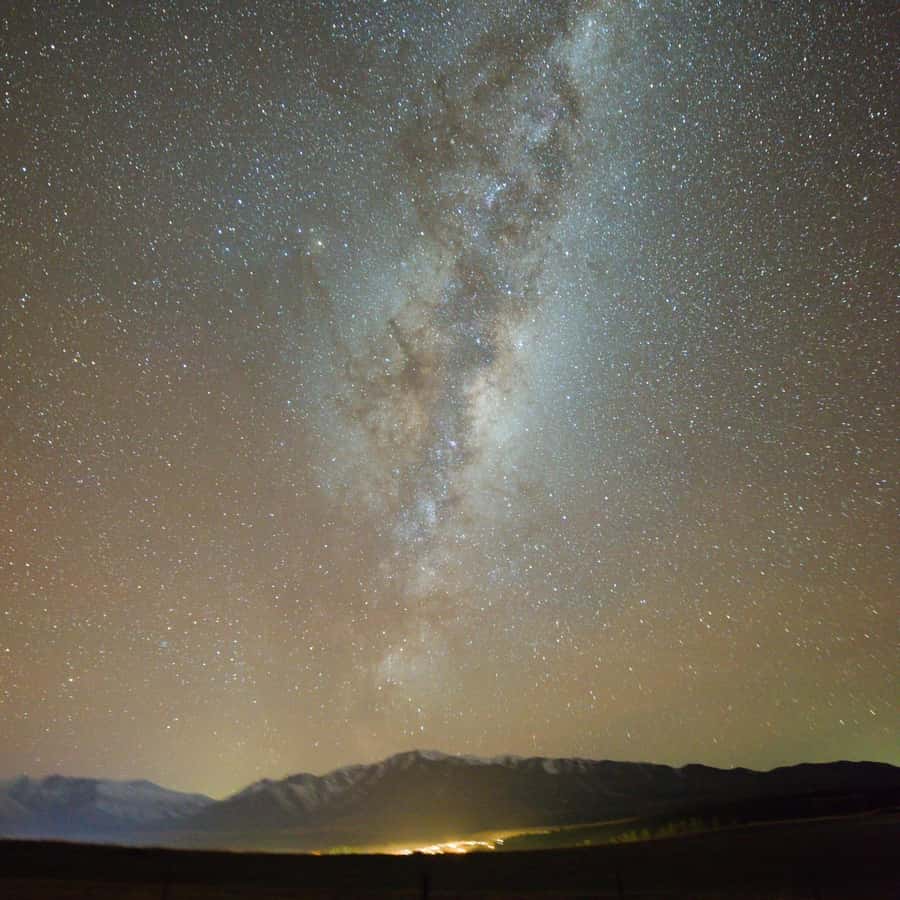
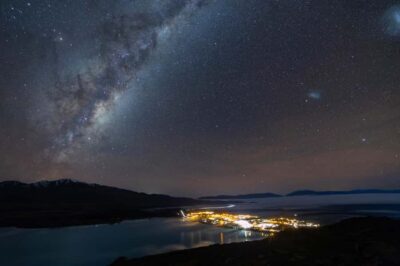
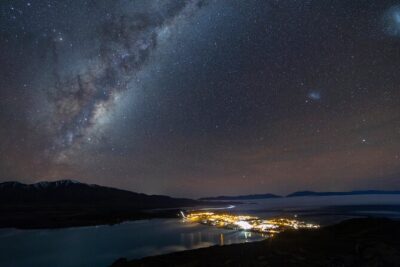
The appeal here begins with darkness. Lake Tekapo sits within the Aoraki Mackenzie International Dark Sky Reserve, and the tour takes you farther from the glow of the township to a private farm. That extra distance matters because even small amounts of stray light can wash out the faintest stars.
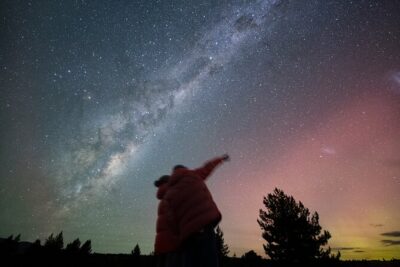
You can often see the Milky Way with your unaided eyes. That is important. A telescope gives you detail, but the great first surprise is the sheer number of stars above you. One look upward may show a broad, pale band across the sky, with darker lanes and bright patches. You do not need astronomy training to appreciate it.
The guide then gives that view some order. Instead of staring at a beautiful but confusing sky, you learn where to find constellations and how to use prominent stars for direction. Laser pointers make this easier, especially when several stars seem to blend together.
The southern hemisphere also gives you a different set of reference points from the northern sky. The guides explain the reason for those differences and may discuss the names, stories, and traditions attached to the stars. This storytelling helps the session feel like more than a technical lesson.
More Guided Trips in Lake Tekapo:
- Teide: Guided Sunset & Stargazing Tour by Night with Dinner
★ 4.7 · 1,339 reviews - Fuerteventura: Guided Stargazing Calderón Hondo Volcano Tour
★ 4.7 · 594 reviews - Teide National Park: Guided Large Telescope Stargazing Tour
★ 4.9 · 319 reviews
Starting at the Kiwi Treasure post office
Your meeting point is the Silver River Stargazing office inside Kiwi Treasure, Lake Tekapo’s post office. That unusual arrangement can cause a moment of confusion, so look for the post office rather than a separate observatory building.
The safety briefing takes about five minutes. It is short, but useful because you are heading to a dark outdoor site rather than staying in town. This is also when you receive one of the tour’s most useful inclusions: a warm down jacket.
The provided coats are long and thick, and many people find them helpful on cold nights. Still, do not treat the jacket as a substitute for warm clothing. Wear sturdy shoes and several layers, and bring a hat or gloves if you have them. A few people also wished for blankets or hot drinks, neither of which is listed as included.
The tour is wheelchair accessible, though the experience takes place at an outdoor stargazing location. If you have specific mobility needs, it is sensible to confirm the details when booking.
The short ride to private farmland
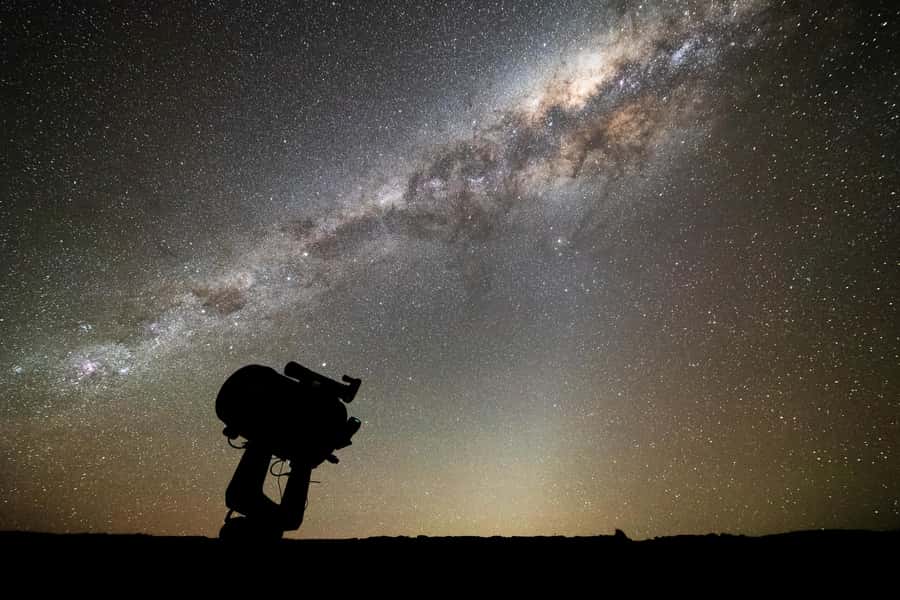
The transfer from the office to the viewing site takes about five minutes each way. That keeps the outing efficient and leaves most of the 75-minute schedule for the sky.
The transfer vehicle has been described as a bus or RV, and the ride may take you over farm tracks in the dark. It is not a long scenic drive, so do not book this for transport sightseeing. Its value is practical: you reach a darker, more open site without needing to drive yourself at night.
At the farm, the surroundings are quiet and free of the direct lights found around Lake Tekapo. The 360-degree outlook gives the guide room to work with different parts of the sky. You are not confined to one direction, which is useful as the visible stars change during the night and across the seasons.
Chairs are set up at the viewing area, making it easier to look upward and wait your turn at the telescope. The setting is simple rather than polished. That is part of the charm, but it also means you are outdoors in real cold and wind.
One hour with the guide and telescope
The main guided session lasts about an hour. Guides use laser pointers to identify stars and constellations, then explain what you are seeing in plain language. A good guide makes the session accessible to complete beginners while still offering enough detail for people who already know a little astronomy.
Sam has been praised for combining clear astronomy lessons with stories about star names and different cultures. Tara is noted for her warmth with children and for answering questions patiently. Nicole, Marcus, Estelle, Evan, JoJo, and others have also received strong praise for making the explanations lively rather than stiff.
Your exact program will depend on the season and the sky. Possible telescope targets include the Moon, Jupiter and its four moons, Saturn, star clusters, nebulae, and even a neighboring galaxy. You may also see a meteor, as one particularly lucky evening did, or the Aurora Australis when conditions line up.
Do not treat that list as a promise. Astronomy targets change, and clouds or wind can make some objects difficult to view. The telescope may show one object beautifully while another remains indistinct. Wind can affect the clarity of the view, and a bright or nearly full moon can reduce the visibility of faint stars. Even so, a bright moon does not necessarily ruin the outing. One evening still offered a good star show despite an almost full moon.
The 14-inch telescope is the main reason to choose a guided experience instead of simply driving somewhere dark and looking up. You can see details that are impossible to make out with the naked eye. The guide also helps each person position themselves correctly and understand what should be visible through the eyepiece.
Because the group is limited to 10, the ratio of equipment to people is reasonable. You should have repeated opportunities to look through the telescope, though the exact amount of time varies with group size, weather, and how many objects are visible. One practical criticism is that some people wanted more telescope time within the 60-minute session.
More Stargazing Tours in Lake Tekapo:
- Lake Tekapo: Stargazing Experience
★ 4.9 · 607 reviews - Chameleon Stargazing Shared Tour
★ 5.0 · 181 reviews - Lake Tekapo: Mountaintop Stargazing at Mount John Summit
★ 4.5 · 176 reviews - Mount John Observatory Stargazing Experience, Tekapo
★ 4.5 · 160 reviews
What the guides add to the evening
The guide is the heart of this experience. The telescope is impressive, but the sky can feel overwhelming without someone to organize it.
You learn how to find major constellations rather than simply being shown them once. That distinction matters because it gives you something to use later from a hotel balcony, campsite, or dark roadside stop. The laser pointer bridges the gap between the guide’s explanation and your own eyes.
The best guides also leave room for questions. Families can ask basic questions about planets, while more curious participants may want to talk about galaxies, the universe, or the history behind star names. Several guides are praised for making complex ideas easy to follow without turning the session into a lecture.
The experience is available in English and Japanese. That is useful for mixed-language groups and for anyone who finds astronomy vocabulary difficult in English. If a guide’s personality matters to you, names such as Sam, Tara, Nicole, JoJo, Marcus, Estelle, and Sakura appear among the staff praised for clear and engaging presentations. You cannot choose a particular guide as a standard feature, so book for the setting and format rather than a specific person.
One point to watch is sound. On one evening, wind and outdoor conditions made it hard for a participant to hear everything. Staying close to the guide helps, and the small group size should make that easier than on a large night tour.
Cold, clouds, and the limits of the sky
Stargazing is weather dependent, and you should plan around that fact. The operator may adjust the start time slightly if conditions are changing. One session began 15 minutes later and benefited from clouds clearing.
Clouds can prevent telescope viewing altogether. Even on a cloudy evening, you may still receive an introduction to the stars and see some openings in the cloud, but you should not assume the tour can deliver a full star field in poor conditions.
Wind presents a different problem. It may not hide the stars, but it can make the telescope image shake or become less sharp. Cold can also change your enjoyment of the outing. The supplied jackets help, yet warm layers remain important.
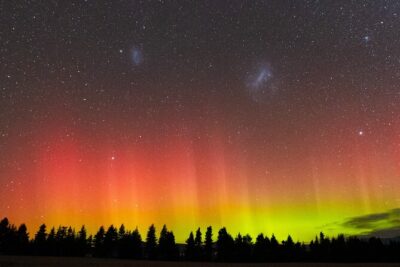
The Aurora Australis is another possible bonus, not a scheduled feature. A full southern aurora made one evening unforgettable, but the tour is not an aurora-chasing trip. Book it for the dark sky, telescope, and instruction. Consider any aurora sighting an extra gift.
Moon phase also affects the experience. A new moon gives you the darkest conditions for faint stars and the Milky Way. A bright moon is excellent for lunar viewing but can reduce the contrast of dimmer objects. If you can choose among dates, a darker moon period may suit you best, though clear weather matters more than any calendar promise.
Is $59 a fair price?
At $59, this is a solid value if you want more than a quick look at the sky. The fee covers the guided session, transport to and from the farm, use of a 14-inch telescope, a warm down jacket, and a digital photo.
You could drive to a dark area for less money, but then you would need to identify the constellations yourself and would not have access to the telescope. You also would not have the same assurance of reaching a private site with little to no local light.
The photo adds some value, especially for families and couples. Night photography is difficult with an ordinary phone, so receiving a finished image with the stars behind you is a useful keepsake. The digital link is normally sent within 48 hours.
The cost is less attractive if you mainly want an aurora or if you dislike standing outside at night. You are paying for a guided astronomy experience, not a guaranteed list of planets or a heated indoor show.
Who will enjoy this most
I would recommend this for first-time stargazers, families with older children, couples, photographers, and anyone visiting Tekapo for one or two nights. The guides make it approachable, and the telescope gives the experience a clear focus.
Children can enjoy it, especially if they are curious and able to stay up late. The tour allows one infant per departure, and infants must be booked onto the earliest departure of the night. That rule makes the early time important for families with very young children.
It also suits people who have seen a dark sky before but want help understanding it. The southern hemisphere has its own character, and the explanations about constellations, navigation, and star names add purpose to the view.
I would be more cautious if you need a long, leisurely astronomy session. Seventy-five minutes passes quickly, and some of that time goes to the briefing and transfers. The telescope time is shared, and poor weather may reduce the program.
Booking details that matter
The tour costs $59 per person and lasts 75 minutes, including the briefing, transfers, and one-hour guided session. Small-group departures are available, with groups limited to 10 people.
Free cancellation is available up to 24 hours before departure, and you can reserve now and pay later. English and Japanese tours are offered. Check the current departure times because the schedule can change with the season and conditions.
Allow enough time to find Kiwi Treasure, since the office is inside the post office. Arrive ready for the cold rather than assuming the supplied coat will do all the work. If photography matters to you, keep the digital photo promise in mind, but remember that it depends on suitable weather.
Should you book Lake Tekapo Alpine Stargazing?
Book it if you want the Milky Way explained, not just displayed. The private farm, low light pollution, small group, and 14-inch telescope give you a fuller experience than a simple roadside stop.
The main question is your tolerance for weather risk. On a clear night, the sight of the southern sky can be the highlight of your time in Tekapo, with planets, moons, clusters, and perhaps an aurora or meteor added to the show. On a cloudy or windy night, the guide may still make the hour worthwhile, but the telescope cannot perform miracles.
For $59, I think it is a smart choice for most first-time visitors, especially if you have only one evening in the area. Dress warmly, keep your expectations flexible, and let the darkness do most of the work.
FAQ
Where does the Lake Tekapo stargazing tour meet?
Meet at the Silver River Stargazing office inside Kiwi Treasure, which is also Lake Tekapo’s post office.
How long does the experience last?
The full experience lasts 75 minutes. This includes a five-minute safety briefing, about five minutes of transport each way, and a one-hour guided stargazing session.
How many people are in each group?
The small-group option is capped at 10 people.
What equipment is provided?
You can use a modern 14-inch telescope and special astronomy laser pointers. Warm down jackets are also provided.
Is transportation included?
Yes. Round-trip transportation between the Silver River Stargazing office and the private stargazing site is included.
When will I receive the complimentary photo?
The digital photo is sent by email through a link within 48 hours, depending on the weather and the ability to take the photo.
Just added around Lake Tekapo
- Lake Tekapo Ultimate Stargazing Experience★ 5.0 · 3 reviews
- Virtual Stargazing & Astronomy Experience in Lake Tekapo★ 3.0 · 2 reviews
- Lake Tekapo: Ultimate Stargazing Experience★ 4.3 · 12 reviews
- Lake Tekapo: Virtual Stargazing and Astronomy Experience★ 4.5 · 8 reviews
- Lake Tekapo: Indoor Māori Cultural Astronomy Experience★ 4.5 · 43 reviews
- Lake Tekapo: 1.5-Hour Hot Pools & Stargazing Experience★ 4.0 · 45 reviews
- Lake Tekapo: Stargazing Experience at Cowan’s Observatory★ 4.7 · 52 reviews
- Stargazing Experience at Cowan’s Private Observatory★ 4.0 · 85 reviews
Lake Tekapo Stargazing Tours, compared.
Mount John Observatory Stargazing Experience, Tekapo
Read our review →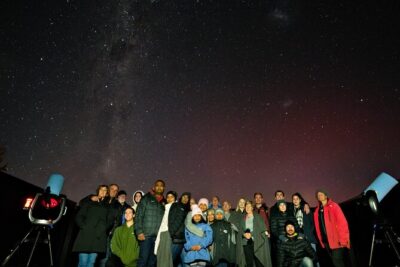
Silver River Stargazing Experience in Lake Tekapo
Read our review →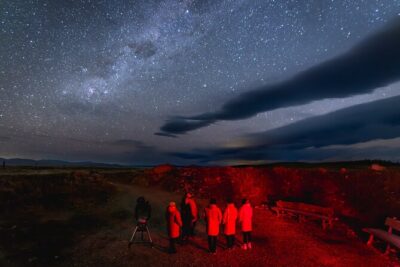
Stargazing Experience at Cowan’s Private Observatory
Read our review →
Dark Sky Indoor Maori Cultural Astronomy Experience
Read our review →Browse the lists this tour appears in