
REVIEW · LAKE TEKAPO
Dark Sky Indoor Maori Cultural Astronomy Experience
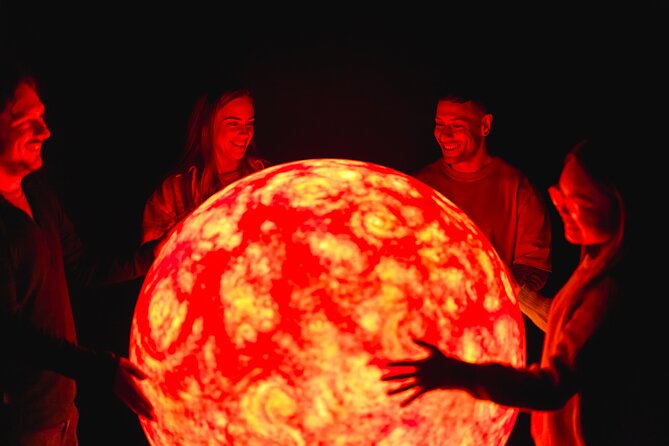
The Dark Sky Experience turns a cloudy day in Lake Tekapo into a journey through the Southern Sky. Inside four interactive zones, you’ll connect Māori astronomy with Western science, learn how stars guided ocean travel, and see why the night sky mattered to agriculture and daily life.
I like two things right away: the attraction works for children and adults, and it runs year-round without asking you to gamble on clear weather. The guide-led storytelling is another strength, especially when the presenter brings science and folklore together in plain language. The one limitation is simple: this is an indoor interpretation of the sky, not a live stargazing session under the stars.
Key points to know before you go
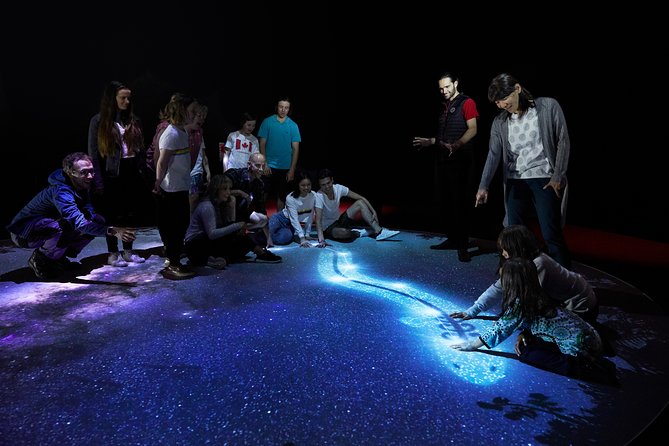
- Four interactive zones: Follow Māori ideas about constellations, star clusters, navigation, mythology, and the origins of life.
- A reliable rainy-day plan: The experience operates year-round, so clouds and rain do not spoil your visit.
- About 45 minutes with a guide: The overall visit is listed at roughly one hour, with a guided presentation through the main zones.
- A cultural and scientific focus: You’ll learn about Māori connections to the universe alongside Western discoveries.
- A 125-year-old telescope: The restored Brashear Telescope rises nine metres and adds a striking historic detail.
- Small maximum group: The experience is limited to 26 people, which helps keep the presentation focused.
Why Lake Tekapo’s indoor astronomy visit matters
Lake Tekapo is known for its exceptional night sky, but good stargazing needs good weather. Clouds, rain, wind, and a full family schedule can all get in the way. This indoor experience gives you a useful alternative during daylight, and it also works as an introduction before you try to look up at the real sky later.
The strongest part is the cultural frame. You are not simply shown a set of constellations and told their names. You learn how Māori communities understood the stars as part of a wider system connected to navigation, seasons, agriculture, and life itself.
That matters because the night sky is not only a collection of distant objects. It has helped people travel, plan work, tell stories, and pass knowledge from one generation to the next. The presentation places Māori understanding beside Western astronomy without treating one as a decorative extra.
I also like the way the experience is built for different ages. Younger children can engage with hands-on displays and multimedia material, while adults can pay closer attention to the cultural stories and scientific explanations. It is not a specialist lecture, so you do not need a background in astronomy to follow along.
More Stargazing Tours in Lake Tekapo:
- Lake Tekapo: Alpine Stargazing Experience with a Guide
★ 4.5 · 626 reviews - Lake Tekapo: Stargazing Experience
★ 4.9 · 607 reviews - Chameleon Stargazing Shared Tour
★ 5.0 · 181 reviews
Entering the four zones at the Dark Sky Project
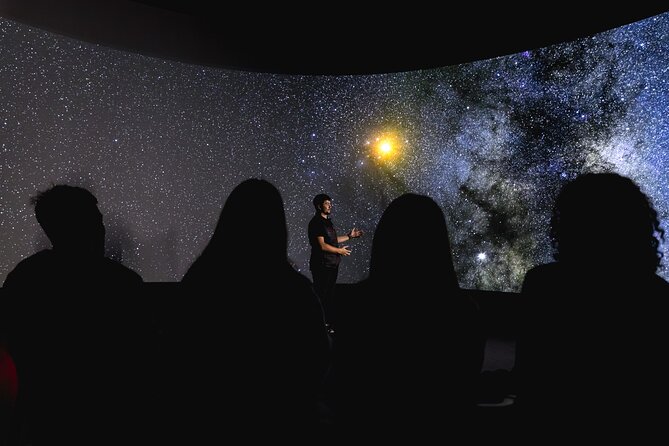
The visit takes place at the Dark Sky Project, at 1 Motuariki Lane in Lake Tekapo. You follow a guide through four zones, each dealing with a different part of the relationship between people and the sky.
The first strength is variety. Instead of keeping you in one room for a long talk, the experience moves through a series of displays and activities. That change of pace helps children stay with the presentation, while adults get several ways to approach the subject.
You’ll learn how Māori used constellations and ocean currents to navigate. This is one of the most practical parts of the visit. It shows that astronomy was not separate from everyday life. The stars could help with direction, while knowledge of the sea helped people make sense of long journeys.
The experience also looks at star clusters and their meaning. These clusters are not treated only as objects for scientific study. They carry cultural importance, and the stories around them help explain how Māori communities understood the order of the universe.
Mythology is another major part of the presentation. The stories give the stars a human and cultural context, making the subject easier to remember than a list of technical facts. A strong guide can make this section especially effective, and the format allows the presenter to explain ideas in a clear, conversational way.
The final thread is the science-based story of how living beings came to be. This gives the tour a wider reach. You are not just learning where stars sit in the sky. You are considering how the universe, Earth, and life fit into a much larger story.
Māori astronomy and Western science together
The experience’s best educational choice is its combination of Māori and Western viewpoints. You do not have to choose between cultural storytelling and scientific explanation. Both offer ways to understand the sky, and each answers different questions.
Western astronomy often asks how stars form, how objects move, and what can be measured. Māori astronomy also asks how the sky guides people, how it relates to place and season, and what responsibilities or stories are connected to it.
That combination makes the subject more memorable. A child may first notice a glowing display or a hands-on activity, then remember a story about navigation. An adult may come for the science and leave with a better sense of how astronomy fits into Māori culture.
The guide’s role is important here. The information has to remain easy to follow, and the best moments come when the presenter links the scientific material to the cultural material instead of treating them as separate blocks. The feedback supplied for this experience repeatedly points to clear delivery, strong storytelling, and an engaging presentation style.
You should also expect a respectful introduction to Māori connections with the universe rather than a full course in Māori culture. The visit lasts about 45 minutes in its guided form, so it can offer useful context but cannot cover every tradition or regional difference.
The restored Brashear Telescope

One of the most memorable objects in the visit is the restored Brashear Telescope. This Victorian-era telescope is 125 years old and rises nine metres, giving the attraction a physical link to the history of astronomy.
Even if you are more interested in cultural stories than equipment, the telescope helps show how people have tried to study the heavens across different periods. It adds scale and character to the visit, and it gives families something substantial to look at between the interactive displays.
The telescope is part of the indoor experience, so do not book expecting a nighttime viewing session through it. Its value here is historical and visual. It helps connect the modern exhibition with earlier scientific efforts to observe and understand the sky.
Same dark skies, a different way to see them:
- Lake Tekapo: Mountaintop Stargazing at Mount John Summit
★ 4.5 · 176 reviews - Mount John Observatory Stargazing Experience, Tekapo
★ 4.5 · 160 reviews - Tekapo Star Gazing Tour – Soak in the Stars
★ 4.5 · 109 reviews - Silver River Stargazing Experience in Lake Tekapo
★ 4.5 · 106 reviews
A good choice when the weather turns bad
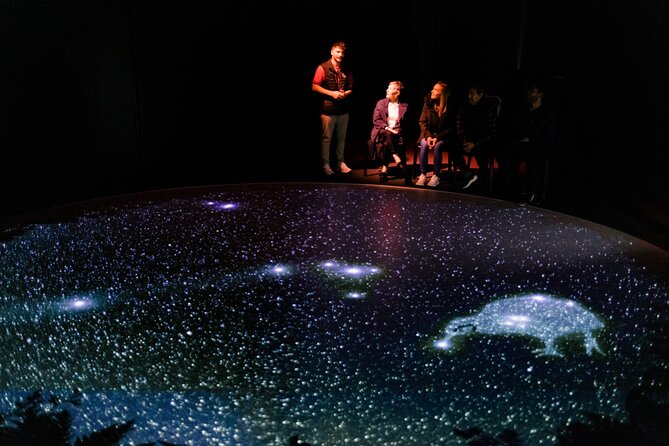
This is one of the clearest reasons to book. Lake Tekapo’s outdoor attractions depend heavily on conditions, but this experience operates in all weather and throughout the year.
If rain has cancelled your plans, the indoor format gives you more than a generic museum stop. The subject remains tied to the place you came to see: the Southern Sky and the Aoraki Mackenzie International Dark Sky Reserve.
The experience can also fill a gap before an evening activity. You do not need to wait until after dark, and you can learn the basic ideas during the day. If the sky clears later, you may look upward with a better understanding of what you are seeing.
Still, keep expectations in check. You will not replace a clear night outside with a 45-minute indoor presentation. The value is different. This is about stories, interpretation, history, and science, while outdoor stargazing is about direct observation.
How the one-hour visit feels
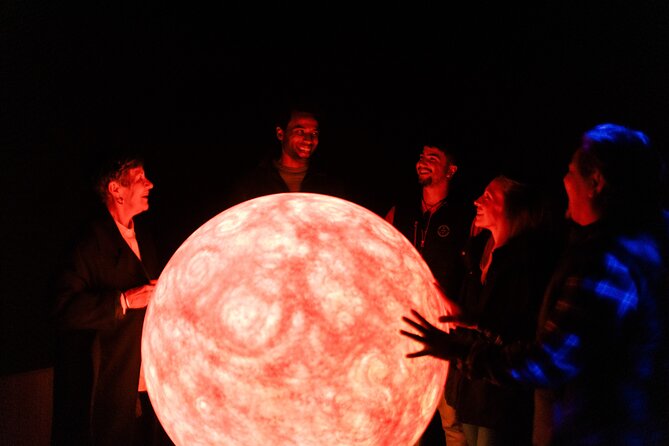
The guided section lasts about 45 minutes, while the overall experience is listed at approximately one hour. That makes it easy to fit into a day in Lake Tekapo without giving up half your schedule.
A guide leads you through the four zones rather than leaving you to read everything alone. This is helpful for families because the presenter can keep the group moving and explain the displays as you go.
The presentation style has been praised for being easy to understand and interactive. That matters with astronomy, a subject that can quickly become too technical. You should expect a clear introduction rather than a specialist seminar.
The group maximum is 26 people. That is not a private tour, but it is small enough to make the guided structure more manageable than a large crowd. Children can take part, and most people can participate.
Because the visit is short, you may find that individual sections leave you wanting more. That is not necessarily a flaw. Think of it as a well-sized introduction to Māori astronomy and the Southern Sky, not the final word on either subject.
What you get for $37.56
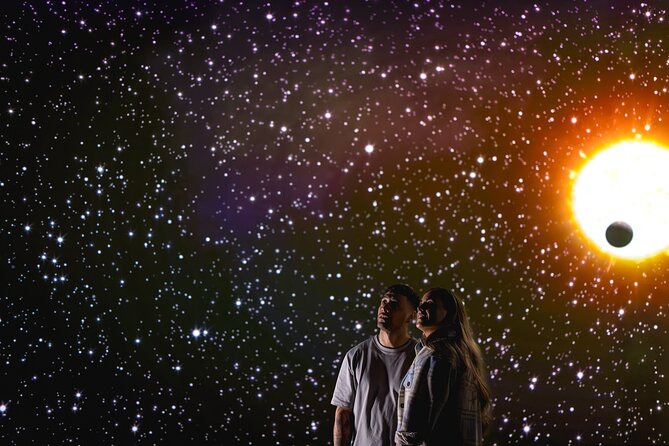
At $37.56 per person, this is not the cheapest indoor activity in a holiday town. Its value depends on what you want from your time and whether weather has limited your other plans.
For a family, the price buys a guided cultural and science experience rather than a room of static panels. The four zones, multimedia material, hands-on activities, guide presentation, and telescope give the visit several layers.
It is also useful for people who may not be able to join a late-night astronomy activity. Families with young children, visitors with an early departure, or anyone dealing with poor weather can get a meaningful introduction during daylight.
The price makes less sense if you are only looking for a quick photo stop or a live telescope viewing. The visit is educational first. You are paying for the explanation and the cultural context as much as for the displays.
Advance booking is sensible, especially since the experience had more than 10 bookings in the previous month and the group size is capped at 26. You receive a mobile ticket, which keeps entry simple.
Who will enjoy this most
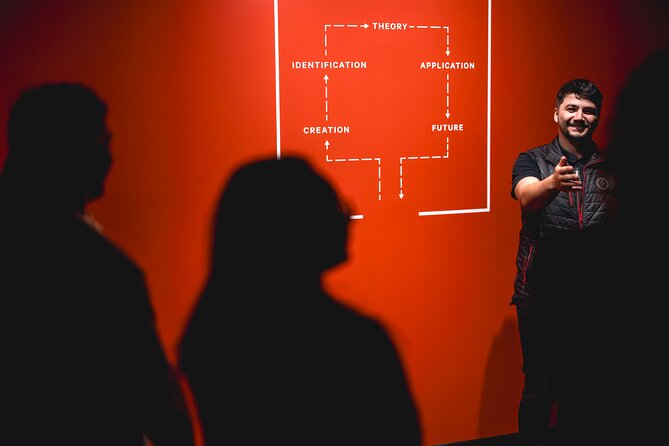
I would recommend this experience to families, first-time visitors to Lake Tekapo, and anyone with a real interest in the night sky but no guarantee of clear weather.
It suits you particularly well if:
- You want an activity that works in rain or cloud.
- You are visiting with children who need a change from scenery and driving.
- You want Māori perspectives included in your understanding of New Zealand.
- You prefer a guided explanation to reading displays alone.
- You are interested in navigation, constellations, mythology, or the history of astronomy.
- You have limited time and want a visit that lasts about an hour.
You might find it less satisfying if your main goal is to look through a telescope at live stars. In that case, treat this as preparation or a backup rather than a replacement for outdoor stargazing.
Service animals are allowed, and the site is near public transportation. Snacks, coffee, and tea are not included, so plan those separately if you need refreshments.
Booking and cancellation advice
You can cancel for a full refund if you do so at least 24 hours before the scheduled start time. Changes or cancellations inside that 24-hour window are not accepted for a refund.
The experience needs a minimum number of participants. If the operator cancels because that minimum is not reached, you will be offered another date or experience, or a full refund.
The activity begins and ends at 1 Motuariki Lane. Since the visit is indoors and relatively short, it is easy to pair with other Lake Tekapo plans, but you should allow enough time to arrive at the meeting point before the start.
Should you book the Dark Sky Experience?
Book it if you want a family-friendly, weather-proof introduction to Māori astronomy and the Southern Sky. The combination of four interactive zones, a clear guide-led presentation, and the restored Brashear Telescope gives the visit more substance than a simple exhibit.
I especially recommend it when rain or cloud has spoiled your outdoor plans. You will leave with a better sense of how stars shaped Māori navigation, stories, agriculture, and ideas about life.
Skip it only if you want direct nighttime stargazing and nothing else. For everyone else, the $37.56 cost is reasonable when you value cultural context, practical learning, and a dependable indoor activity in Lake Tekapo.
FAQ
How long does the Dark Sky Experience last?
The guided portion lasts about 45 minutes, and the total experience is approximately one hour.
Where does the experience take place?
It takes place at the Dark Sky Project, 1 Motuariki Lane, Lake Tekapo 7999, New Zealand.
What does the ticket cost?
The listed price is $37.56 per person.
Is the experience suitable for children?
Yes. The attraction is designed for all ages and includes multimedia displays and hands-on activities that suit families.
Does the experience operate in bad weather?
Yes. It operates year-round indoors, so rain, cloud, or other poor conditions do not prevent the visit.
How many zones are included?
The guided visit covers four interactive zones.
What will I learn about Māori astronomy?
You will learn about Māori connections with the universe, including navigation, ocean currents, agriculture, constellations, star clusters, mythology, and the meaning of the sky in daily life.
Can I see a historic telescope?
Yes. The visit includes the restored 125-year-old Brashear Telescope, which is nine metres tall.
How large can the group be?
The maximum group size is 26 participants.
Can I cancel for a refund?
Yes. You can receive a full refund if you cancel at least 24 hours before the experience start time. Cancellations made less than 24 hours before the start are not refunded.
Just added around Lake Tekapo
- Lake Tekapo Ultimate Stargazing Experience★ 5.0 · 3 reviews
- Virtual Stargazing & Astronomy Experience in Lake Tekapo★ 3.0 · 2 reviews
- Lake Tekapo: Virtual Stargazing and Astronomy Experience★ 4.5 · 8 reviews
- Lake Tekapo: Ultimate Stargazing Experience★ 4.3 · 12 reviews
- Lake Tekapo: 1.5-Hour Hot Pools & Stargazing Experience★ 4.0 · 45 reviews
- Lake Tekapo: Indoor Māori Cultural Astronomy Experience★ 4.5 · 43 reviews
- Lake Tekapo: Stargazing Experience at Cowan’s Observatory★ 4.7 · 52 reviews
- Stargazing Experience at Cowan’s Private Observatory★ 4.0 · 85 reviews
Lake Tekapo Stargazing Tours, compared.
Mount John Observatory Stargazing Experience, Tekapo
Read our review →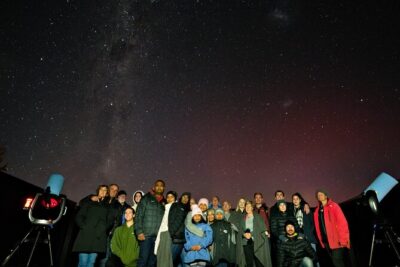
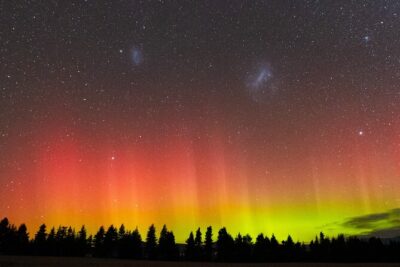
Silver River Stargazing Experience in Lake Tekapo
Read our review →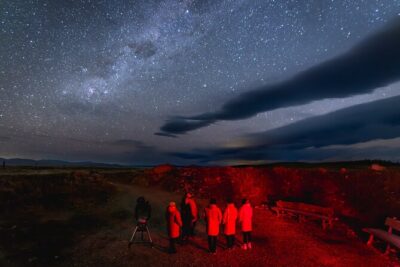
Stargazing Experience at Cowan’s Private Observatory
Read our review →Browse the lists this tour appears in