
REVIEW · LAKE TEKAPO
Lake Tekapo: Stargazing Experience
Lake Tekapo’s greatest show begins when the sun goes down. Away from the village lights, you’ll sit beneath the Aoraki Mackenzie Dark Sky Reserve and learn to pick out stars, planets, constellations, and distant objects through powerful telescopes. The sky is the star here, naturally, but the warm setup makes the experience far more comfortable than simply standing outside in the cold.
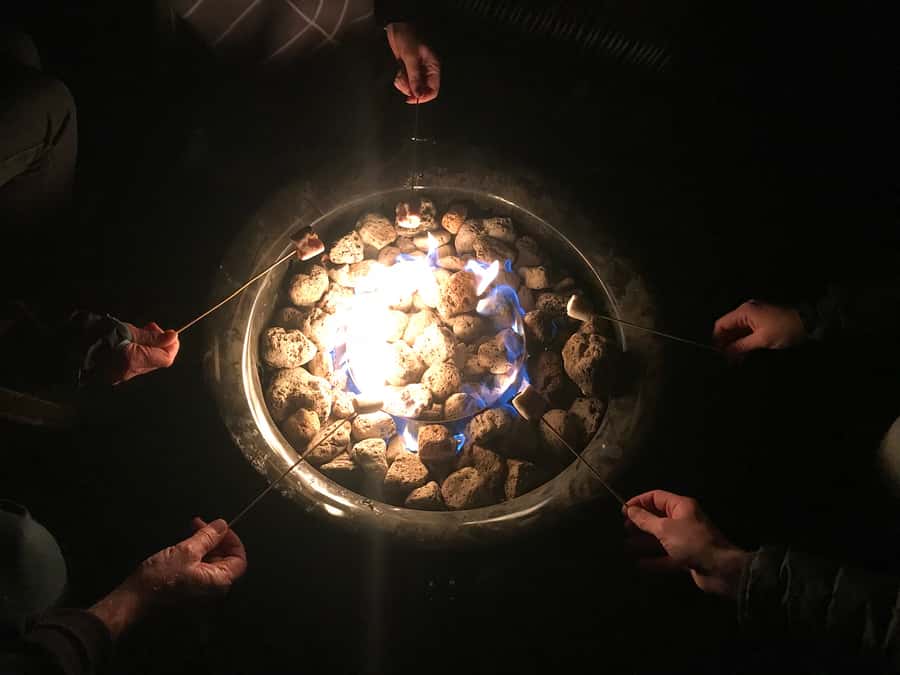
I like two things especially: the guides explain science in plain language, and the tour includes thoughtful comforts such as thick blankets, hot chocolate, and a fire bowl for marshmallow roasting. You also receive edited photos of the sky and a portrait beneath it, which gives you something useful to take home.
The main consideration is the weather. Clouds and wind can affect what you see, and Tekapo can feel bitterly cold at any time of year. If you walk from town, the final stretch is dark, so bring a torch and something reflective.
Key points to know before booking
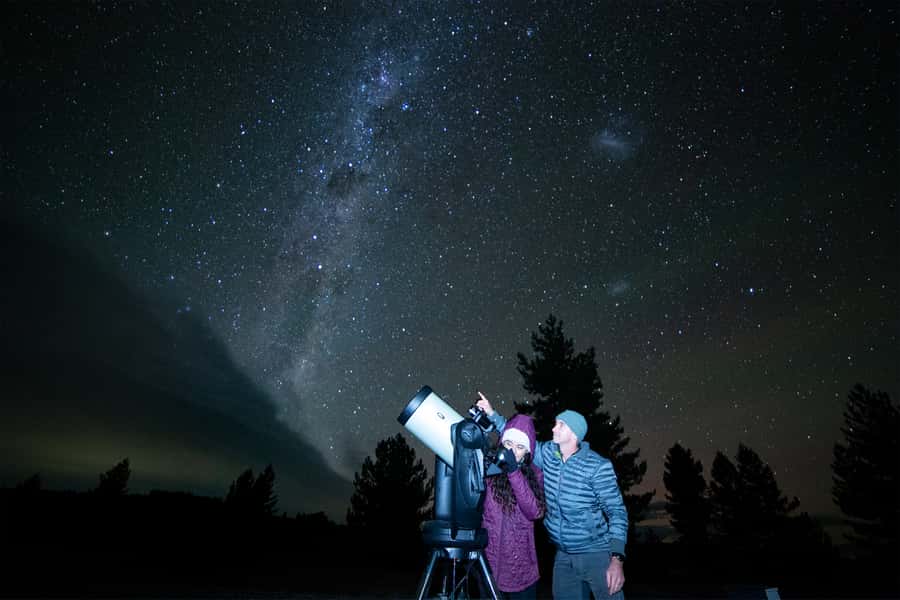
- See the Southern Sky through two telescopes: Use a 9.25-inch computerized telescope and a smart telescope to view objects that are hard to see with the naked eye.
- Expect a friendly, story-led lesson: Guides such as Mok, George, Estella, and Adrian explain astronomy, Greek mythology, and Māori sky stories.
- Warmth is built into the evening: Outdoor seats, pillows, mattresses, blankets, hot chocolate, and a fire bowl help take the edge off the cold.
- Receive personal night-sky photos: The team takes an edited portrait of you beneath the stars and shares images of objects viewed through the telescopes.
- The site is close to Lake Tekapo village: It is about a four-minute drive or a 20-minute walk, beside the Tekapo River.
- Allow for darkness and weather: Bring warm layers and comfortable shoes, and use a torch if walking to the site.
Why Lake Tekapo is such a good place for stargazing
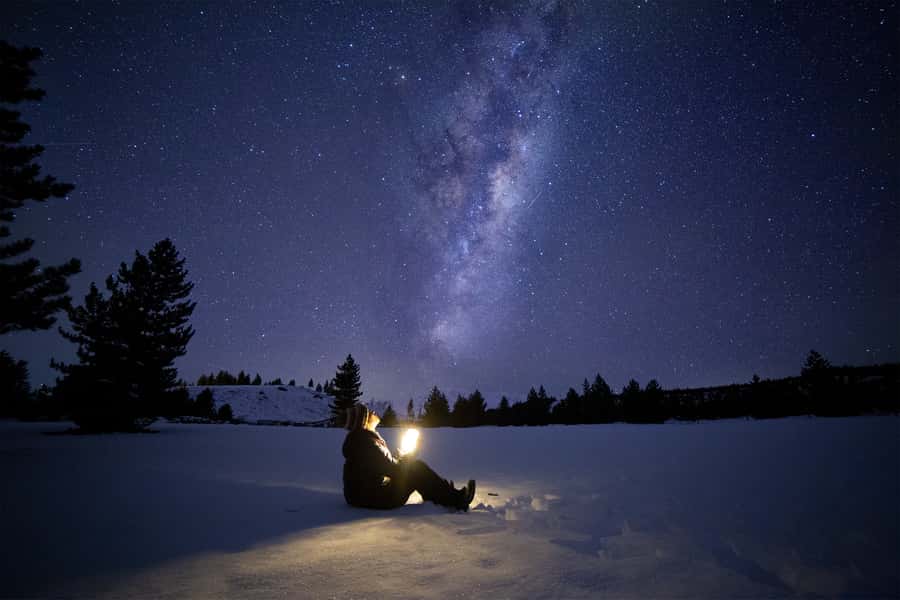
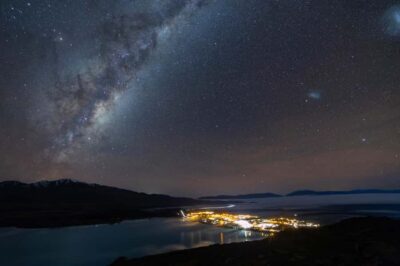
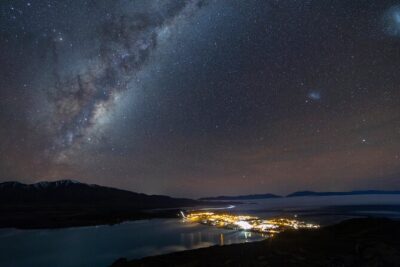
Lake Tekapo sits within the Aoraki Mackenzie International Dark Sky Reserve, an area valued for its unusually dark night skies. That matters because artificial light washes out faint stars and distant objects. At the viewing site beside the Tekapo River, you get away from the brighter lights of the village and give your eyes a better chance to adjust.
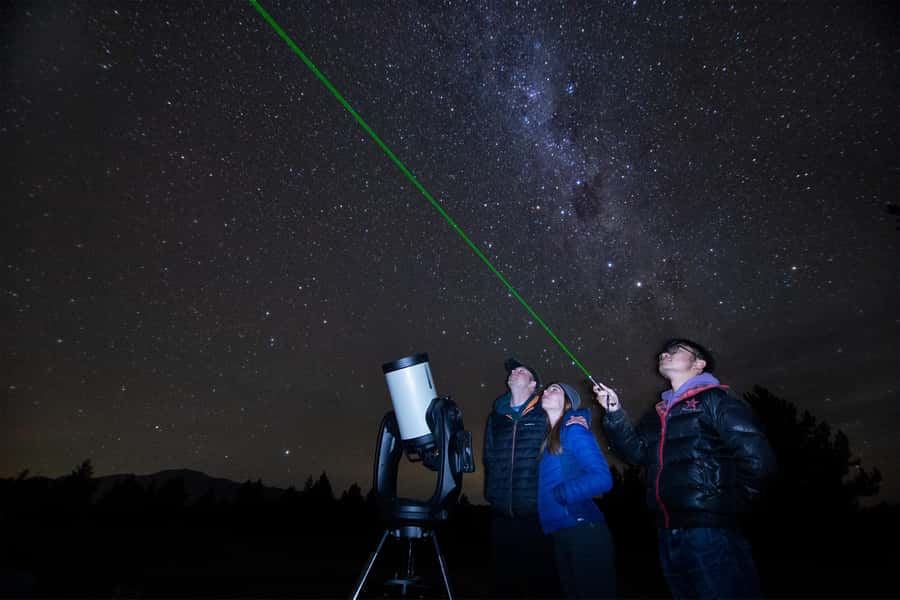
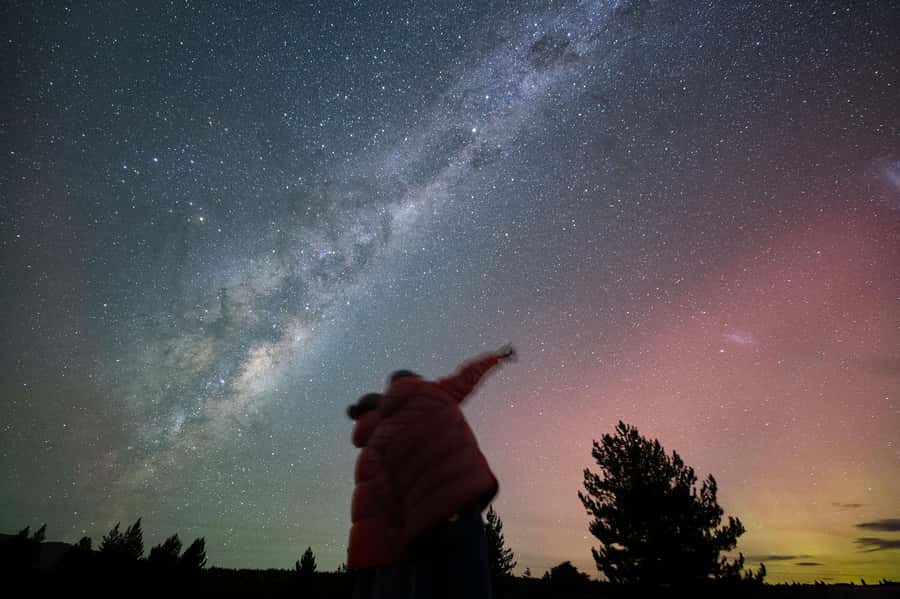
You do not need to know the difference between a nebula and a constellation before arriving. The guide begins with the sky above you, using explanations, stories, and a laser pointer to show where to look. You may learn how to recognize southern constellations, hear ancient Greek stories, and explore Māori legends connected with the stars.
This mix is one of the tour’s strengths. Astronomy can become dry when it turns into a list of names and distances. Here, the guide links the science with stories and simple explanations. George, Mok, Estella, and other guides have been praised for making the subject easy to follow, funny, and open to questions.
You should still keep your expectations sensible. The sky is not a cinema screen. Clouds, wind, moonlight, and seasonal conditions can change the show. On a clear night, the number of visible stars can be startling, but no guide can order up a perfect sky.
More Stargazing Tours in Lake Tekapo:
- Lake Tekapo: Alpine Stargazing Experience with a Guide
★ 4.5 · 626 reviews - Chameleon Stargazing Shared Tour
★ 5.0 · 181 reviews - Lake Tekapo: Mountaintop Stargazing at Mount John Summit
★ 4.5 · 176 reviews
From the village to the river-side viewing site
You make your own way to the meeting point because no shuttle is provided. From central Lake Tekapo, it takes roughly four minutes by car or around 20 minutes on foot. The short drive makes this easy to fit into an evening, especially if you are already staying in the village.
Walking requires more care than the distance suggests. The route becomes very dark, and one person found a head torch especially useful for the final section. Wear comfortable shoes, carry a torch, and add a reflective item if you are walking alone. These are small preparations, but they make the arrival less awkward.
The viewing area is beside the Tekapo River. Once you arrive, the setup is designed to get you comfortable quickly. You are shown to outdoor seats, with blankets, pillows, and other soft bedding arranged for looking upward. It is a more relaxed arrangement than a standard standing astronomy talk.
The seating also changes the pace of the evening. You can listen without constantly shifting your feet, and you are less likely to spend the entire tour thinking about the temperature. Still, do not treat the provided blankets as your only defense against the cold. Wear a proper warm jacket, several layers, and warm footwear.
The first lesson: constellations, stories, and the southern sky
The opening part usually focuses on the unaided sky. Your guide points out stars and constellations, explains what you are seeing, and gives you a way to understand the southern heavens. A laser pointer helps connect the spoken explanation with the actual points of light overhead.
This is useful even if you already use a stargazing app. A guide can adjust the explanation to the group, answer questions, and point out features you might miss while looking at a phone screen. You may also hear about navigation by the southern sky, along with Greek mythology and Māori stories.
The guides are a major part of the experience. Mok is described as warm, funny, and highly engaged, while George is often praised for clear explanations and a well-judged pace. Estella has been singled out for her enthusiasm and science communication. The exact guide depends on the session, but the format clearly favors conversation over a memorized speech.
I like the fact that the session is not only about collecting impressive telescope images. Learning which stars belong together gives the sky some order. After the tour, you may find yourself pointing out a constellation on another evening, which is a more lasting souvenir than a single photograph.
Two telescopes and the thrill of seeing distant objects
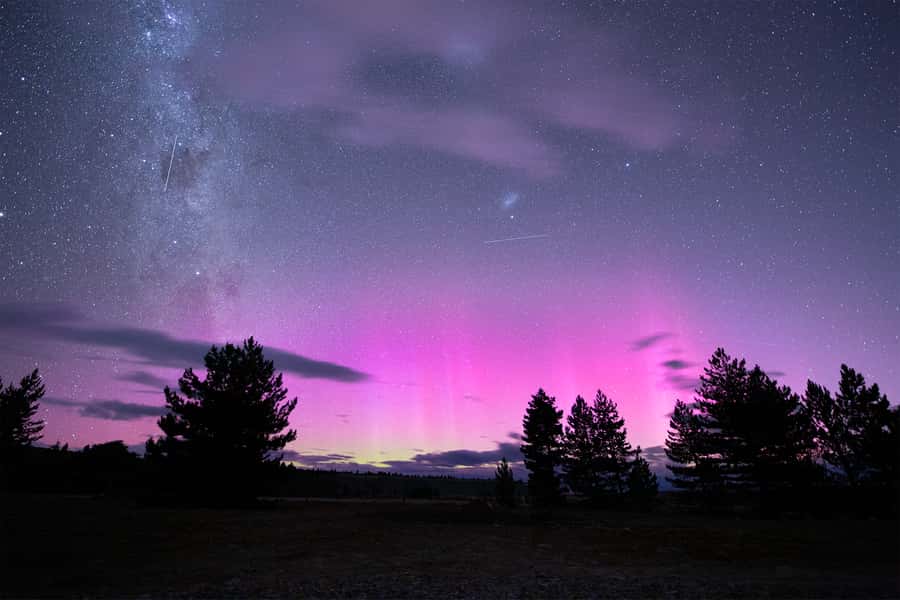
The central part of the experience uses a 9.25-inch computerized telescope and a smart telescope. The two systems give you different ways to view the night sky, and the guide explains what you are looking at before or after each viewing.
A large telescope gathers more light than your eyes can collect alone. That is why faint objects can appear where you previously saw only darkness. Depending on conditions and the objects selected that night, you might see planets, the moon, star clusters, or a nebula. One particularly memorable moment described by a participant was seeing a nebula through the telescope.
The smart telescope adds another tool to the session. It can help display faint deep-sky objects in a way that is easier to appreciate, while the main telescope gives you the pleasure of looking through an eyepiece. The important point is not simply that there are two machines. It is that you get more than one view of the sky.
You should be prepared for a little waiting while the equipment is adjusted and people take turns. That is normal for a shared astronomy experience. The 90-minute duration gives the guide time to discuss the sky, operate the telescopes, and answer questions without rushing every person through in seconds.
The view through a telescope may not look exactly like a polished space-agency image. Some objects are faint, small, or subtle. That is part of the appeal: you are seeing light from a real object far beyond Earth with your own eyes. The guide’s explanation helps turn a dim patch into something meaningful.
Same dark skies, a different way to see them:
- Mount John Observatory Stargazing Experience, Tekapo
★ 4.5 · 160 reviews - Tekapo Star Gazing Tour – Soak in the Stars
★ 4.5 · 109 reviews - Silver River Stargazing Experience in Lake Tekapo
★ 4.5 · 106 reviews - Stargazing Experience at Cowan’s Private Observatory
★ 4.0 · 85 reviews
Hot chocolate, blankets, and a small fire at the end
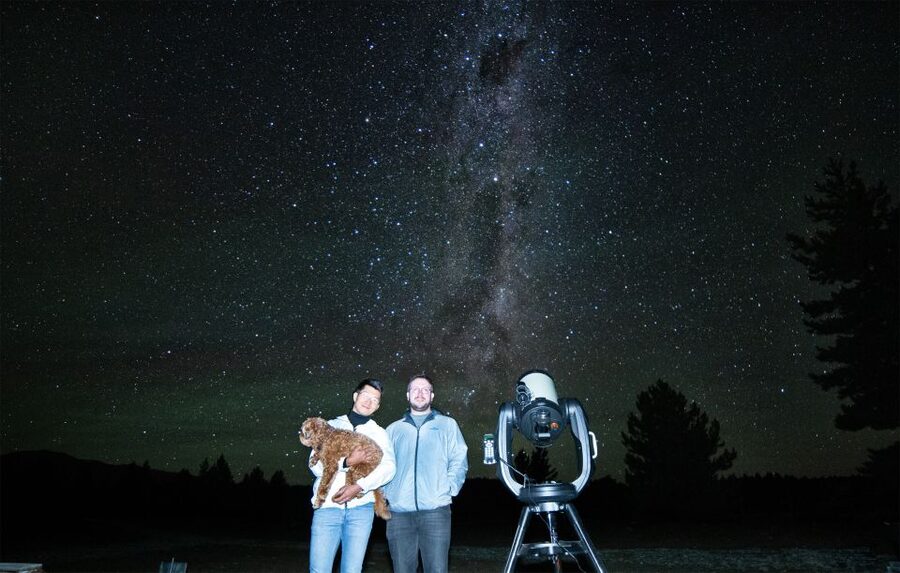
Tekapo is cold after dark, even in summer. The blankets and outdoor seating are not decorative extras. They can make the difference between paying attention to the guide and wishing the tour would end.
Hot chocolate is served during the experience, with lactose-free and gluten-free options available if requested. Several people have appreciated receiving it in a reusable or keepsake cup, though you should confirm the current serving details when booking if that matters to you. The drink is a simple touch, but it works well on a cold night.
The final fire bowl gives the evening a sociable finish. You can roast marshmallows while the guide answers more questions and the group warms up. This is not a wilderness campfire or a long meal, but it is a pleasant way to end an astronomy lesson.
Families and couples will likely enjoy this part, and solo visitors can join the informal conversation easily. The fire also softens the transition back to ordinary holiday mode. You have spent the evening discussing stars and galaxies, then finish with a very earthly sticky marshmallow.
The photos are more useful than a quick phone snapshot
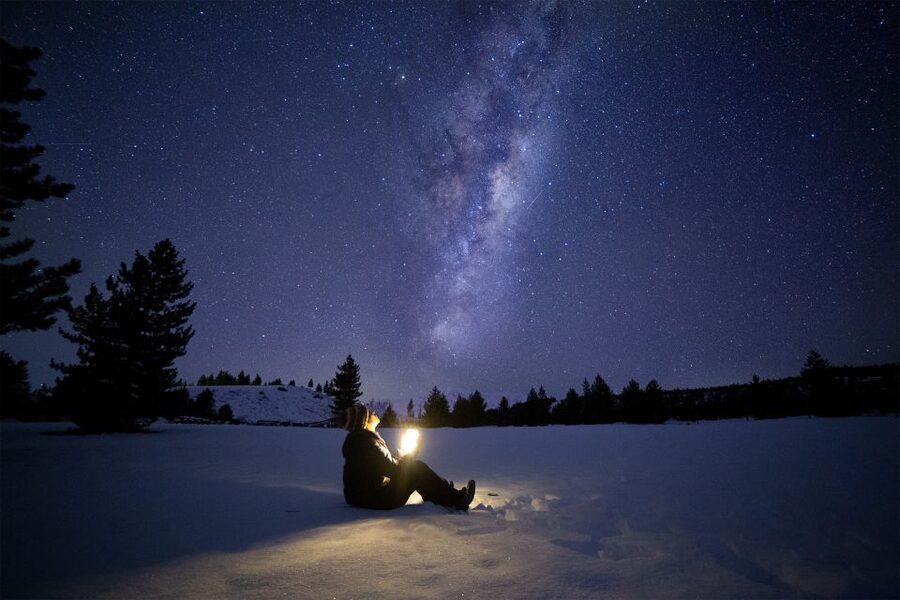
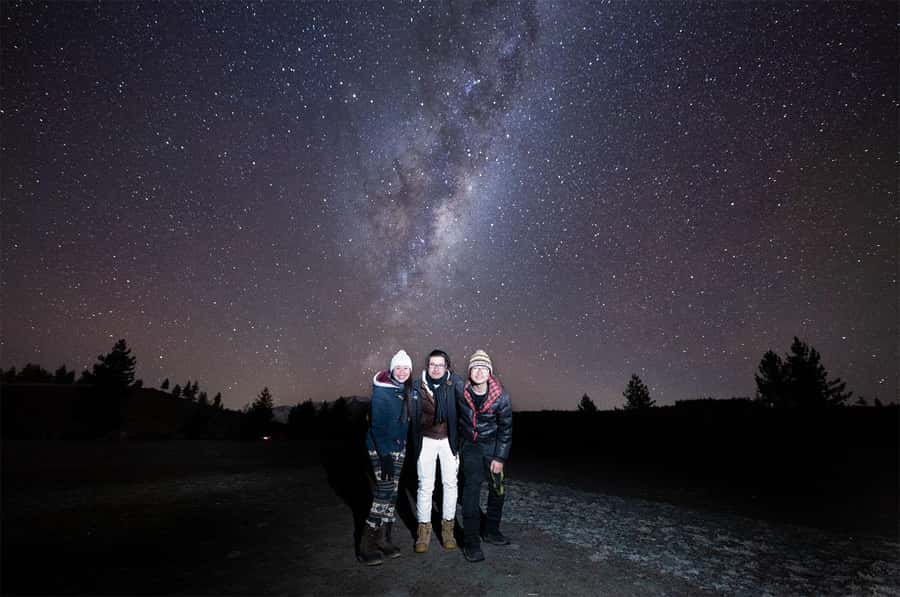
The team provides a photography service during the experience. Your guide takes an individual photo of you with the night sky behind you, and edited images are sent afterward. You also receive photos of objects seen through the telescopes.
This is valuable because ordinary phone cameras often struggle in very dark conditions. A long-exposure portrait can show both you and the stars, rather than producing a black background or a blurry figure. It also means you can put your phone away for much of the evening and let the guide handle the record of the visit.
The photos are not a replacement for seeing the sky in person. They are a reminder of the evening and a useful way to share it with family or friends. Some sessions also include a small souvenir light or similar token, but you should not book solely for that extra.
What the 90-minute schedule feels like
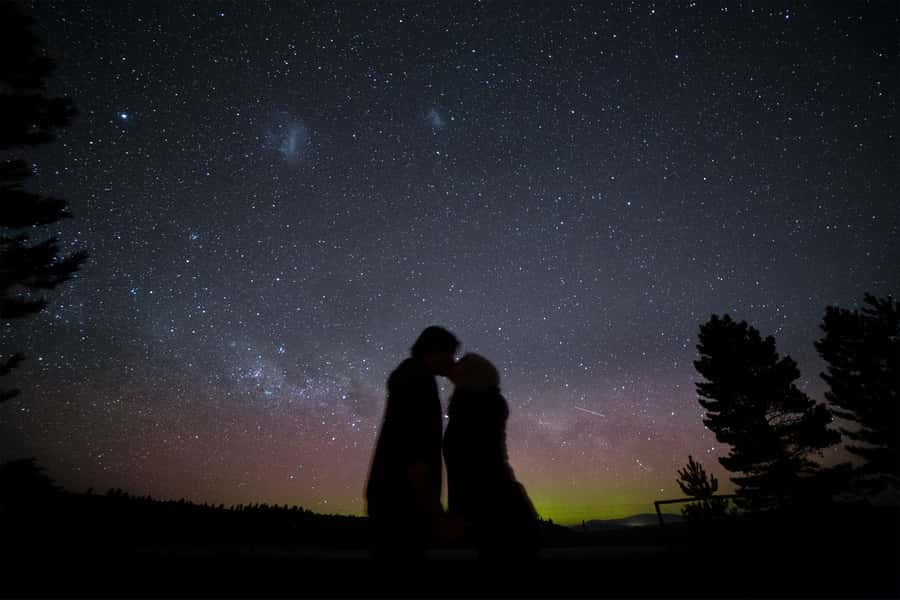
Ninety minutes is a sensible length for this activity. It is long enough to cover the naked-eye sky, telescope viewing, questions, photography, and the fire bowl without turning into a late-night lecture.
The pacing may look something like this:
- Arrive at the river-side site and settle into a seat.
- Get oriented to the night sky through the guide’s explanation and laser pointer.
- Hear astronomy facts, constellation stories, Greek mythology, and Māori legends.
- Take turns viewing selected objects through the computerized and smart telescopes.
- Have your night-sky portrait taken and receive information about the images.
- Warm up with hot chocolate and finish with marshmallow roasting around the fire bowl.
The exact order can shift with the weather and the sky. If clouds move in, the guide may spend more time on stories and explanation, or wait for clearer gaps. One session continued after clouds parted, while another offered a choice when conditions looked uncertain. It is sensible to check messages and weather updates before setting out.
Late-night timing also needs attention. If your selected tour begins after midnight, book it under the following calendar date. For example, a 12:45 AM session after December 31 is listed as January 1. This is easy to miss when planning around New Year’s Eve or another late night.
Who will enjoy this experience most
This is a strong choice if you want a guided introduction to astronomy rather than a silent lookout. You will get the most from it if you enjoy asking questions, hearing stories, and taking turns at shared equipment.
It suits families, couples, solo visitors, and small groups. The seating and warm drinks make it easier for people who might not enjoy standing outside for an hour and a half. Children can appreciate the fire and marshmallows, while adults may be more interested in the telescope views and southern-sky orientation.
You do not need advanced astronomy knowledge. The guides explain the subject at an accessible level, and the tone is intended to be entertaining as well as informative. If you already own serious astronomy equipment, the experience may feel introductory, but the dark setting and guided access to deep-sky objects still offer a good reason to attend.
This may be less suitable if you want complete privacy, a private guide, or a guaranteed clear sky. It is a group experience, and telescope viewing requires patience. The activity is wheelchair accessible, which is useful for many visitors, though you should still confirm any personal access needs before arrival.
Is $71 a fair price?
At $71 per person, this is not the cheapest way to spend an evening in Tekapo. You can step outside and look at the stars for free. The price makes more sense when you count what is added: an astronomy guide, access to two telescope systems, seating, blankets, hot chocolate, marshmallows, edited photos, and a portrait beneath the sky.
The strongest value comes from the guide and the equipment. Without help, you may see a beautiful sky but miss the objects that make the region special. The 9.25-inch telescope and smart telescope give you a chance to see more than you could with your eyes alone, while the explanations give context to each view.
The photos add practical value too. A phone snapshot taken in the dark may not preserve the memory well. Receiving a finished image and telescope photographs means you take away something tangible.
I would call the price fair for a first serious stargazing experience, especially if the sky is clear. If weather is your main concern, book with the flexible cancellation terms in mind: cancellation is allowed up to 24 hours before the activity for a full refund. That does not guarantee a perfect night, but it reduces the risk of committing to a weather-sensitive outing.
What to wear and bring
Dress as if you will spend the evening outdoors in winter, even if the calendar says summer. Lake Tekapo can become very cold at night, and wind makes the temperature feel sharper.
Bring:
- A warm jacket and extra layers
- Comfortable closed shoes
- A torch or head torch if walking
- Something reflective if walking from town alone
- Any requested dietary information for hot chocolate
The blankets help, but they should supplement your clothing, not replace it. Comfortable shoes matter because you still need to reach the site and move between the seating and telescope areas.
Should you book the Lake Tekapo Stargazing Experience?
I would book it if you want more than a pretty view of the stars. The combination of a dark river-side setting, patient guides, two telescope systems, personal photos, and a warm marshmallow finish gives the evening a clear sense of purpose.
Book it especially if you are visiting Lake Tekapo once, have limited astronomy experience, or want an activity that works for a mixed-age group. Choose a night when you can stay flexible around the weather, dress warmly, and allow extra time if you plan to walk.
Skip it if you dislike group activities, cannot tolerate cold, or need a guaranteed clear sky. For everyone else, $71 buys a well-planned introduction to the southern night sky and a much better chance of knowing what you are looking at.
FAQ
How long does the Lake Tekapo stargazing experience last?
The activity lasts 90 minutes.
How much does the experience cost?
The listed price is $71 per person.
Where does the stargazing take place?
The site is next to the Tekapo River, about a four-minute drive from Lake Tekapo village center or a 20-minute walk.
Is transport provided to the meeting point?
No shuttle service is provided. You need to drive or walk to the meeting point yourself.
What telescopes will I use?
You will have access to a 9.25-inch computerized telescope and a smart telescope.
What might I see through the telescopes?
The experience includes views of deep-sky objects. Depending on the conditions and the night, you might see the moon, planets, nebulae, stars, or other objects selected by the guide.
What languages are available?
Live guiding is available in English and Chinese.
Is the experience wheelchair accessible?
Yes, the activity is listed as wheelchair accessible.
What should I wear?
Wear warm clothing and comfortable shoes. Tekapo can be very cold at night in every season, so bring extra layers.
Are hot chocolate and marshmallows included?
Yes. Hot chocolate, a fire bowl, and marshmallows are included. Lactose-free and gluten-free hot chocolate options are available on request.
Are photos included?
Yes. The team takes edited photos, including individual images with the night sky, and provides photos of objects viewed through the telescopes.
What happens if I book a tour after midnight?
A tour after midnight must be booked under the following calendar day. For example, a 12:45 AM session after December 31 is treated as a January 1 tour.
Can I cancel the booking?
You can cancel up to 24 hours in advance for a full refund. You can also reserve now and pay later.
Just added around Lake Tekapo
- Lake Tekapo Ultimate Stargazing Experience★ 5.0 · 3 reviews
- Virtual Stargazing & Astronomy Experience in Lake Tekapo★ 3.0 · 2 reviews
- Lake Tekapo: Virtual Stargazing and Astronomy Experience★ 4.5 · 8 reviews
- Lake Tekapo: Ultimate Stargazing Experience★ 4.3 · 12 reviews
- Lake Tekapo: 1.5-Hour Hot Pools & Stargazing Experience★ 4.0 · 45 reviews
- Lake Tekapo: Indoor Māori Cultural Astronomy Experience★ 4.5 · 43 reviews
- Lake Tekapo: Stargazing Experience at Cowan’s Observatory★ 4.7 · 52 reviews
- Dark Sky Indoor Maori Cultural Astronomy Experience★ 4.5 · 70 reviews
Lake Tekapo Stargazing Tours, compared.
Mount John Observatory Stargazing Experience, Tekapo
Read our review →
Silver River Stargazing Experience in Lake Tekapo
Read our review →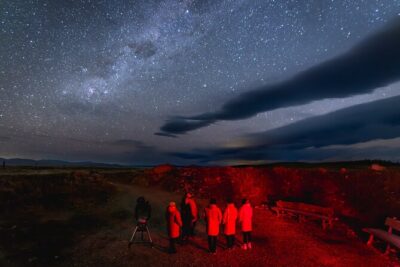
Stargazing Experience at Cowan’s Private Observatory
Read our review →
Dark Sky Indoor Maori Cultural Astronomy Experience
Read our review →Browse the lists this tour appears in