
REVIEW · MOUNT TEIDE
Teide National Park: Guided Large Telescope Stargazing Tour
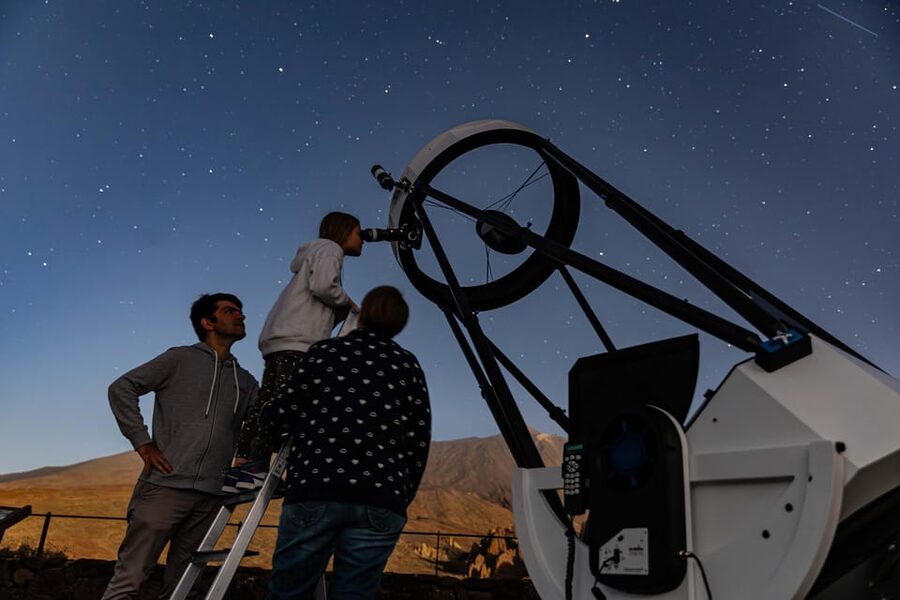
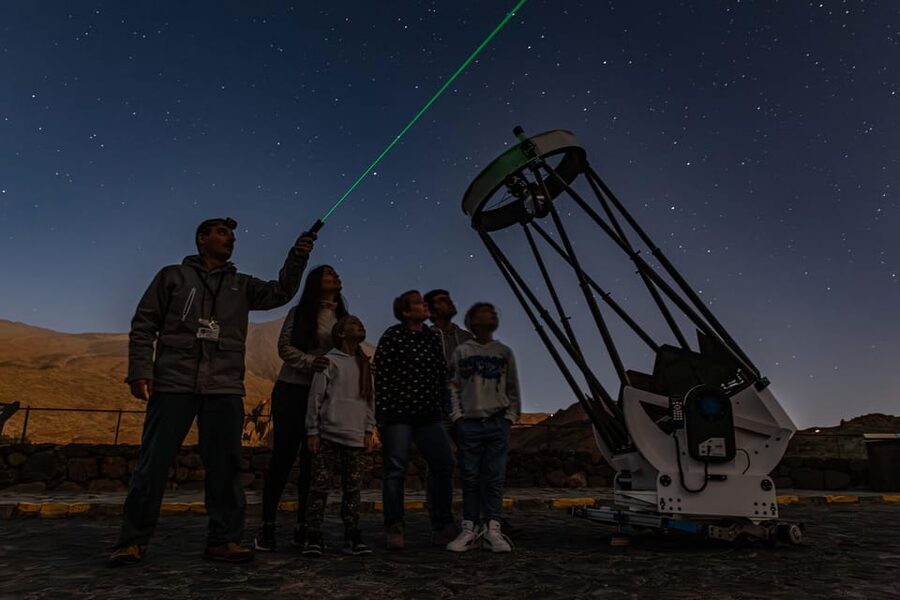
The star of this three-hour night tour is a 32-inch computerized Dobsonian telescope, said to be the largest private telescope in the Canary Islands. Under Teide’s dark skies, you may look at galaxies, nebulae, star clusters, planets, and the remains of exploded stars rather than simply pointing out constellations.
I like the small groups, capped at 12, because everyone gets real time at the eyepiece. I also like the mix of live viewing and photographs made with a cooled astro-camera, so you leave with more than a cold neck and a vague memory of Saturn. The main thing to consider is the weather: wind can stop telescope viewing, and the meeting place may change on the day.
- A huge 32-inch telescope: Its large mirror gathers far more light than an ordinary backyard scope, revealing faint galaxies, nebulae, and supernova remnants.
- Small-group attention: Groups of up to 12 leave room for questions and a fair turn at the eyepiece.
- Night Vision option: A modified 12-inch telescope amplifies available light and gives you a different, real-time way to see the sky.
- A guide who teaches, not just points: Alessandro explains difficult ideas in plain language, with enough detail for serious amateur astronomers.
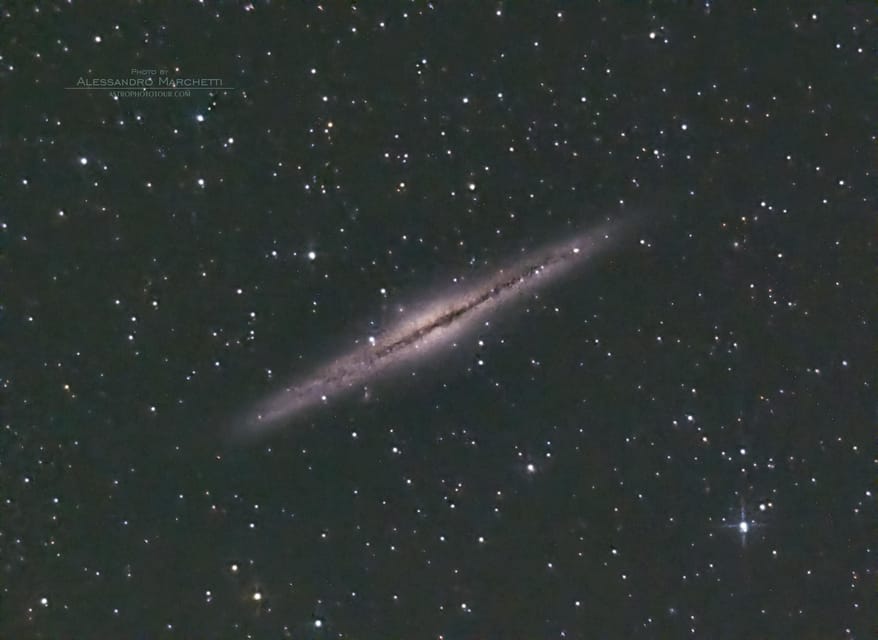
- Useful keepsakes: A cooled astro-camera captures images during the evening, and additional photographs from earlier sessions help show what the telescope can reveal.
- Mountain conditions matter: Bring warm layers, water, and snacks. The exact meeting point depends on wind and is sent by WhatsApp on the day.
Why Teide is such a good place to watch the sky
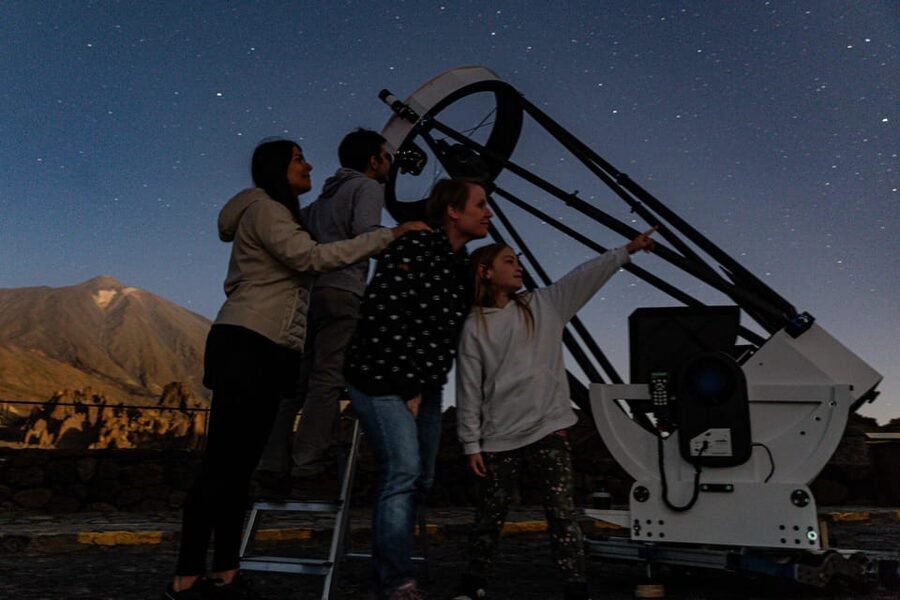
Teide National Park is a powerful setting for astronomy. You are high in the mountains, away from the bright streets and hotel signs of the coast, with a broad, dark sky overhead. The setting matters because faint objects need darkness, steady air, and a clear view.
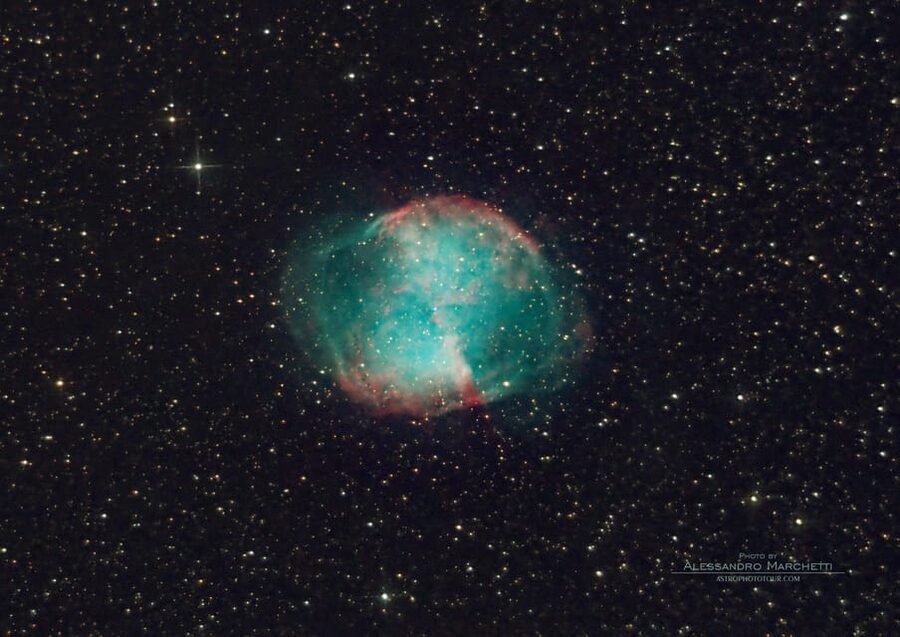
This tour is not simply a short lesson in constellations. The goal is to look at actual deep-sky objects through serious equipment. Depending on the season and conditions, you might see galaxies, protostellar nebulae, planetary nebulae, star clusters, planets, or the remains of a supernova.
The night begins after sunset, so the start time changes through the year. That makes sense, but it means you cannot assume the same departure hour in January and July. The provider confirms the time and GPS meeting point by WhatsApp at about 9:30 in the morning on the day of the tour.
Alessandro and the human side of the telescope
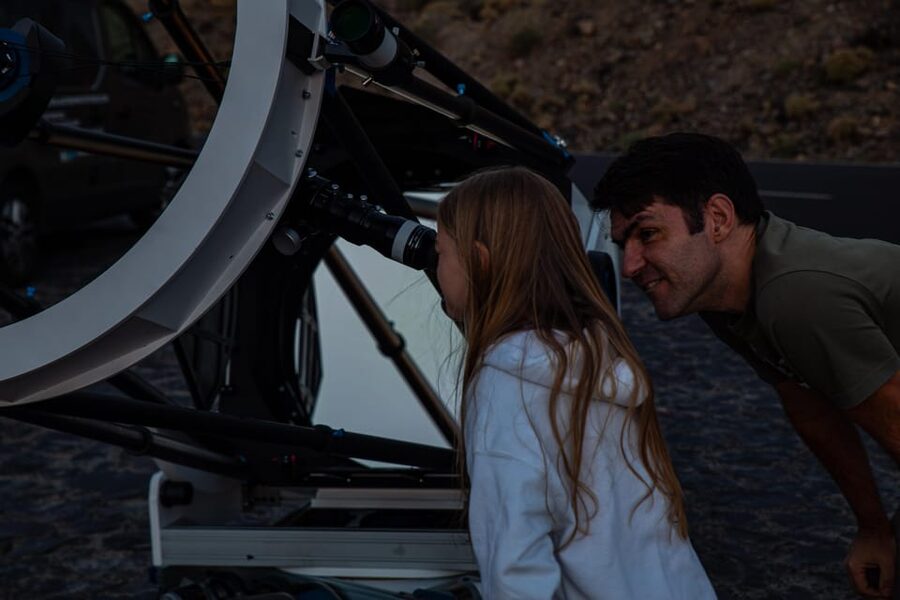
A large telescope alone does not make a good evening. You need someone who can aim it, explain what you are seeing, and adjust the level for a mixed group. Alessandro is the central personality here, and the strongest praise for the experience focuses on his patience, enthusiasm, and ability to explain astronomy without making beginners feel lost.
He can take you from the origins of the universe and the life cycle of stars to the practical question of what is glowing in the eyepiece right now. His explanations work for curious first-timers, while amateur astronomers can ask about astrophotography, telescope design, and advanced astronomy.
That mix is one of the tour’s best features. A family can learn why a star cluster looks different from a nebula, while an experienced sky watcher can ask more technical questions. One family even needed some translation time for children, and Alessandro reportedly slowed down rather than rushing ahead.
Antonella may also help with the evening. The experience is clearly personal rather than run like a large commercial bus excursion. That can make the night feel more like visiting an enthusiastic astronomer than checking off a standard attraction.
More Mount Teide Stargazing Tours:
- Tenerife: Teide National Park Sunset & Stargazing Tour
★ 4.2 · 3,812 reviews - Tenerife: Sunset and Stargazing at Teide National Park
★ 4.7 · 2,826 reviews - Teide National Park Sunset & Stargazing with Dinner (Star Safari)
★ 5.0 · 2,601 reviews
What happens during the three-hour session
The exact order depends on the sky and the objects visible that night, but you can expect a mix of orientation, telescope viewing, explanation, and photography.
First, the guide gets you familiar with the night sky. This may include visible constellations, the direction of notable objects, and a simple explanation of how the sky changes through the seasons. That introduction is useful because it gives you a map before the telescope begins showing you distant objects.
Next comes the main event: the 32-inch computerized Dobsonian telescope. The telescope was designed and built by Alessandro, and one description places its mirror at roughly one metre across. The large mirror gathers substantial light, which is especially important for faint objects such as galaxies and nebulae.
You will take turns at the eyepiece while the guide explains what you are seeing. Since the group is limited to 12, you should have a reasonable chance to look more than once and ask questions. One practical benefit of a small group is that the guide can help children and first-time telescope users position themselves properly instead of waving them aside for the next person.
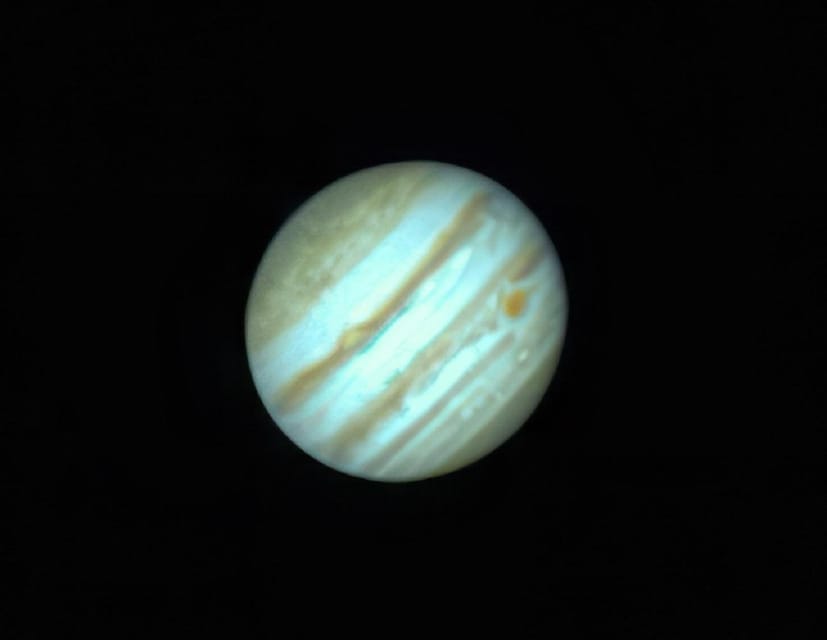
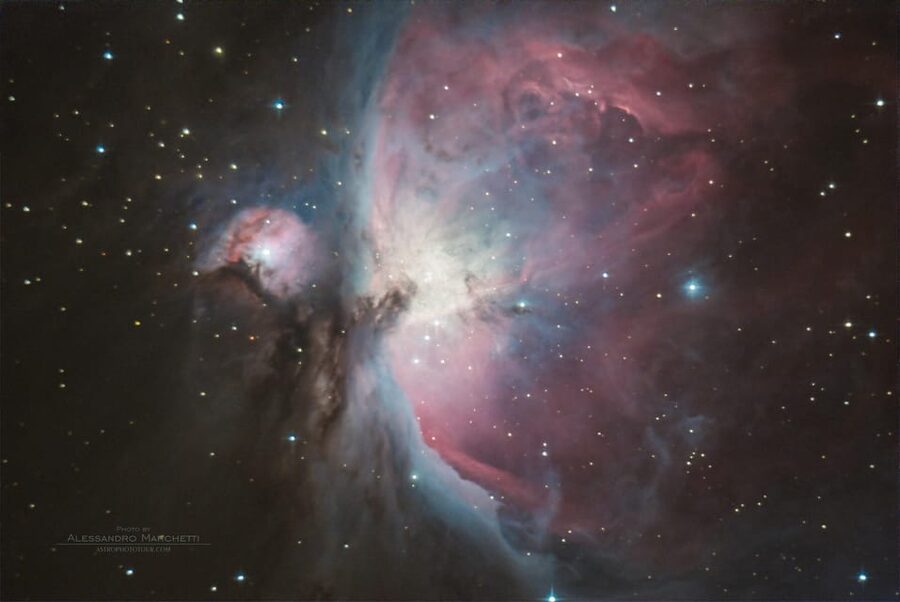
The objects change with the calendar. At different times, people have seen Saturn and its major moons, Jupiter, Mars, Orion, star clusters, the Whirlpool Galaxy and its companion, nebulae, and the remains of an exploded star. You should not book expecting one fixed list. Astronomy depends on the season, the time of night, and the weather.
The viewing is live, through the telescope. It is not the same as looking at a glossy observatory photograph. Some objects appear as subtle gray shapes or small points with structure that takes a moment for your eyes to recognize. The large aperture helps, but the guide’s explanation is still important. He gives your eyes a reason to keep looking.
The Night Vision Voyage is a different kind of astronomy
The 12-inch Night Vision telescope offers an alternative to the main 32-inch experience. Its light-amplifying system changes the way you see the sky, making it possible to observe objects in real time with a different level of brightness and immediacy.
Do not choose it simply because 12 inches sounds close to 32 inches. The two setups serve different purposes. The 32-inch scope is the headline attraction and gathers more light through its much larger mirror. The Night Vision option is smaller but uses modified equipment to create a distinctive observational experience.
This choice could suit you if you have already used conventional telescopes or want something less typical. It may also appeal to anyone who likes seeing the effect of the technology as it happens, rather than only studying a polished image afterward.
The provider also offers a private version called the Exclusive Starlight Experience. That uses the same impressive opportunity but reserves the setting for your couple, family, or group of friends. It costs more than the listed $58 small-group price, though the private format may be worth considering if your group has young children, different levels of interest, or a long list of questions.
The photographs are more than a souvenir
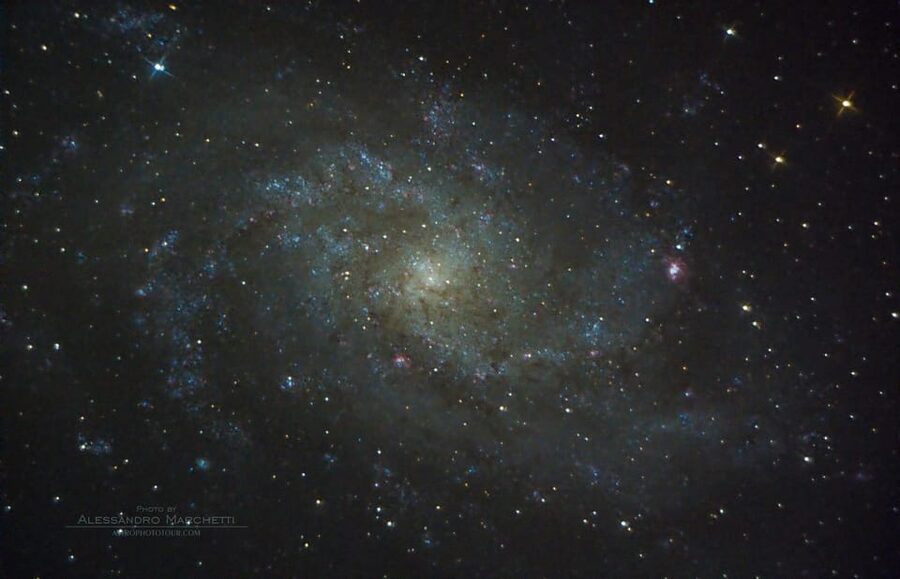
Each experience includes a dedicated cooled astro-camera and photographs. This matters because deep-sky photography can show color and detail that your eye may not easily see through the eyepiece.
The package includes photographs taken during that evening, along with images from earlier sessions. That gives you a record of the night and a better sense of the telescope’s full reach. A photo taken with the telescope can show a galaxy or nebula in a way that is hard to capture with a phone.
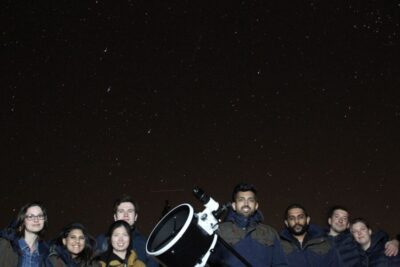
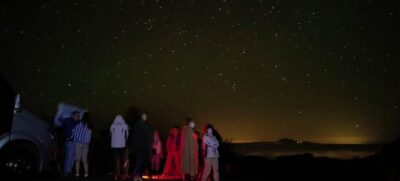
There is also a final photo opportunity with the night sky. One image described by a participant used a long exposure, with people holding still while the camera gathered light. The result may not be a crisp portrait, but that is part of the charm. Expect a memorable astronomy image, not a studio headshot.
I would treat the photographs as a valuable extra, not the main reason to book. The live view, the scale of the telescope, and the conversation with Alessandro are what make the experience distinctive. The images help you remember what you saw and share it with friends who were not there.
More Observatory and Telescope Tours in Tenerife:
- Teide by Night: Sunset & Stargazing with Telescopes Experience
★ 4.5 · 1,492 reviews - Tenerife: Mount Teide Observatory Astronomical Tour
★ 4.4 · 126 reviews - Astronomic Small-Group Tour on Tenerife Teide Observatory
★ 4.0 · 34 reviews - Magic Stargazing & Sunset in Teide with Dinner + Telescopes
★ 3.5 · 20 reviews
Cold, wind, and the practical side of mountain stargazing
Teide can become very cold after dark, including in seasons when Tenerife’s coast feels warm. Bring a proper warm layer, long trousers, and comfortable closed shoes. Shorts and open-toed shoes are not allowed, and that rule makes good sense on a cold mountain night.
Take water and snacks. Food and drinks are not included, although Alessandro and Antonella have sometimes offered hot tea, biscuits, or spare coats. Treat those touches as possible kindnesses, not guaranteed parts of the package.
Do not bring a flashlight. Bright light makes it harder for everyone’s eyes to adjust to darkness. A careless beam can also spoil another person’s view at the eyepiece.
There is no hotel pickup or drop-off. You must reach the meeting point yourself, and the location can change according to wind direction because a large telescope needs a sheltered area. You receive the GPS coordinates by WhatsApp on the day, so keep your phone charged and check messages in the morning.
That moving meeting point is a small inconvenience, but it is tied to the equipment. A large telescope needs stable conditions. The provider may postpone the experience to the next day if the weather will not allow observation, or offer a refund when conditions are unsuitable.
Is $58 a fair price?
At $58 per person, this is not the cheapest way to spend an evening in Tenerife. You are also paying for your own transport, and there is no meal included. Still, the price compares well with the equipment and format: a small group, a three-hour session, a guide, a large private telescope, a cooled camera, and photographs.
The value is strongest if you have a real interest in astronomy or want one memorable night away from ordinary sightseeing. A large bus-based stargazing outing may suit you better if you want a broad, simple introduction with less personal attention. Here, the point is quality time with the telescope and the chance to ask questions.
The private option is a different value decision. Couples and families who want a quiet, personal session may find the extra cost worthwhile. If you are happy sharing the evening and listening to other people’s questions, the standard small group should offer better value.
Who will enjoy this most?
This suits adults and children aged five and over who can stay outside for several hours and tolerate cold mountain conditions. It is especially good for families because the guide takes time to help children see and understand the objects rather than treating them as an afterthought.
It also suits amateur astronomers. The 32-inch scope offers views that smaller personal telescopes cannot match, and the guide can discuss astrophotography and more advanced ideas without losing beginners.
You may enjoy it less if your group has little interest in space or expects a quick, highly visual show. One participant found the presentation so detailed that a less interested partner might have preferred a shorter version. That is useful advice: the tour can become quite educational, and the guide’s enthusiasm is a major part of the evening.
Weather is the one real wildcard
Clear skies are never guaranteed. Wind can be just as serious as cloud because it can make a large telescope unusable. On one occasion, strong wind stopped telescope viewing before the planned program was complete.
The good news is that the evening does not necessarily end at once. If the telescope cannot be used, the guide may show photographs, point out constellations, and identify objects visible to the naked eye. You can also choose whether to continue, depending on the conditions and the group.
That said, book with flexible expectations. You might see Saturn, galaxies, and nebulae in one season, while another night brings a shorter session and more naked-eye astronomy. The provider can postpone the tour or refund you if conditions are not suitable, and free cancellation is available up to 24 hours before the activity.
Should you book this Teide stargazing tour?
I would book it if you want a small, serious, friendly astronomy experience rather than a quick look at a few stars. The large 32-inch telescope, Alessandro’s clear teaching style, and the included photographs give this tour substance for the price.
Dress more warmly than you think you need, keep your schedule flexible, and check WhatsApp for the meeting coordinates. Choose the Night Vision version if you want a different technical experience, or the private tour if your group values time alone with the guide.
Skip it if your party is not interested in astronomy, dislikes cold evenings, or needs fixed transport from a hotel. For everyone else, this is one of Tenerife’s more memorable ways to spend three hours, with real equipment, personal instruction, and a sky far removed from the resort strip.
FAQ
How long does the stargazing tour last?
The experience lasts three hours.
How much does the tour cost?
The listed price is $58 per person.
What telescope will I use?
The standard experience uses a computerized 32-inch Dobsonian telescope. The Night Vision Voyage uses a modified 12-inch telescope with a Night Vision system.
How large can the small group be?
Small groups can include up to 12 people. A private option is also available for couples, families, or groups of friends.
Who leads the experience?
Alessandro is the main guide, and Antonella may also assist. The tour is offered in English, Spanish, and Italian.
What happens if the weather is bad?
The activity may be postponed to the next day, or you may receive a refund if conditions are not suitable for observation.
Where is the meeting point?
The exact meeting point depends on wind direction and is sent by WhatsApp on the day of the tour. The time is also confirmed that day and changes with sunset times.
Is hotel pickup included?
No. Hotel pickup and drop-off are not included, so you must arrange your own transport to the GPS meeting point.
What should I bring?
Bring warm clothing, water, snacks, and comfortable clothes. Do not wear shorts or open-toed shoes, and do not bring a flashlight.
More National Park Stargazing in Tenerife
- Teide National Park: Sunset & Stargazing Safari with Dinner
★ 4.6 · 2,115 reviews - Tenerife. Stargazing in Teide National Park
★ 4.9 · 319 reviews - Teide National Park: Stargazing Experience
★ 4.7 · 220 reviews - Sunset and Stars at Teide National Park
★ 4.5 · 168 reviews
Just added around Tenerife
- Tenerife Exclusive & Private Gastronomic, Sunset-Stargazing★ 5.0 · 3 reviews
- Small Group Teide Stargazing Tour with Picnic at Sunset★ 5.0 · 3 reviews
- TEIDE NIGHT Astronomy Stargazing Bus Tour, Meal & Drinks included!★ 4.0 · 15 reviews
- “Stargate” Tenerife stargazing★ 5.0 · 13 reviews
- Stargazing Tour in Tenerife★ 3.0 · 2 reviews
- Polestar SELF-DRIVE Sunset Stars Tour in Teide National Park★ 5.0 · 19 reviews
- Private stargazing trip in Teide★ 5.0 · 3 reviews
- Stargazing Experience with Dinner & Drinks★ 4.0 · 23 reviews
Mount Teide Stargazing Tours, compared.
Teide National Park Sunset & Stargazing with Dinner (Star Safari)
Read our review →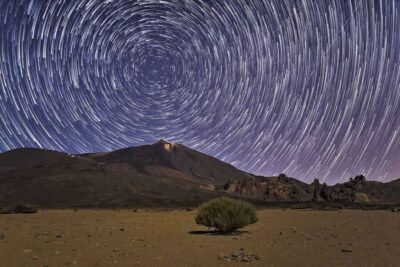
Teide National Park: Sunset & Stargazing Safari with Dinner
Read our review →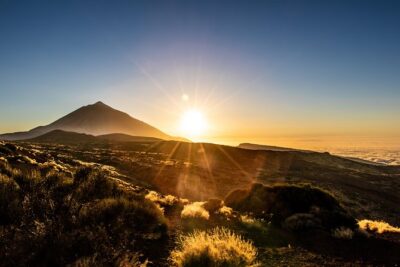
Teide by Night: Sunset & Stargazing with Telescopes Experience
Read our review →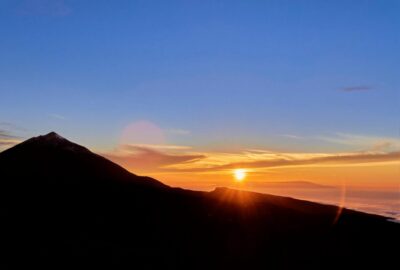
Guided Sunset & Stargazing Tour by Night with Dinner
Read our review →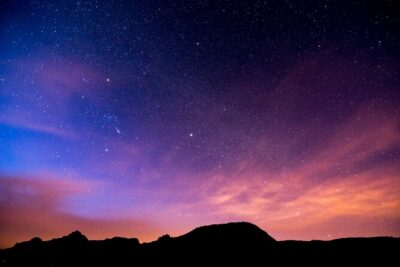
Roque de los Muchachos Stargazing Tour with Wine
Read our review →Browse the lists this tour appears in