
REVIEW · MOUNT TEIDE
Tenerife. Stargazing in Teide National Park
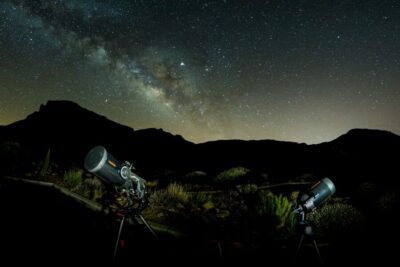
Teide National Park is one of Europe’s finest places to look up after dark, and this two-hour session makes the most of its clear, high-altitude sky. Roberto guides you through constellations, planets, galaxies, and star clusters with a high-end telescope, then explains how the sky moves and why ancient people gave its patterns meaning.
I especially like the small group format, which gives you time at the telescope instead of a rushed glance. I also like the thoughtful extras: free photographs under the stars, water, chocolate, and blankets when the mountain air turns sharp. The main drawback is the cold. Even in warmer months, Teide after sunset can feel far colder than Tenerife’s coast.
Key points at a glance
- Meet 40 minutes after sunset: Find the guide beside the Ermita de las Nieves in Teide National Park.
- Roberto leads in English and Spanish: His explanations suit beginners, families, and people already interested in astronomy.
- See more than bright stars: Depending on the season and conditions, you may view planets, nebulae, galaxies, clusters, double stars, and the Moon.
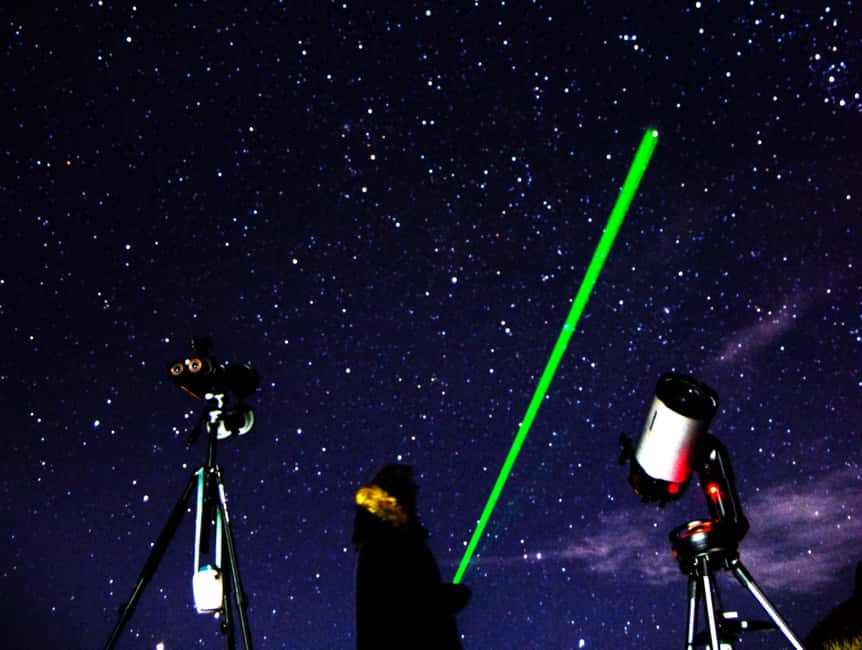
- A proper telescope matters: The equipment includes a high-end telescope, plus laser-guided explanations of the sky.
- Small groups keep it personal: Groups are generally around 10 to 12 people, with time for questions and telescope viewing.
- Bring serious warm clothing: Several visits were made at around 3 degrees Celsius with strong wind, and blankets do not replace a good coat.
Why Teide is such a good place for stargazing
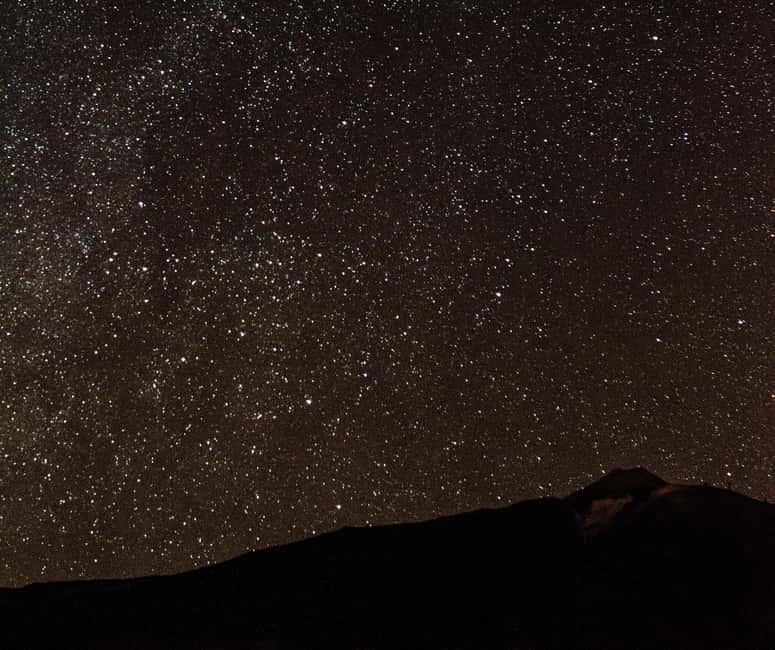
The appeal begins before the telescope is even pointed upward. Teide National Park sits high above the coast, and the meeting point is around 2,000 meters above sea level according to the experience details provided by visitors. That height and the relatively low light around the viewing area can make a striking difference.
From Tenerife’s resort towns, you may see a few bright stars. At Teide, the sky can look much fuller, with the Milky Way, clusters, planets, and distant galaxies becoming easier to pick out. The exact view changes with the month, the Moon, cloud cover, and wind, so no two sessions are quite alike.
I would allow extra driving time to reach the park. Roads can be busy around sunset, when people head uphill for views, photographs, and other evening activities. Arriving early also gives you the chance to stop at viewpoints along the way, though those stops are not part of this two-hour activity.
The meeting point is beside the Ermita de las Nieves. The tour begins 40 minutes after sunset, which gives the sky time to darken. That timing is useful: you are not standing around waiting for full night, but you also should not expect a star-filled sky the instant the sun disappears.
More Mount Teide Stargazing Tours:
- Tenerife: Teide National Park Sunset & Stargazing Tour
★ 4.2 · 3,812 reviews - Tenerife: Sunset and Stargazing at Teide National Park
★ 4.7 · 2,826 reviews - Teide National Park Sunset & Stargazing with Dinner (Star Safari)
★ 5.0 · 2,601 reviews
Meeting Roberto beside the Ermita de las Nieves
Roberto is the heart of this experience. His approach is friendly and lively, but the explanations are not watered down. He starts from the basics, so you do not need to know the names of stars or understand astronomy before arriving.
That makes this a good choice for families and mixed groups. Children as young as nine have followed the explanations with interest, while adults with home telescopes have also found enough detail to keep them engaged. Roberto uses humor, questions, and simple examples rather than giving a long lecture.
The bilingual format is helpful if your group includes English and Spanish speakers. He leads in both languages and takes care to make sure people understand what they are seeing. If your Spanish is limited, the English explanations should make the session accessible.
Expect a calm pace. Astronomy works better when nobody is being hurried from one object to the next, and the small group allows Roberto to answer questions. He also makes sure each person gets a chance to look through the telescope at the featured objects.
Learning to read the night sky
The first part of the session helps you get oriented. Roberto explains the movement of the celestial sphere, points out major constellations, and shows you how to distinguish important stars. This is more useful than simply hearing a list of names, because you leave with a better sense of how to find your way around the sky later.
The guide also connects astronomy with mythology and the old stories attached to constellations. There is some discussion of astrology as well, so you can expect both the scientific view of the heavens and the cultural ideas people have attached to them over time.
The laser technology makes this part easier to follow. Instead of waving vaguely toward a dark patch of sky, Roberto can indicate the exact star or constellation he is describing. That matters in a group setting, especially when several people are looking in different directions.
You might hear about the Milky Way, the types of stars, orientation, planets, and the way celestial objects appear to move. Roberto’s style is interactive, so you can ask questions rather than simply listen. The result is an evening that teaches you how to look, not just what to look at.
What you may see through the high-end telescope
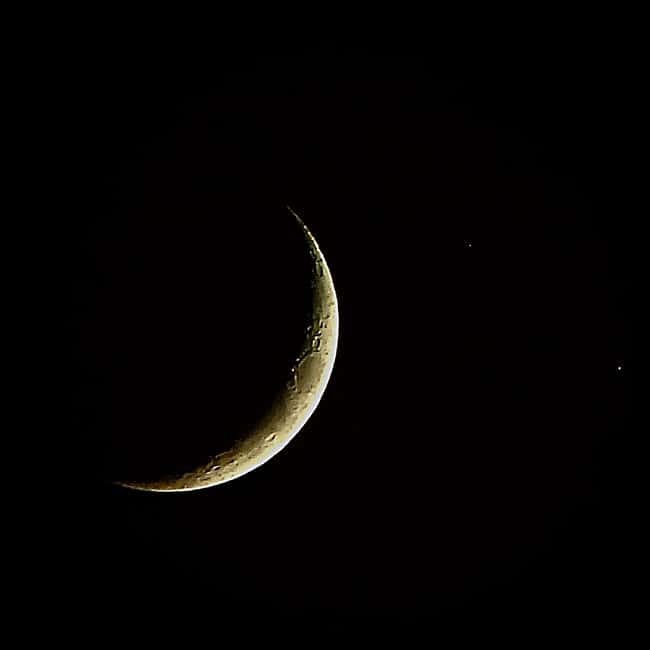
The telescope is the main reason to choose a guided session instead of simply driving up with a blanket and looking at the sky. With the right conditions, the equipment has been used to show Saturn and its rings, Neptune, the Moon, double stars, star clusters, nebulae, and galaxies including Andromeda.
Some visitors have also seen comets, shooting stars, and different planet views. Those sightings depend on the date and weather, so do not book expecting one fixed checklist. The Moon can also change the mood of the evening. It is an impressive target through the telescope, but a very bright Moon can make faint objects harder to see.
Roberto has also used astronomy binoculars on a tripod alongside the main telescope. That gives the group another way to view broad areas of the sky while people take turns at the telescope. If you are already familiar with stargazing, this combination adds variety. If you are new to it, it helps you compare a wider view with the closer, more focused image from the telescope.
The quality of the view is still controlled by nature. Clouds, wind, haze, and the Moon can affect what is visible. A clear forecast improves your chances, but it cannot guarantee a particular planet or galaxy. The guide’s skill helps him adapt the session to what is actually above you.
More National Park Stargazing in Tenerife:
- Teide National Park: Sunset & Stargazing Safari with Dinner
★ 4.6 · 2,115 reviews - Teide National Park: Guided Large Telescope Stargazing Tour
★ 4.9 · 319 reviews - Teide National Park: Stargazing Experience
★ 4.7 · 220 reviews - Sunset and Stars at Teide National Park
★ 4.5 · 168 reviews
The cold is the one real challenge
Tenerife’s beaches may be warm while Teide is cold. At night, the temperature can drop quickly, and the wind can make it feel colder than the thermometer suggests. One session took place at about 3 degrees Celsius with strong wind, while other evenings felt more moderate.
Bring a proper coat, warm layers, long trousers, and sturdy shoes. The official advice is simply weather-appropriate clothing, but I would interpret that generously. Trainers may be fine for some people, yet warm socks and firm footwear are sensible for standing outside at night.
Roberto has provided blankets, fleece tops, jackets, water, and chocolate during some sessions. Those are welcome touches, but you should not rely on them as your main protection. You will enjoy the telescope far more if you are not shivering while waiting your turn.
The cold is not a minor detail. You spend two hours outdoors, and the quiet pauses between telescope views are part of the experience. Pack for mountain night conditions, not for the weather at your hotel.
Small groups and the free photographs
The group is small, often around 10 or 11 people and sometimes a little more. That size allows the experience to remain personal without making the price feel like a private tour.
You should have enough time to look through the telescope at each featured object. Roberto checks that everyone gets a turn, answers questions, and keeps the pace moving. A larger group could make the same equipment feel frustrating, so this is one of the most important practical advantages.
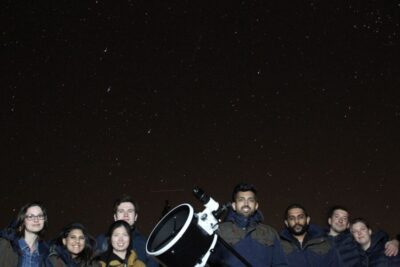
At the end, Roberto takes photographs of participants beneath the stars, sometimes with Teide in the background. The photos are included at no extra charge. Some images use playful light effects, including lightsabers, while others capture you against the night sky.
Do not expect a professional photography workshop. The photographs are a thoughtful souvenir rather than the main attraction. Still, they add real value because ordinary phone cameras struggle to capture both people and stars in one frame. Roberto has also helped people with basic astrophotography and shared additional images when someone needed to leave early.
Is $41 a fair price?
At $41 per person, this is a strong value if you want more than a casual look at the stars. The price includes the telescope, laser-guided explanations, the two-hour session, and free photographs. Water, chocolate, and blankets have also been offered during some sessions, though lunch and drinks are not part of the official inclusions.
You are paying for access to a good viewing location, specialized equipment, and a guide who can turn a dark sky into something understandable. Renting or carrying suitable equipment yourself would not give you Roberto’s explanations or the structure of the evening.
The value is less obvious if you only want to take a quick photograph of the sky or if you dislike sitting and standing outdoors in the cold. It is also not a transport package. You must arrange your own way to Teide National Park, and no transfer is included.
For a family, the cost can add up, but the session has worked well for children, teenagers, and older adults. For someone curious about space, the combination of teaching and telescope time makes the fee reasonable.
Who will enjoy this most?
I would choose this for first-time stargazers, families with older children, couples looking for a quieter evening, and anyone who wants to understand the sky instead of simply photographing it. You do not need prior astronomy knowledge, and Roberto keeps the explanations friendly.
It also suits people with some experience. The 8-inch telescope and astronomy binoculars have been enough to interest an enthusiastic amateur, particularly when viewing double stars, clusters, planets, and galaxies from a darker site.
Babies under one year old are not suitable for the activity. The cold, late timing, and two hours outside may also be tiring for very young children. Older children who can stay interested in a calm activity should fare better.
Wheelchair access is listed as available, but the experience takes place outdoors in a mountain park. If access needs are important for your group, confirm the exact surface and conditions before booking.
The language options are English and Spanish. Some material may be presented in its original language, so ask ahead if everyone in your group needs one language only.
Booking details that matter
You can cancel up to 24 hours before the activity for a full refund. The reserve-now, pay-later option lets you hold a place without paying immediately, which is useful when your Tenerife plans depend on weather or a rental car.
Check the start time for your chosen date because the activity begins after sunset and the exact time changes through the year. Plan your drive carefully, especially during busy sunset periods.
The guide waits beside the Ermita de las Nieves. Do not assume a hotel pickup, lunch, or drinks. Bring warm clothes, arrive with enough time to find the meeting point, and check the mountain forecast rather than relying on the temperature at the coast.
Should you book the Teide stargazing session?
Book it if you want a clear introduction to astronomy, time with a proper telescope, and a small-group evening led by Roberto. The strongest reasons are his patient bilingual teaching, the chance to see objects such as Saturn, Andromeda, nebulae, and clusters, and the free photographs that give you something tangible to take home.
Skip it if you want a short, warm activity, guaranteed views of a particular planet, or included transportation. The cold is real, and the quality of the sky depends on conditions.
For most people who can manage the mountain temperature and arrange their own transport, $41 buys a memorable and unusually personal night in Teide National Park. Pack warmer than you think you need, arrive before the meeting time, and give yourself permission to simply look up.
FAQ
Where does the stargazing activity meet?
The guide waits beside the Ermita de las Nieves in Teide National Park.
When does the session begin?
The activity begins 40 minutes after sunset. The exact starting time depends on the date, so check availability when booking.
How long does the stargazing experience last?
The session lasts two hours.
What languages does Roberto speak?
The live tour is available in English and Spanish.
Is transportation to Teide National Park included?
No. Transfers are not included, so you must arrange your own transportation to the meeting point.
What should I bring?
Bring weather-appropriate clothing, with extra warm layers strongly recommended because the mountain can become very cold and windy after dark.
Are photographs included?
Yes. Free photographs of the experience are included, and the guide takes images of participants beneath the night sky.
Just added around Tenerife
- Tenerife Exclusive & Private Gastronomic, Sunset-Stargazing★ 5.0 · 3 reviews
- Small Group Teide Stargazing Tour with Picnic at Sunset★ 5.0 · 3 reviews
- TEIDE NIGHT Astronomy Stargazing Bus Tour, Meal & Drinks included!★ 4.0 · 15 reviews
- “Stargate” Tenerife stargazing★ 5.0 · 13 reviews
- Stargazing Tour in Tenerife★ 3.0 · 2 reviews
- Polestar SELF-DRIVE Sunset Stars Tour in Teide National Park★ 5.0 · 19 reviews
- Private stargazing trip in Teide★ 5.0 · 3 reviews
- Stargazing Experience with Dinner & Drinks★ 4.0 · 23 reviews
Mount Teide Stargazing Tours, compared.
Teide National Park Sunset & Stargazing with Dinner (Star Safari)
Read our review →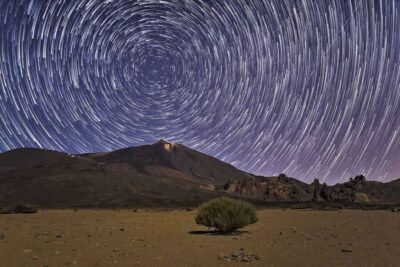
Teide National Park: Sunset & Stargazing Safari with Dinner
Read our review →
Teide by Night: Sunset & Stargazing with Telescopes Experience
Read our review →
Guided Sunset & Stargazing Tour by Night with Dinner
Read our review →
Roque de los Muchachos Stargazing Tour with Wine
Read our review →Browse the lists this tour appears in