
REVIEW · MOUNT TEIDE
Polestar SELF-DRIVE Sunset Stars Tour in Teide National Park
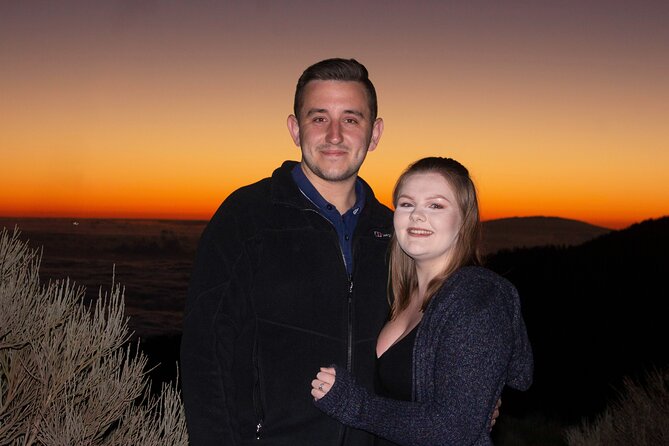
Teide National Park gives you two excellent shows in one evening: a sunset over La Gomera and La Palma, followed by a dark-sky session among volcanic peaks. The change from warm sunset colors to a cold, star-filled sky is the real appeal of this self-drive astronomy tour.
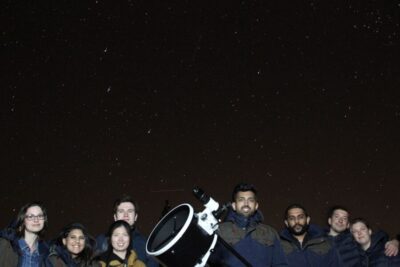
I like the glass of cava at Mirador de los Poleos, and I like that the guides do more than point at stars. They explain the Moon, planets, galaxies, nebulae, and constellations with a large computerized telescope. The main drawback is that you drive your own car and follow the company vehicle, so this is not a fully guided ride from your hotel.
Key points to know before booking
- Sunset begins at Mirador de los Poleos: Look west toward La Gomera and La Palma, with Mount Teide often glowing red as the sun drops.
- The self-drive format saves time: You meet in Santiago del Teide and follow the guides into the park instead of arranging a separate transfer.
- Astronomy is the main event: The telescope may show the Moon, planets, star clusters, galaxies, nebulae, and the Milky Way.
- Cava is included, but dinner is not: Plan to eat before or after the 2 to 2.5-hour experience.
- Dress for serious cold: Warm jackets may be available to borrow, but you should still bring several warm layers.
- The stargazing point can change: The final location depends on weather and is decided locally.
Sunset at Mirador de los Poleos
The evening starts at Mirador de los Poleos, a west-facing lookout near Santiago del Teide. This is not just a place to park and wait for darkness. You look across the ocean toward La Gomera and La Palma, with the volcanic slopes around you providing a dramatic foreground.
The viewpoint sits near the site of Tenerife’s first recorded volcanic eruption. Christopher Columbus wrote about the eruption in his ship log during his 1492 voyage to the Americas, giving this otherwise quiet lookout an unusual link to the island’s past.
Your timing matters here. The information supplied for the tour gives a start around early evening, while one booking detail has been noted as later than ideal. I would confirm the meeting time directly with Stargazing Tenerife before setting out. You do not want to arrive after the sun has begun its descent.
A glass of cava or a non-alcoholic drink is served while you watch the colors change. As the sun drops below the cloud layer, Mount Teide can take on a red or copper tone. The clouds below the viewpoint may catch pink, orange, and purple light, making this the best part of the evening for wide photographs.
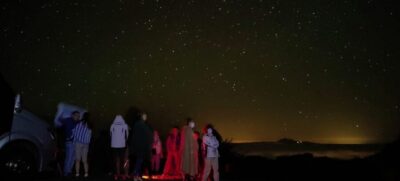
The meeting area can be shared by several astronomy companies. That means you may see other groups nearby, and the first gathering can feel less private than the name of a small excursion might suggest. The operator allows up to 45 people, although the actual group may be smaller.
More Mount Teide Stargazing Tours:
- Tenerife: Teide National Park Sunset & Stargazing Tour
★ 4.2 · 3,812 reviews - Tenerife: Sunset and Stargazing at Teide National Park
★ 4.7 · 2,826 reviews - Teide National Park Sunset & Stargazing with Dinner (Star Safari)
★ 5.0 · 2,601 reviews
Following the guides into Teide National Park
After sunset, you get back into your own car and follow the company vehicle toward the national park. This arrangement is useful if you already have a rental car and prefer not to spend part of the evening waiting for hotel pickups.
It also explains what self-drive means in practical terms. You are not simply dropped at a viewpoint with a map. You follow the guides to the volcanic sites and the final astronomy location, which reduces the chance of missing the correct turn or searching for a suitable dark-sky spot after nightfall.
The trade-off is that you remain responsible for driving. If you want to enjoy several alcoholic drinks, the included cava is limited to a glass, and you should plan accordingly. The road journey is short between some points, but the overall route takes you from the western edge of the park toward the higher volcanic area.
The tour is conducted in English only. That matters for an astronomy experience because much of the value comes from the explanations. Older children can enjoy it, but they need to understand English well, or an adult will need to translate as the evening goes on.
The volcanic stops between sunset and starlight
The route includes a look at the last recorded eruption in the area, dating to 1909, before continuing toward the Samara viewpoint. These stops help connect the astronomy to Tenerife’s volcanic setting. You are not only looking up at the sky. You are also standing among the forces that shaped the island.
Mirador de Samara is associated with wide views across the volcanic interior and toward the western islands. El Hierro can also be visible from the area when conditions are clear. At this stage, the remaining sunset light may still color the clouds, so the transition from daylight to night happens gradually.
The exact final point can change with weather. This is sensible in a high mountain park, where cloud can ruin an otherwise clear astronomy session. It does mean you should not treat Mirador de Samara as a guaranteed ending point. The operator decides on site where conditions are best.
I like this flexible approach because a fixed viewpoint is less useful than a clear sky. Still, you should tell anyone meeting you later that the tour may finish at a different point within the area. The advertised end is Mirador de Samara, but the final stargazing place can vary.
What the telescope adds to the evening
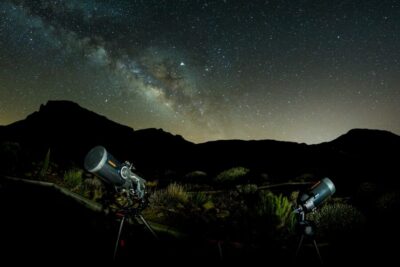
The large computerized telescope is the strongest reason to book rather than simply drive into Teide National Park and look up on your own. A dark sky can show you far more stars than you will see from a resort, but most people still need help identifying what they are looking at.
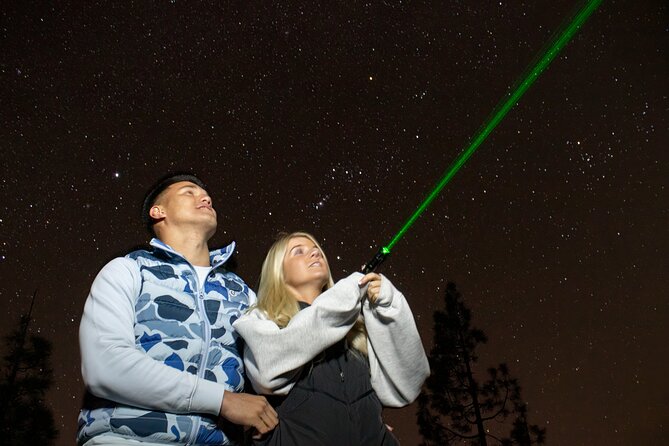
The guides use the telescope for the Moon and may also show planets, galaxies, nebulae, and star clusters. Depending on the date and conditions, you might see a planet such as Mars, or trace familiar constellations with a laser guide.
The Moon creates an interesting compromise. A full Moon can be an impressive sight as it rises over the mountains, but its brightness can wash out some fainter stars. If your priority is the Milky Way, a darker moon phase is usually more helpful. If your priority is seeing the Moon’s surface through the telescope, a bright lunar night has its own reward.
The guides named in the experience material include Steve and Daniele, with Phil and Pete also mentioned in connection with the astronomy team. The useful point is not just the names. It is the style of presentation. The guides explain technical ideas in plain language and are happy to discuss Tenerife as well as the night sky.
That makes this a good choice for beginners. You do not need to know the difference between a nebula and a galaxy before arriving. You can simply ask questions and use the telescope as a starting point.
More National Park Stargazing in Tenerife:
- Teide National Park: Sunset & Stargazing Safari with Dinner
★ 4.6 · 2,115 reviews - Tenerife. Stargazing in Teide National Park
★ 4.9 · 319 reviews - Teide National Park: Guided Large Telescope Stargazing Tour
★ 4.9 · 319 reviews - Teide National Park: Stargazing Experience
★ 4.7 · 220 reviews
Why the photography advice matters
The sunset stop is the easier photography opportunity. You can frame the descending sun, the cloud layer, the neighboring islands, and the red face of Teide without special equipment. A phone can record the colors, although a camera with manual controls will give you more control over exposure.
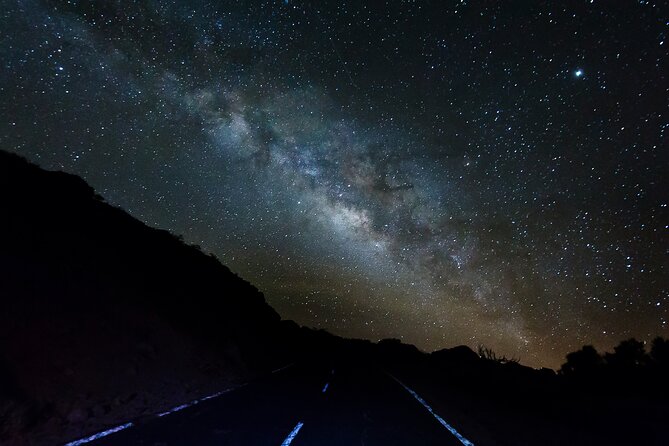
The night session is harder. Stars are faint, and a phone photograph rarely shows what your eyes see. The team offers advice on where and when to take pictures, and the experience includes astrophotography help that would be difficult to reproduce alone.
You should keep your expectations sensible. This is not described as a dedicated multi-hour photography workshop. The photography guidance is part of a broader sunset and astronomy evening. If you want technical instruction on camera settings, ask the guides directly at the start.
A useful benefit of the self-drive format is that you can keep your camera gear with you. You are not limited to what fits into a shared transfer vehicle. On the other hand, you must handle the equipment, parking, and driving yourself.
Cold temperatures are part of the package
The biggest practical warning is simple: bring warm clothing. Teide’s high volcanic setting can feel freezing after sunset, even if the coast was warm earlier in the day.
Several people have specifically stressed the cold, and warm jackets may be available to borrow. I would not rely on that alone. Wear a proper coat, long trousers, and warm footwear. Add a hat or scarf if you feel the cold easily.
The tour lasts about two and a half hours, though the detailed route also describes roughly two hours of activity. That difference may reflect the timing of the drive and the amount of time spent at the telescope. Either way, you could be standing outdoors for a long stretch after dark.
There is no dinner or food service. Eat before you meet the group, or arrange a meal for afterward. The cava is a pleasant touch, but it is not meant to replace dinner.
Is $48.01 good value?
At $48.01 per person, the price is reasonable if you want an organized astronomy session but already have access to a car. You are paying for the guides, the route knowledge, the telescope, the laser star talk, the sunset viewpoint, and the advice that helps you make more of the sky.
The value is less clear if you only want to see the sunset. You can reach a viewpoint without paying for an astronomy tour, and the sunset itself is free. The price makes more sense when you count the telescope session and the chance to see objects that are easy to miss on your own.
The self-drive format keeps the price below what a fully chauffeured excursion might cost, but it shifts some work to you. You must reach the meeting point, drive into the park, and follow the guides. If you do not have a car, this is not the most convenient option.
Group size also affects the value. The maximum is 45 people, but a smaller group is possible. A large group can mean more waiting at the telescope, while a smaller one allows more time for questions. Ask about the expected group size if that matters to you.
The experience is recommended by 95 percent of those who rated it, with an overall score of 4.8 from 19 ratings. That is a strong result, though the sample is small. One important criticism is that some people may feel they are paying mainly to follow a van to places they could reach independently.
That criticism is fair. The operator’s answer is also fair: the telescope, expert explanations, and astrophotography help add something beyond simply standing under the stars. Your decision depends on how comfortable you are finding volcanic viewpoints and interpreting the night sky on your own.
Who will enjoy this most?
I would choose this for adults, couples, families with older children, and anyone staying in western Tenerife with a rental car. It works especially well for people who want a gentle introduction to astronomy rather than a technical lecture.
It is also a good fit if you enjoy photography but do not know the best places to set up. The sunset views are easy to appreciate, while the guides can help you understand why the night sky looks so different from a coastal town.
Children around 12 or older may enjoy it if they understand English. Younger children may struggle with the late hour, cold, and length of the astronomy explanations. The experience is not presented as a children’s activity, so choose it for a child who already has some interest in planets or stars.
You may want a different kind of tour if you dislike driving at night, need hotel pickup, want a private group, or expect a meal. You should also think twice if your only goal is sunset photography.
Booking, weather, and small practical details
Confirmation is provided when you book, and mobile tickets are accepted. Service animals are allowed, and most people can participate.
Weather is central to the experience. If poor conditions force a cancellation, you can choose another date or receive a full refund. You can also cancel for a full refund up to 24 hours before the start time. Changes or cancellations inside that 24-hour window are not refunded.
Because the final stargazing point depends on the conditions, check the meeting instructions shortly before the outing. The start point is Mirador de los Poleos, 38690 Santiago del Teide. The advertised end is Mirador de Samara, 38688 Guía de Isora, but the team may select another nearby point.
Should you book the Polestar self-drive tour?
Book it if you have a car, want a sunset and astronomy combination, and would value expert guidance with a real telescope. The strongest parts are the view from Mirador de los Poleos, the passionate explanations from the astronomy team, and the chance to see more than ordinary constellations.
Skip it if you want a private chauffeur, dinner, hotel pickup, or a short sunset stop with no waiting. Also skip it if you are not prepared for cold mountain air.
For most people who already plan to visit Teide National Park, the $48.01 price is a fair way to add structure and expert help to an evening that could otherwise end with simply looking up and guessing. Bring warm clothes, confirm the start time, eat beforehand, and let the sky determine the final stop.
FAQ
Where does the tour begin?
It begins at Mirador de los Poleos, 38690 Santiago del Teide, Santa Cruz de Tenerife, Spain.
Where does the tour finish?
The advertised ending point is Mirador de Samara, 38688 Guía de Isora. The final stargazing location can change depending on the weather and is decided locally.
Is transportation included?
No. This is a self-drive experience. You meet the guides and follow their vehicle into Teide National Park in your own car.
What is included in the price?
The tour includes use of a telescope, astronomy guidance, and one glass of cava or a non-alcoholic drink. Dinner and other food are not included.
Is the tour offered in languages other than English?
No. The tour is conducted in English only.
What happens if the weather is poor?
If the experience is canceled because of bad weather, you can choose a different date or receive a full refund. You can also cancel up to 24 hours before the start time for a full refund.
More Evening Trips in Tenerife
- Teide Night Experience with Dinner and Stargazing
★ 3.9 · 359 reviews - Teide: Small Group Sunset Adventure with Picnic & Stargazing
★ 4.6 · 231 reviews - Sunset and Stars at Teide National Park
★ 4.5 · 168 reviews - Self Drive Sunset & Stargazing in Teide National Park – No Dinner
★ 5.0 · 151 reviews
More Sunset and Stargazing Tours in Tenerife
- Teide by Night: Sunset & Stargazing with Telescopes Experience
★ 4.5 · 1,492 reviews - Teide: Guided Sunset & Stargazing Tour by Night with Dinner
★ 4.7 · 1,339 reviews - Sunset & Stargazing Experience From Teide
★ 4.5 · 1,129 reviews - Tenerife: Sunset Night Tour and Stargazing at Teide + Dinner
★ 3.8 · 316 reviews
Just added around Tenerife
- Tenerife Exclusive & Private Gastronomic, Sunset-Stargazing★ 5.0 · 3 reviews
- Small Group Teide Stargazing Tour with Picnic at Sunset★ 5.0 · 3 reviews
- “Stargate” Tenerife stargazing★ 5.0 · 13 reviews
- TEIDE NIGHT Astronomy Stargazing Bus Tour, Meal & Drinks included!★ 4.0 · 15 reviews
- Stargazing Tour in Tenerife★ 3.0 · 2 reviews
- Private stargazing trip in Teide★ 5.0 · 3 reviews
- Stargazing Experience with Dinner & Drinks★ 4.0 · 23 reviews
- 6-Hour Tour with Observation of the Stars 1242 with Lunch★ 5.0 · 5 reviews
Mount Teide Stargazing Tours, compared.
Teide National Park Sunset & Stargazing with Dinner (Star Safari)
Read our review →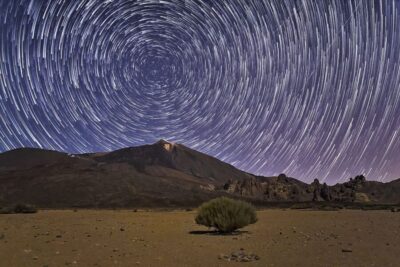
Teide National Park: Sunset & Stargazing Safari with Dinner
Read our review →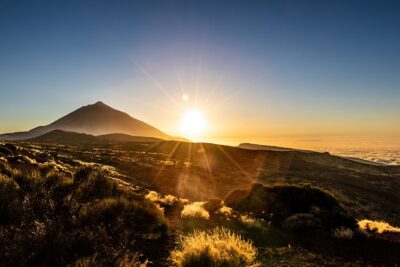
Teide by Night: Sunset & Stargazing with Telescopes Experience
Read our review →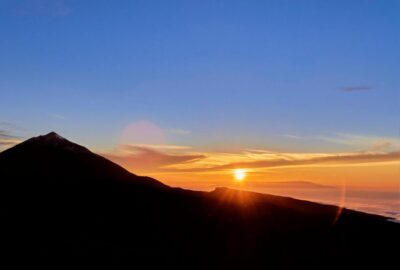
Guided Sunset & Stargazing Tour by Night with Dinner
Read our review →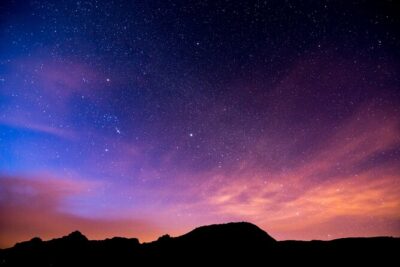
Roque de los Muchachos Stargazing Tour with Wine
Read our review →Browse the lists this tour appears in