
REVIEW · LAKE TEKAPO
Mount John Observatory Stargazing Experience, Tekapo
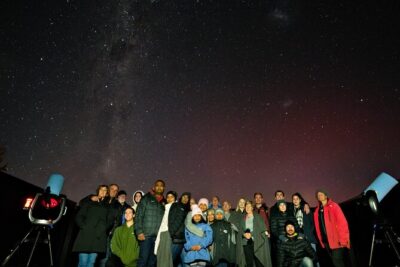
Mount John Observatory gives you something rare: a chance to stand under a truly dark Southern Hemisphere sky, then study that sky through serious observatory equipment. From the 1,029-metre summit, guides point out the Southern Cross, the true southern star, planets, star clusters, and perhaps a far-off galaxy. The naked-eye tour is just as important as the telescopes, since it helps you see the sky as a whole rather than as a series of tiny targets.
I like the easy return transport from Lake Tekapo and the loan of thick Extreme Cold Weather jackets. I also like the guides’ clear, lively teaching style. Kieran, Alice, and Olive have all been singled out as engaging guides, and the format works well for people who know little about astronomy. The catch is simple: cloud and wind can change the night completely, and an indoor replacement may feel thin compared with the mountaintop session.
Key points to know before you book
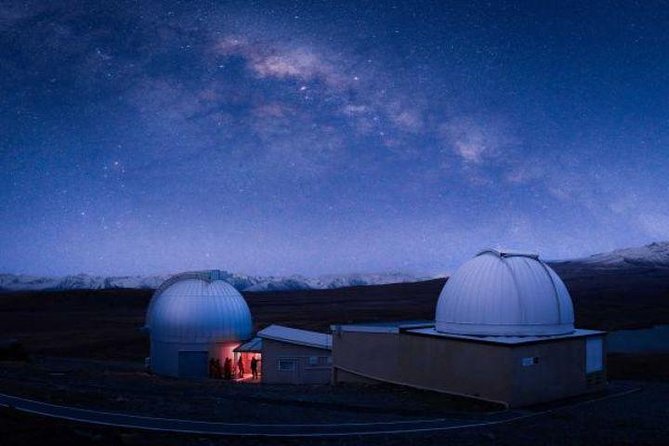
- The summit is 1,029 metres above Tekapo, inside the Aoraki McKenzie International Dark Sky Reserve.
- Three telescopes may be used, alongside naked-eye viewing and laser-guided explanations.
- The total visit lasts about 1 hour 45 minutes, including roughly 15 minutes for check-in and transport.
- Cold-weather jackets are supplied, but you should still wear warm layers and closed shoes.
- Cloud can cancel the outdoor session, with another date or a refund offered when weather stops the tour.
- The group is capped at 22 per departure time, though the stated activity maximum is 30 people.
Why Mount John is the right place for stargazing
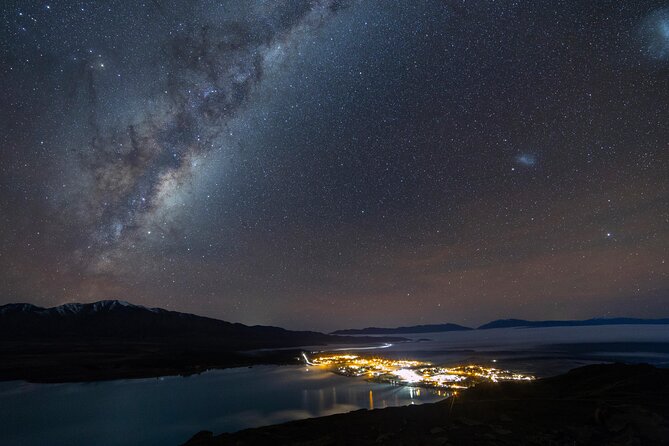
Lake Tekapo sits within the Aoraki McKenzie International Dark Sky Reserve, described here as the world’s largest Gold standard reserve. That label matters because artificial light is kept low, allowing far more stars to appear than you would see from a city or ordinary town.
Mount John adds height and a research setting. The summit rises to 1,029 metres above Tekapo, with the University of Canterbury observatory around you. You are not simply taken to a dark field with a small telescope. You are brought to an active astronomical research centre and shown the Southern Sky with equipment built for serious observation.
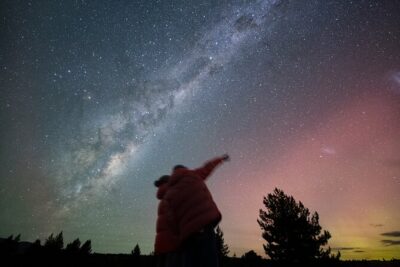
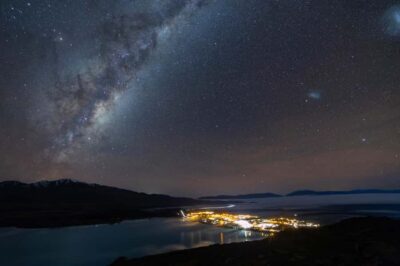
The setting also gives the experience a useful sense of place. You are looking over Lake Tekapo and the surrounding mountains before the darkness takes over. Once the lights are kept low, your eyes begin to adjust, and the Milky Way can become a broad band rather than a faint smudge.
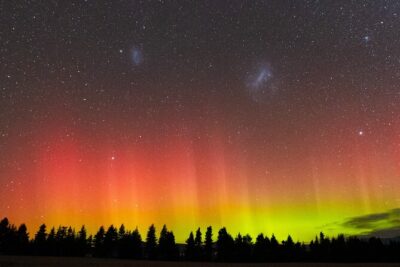
Do not expect the sky to look identical every night. The Moon, cloud, wind, and season all affect what you can see. One night may bring Jupiter and its moons. Another may give you a clearer view of star clusters or the Milky Way. That variation is part of astronomy, but it also makes weather planning important.
More Observatory and Telescope Tours in Lake Tekapo:
- Stargazing Experience at Cowan’s Private Observatory
★ 4.0 · 85 reviews - Lake Tekapo: Stargazing Experience at Cowan’s Observatory
★ 4.7 · 52 reviews - Teide by Night: Sunset & Stargazing with Telescopes Experience
★ 4.5 · 1,492 reviews
From Lake Tekapo to the summit
You begin at the Dark Sky Project base in Lake Tekapo. From there, the team transports you up to Mount John. The ride is included, so you do not need to arrange your own way to the summit.
The first stage takes about 15 minutes and includes check-in and transport. The remaining 90 minutes are spent at the observatory. That is a sensible length for a cold-weather activity. You have enough time to learn the sky and use the telescopes without turning the night into an endurance test.
The summit access is exclusive to this experience, which gives the visit more focus than simply driving up for a view. Your guide gathers the group, explains how to move around safely in the dark, and begins with the sky above you.
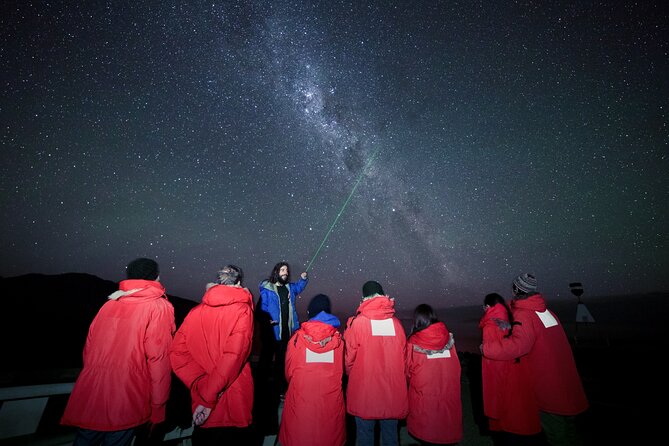
That last point is worth noting. You are not rushed straight to a telescope. The guide first helps you find major constellations and stars with your own eyes. This makes the later telescope viewing easier to follow, since you know where the target sits in relation to the rest of the sky.
Learning the Southern Sky without a science degree
This is a good choice if you have only a passing interest in astronomy. The explanations are designed for beginners, but they still offer enough detail to keep an experienced stargazer interested.
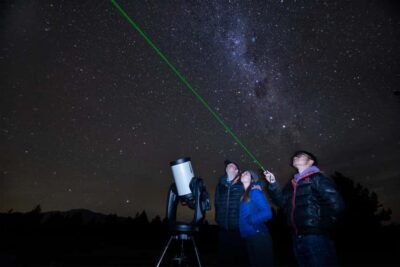
Laser pointers help the guide trace constellations and show you how to orient yourself. You may learn to identify the Southern Cross, along with the difference between the true southern star and the so-called false Southern Cross. That small lesson is practical: it gives you a way to find direction in the Southern Hemisphere sky.
The guides also connect the points of light to larger ideas. You may hear about planets, solar systems, star clusters, and distant galaxies. The strongest part of the experience is the balance between facts and stories. The guides do not simply name an object and move on. They explain what you are seeing and why it matters.
English and Mandarin guiding are available, but you must speak the language of the tour for health and safety reasons. If you cannot, you will not be allowed to join. Check this carefully when booking, especially if someone in your group needs another language.
The guides are a major part of the value. Kieran, Alice, and Olive are among the names associated with especially warm, clear presentations. The exact guide on your departure can vary, but the format gives the astronomy team plenty of room to answer basic questions and keep the session moving.
What you see through the telescopes
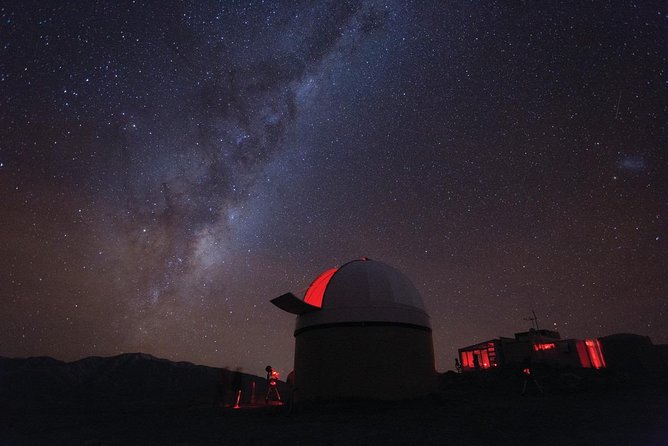
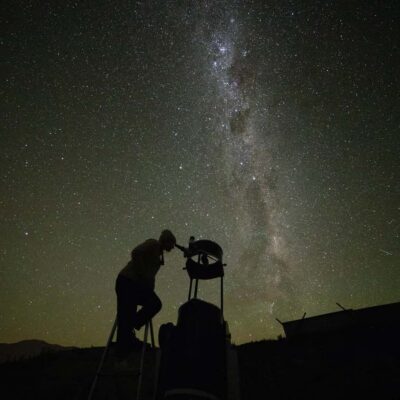
The telescope portion is the main reason to pay for the summit session rather than simply look at the stars from Lake Tekapo. You may use up to three telescopes, with each instrument offering a different target or view.
The equipment has been used to show sights such as the moons of Jupiter and star clusters dating from just after the Big Bang. You might also see planets, distant solar systems, or a galaxy far beyond our own. The exact targets depend on what is visible that night, so no guide can promise a fixed list.
This uncertainty is worth accepting. Astronomy is not a stage show with the same result every time. If cloud shifts across one area, the guide may work around it and point out another part of the sky. A partially cloudy evening does not always mean a wasted trip. Guides have been able to show the Southern Cross, the true southern star, and several telescope targets during broken cloud.
Still, a fully clouded sky is different. If conditions prevent the outdoor session, the operator may offer an indoor alternative. This protects you from making a wasted trip, but it may not match the main experience. An indoor session can explain astronomy, yet it cannot replace standing beneath the Milky Way or looking through an observatory telescope.
More Stargazing Tours in Lake Tekapo:
- Lake Tekapo: Alpine Stargazing Experience with a Guide
★ 4.5 · 626 reviews - Lake Tekapo: Stargazing Experience
★ 4.9 · 607 reviews - Chameleon Stargazing Shared Tour
★ 5.0 · 181 reviews - Lake Tekapo: Mountaintop Stargazing at Mount John Summit
★ 4.5 · 176 reviews
Cold, darkness, and what to wear
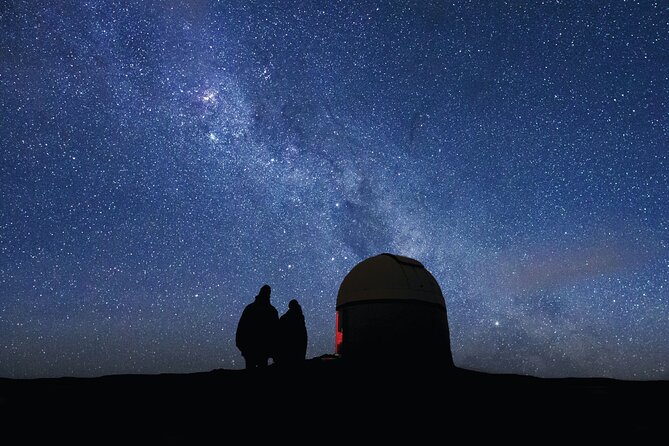
The cold is not a minor detail. Mount John can feel bitter even when Lake Tekapo seems manageable, and spring visitors have found it freezing at the summit. The tour supplies Extreme Cold Weather jackets, which are thick and useful, but you should still wear warm layers underneath.
I would pack:
- A warm base layer and fleece or sweater
- Long trousers
- Closed, sturdy shoes
- Warm socks
- A hat and gloves if you have them
You should also prepare for darkness underfoot. White torches and phone lights are not allowed because they spoil other people’s night vision. The ground can be hard to see, so stay close to the guide and group. This is not the moment to wander off for a private photograph.
The no-white-light rule may feel restrictive at first, but it protects the main reason you are there. A single bright phone screen can affect everyone’s adjusted vision. Keep your phone away unless the guide gives permission, and use the time to watch the sky instead.
Photography is not the main attraction. One account notes that the staff would not take camera pictures when there was wind. Even on a calm night, ordinary phones will not capture what your eyes see. Treat this as a viewing experience, not a chance to collect polished night-sky images.
How weather affects the experience
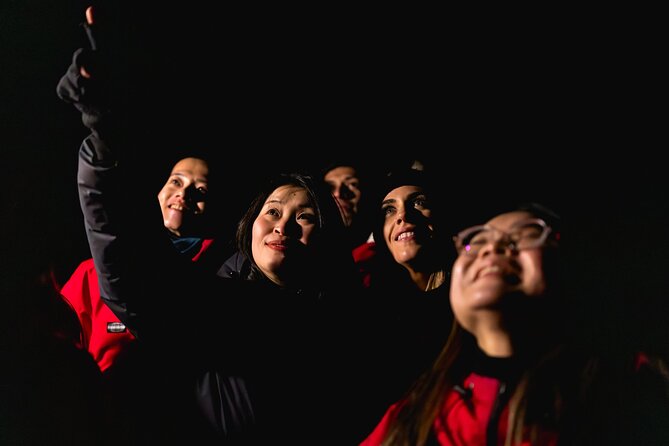
Weather is the biggest risk in booking this tour. Clouds can block the stars, and wind can affect telescope use and photography. The operator requires suitable conditions, so a cancellation caused by poor weather is not a sign of poor planning.
If the outdoor session is canceled, you can be offered another date or a full refund. If you have several nights in Tekapo, booking early in your stay gives you a better chance of moving to another evening. If you have only one night, you need to accept that the tour may not operate as advertised because the sky is beyond anyone’s control.
A partly cloudy night can still work well. Guides may follow gaps in the cloud and show different objects as the sky shifts. Several parts of the sky may remain visible even when the full Milky Way is hidden.
A full Moon is another consideration. A bright Moon can reduce the contrast of faint stars and the Milky Way. If you can choose your date, a darker lunar phase may improve the view, though it cannot solve cloud or wind.
The indoor alternative is the weak point for some visitors. If your main goal is a live telescope session, ask yourself how you would feel if the outdoor portion disappeared. I would book this for the chance to see a clear sky, not because the backup program is guaranteed to provide the same impact.
Is $139.39 a fair price?
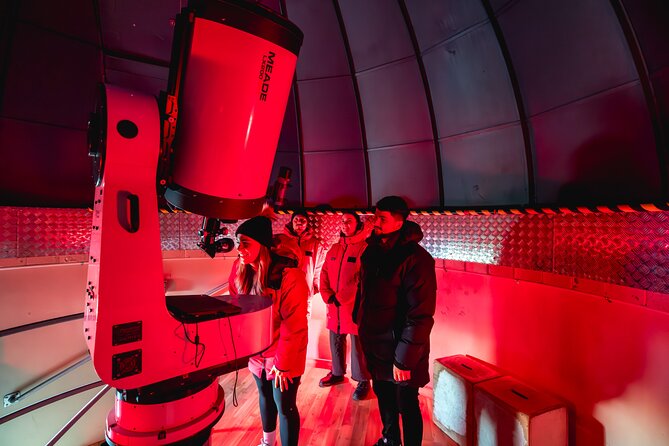
At $139.39 per person, this is not a cheap evening activity. You are paying for summit transport, restricted access to the observatory site, specialist equipment, guides, and the chance to view the sky from one of New Zealand’s strongest dark-sky locations.
The price makes more sense if you value the setting and the teaching. You are not only looking through a telescope. You are learning how to read the Southern Hemisphere sky, then seeing selected objects through several instruments. For a first serious astronomy experience, that combination can justify the cost.
The value is less clear if you have already spent a lot of time using your own telescope or visiting major observatories. One person with years of stargazing experience still found the Mount John sky exceptional, but another found the group crowded and the stargazing only average. Your expectations matter.
The group size is limited to 22 people per time slot, with a stated maximum of 30 for the activity. That is not a private tour, but it should allow more personal space than a large coach group. At a telescope, you may need to wait your turn. The experience works best when you are happy to share the viewing time rather than expect uninterrupted access.
Who should book this experience?
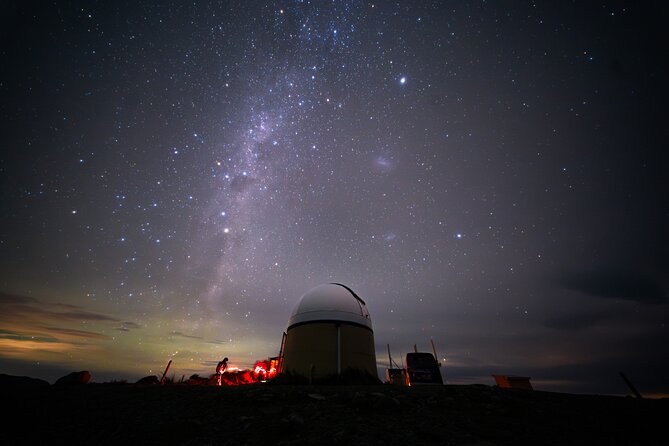
I would recommend it to first-time stargazers, families with older children, couples looking for an evening activity, and anyone who wants a clear introduction to the Southern Sky. The guides explain the basics without requiring previous knowledge, and the telescope targets give the night a sense of purpose.
Children can take part, but they must be accompanied by an adult. The cold, darkness, and need to remain with the group mean this is not a casual walk for very young children.
It also suits experienced astronomy fans who want access to a darker sky and professional equipment. The opportunity to see the Southern Hemisphere from Mount John can be worthwhile even if you already know the major constellations.
I would think twice if you have mobility limitations. The activity is not recommended for people with mobility issues, and the dark summit setting may make walking more difficult. The tour also requires you to speak the tour language for safety reasons.
Booking and cancellation details
You receive confirmation when you book, and a mobile ticket is provided. The activity runs for about 1 hour 45 minutes, but allow extra time around the scheduled departure in case the check-in process takes longer.
Return transport is provided from Lake Tekapo township. Hotel pickup and drop-off are not included, so you need to reach the meeting point yourself. Meals and snacks are also not included.
You can cancel for a full refund up to 24 hours before the local start time. Cancellations or changes inside that 24-hour window are not refunded or accepted. Pay close attention if you book a time after midnight, since the date shown during booking can be confusing.
Should you book Mount John Observatory?
Book it if you want a well-run introduction to the Southern Hemisphere sky, value clear guides, and can keep a flexible evening open for weather. The combination of dark-sky access, naked-eye teaching, and several telescopes makes this one of the more substantial things to do in Lake Tekapo after sunset.
Do not book it expecting a guaranteed list of planets or a perfect photograph. Cloud may cancel the session, wind may affect viewing, and the indoor replacement may feel modest. But if the sky clears, the cold jacket goes on, the lights go out, and the Southern Cross appears above Mount John, the price begins to feel reasonable.
FAQ
How long does the Mount John Observatory experience last?
The experience lasts approximately 1 hour 45 minutes. About 15 minutes covers check-in and transport, followed by around 1 hour 30 minutes at the summit.
Where does the tour begin?
You check in with the Dark Sky Project team in Lake Tekapo township. Return transport to Mount John and back is included.
How high is Mount John Observatory?
The summit of Mount John is 1,029 metres above Lake Tekapo.
What is included in the price?
The experience includes summit access, return transport from Tekapo township, expert astronomy guides, naked-eye stargazing with laser pointers, telescope viewing, and Extreme Cold Weather jackets.
Are meals or hotel transfers included?
No. Meals and snacks are not included, and hotel pickup and drop-off are not provided.
What happens if the weather is bad?
If poor weather prevents the tour from operating, you may be offered another date or a full refund. An indoor alternative may also be offered.
Do I need to bring warm clothing?
Yes. Jackets are provided, but the summit can be very cold. Wear warm layers, long trousers, and sturdy closed shoes.
Can children join the tour?
Children may participate, but they must be accompanied by an adult. The activity is not recommended for people with mobility issues.
Just added around Lake Tekapo
- Lake Tekapo Ultimate Stargazing Experience★ 5.0 · 3 reviews
- Virtual Stargazing & Astronomy Experience in Lake Tekapo★ 3.0 · 2 reviews
- Lake Tekapo: Virtual Stargazing and Astronomy Experience★ 4.5 · 8 reviews
- Lake Tekapo: Ultimate Stargazing Experience★ 4.3 · 12 reviews
- Lake Tekapo: Indoor Māori Cultural Astronomy Experience★ 4.5 · 43 reviews
- Lake Tekapo: 1.5-Hour Hot Pools & Stargazing Experience★ 4.0 · 45 reviews
- Lake Tekapo: Stargazing Experience at Cowan’s Observatory★ 4.7 · 52 reviews
- Stargazing Experience at Cowan’s Private Observatory★ 4.0 · 85 reviews
Lake Tekapo Stargazing Tours, compared.
Silver River Stargazing Experience in Lake Tekapo
Read our review →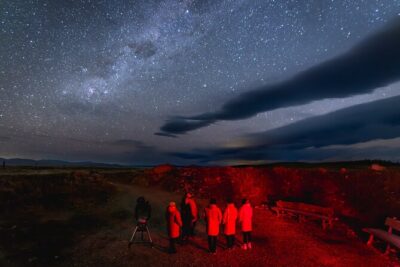
Stargazing Experience at Cowan’s Private Observatory
Read our review →
Dark Sky Indoor Maori Cultural Astronomy Experience
Read our review →Browse the lists this tour appears in