
REVIEW · STARGAZING HIKES & NIGHT WALKS
Moab: The Windows Astro-Photography and Stargazing Hike
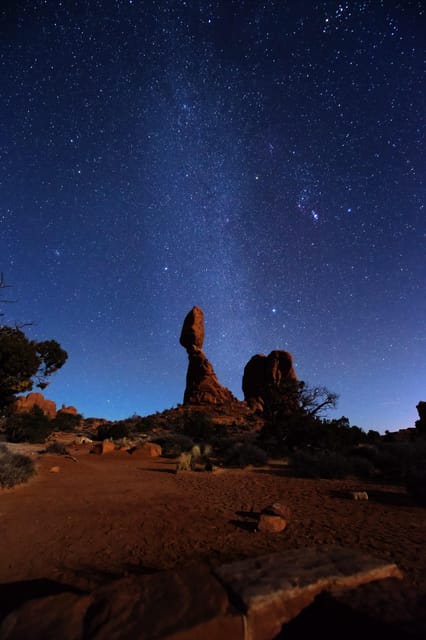
Arches National Park looks entirely different after dark. On this two-hour walk, you follow a guide through the Windows area by red headlamp, then point your camera toward the Milky Way, the arches, and a sky free from city glare. The small group of no more than six makes it easier to get personal help with camera settings.
I like the included tripod and headlamp, since you do not need to arrive with a full night-photography kit. I also like the guides’ patience with phones. Sam and Brandon have helped people use ordinary iPhones as well as dedicated cameras. The main catch is that the $175 price does not include the Arches entry fee, transportation, or optional camera rentals.
Key points at a glance
- Walk beneath the Windows after dark: The route covers about two miles and includes the North and South Windows, Turret Arch, and Double Arch.
- Get hands-on camera help: Your guide explains the basics of night photography and helps you practice with your own camera or smartphone.
- Use the supplied gear: Red LED headlamps and tripods are included if you need them.
- Keep the group personal: A maximum of six people gives the guide time to work with different cameras and skill levels.
- Choose your moonlight: A dark sky is not the only option. A full moon can light the arches and create a completely different kind of photograph.
- Rent better equipment if needed: A DSLR camera or compatible Canon EF/EFS or Nikon F lens can be arranged for an added fee.
Meeting the guide at the Windows trailhead
You meet after dark at the Windows parking area, in the first parking lot on the right. You must arrange your own transportation to the park, and the $30 entry pass for a standard vehicle is separate from the tour price.
That extra planning matters. This is not a pickup excursion from a Moab hotel. You need to reach the trailhead on your own, with your camera, water, hiking shoes, and a charged smartphone. The tour begins at the trailhead, so arrive ready to walk rather than expecting a long introduction or a vehicle transfer.
Once everyone is together, the guide hands out red LED headlamps and tripods as needed. Red light helps you see the path while being less harsh than a bright white beam. It also fits the night setting better, though you still need to pay attention to where you step.
The group limit of six is one of the best features here. Night photography involves pauses, adjustments, and repeated attempts. In a large group, that can turn into a queue for the guide. With six people or fewer, you have a better chance of getting help with your own camera controls.
More Stargazing Hikes and Night Walks in the USA:
- Big Island GOAT Experience: Mauna Kea Summit, Sunset & Stars
★ 5.0 · 1,706 reviews - Big Island: Mauna Kea Summit and Stars Small-Group Adventure Tour
★ 5.0 · 1,545 reviews - Hilo: Mauna Kea Summit, Sunset, & Stargazing Experience
★ 4.8 · 629 reviews
Learning night photography without getting lost in jargon
The point is not simply to look at stars. Your guide teaches you how to make the camera record them. That can include the basic controls needed for a night shot, along with practical advice on focus, exposure, and using a tripod. The exact help will depend on your camera and your starting skill level.
I especially like that the instruction is not limited to expensive equipment. Sam and Brandon have helped people take strong night photographs with iPhones. A phone will not give you the same control as a DSLR, but you can still leave with a better understanding of how to use its night mode and manual features, if available.
Bring your own camera if you have one, and bring your phone even if you do not expect to use it. The phone is useful for communicating with the guide and may also be your best camera if you are not used to a dedicated camera.
If you want to use a DSLR, you can request a rental before the tour. Camera and lens rentals cost extra. The available lens mounts listed for this experience are Canon EF/EFS and Nikon F, so check compatibility before you book. Renting can make sense if you already understand basic camera controls and want better equipment for the evening. If you are a complete beginner, better gear alone will not replace the guide’s instruction.
The North and South Windows by red light
The walking portion begins through the Windows area, a remarkable collection of red-rock formations and openings. At night, the familiar shapes become harder to read. Your headlamp shows the trail, while the sky and dark rock take over most of your attention.
The North Window and South Window are major stops on the route. In daylight, they are obvious sightseeing targets. At night, they become framing tools for your photographs. Your guide can help you place the arch and stars in the same composition, rather than simply taking a dark picture with a bright spot in the middle.
The route involves about two miles of hiking. That is not a long distance for most people who are comfortable on foot, but darkness changes the experience. You need hiking shoes, water, and enough care to stay with the group. There are drop-off points in the area, and guides have taken special care to point these out when people get close to them.
This is one reason a guided walk has value here. The park is not just a dark room with stars overhead. You are moving around rock formations, on a trail where edges and uneven ground can be harder to see. The guide helps with both the photography and the route.
Turret Arch and the changing night sky
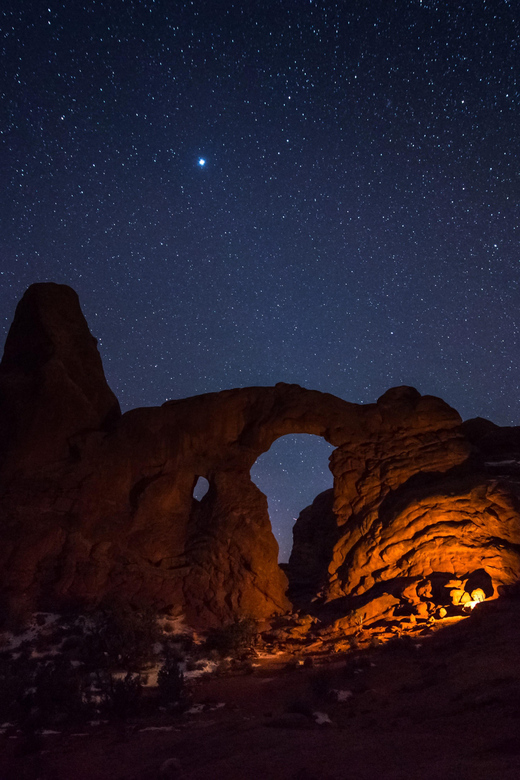
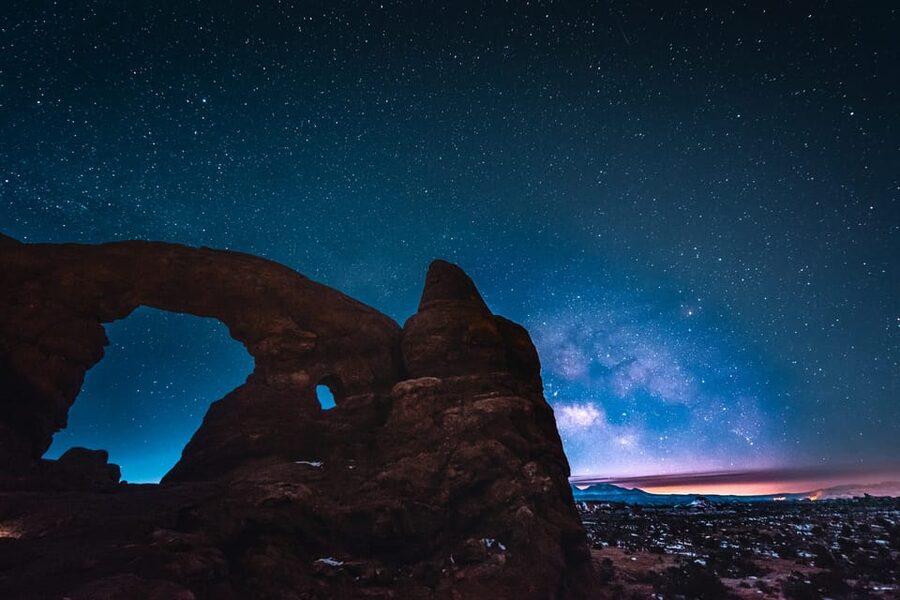
Turret Arch adds another strong subject to the walk. The rock formations are not only scenery behind the stars. They give your images scale and shape, making the sky feel connected to the park rather than floating above a featureless horizon.
The moon changes this part of the experience. If you want the darkest possible sky, ask the provider about a date and time that suit that goal. The activity information also points out that every part of the lunar cycle has something to offer. A moonless night may show more stars, while a full moon can reveal the arches and trail more clearly.
That distinction is useful when choosing a date. Do not assume that darker always means better. If your main goal is to see the Milky Way clearly, a darker sky may be the priority. If you want the rock formations to show in your photograph, moonlight can help.
The guide can also point out constellations and explain what you are seeing overhead. This adds a stargazing layer to the photography lesson. You are not just waiting for the shutter to finish. You are learning to pay attention to the sky and the shapes around you.
More Walking and Hiking Trips in the USA:
- Sedona Dark Sky Sunset & Night Hike With a Private Guide
★ 5.0 · 86 reviews - Astro-Photo, Hiking and Stargazing Tour in Arches National Park
★ 5.0 · 63 reviews - Page: Antelope Valley Canyon Stargazing Night Hike
★ 4.5 · 37 reviews - Sedona Night Hike and Stargazing
★ 5.0 · 7 reviews
Double Arch is the night’s main photo stop
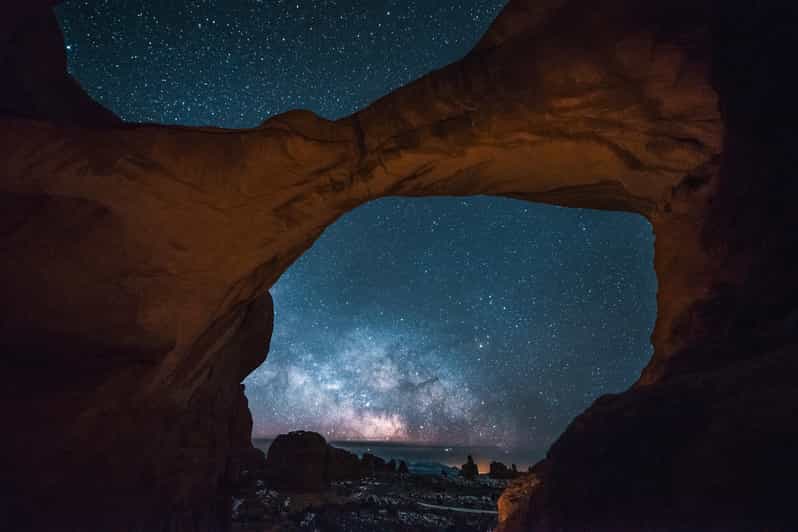
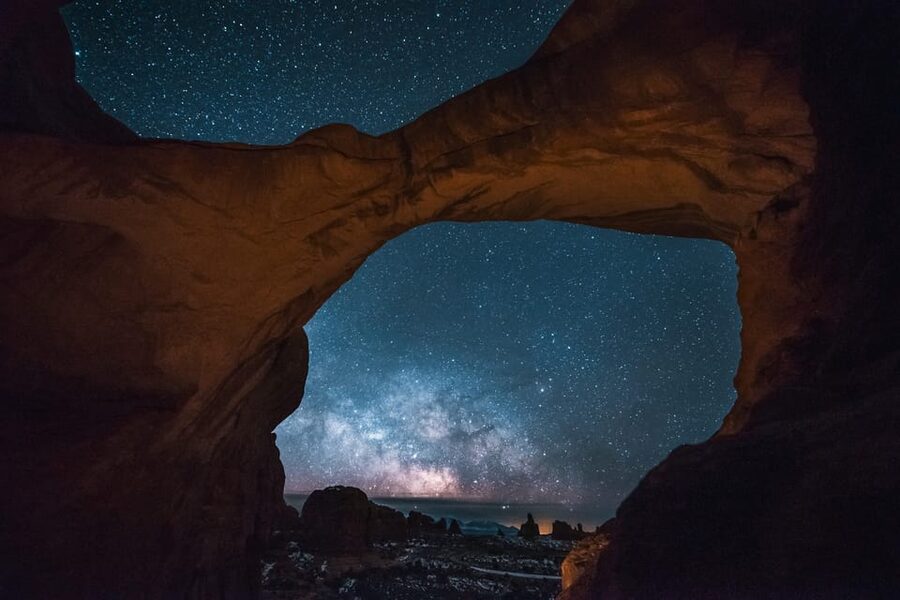
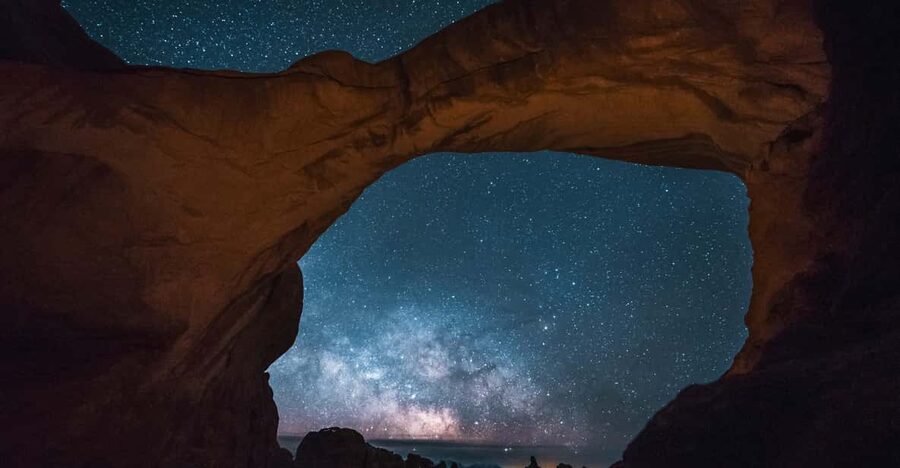
The walk continues to Double Arch, described as the highlight of the area. Its broad, layered form gives you a dramatic foreground for night images. With the galaxy above and the arch in front, this is the point where the evening’s photography practice can come together.
Expect to spend time here making adjustments. Night photography often requires patience. You may need to change your framing, check focus, take a test shot, and try again. That is much easier with a tripod, which is why the included equipment matters more than it might at first appear.
The guide’s role is practical. You can ask for help with your camera, phone, or composition instead of trying to solve every problem alone. The small group also means you are not likely to be rushed through every stop, although the total tour still lasts only two hours.
Photos can record light that your eyes cannot see. This is important to understand before you arrive. A camera may show more stars, color, or detail than you noticed while standing beneath the arch. That is part of the appeal, but it also means your final image may not look exactly like the scene as you saw it.
What the guides add to the evening
The guides receive the strongest praise in the supplied comments, and that makes sense for this kind of activity. The gear is helpful, but the quality of the evening depends heavily on how well someone can explain unfamiliar camera settings in the dark.
Sam is described as patient, friendly, and strong in photography. She has helped people take night shots with cellphones and has adjusted her teaching to suit different levels of experience. Brandon has also been praised for taking time with each person, explaining camera and iPhone features, and helping the group stay safe near drop-offs.
Those details matter more than a long lecture about photography. You want a guide who notices when you are confused, gives you one useful adjustment at a time, and still lets you enjoy the park. The best comments point to exactly that balance.
Some evenings may include extra sky viewing. One person had the chance to see Saturn through a telescope, while another happened to see the northern lights. Neither should be treated as a guaranteed part of the tour. They depend on conditions and what the guide has available, but they show how much the sky can add to the planned route.
Is $175 a fair price?
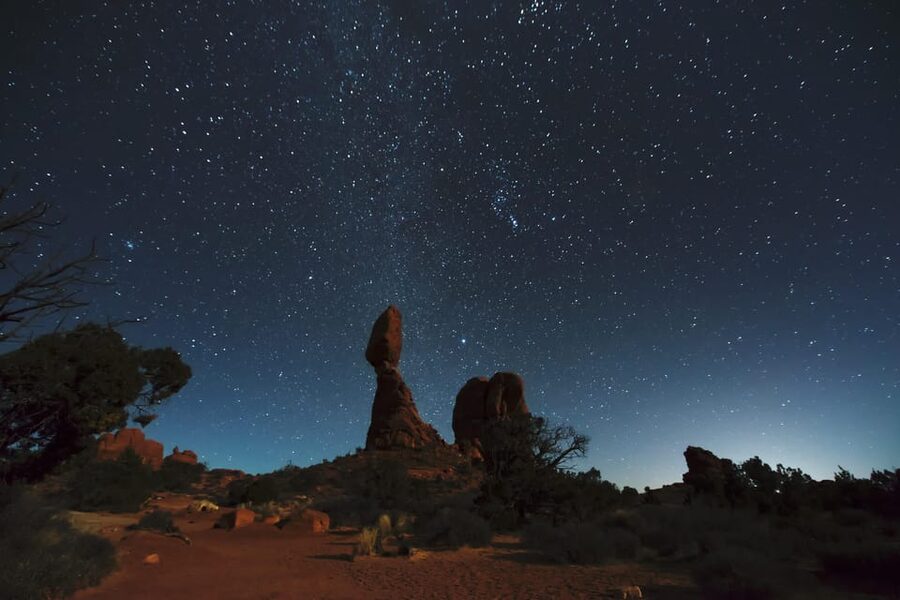
At $175 per person, this is not a cheap walk in the park. You also pay the $30 Arches entry fee per standard vehicle, and you must get to the meeting point yourself. Camera or lens rental costs extra.
The price becomes easier to justify if you want instruction rather than a simple stargazing stop. You receive a live guide, a two-hour walking tour, a red headlamp, and a tripod if needed. The group limit of six is important here. You are paying for access to a person who can work with your particular camera, not just for admission to a viewpoint.
It is a weaker value if you already shoot night photography confidently and own a tripod. In that case, you may be able to visit the Windows area on your own and spend more time working at your own pace. You will still need to follow park rules and handle the dark trail yourself.
For first-time night photographers, couples, and small groups who want a guided experience in Arches, the cost is more reasonable. The guide can save you from spending the whole evening guessing at settings. You also get a safer introduction to walking around the Windows area after dark.
What to bring and who should skip it
Bring a camera, hiking shoes, water, and a charged smartphone. The supplied information does not list warm clothing, so check the conditions before leaving, especially for a late or cool-season start. You should also be ready to carry your own personal items during the roughly two-mile walk.
The activity is not suitable for children under six, wheelchair users, or people with mobility impairments. Pets are not allowed. The trail and darkness require you to walk independently with the group.
This tour suits you best if you fall into one of these groups:
- You want to photograph the Milky Way but do not know where to begin.
- You have a phone with a night mode and want practical help using it.
- You are visiting Arches and want a different experience from a daytime drive.
- You enjoy stargazing but also want a finished photograph to take home.
- You are comfortable walking about two miles after dark.
It may not suit you if you want a relaxed, seated stargazing session, need wheelchair access, or prefer to explore without a fixed route. It is also not the right choice if you want a guaranteed moonless sky, northern lights, telescope session, or perfectly clear weather.
Book it for guidance, not just for the stars
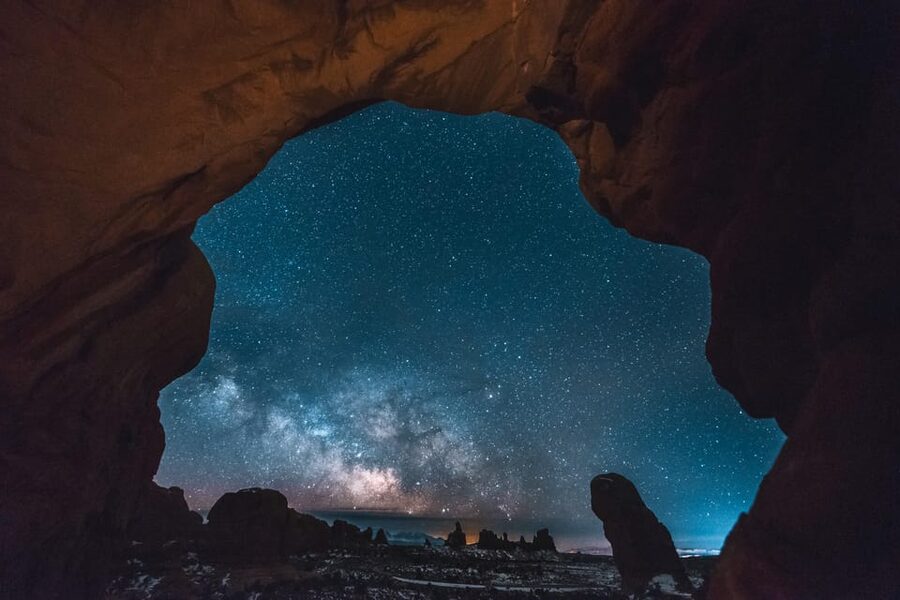
I would book this experience if you want to learn while you walk. The North and South Windows, Turret Arch, and Double Arch are worth seeing at night, but the real benefit is having Sam, Brandon, or another guide show you how to turn that setting into a usable photograph.
Choose your timing with care. Ask about moon conditions if dark skies are your priority, and contact the provider if you specifically want a darker night. If you are bringing a DSLR, confirm the camera or lens rental details before the start. If you are using a phone, do not assume you need expensive equipment. The guides have shown people how to get good results with what they already carry.
For a first step into night photography in Arches National Park, this is a focused and personal way to do it. For an experienced photographer with full gear, the value depends on how much you want a guide and a safer route through the dark.
FAQ
Where does the Windows Astro-Photography and Stargazing Hike meet?
Meet your guide at the Windows parking area in the first parking lot on the right.
How long is the tour?
The guided experience lasts two hours and involves roughly two miles of hiking from the Windows trailhead.
Is park admission included?
No. Entry to Arches National Park is separate and costs $30 per standard vehicle.
Do I need to bring a tripod and headlamp?
No. Red LED headlamps and tripods are included if needed. You should still bring your own camera, hiking shoes, water, and a charged smartphone.
Can I rent a camera or lens?
Yes. A DSLR camera and DSLR lenses are available for an additional fee. The listed lens mounts are Canon EF/EFS and Nikon F, and you should request rental equipment before the tour begins.
Is the activity suitable for children or wheelchair users?
The activity is not suitable for children under six, people with mobility impairments, or wheelchair users. Pets are also not allowed.
More Photo Sessions in the USA
- Mauna Kea Stargazing Experience + Photos
★ 5.0 · 261 reviews - Night-Time Snorkel at TurtleTown with Stars, Lights, and Photos
★ 5.0 · 126 reviews - Mauna Kea: Stargazing Experience with Free Photos
★ 4.2 · 32 reviews - Milky Way Photography Workshop in Acadia National Park
★ 5.0 · 8 reviews
Just added around the USA
- Private Under the Stars Night-Time Tour of DC (Up to 5 Guests)★ 5.0 · 24 reviews
- Stargazing and Milky Way Portrait in Capitol Reef National Park★ 4.5 · 13 reviews
- Temecula Wine Country Stargazing Tour★ 5.0 · 2 reviews
- Skyway Light Show Tour Under the Stars★ 5.0 · 5 reviews
- Astronomy and Stargazing Tour in Utah★ 5.0 · 8 reviews
- Sunset Sedona Sacred Places -gourmet picnic dinner and stargazing★ 5.0 · 12 reviews
- Private Stargazing – Sequoia National Park★ 4.5 · 14 reviews
- PRIVATE Sedona Jeep Tour 4X4 Stargazing Tour at Night★ 4.5 · 11 reviews
Stargazing Hikes & Night Walks, compared.

Sunset Camel Trek, Al Khayma Camp, Stargazing & BBQ
Read our review →
Big Island GOAT Experience: Mauna Kea Summit, Sunset & Stars
Read our review →
Mauna Kea Summit and Stars Small-Group Adventure Tour
Read our review →
Edge Of The World Hike(Dinner under stars,village,bats cave,camp)
Read our review →
Mauna Kea Summit, Sunset, & Stargazing Experience
Read our review →Sunset Camel Trek, Al Khayma Camp, Stargazing & BBQ
Read our review →
MaunaKea Summit SUNSET and Star Tour with Photo
Read our review →
Browse the lists this tour appears in