
REVIEW · MAUNA KEA
Big Island GOAT Experience: Mauna Kea Summit, Sunset & Stars
Mauna Kea gives you two very different shows in one evening: a sunset above the clouds at 13,796 feet, followed by a sky crowded with stars. The mountain’s summit is home to major international observatories, and the high, dry air makes this one of the Big Island’s most memorable night outings. The sunset is the first great payoff.
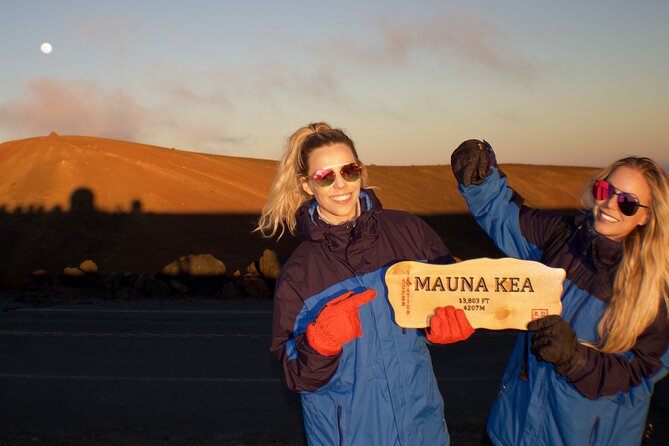
I like the way this trip combines Hawaiian cultural stories with astronomy, rather than treating the mountain as just a photo stop. I also like the practical touches: warm coats, gloves, hot drinks, snack bags, a telescope, and a professional night photo.
The main drawback is simple: Mauna Kea can be brutally cold, windy, and cloudy. You may spend a good part of the seven-to-eight-hour outing in a van, and even a well-run trip cannot promise clear stars.
Key points to know before booking
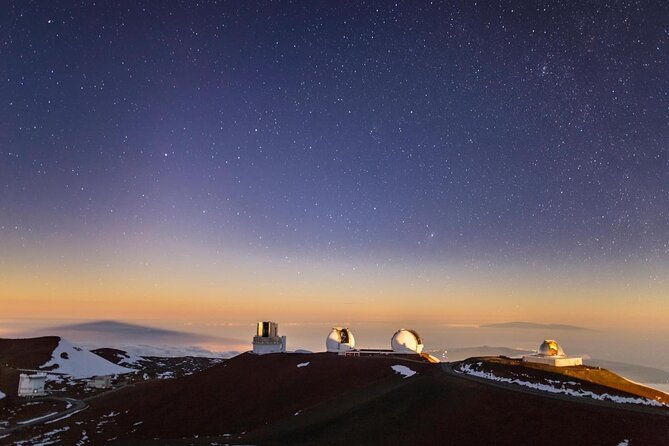
- Sunset at 13,796 feet: Watch the sun drop from above the clouds near the summit observatories.
- Stargazing at lower altitude: The astronomy portion usually takes place farther down the mountain, often near the 9,200-foot visitor facility.
- Small-group 4×4 transport: Pickup is available in Hilo, Waikoloa Village, and Kailua-Kona, with a published maximum of 14 people.
- Cold-weather gear included: Jackets and gloves are supplied, but bring your own warm layers, hat, and thick socks.
- Guides make the difference: Guides including Tay, Kella, John, Chris, Val, and Kellah are praised for astronomy, Hawaiian history, humor, and care.
- Bring dinner: Snacks and a hot drink are included, but dinner is not sold on the mountain.
Why Mauna Kea’s sunset feels different
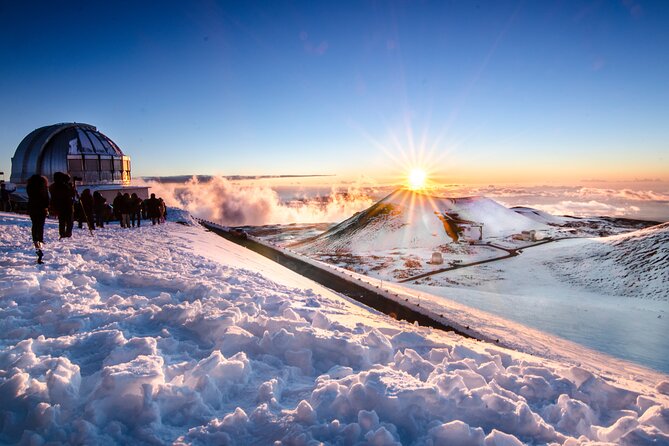
The first thing to understand is the scale. Mauna Kea’s summit reaches 13,796 feet above sea level, far above the Big Island’s beaches and towns. As the van climbs, the air cools quickly and the view opens across volcanic slopes and cloud layers.
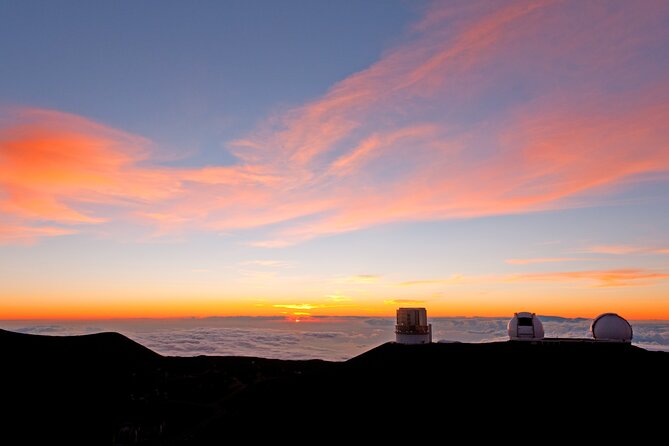
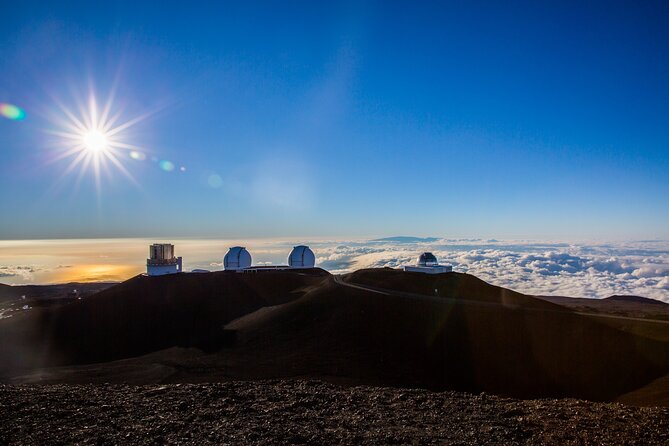
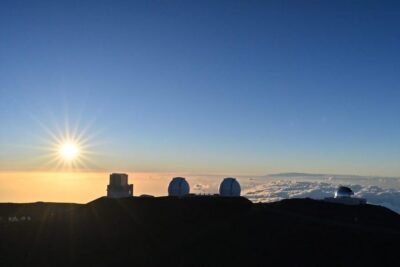
At the summit, you can watch the sun sink toward the Pacific from a place that often sits above the clouds. On a clear evening, the clouds below turn gold and pink while the observatories take on the look of giant silver machines on a high desert mountaintop.
The summit stop lasts about four hours, including transport, sunset, time near the observatories, and the return to a lower point for the astronomy program. You are not simply driven up, handed a camera, and sent back down. The guide explains the volcano, the observatories, Hawaiian traditions, and what you are seeing in the sky.
This is also a place where conditions change fast. Snow has appeared at the summit, even while lower parts of the island were wet and warm. One February outing reached the summit after a snowstorm, with a snow-covered view behind the sunset. On other evenings, cloud cover has blocked much of the stargazing but still produced a striking sunset.
That uncertainty is part of the deal. If you need a guaranteed clear sky, no mountain tour can offer it. If you can accept that the sunset, stars, clouds, moon, or even snow may take turns being the evening’s main attraction, the experience makes more sense.
More Mauna Kea Summit Stargazing Trips:
- Big Island: Mauna Kea Summit and Stars Small-Group Adventure Tour
★ 5.0 · 1,545 reviews - Hilo: Mauna Kea Summit, Sunset, & Stargazing Experience
★ 4.8 · 629 reviews - Mauna Kea Stargazing Experience + Photos
★ 5.0 · 261 reviews
The drive from Hilo, Waikoloa, or Kona
Pickup is available from selected locations in Hilo, Waikoloa Village, and Kailua-Kona. Choose carefully when booking, since the included pickup applies to the departure point selected with your reservation.
The 4×4 van saves you from handling the mountain road yourself. That matters for two reasons. First, you can pay attention to the changing scenery and the guide’s explanations instead of driving in the dark. Second, the guide handles the climb and the return after a long, cold evening.
The ride takes a large share of the experience. This is not a quick two-hour excursion. Plan on seven to eight hours from pickup to drop-off, with long stretches in the vehicle. Some people will enjoy the guide’s facts about lava, volcanoes, beaches, and island history. Others may find the driving tiring, especially from Kona or Hilo.
The published group limit is 14 people. That is small enough to make questions and conversation possible, though the actual vehicle setup matters. A few accounts describe cramped seating or a larger-feeling transfer arrangement, including limited legroom in the back. If comfort and personal space are major concerns, ask the operator about the vehicle and group size before you pay.
The trip is conducted in English. Guides such as John, Chris, Kella, Kellah, Tay, Val, and Tom have been singled out for humor, warmth, astronomy knowledge, and Hawaiian storytelling. The strongest part of the tour is often the guide’s ability to turn a long ride into useful context.
At the summit: observatories, altitude, and cold air
The summit is not a normal sightseeing stop. At nearly 14,000 feet, the air is thin and the temperature can drop below freezing, with strong wind making it feel colder still.
You do not enter the large research telescopes. The observatories are operated by universities and organizations from several countries. You can see them from the summit area and learn why this mountain is prized for astronomy, but the public telescope experience comes later with the tour’s own Celestron instrument.
The altitude also changes how your body feels. The tour calls for moderate physical fitness, and even short uphill walks can feel harder than expected. One person described walking uphill at the summit as difficult. Keep your pace slow, avoid unnecessary exertion, and tell the guide if you feel unwell.
This tour is not suitable for people under 13, pregnant people, or anyone with heart problems or other serious medical conditions. The significant climb from sea level to the summit is not a minor detail. If you have a medical concern, ask your doctor before booking rather than relying on the provided coat and a hopeful attitude.
The operator supplies jackets and gloves, which are useful but not a complete winter wardrobe. Bring:
- Long pants and several warm layers
- A wool or winter hat
- Thick socks
- Closed shoes with good insulation
- Your own lightweight gloves if you have them
- Hand or toe warmers if you use them
The supplied coats are described as one-size-fits-all, and some have had broken zippers. The gloves may not be warm enough for everyone. Your feet can become especially cold while you stand outside for sunset, so good socks matter more than many people expect.
Halepōhaku and the mountain’s Hawaiian meaning
The stop at Halepōhaku, the Onizuka Center for International Astronomy area, adds something important that a purely technical astronomy trip might miss. Mauna Kea is not only a site for telescopes. It is a sacred place in Hawaiian culture.
The mountain is connected with Poliʻahu, the snow goddess, as well as the deities Lilinoe and Waiau. In earlier times, the summit was kapu, or restricted, and access was reserved for high chiefs and priests. Queen Emma made the difficult journey in 1881, leading companions to the summit and sacred Lake Waiau.
The guide may explain these traditions alongside the modern science. That combination gives the mountain more meaning. You are not only looking at a high point with good visibility. You are hearing why Mauna Kea matters to Hawaiian culture and why its use remains a sensitive subject.
The Onizuka Center area sits around 9,200 feet and is used as the lower point for the night-sky program. The change in altitude also provides a more practical place to spend extended time outside. You still need warm clothing, but the setting is less severe than the summit.
More Stargazing Hikes and Night Walks in the USA:
- MaunaKea Summit SUNSET and Star Tour with Photo
★ 4.8 · 220 reviews - Sedona Dark Sky Sunset & Night Hike With a Private Guide
★ 5.0 · 86 reviews - Astro-Photo, Hiking and Stargazing Tour in Arches National Park
★ 5.0 · 63 reviews - Page: Antelope Valley Canyon Stargazing Night Hike
★ 4.5 · 37 reviews
The stars, telescope, and Hawaiian navigation
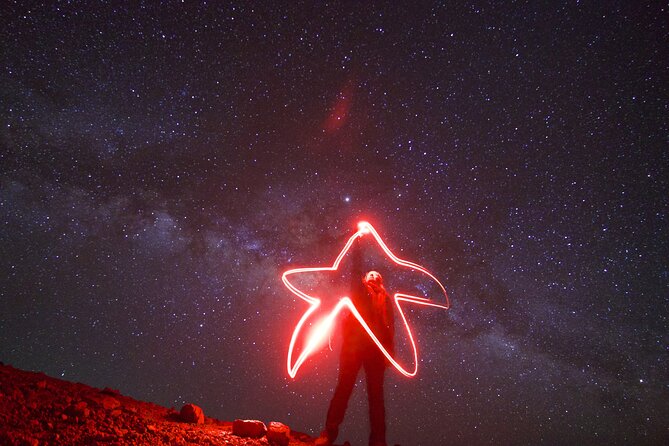
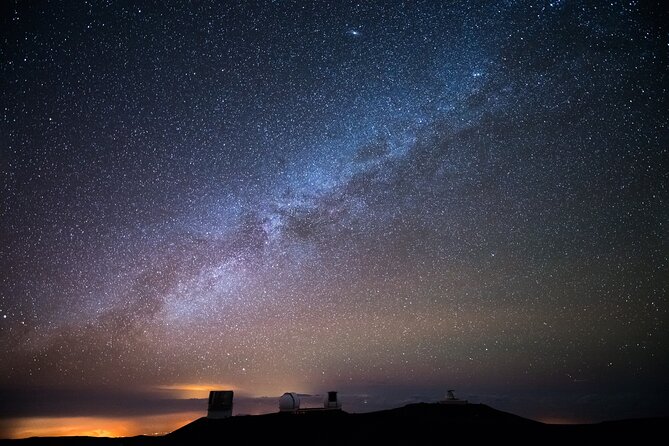
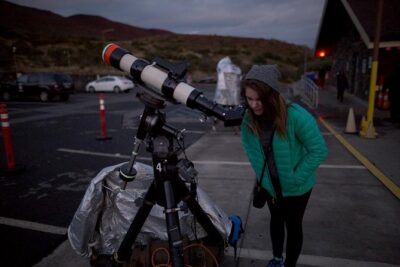
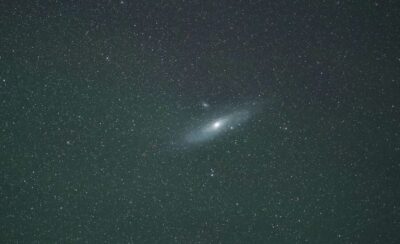
After sunset, the group usually moves lower on the mountain for stargazing. The guide uses a laser pointer to identify constellations, planets, galaxies, and nebulae, then brings selected objects closer with a professional Celestron telescope, weather permitting.
On a clear night, this can be the strongest part of the evening. The high elevation and dark surroundings reveal far more stars than you can normally see from a resort area. The moon may be bright enough to affect faint objects, but it can also become part of the show. One outing included a full moon rising, while another saw the International Space Station and several Starlink satellites pass overhead.
The astronomy talk also connects the sky to Polynesian navigation. You learn how stars and formations helped people find their way across the Pacific, rather than hearing only a list of scientific names.
The telescope viewing is shared, so do not expect a private observatory session or long uninterrupted time at the eyepiece. You might look at a galaxy or nebula for only a short time before moving aside for the next person. The value comes from the full presentation: the guide’s explanation, the naked-eye sky, the laser pointer, and the telescope working together.
Clouds can change everything. One guide waited patiently through a cloudy evening and found a brief opening that revealed the stars. Another outing had an excellent sunset but little stargazing because clouds moved in. The tour can be wonderful in imperfect weather, but you should not treat the telescope as guaranteed.
Snacks, hot drinks, and the missing dinner
The operator provides a snack bag and a hot beverage, often hot chocolate. These small touches matter when you are standing in cold wind after sunset.
Dinner is not included, and there is no food available for purchase on the mountain. Bring a packed meal if you need more than snacks, and eat before the final climb or during an approved stop. Keep your food simple and easy to manage in the van.
Bathrooms are available at the Mauna Kea Visitor Center, and portable toilets may be available near the summit. Conditions can be basic, so carrying tissues is sensible.
The included night photo
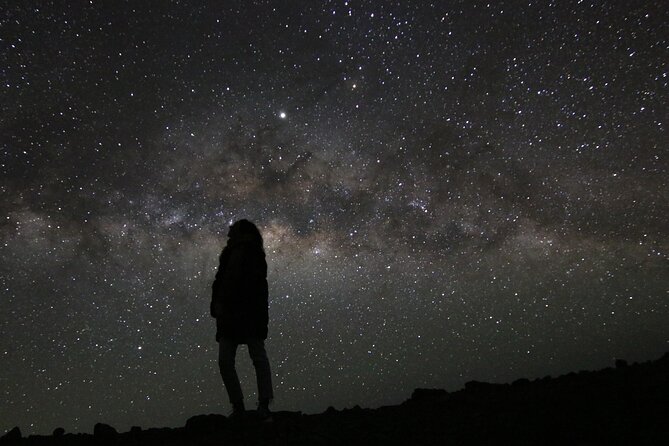
A professional night photo is included, taken with a DSLR camera. This is more useful than asking a phone to capture people in near darkness. The photos can show you beneath the stars, with the mountain or sky behind you.
Save the photo link when it arrives. At least one person had trouble opening the images on a phone, so download the pictures soon and use a computer if the phone link gives you trouble.
Your own phone may still be useful for the sunset and daytime views, but a phone camera will struggle with the night sky. The included photograph gives you a better chance of taking home a clear record of the evening.
Is $289 a fair price?
At $289 per person, this is not a cheap sunset outing. You are paying for a full evening of transport, a 4×4 vehicle, a guide, summit access, cold-weather gear, snacks, a hot drink, telescope equipment, and a professional photograph.
The value depends on what you would otherwise do. If you already have an appropriate four-wheel-drive vehicle and feel comfortable with the mountain road, you could reach the summit independently. But self-driving does not give you the same guided astronomy talk, telescope setup, cultural stories, or included photograph. It also may not provide the same access to the stargazing portion.
I think the price is easier to justify for first-time Big Island visitors, people who do not want to drive at altitude, and anyone who values interpretation rather than just a viewpoint. It is harder to justify if you dislike long van rides, want a private experience, or expect a guaranteed telescope session under clear skies.
Private tours are not included. The shared format keeps the cost below a private guide, but it also means you follow the group’s timing and share the telescope and photo opportunities.
Who should book this Mauna Kea outing?
I would recommend it to adults and older teens who enjoy astronomy, geology, Hawaiian culture, and dramatic natural views. It is also a strong choice for couples, families with children over 13, and anyone who wants a major Big Island experience without driving the summit road.
You should think twice if you dislike cold, have difficulty with altitude, need generous legroom, or want a relaxed dinner-and-sunset evening. This is an active, lengthy outing with a sharp change in temperature and elevation.
Book with enough flexibility for weather. The experience has free cancellation up to 24 hours before the start time, while weather cancellations offer a different date or a full refund. That policy helps, since clouds and road conditions can affect the mountain.
Final call: a memorable Big Island splurge
I would book this tour if seeing Mauna Kea at sunset and under the stars is high on your Big Island list. The best elements work together: a summit above the clouds, a lower-elevation astronomy session, Hawaiian stories, a telescope, warm gear, and a photo you do not have to take yourself.
Go in prepared for cold, wind, long drives, and changing weather. Bring your own layers, dinner, thick socks, and patience. If you do, the evening can deliver one of Hawaii’s rarest combinations: sunset on a volcanic summit, followed by a sky that feels almost close enough to touch.
FAQ
Where can I be picked up for the tour?
Pickup is available from selected locations in Hilo, Waikoloa Village, and Kailua-Kona. You must select the correct pickup option when booking.
How high is Mauna Kea’s summit?
The summit is 13,796 feet, or 4,205 meters, above sea level. The Mauna Kea Visitor Center area is around 9,200 feet, or 2,800 meters.
Is dinner included?
No. Snacks and a hot beverage are included, but dinner is not. You may bring a packed dinner, and there is no food available for purchase upon arrival.
Are coats and gloves provided?
Yes. Jackets and gloves are provided to help keep you warm. You should still bring warm layers, a hat, and thick socks because summit conditions can be below freezing and windy.
Can children join the tour?
People under 13 are not allowed to participate. The tour is also not recommended for pregnant people or anyone with heart problems or other serious medical conditions.
Can I use the large observatory telescopes?
No. The major observatories are operated by universities and organizations from several countries. The tour provides a professional Celestron telescope for stargazing, weather permitting.
More Evening Trips in the USA
- The Original Sedona UFO and Stargazing Night Tour
★ 4.5 · 269 reviews - The Night Sky Star Story, Galaxy, and Sedona Story Tour
★ 4.5 · 243 reviews - Night-Time Snorkel at TurtleTown with Stars, Lights, and Photos
★ 5.0 · 126 reviews - Mt Rushmore Night Ceremony and Tour – with Tunnels and Stargazing
★ 4.5 · 65 reviews
More Sunset and Stargazing Tours in the USA
- Death Valley Day & Night Tour – Scenic Stops, Sunset & Stargazing
★ 5.0 · 124 reviews - UTV Sunset S’mores n’ Stars at Coral Pink Sand Dunes
★ 5.0 · 108 reviews - Death Valley Small Group Day Tour with Sunset and Stargazing
★ 5.0 · 37 reviews - Haleakala Sunset and Astronomy Tour
★ 5.0 · 33 reviews
Just added around the USA
- Private Under the Stars Night-Time Tour of DC (Up to 5 Guests)★ 5.0 · 24 reviews
- Stargazing and Milky Way Portrait in Capitol Reef National Park★ 4.5 · 13 reviews
- Temecula Wine Country Stargazing Tour★ 5.0 · 2 reviews
- Skyway Light Show Tour Under the Stars★ 5.0 · 5 reviews
- Astronomy and Stargazing Tour in Utah★ 5.0 · 8 reviews
- PRIVATE Sedona Jeep Tour 4X4 Stargazing Tour at Night★ 4.5 · 11 reviews
- Sunset Sedona Sacred Places -gourmet picnic dinner and stargazing★ 5.0 · 12 reviews
- Private Stargazing – Sequoia National Park★ 4.5 · 14 reviews
Mauna Kea Stargazing Tours, compared.
Mauna Kea Summit and Stars Small-Group Adventure Tour
Read our review →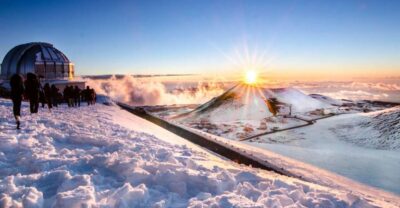
Mauna Kea Summit, Sunset, & Stargazing Experience
Read our review →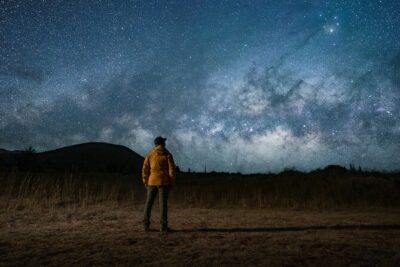
MaunaKea Summit SUNSET and Star Tour with Photo
Read our review →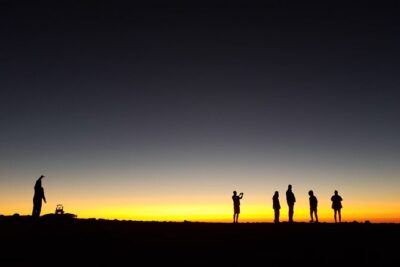
Mauna Kea: Stargazing Experience with Free Photos
Read our review →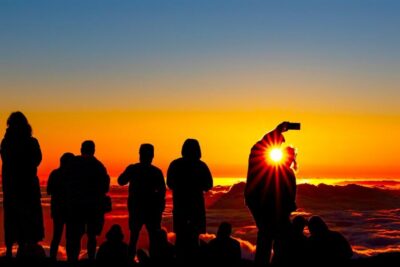
Haleakala Sunset and Stargazing Tour with Dinner
Read our review →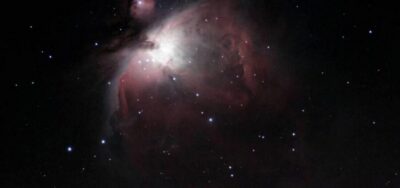
Browse the lists this tour appears in