
REVIEW · MAUNA KEA
Hilo: Mauna Kea Summit, Sunset, & Stargazing Experience
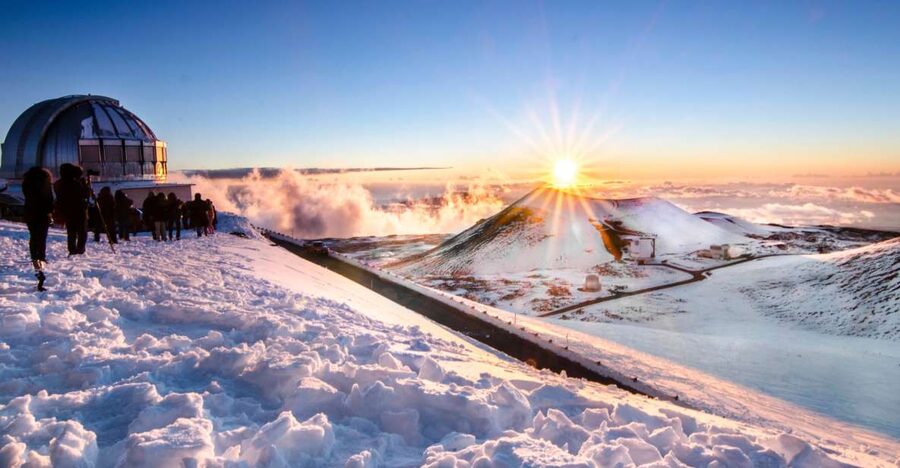
Mauna Kea gives you two big shows in one evening: a sunset above the clouds and a dark sky crowded with stars. The trip also brings you close to the giant research telescopes linked to the first black hole image, then sets up a telescope of its own for a more personal look at the heavens.
I like the warm parkas, gloves, snacks, and hot chocolate, because the summit is genuinely cold even when Hilo feels tropical. I also like the guides’ mix of astronomy, Hawaiian stories, geology, and navigation. The drawback is altitude: this is not a casual sightseeing ride, and the $289 price will feel high if clouds or wind spoil the sky.
Key points to know before booking
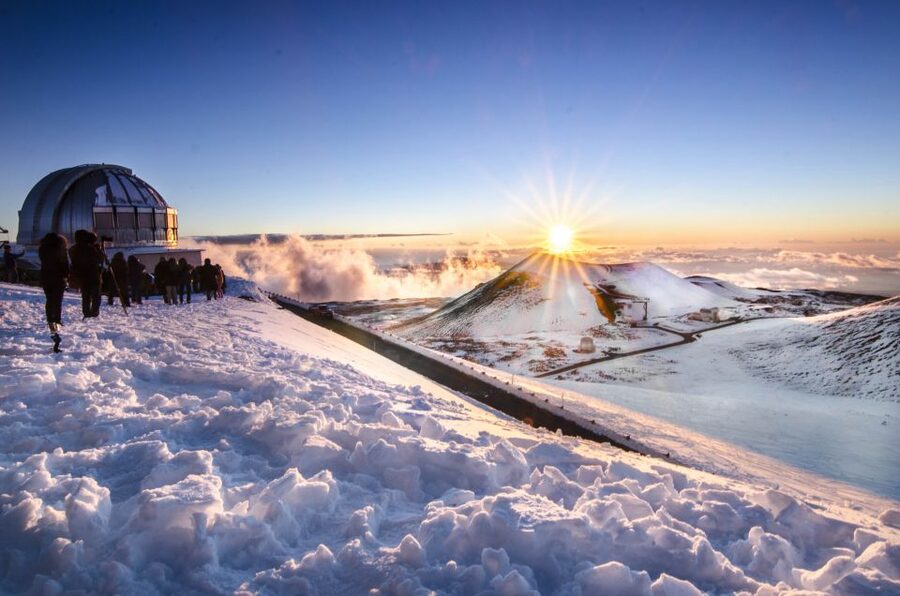
- Sunset near 14,000 feet: Watch the sun drop from above the clouds at Mauna Kea’s summit.
- Stargazing around 9,000 to 12,000 feet: After sunset, the group moves lower for a darker, calmer viewing area.
- Warm clothing supplied: Parkas and gloves are included, with hot chocolate and snacks during the evening.
- Personal telescope session: Views may include nebulae, star clusters, planets, or galaxies, depending on weather and visibility.
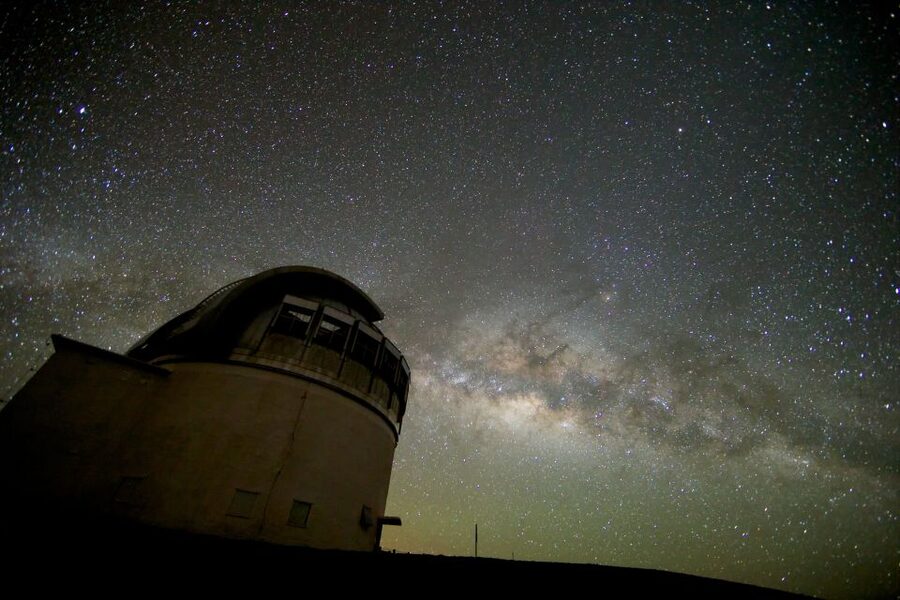
- Free night photos: Your guide takes group pictures, including shots with the Milky Way, and emails them afterward.
- Strict health limits: The experience is for ages 13 to 80 and is not suitable for pregnancy, heart or lung conditions, mobility problems, or altitude sickness.
Why Mauna Kea sunset feels different
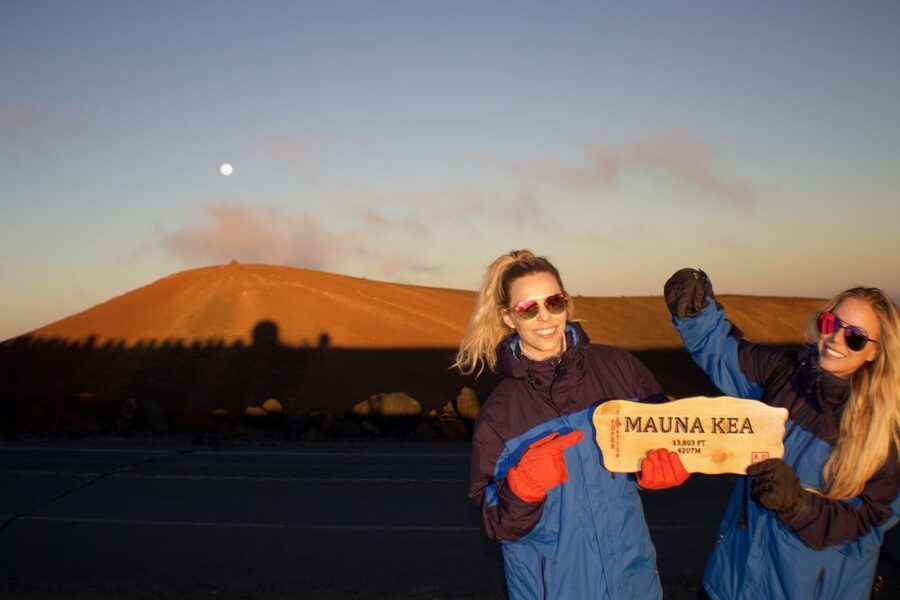
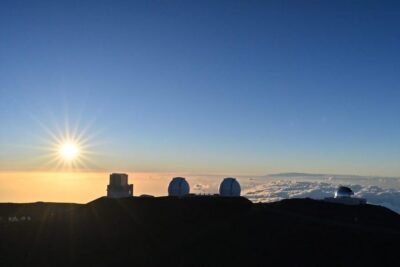
The main attraction is not simply reaching a high viewpoint. At the summit, you look across a sea of cloud while the light changes from gold to pink, red, and violet. On a clear evening, the setting feels almost detached from the island below.
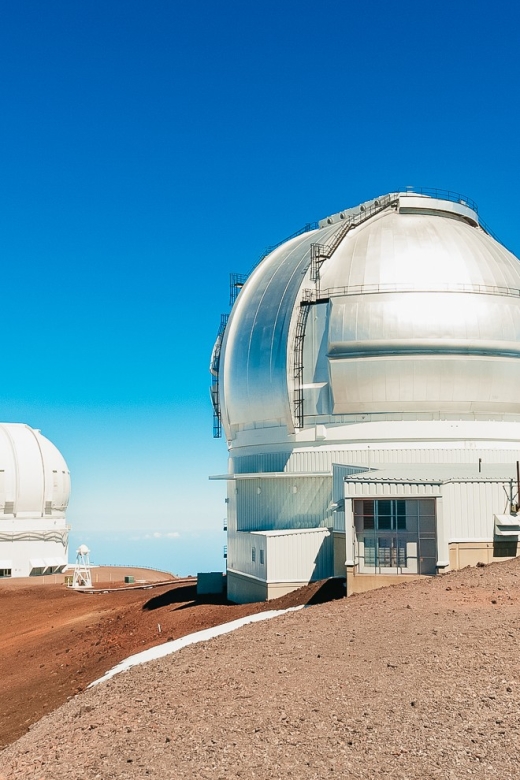
Mauna Kea is the highest point in the Pacific, and its summit hosts one of the world’s largest collections of research telescopes. You will see major observatory buildings, including two of the eight telescopes connected with the first photograph of a black hole. The machines are impressive, but the setting gives the stop its force: science, Hawaiian culture, volcanic geology, and open sky all meet in one place.
The summit stop is also the coldest part of the trip. Temperatures can fall sharply, and wind can make the air feel colder still. The supplied parka and gloves are not decorative extras. You will want them, especially while waiting for the last light.
More Mauna Kea Summit Stargazing Trips:
- Big Island GOAT Experience: Mauna Kea Summit, Sunset & Stars
★ 5.0 · 1,706 reviews - Big Island: Mauna Kea Summit and Stars Small-Group Adventure Tour
★ 5.0 · 1,545 reviews - Mauna Kea Stargazing Experience + Photos
★ 5.0 · 261 reviews
The ride from Hilo to the mountain
Pickup is available from selected Hilo locations, including the Bank of Hawaii, Starbucks, and the Grand Naniloa Hotel Hilo, a DoubleTree by Hilton. The exact meeting point depends on the option you choose, so check it carefully and arrive at least 10 minutes early.
The trip lasts about 390 to 450 minutes, or roughly six and a half to seven and a half hours. That long duration makes sense once you factor in the drive, the altitude adjustment, the summit visit, sunset, and the later telescope session. Still, you are committing most of an afternoon and evening, not squeezing in a quick attraction.
The vehicles are described as comfortable, with good visibility from the seats. Some departures use more than one vehicle as the group travels up the mountain. Guides such as Val, Tay, John, Jess, Rob, Mitch, and Zack have received especially strong praise for explaining the island along the way rather than treating the drive as dead time.
Expect commentary on Hawaiian history, geology, plants, animals, volcanoes, and astronomy. Several guides also bring in Hawaiian views of the constellations, including their importance for seafaring. That cultural layer makes the stars feel connected to the island, not just to a textbook.
You receive a small snack bag for the drive. The exact choices may include chips, crackers, candy, and similar simple items. It is useful road food, though you should not expect a full meal or a specifically Hawaiian menu. Dinner is not included, so eat beforehand or plan food around the tour.
The visitor stop and altitude adjustment
The ascent does not rush straight from sea level to the summit. The group stops at the visitor area for about 30 minutes before continuing higher, giving you time to adjust. This is an important part of the schedule, not wasted time.
At roughly 14,000 feet, the oxygen level is about 40 percent lower than at sea level. Some people feel short of breath, light-headed, or uncomfortable at that height. The experience requires good physical condition, and supplemental oxygen is available if needed, but that does not make the summit appropriate for everyone.
Take this warning seriously. You should not join if you are pregnant or have heart, lung, respiratory, back, or mobility problems. The tour also excludes people with altitude sickness and anyone over 80. Children under 13 cannot participate, and the stated age range is 13 to 80.
You must also avoid scuba activity within 24 hours before the tour. That rule is easy to miss when planning a Hawaii holiday, especially if you are combining Mauna Kea with ocean activities.
Sunset among the observatories
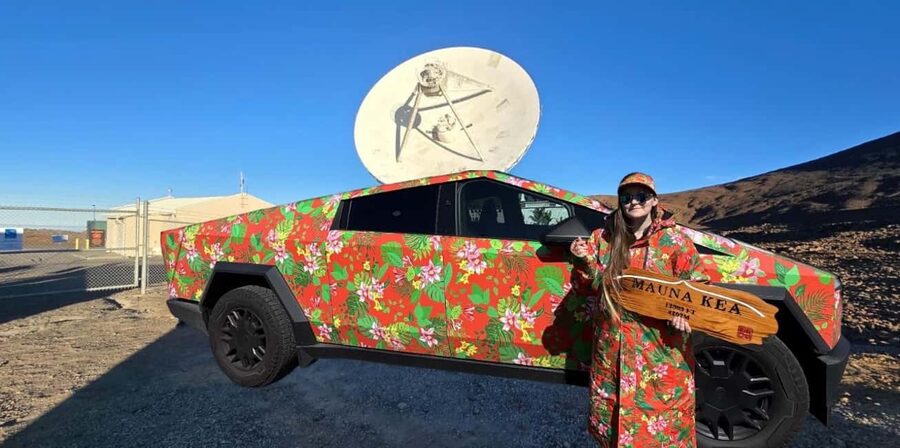
The summit visit is the visual centerpiece. You get time near the observatories and a chance to see the sun set from above the clouds. The guides explain the telescopes and the work done on the mountain, including the connection to the first black hole image.
Do not expect to enter the working research facilities. This is an outdoor visit near the observatories, with the focus on views, explanation, and photography. The buildings themselves provide a striking contrast to the wild volcanic summit.
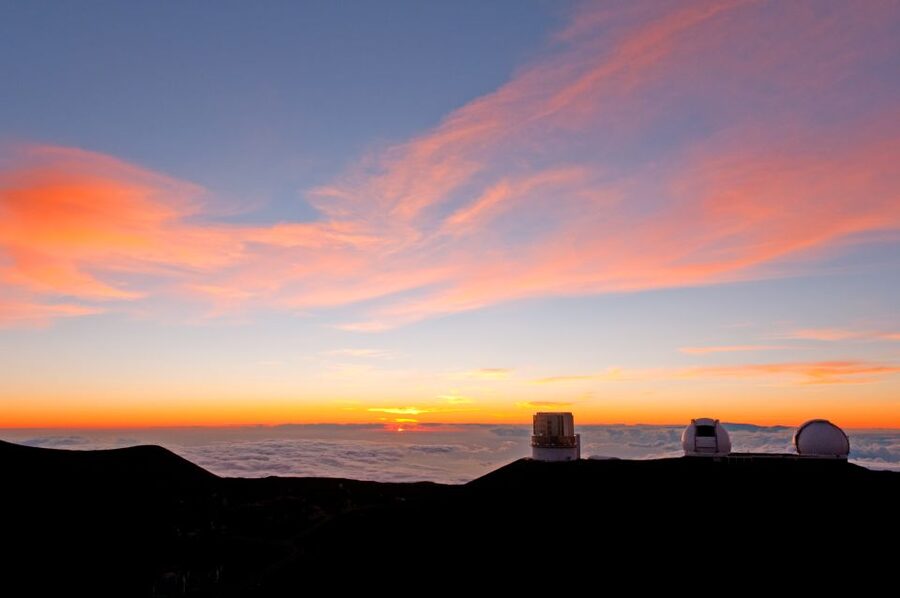
The high point of the sunset stop is often the changing color. On a clear evening, the sky may shift rapidly while clouds below catch the last light. The experience can be spectacular, but weather remains the deciding factor. Ice, cloud, wind, or road conditions can affect the summit portion. One scheduled outing had to be stopped because the summit road was closed by ice, with the option to reschedule or receive a refund.
That is an important value point. You are paying for access, transport, equipment, and guidance, but no operator can guarantee a perfect sunset. A flexible schedule helps. If your visit has several open evenings, book early enough to leave room for a weather change.
More Stargazing Hikes and Night Walks in the USA:
- MaunaKea Summit SUNSET and Star Tour with Photo
★ 4.8 · 220 reviews - Sedona Dark Sky Sunset & Night Hike With a Private Guide
★ 5.0 · 86 reviews - Astro-Photo, Hiking and Stargazing Tour in Arches National Park
★ 5.0 · 63 reviews - Page: Antelope Valley Canyon Stargazing Night Hike
★ 4.5 · 37 reviews
Stargazing with a telescope
After sunset, the group travels to a lower elevation for stargazing, often described in the range of 9,000 to 12,000 feet. This area is less exposed than the summit and can offer a darker, more comfortable place to sit or stand under the sky.
The guide gives a talk on stars and constellations, often blending Greek stories with Hawaiian traditions. You may learn how stars were used for navigation and how different cultures read the same night sky. The presentation is aimed at ordinary people, not trained astronomers, so you do not need any background knowledge.
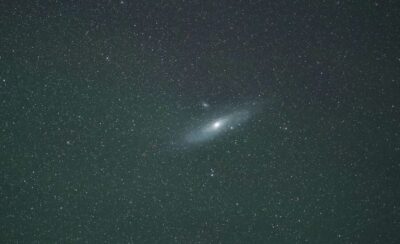
The telescope session depends on weather. Clear skies may reveal nebulae, star clusters, planets, or distant galaxies. Specific sightings vary with the date, season, cloud cover, and equipment. One evening included Orion’s Nebula and several galaxies, while another focused on three nebulae. You might see a shooting star, but that is luck rather than a promised part of the program.
The telescope makes this more rewarding than simply standing outside and looking upward. A guide can point out what you are seeing, explain why it looks different through the instrument, and help you find major constellations with your own eyes afterward.
Hot chocolate is served during the stargazing stop, along with snacks. It is a small touch, but it matters when you have spent the evening in cold, dry air. Bring water as well. The supplied clothing keeps you warmer, but it does not replace your own layers.
Photos with the Milky Way
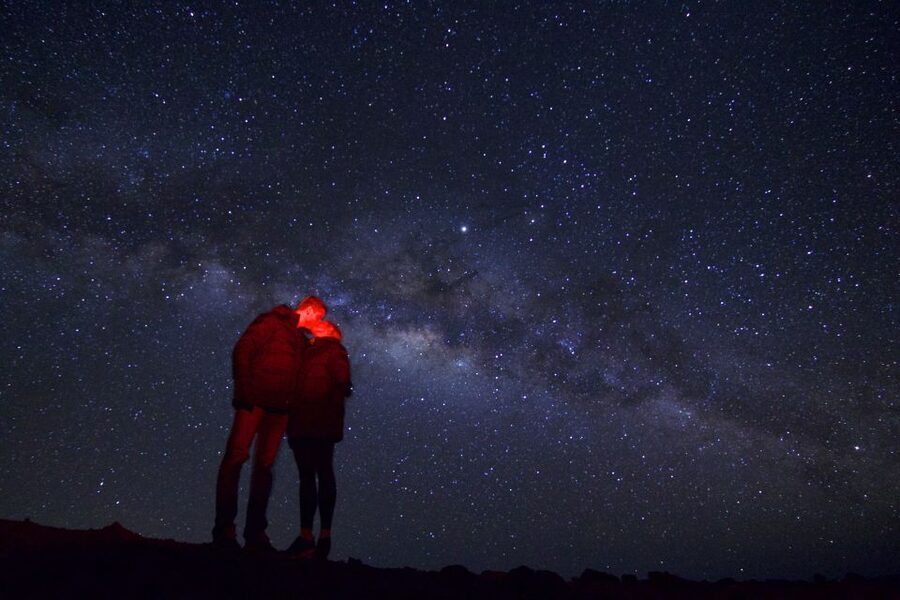
Your guide takes free night photos and emails them after the tour. These may include portraits of your group with the night sky behind you, along with images connected to the telescope session.
This is one of the better extras in the package. Night photography is difficult with an ordinary phone, and the supplied pictures give you a record of the experience without making you spend the whole evening managing a camera.
The photos are not a substitute for seeing the sky directly. Your eyes take in a wider, more immediate view, while a camera may show colors and detail that are hard to notice in person. Still, the pictures are useful, especially if you want a group shot beneath the Milky Way.
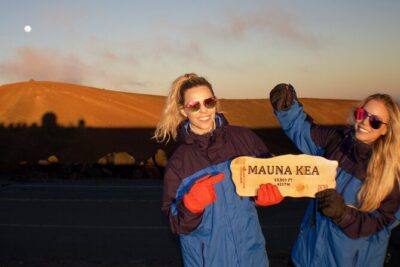
The colorful parkas also make the photos more playful. They are practical first, but they add a bright Hawaiian touch to an otherwise dark setting.
Guides who shape the evening
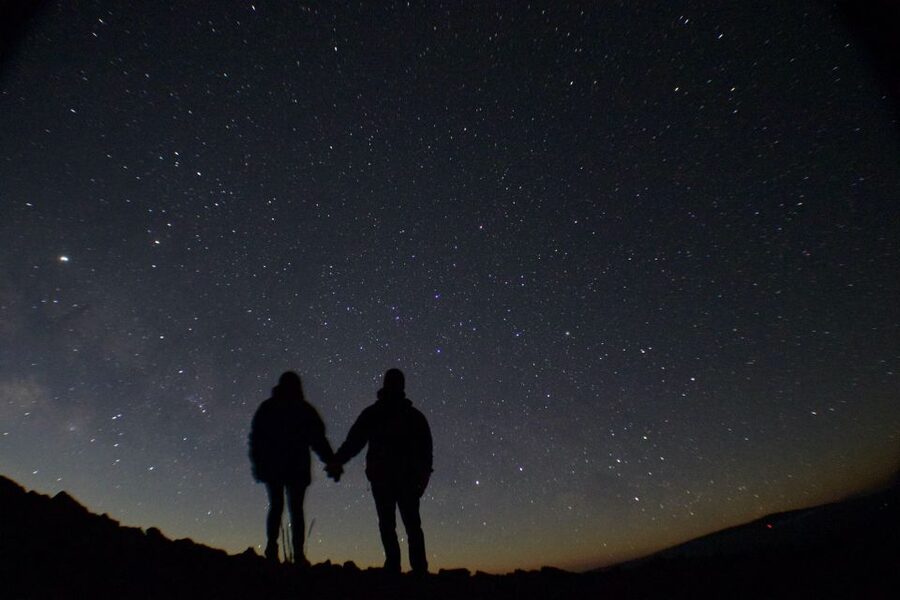
The guide can make or break a long mountain outing. The strongest names associated with this experience include Val, Tay, John, Jess, Rob, Mitch, Zack, James, Ryan, Chris, and Bean. Assignments vary, so you should not book expecting one particular person unless the operator confirms it.
The best guides do more than drive. They explain the volcanic rock, the telescope sites, Hawaiian history, astronomy, and the practical demands of the mountain. Tay has been singled out for making astronomy easy to follow while also explaining Hawaiian culture and star navigation. Val is praised for keeping people comfortable and telling stories well. Jess and Rob are frequently described as warm, organized, and energetic.
That range of subjects gives the evening its value. You are not just buying a ride to a viewpoint. You are paying for someone to handle the mountain road, watch the schedule, explain what you are seeing, provide warm clothing, and keep the group together as conditions change.
You should also keep expectations realistic. Guide quality can vary from one departure to another, and the weather can have a bigger effect than any person. A brilliant guide cannot clear clouds from the summit.
Is $289 a fair price?
At $289 per person, this is an expensive half-day outing. If you compare it with a simple sunset viewpoint, the price looks steep. The value becomes clearer when you count the long round-trip transport, high-altitude vehicle access, guide service, visitor stop, parkas, gloves, snacks, hot chocolate, telescope use, and free photography.
You also avoid driving the mountain yourself. The road, darkness, altitude, weather, and four-wheel-drive requirements make self-driving a serious undertaking. A guide knows where to stop, when to move on, and how to position the evening around sunset and darkness. That convenience is a major part of the cost.
The experience is most worth the price if you care about astronomy, photography, Hawaiian culture, or unusual natural settings. It is less appealing if you dislike long drives, cold weather, strict schedules, or group outings.
I would also treat the cancellation policy as useful protection. You can cancel up to 24 hours before departure for a full refund, and the reserve-now, pay-later option lets you hold a place without paying immediately. Those terms help when mountain weather is uncertain.
What to wear and bring
Start with comfortable shoes and long pants, as requested by the operator. Add a warm shirt, sweater, or light jacket underneath the supplied parka. A beanie, tall socks, and a water bottle are sensible additions based on the conditions described by people who have taken the trip.
You should expect cold and wind at the summit, even if you leave a warm, humid part of Hilo. The parka and gloves are provided, but your own layers help you stay comfortable while waiting for sunset and during the star talk.
Do not bring alcohol or drugs. Non-folding wheelchairs are not permitted, and the physical demands make this unsuitable for people with mobility limits. The experience also requires standing and walking in a high-altitude setting, so it is not designed as an easy-access sightseeing ride.
Who should book this Mauna Kea experience?
I would recommend it most strongly to adults and teenagers who want a full evening devoted to the sky. It suits you if you enjoy asking questions, listening to stories, and seeing both the scientific and cultural sides of Mauna Kea.
It also works well for couples and small groups marking a special occasion. The sunset, telescope session, and night portraits give the evening a clear sense of occasion without requiring you to organize separate activities.
This is not the right choice for a relaxed family excursion with young children. It is also a poor match for anyone with medical conditions affected by altitude, anyone who dislikes cold, or anyone hoping for a guaranteed clear sky.
Should you book it?
Book this experience if you want more than a viewpoint and do not want to manage the mountain drive yourself. The combination of sunset above the clouds, observatory context, Hawaiian star stories, telescope viewing, warm gear, and free night photos gives the evening real substance.
Skip it if $289 feels uncomfortable, your schedule cannot handle six and a half to seven and a half hours, or you have health concerns at altitude. For everyone else, choose a date with some flexibility, bring warm layers and water, and accept that the sky gets the final word.
FAQ
How long does the Mauna Kea sunset and stargazing experience last?
The stated duration is 390 to 450 minutes, or about six and a half to seven and a half hours. The schedule includes pickup, the mountain drive, an altitude adjustment stop, the summit visit, sunset, stargazing, and return transport.
Where can I be picked up in Hilo?
Pickup options include the Bank of Hawaii, Starbucks, and the Grand Naniloa Hotel Hilo, a DoubleTree by Hilton. Your exact meeting point depends on the option booked.
Is transportation included?
Yes. Pickup and drop-off at selected locations are included. The vehicles take you up the mountain and return you to the selected drop-off point.
What happens at Mauna Kea’s summit?
You watch the sunset from near the summit, learn about Mauna Kea and its observatories, and see two telescopes connected with the first photograph of a black hole. The summit is about 14,000 feet above sea level.
Is telescope viewing guaranteed?
No. The telescope session is weather permitting. Cloud, wind, or other conditions can limit what you see.
What food and drinks are included?
Snacks and hot chocolate are included. Dinner is not included, so plan your meal separately.
Are warm clothes provided?
Yes. Parkas and gloves are provided. You should still bring long pants and extra layers, since the summit can be very cold and windy.
Who cannot join this experience?
The activity is not suitable for children under 13, adults over 80, pregnant people, or anyone with heart, lung, respiratory, back, or mobility problems. It is also not suitable for people with altitude sickness or anyone who has taken part in scuba activity within the previous 24 hours.
Can I cancel if my plans change?
You can cancel up to 24 hours before departure for a full refund. A reserve-now, pay-later option is also available.
More Evening Trips in the USA
- The Original Sedona UFO and Stargazing Night Tour
★ 4.5 · 269 reviews - The Night Sky Star Story, Galaxy, and Sedona Story Tour
★ 4.5 · 243 reviews - Night-Time Snorkel at TurtleTown with Stars, Lights, and Photos
★ 5.0 · 126 reviews - Mt Rushmore Night Ceremony and Tour – with Tunnels and Stargazing
★ 4.5 · 65 reviews
More Sunset and Stargazing Tours in the USA
- Death Valley Day & Night Tour – Scenic Stops, Sunset & Stargazing
★ 5.0 · 124 reviews - UTV Sunset S’mores n’ Stars at Coral Pink Sand Dunes
★ 5.0 · 108 reviews - Death Valley Small Group Day Tour with Sunset and Stargazing
★ 5.0 · 37 reviews - Haleakala Sunset and Astronomy Tour
★ 5.0 · 33 reviews
Just added around the USA
- Private Under the Stars Night-Time Tour of DC (Up to 5 Guests)★ 5.0 · 24 reviews
- Stargazing and Milky Way Portrait in Capitol Reef National Park★ 4.5 · 13 reviews
- Temecula Wine Country Stargazing Tour★ 5.0 · 2 reviews
- Skyway Light Show Tour Under the Stars★ 5.0 · 5 reviews
- Astronomy and Stargazing Tour in Utah★ 5.0 · 8 reviews
- PRIVATE Sedona Jeep Tour 4X4 Stargazing Tour at Night★ 4.5 · 11 reviews
- Sunset Sedona Sacred Places -gourmet picnic dinner and stargazing★ 5.0 · 12 reviews
- Private Stargazing – Sequoia National Park★ 4.5 · 14 reviews
Mauna Kea Stargazing Tours, compared.
Big Island GOAT Experience: Mauna Kea Summit, Sunset & Stars
Read our review →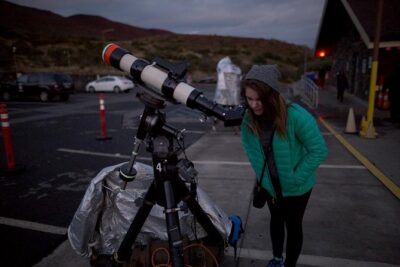
Mauna Kea Summit and Stars Small-Group Adventure Tour
Read our review →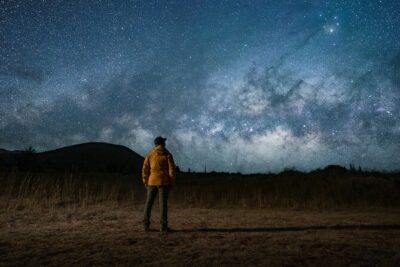
MaunaKea Summit SUNSET and Star Tour with Photo
Read our review →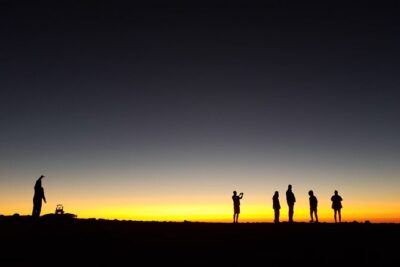
Mauna Kea: Stargazing Experience with Free Photos
Read our review →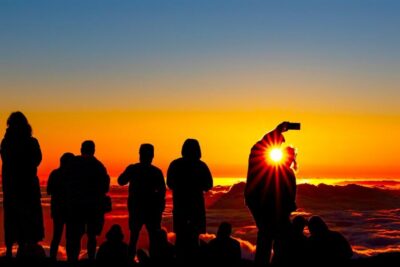
Haleakala Sunset and Stargazing Tour with Dinner
Read our review →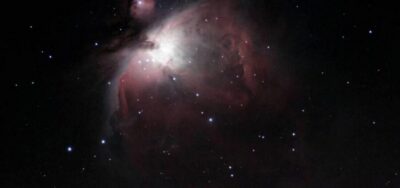
Browse the lists this tour appears in