
REVIEW · USA
Astronomy Tour
A few minutes outside Boulder, you can watch Saturn’s rings, Jupiter’s moons, nebulae, and distant galaxies through several telescopes. The setting is easy to reach by car or rideshare, and you do not need to hike into the foothills with a headlamp and heavy pack.
I like the hands-on telescope time and the chance to ask plenty of questions. I also like the simple format: arrive at twilight, listen to a professional astronomer explain the sky, then look through different instruments as night settles in. The main drawback is Boulder’s glow and occasional traffic near the trailhead, which can interrupt an otherwise dark-sky experience.
Key points to know before booking
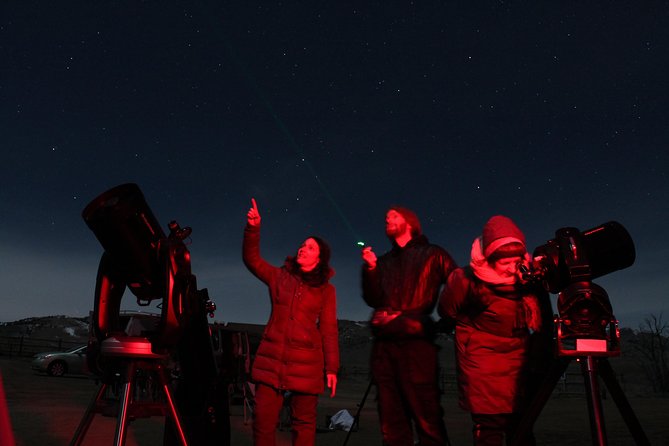
- Three or four telescopes may be set up: Different instruments offer different views of planets, star clusters, galaxies, and nebulae.
- No hiking is required: The meeting point is at Boulder Valley Ranch Trailhead, with access by car, taxi, Lyft, or Uber.
- Luke, Massie, and Koda have led sessions: The guides explain astronomy in plain language and leave time for questions.
- The tour begins at twilight: You watch the sky change from daylight to a field of stars during the two-hour program.
- Bring serious cold-weather gear: Temperatures can drop quickly at night, even after a hot Colorado day.
- You may stay after the formal tour: The sky remains available for extra viewing while the equipment is packed away.
What this Boulder astronomy tour is really like
This is a two-hour evening program at Boulder Valley Ranch Trailhead, north of Boulder. You meet at a roadside trailhead rather than hiking to a remote overlook, so the experience is more about the telescopes and the guide than about reaching an isolated mountain location.
That easy access is a real advantage. You can arrive by car, taxi, Lyft, or Uber, and most people can take part without special fitness. The tradeoff is equally clear: this is not a silent, miles-from-civilization stargazing camp. Boulder remains visible from the site, and other vehicles or people may pass through.
The timing begins around twilight. That gives you a useful transition from the familiar evening sky to the darker one. The guide can point out what is visible as conditions change, rather than asking you to arrive in full darkness and figure out what you are seeing on your own.
The session is led by a professional astronomer. Luke is praised for explaining the night sky clearly and for handling a wide range of questions. Massie is also noted for making the session informative, while Koda has led a setup with three telescopes offering different views. Guide assignments can vary, but the format is built around direct instruction rather than a simple telescope queue.
More Stargazing Tours in the USA:
- Small Group Big Island Twilight Volcano and Stargazing Tour
★ 5.0 · 1,619 reviews - Sedona Stargazing Tours LLC
★ 4.5 · 881 reviews - Hilo: Mauna Kea Summit, Sunset, & Stargazing Experience
★ 4.8 · 629 reviews
Looking through several telescopes
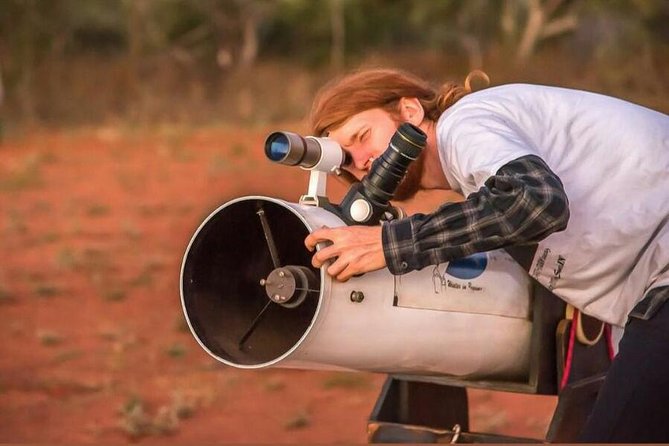
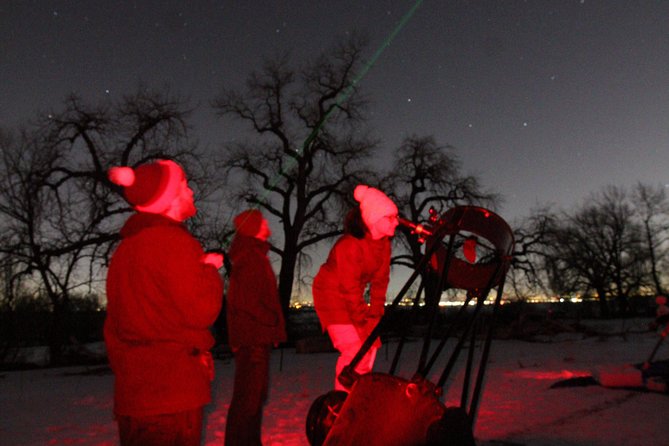
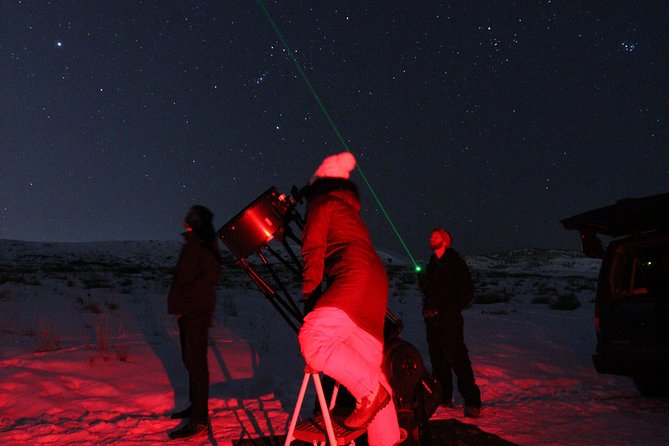
The telescopes are the heart of the evening. Instead of looking at one object through one instrument, you may move among several setups as the guide adjusts them for different targets. One session used three telescopes with different abilities, while another had four telescopes and a pair of binoculars for a group of about 17 people.
That variety matters. A planet can look best through one type of telescope, while a broad star cluster or faint galaxy may suit another. You are not just being shown a single prepared view. The equipment is adjusted as the night progresses and as the guide selects objects that fit the sky conditions.
The list of possible sights is impressive for a two-hour outing. You might see Venus, Saturn, Jupiter and its moons, star clusters, nebulae, and a galaxy. The exact lineup depends on the season, cloud cover, and what is above the horizon that evening, so no responsible tour can promise every object.
Saturn is a likely highlight when it is visible. Seeing its rings with your own eye through a telescope is very different from seeing a photograph in a book or on a phone. Jupiter can also be memorable because its moons may appear as small points beside the planet, offering a quick lesson in how other worlds orbit their own planet.
Nebulae and galaxies require a different kind of attention. They may not appear as bright, colorful images like the photographs used in astronomy books. Through a telescope, you might see a soft patch, a faint shape, or a compact cluster of light. The guide’s explanation helps you understand what you are seeing and why the object matters.
Learning the sky without a classroom lecture
The educational side is strong, but this is not described as a formal lesson with a fixed script. The guides talk about the universe, explain the objects in view, and set aside time for questions. That open format works well if you are curious about planets, stars, galaxies, or the mechanics of the telescopes.
I like that you can ask the questions that come up naturally. You might want to know how far away a galaxy is, why Saturn has rings, or how a telescope gathers light. The dedicated question period gives you room to move beyond the guide’s prepared points.
Luke, in particular, has been praised for being willing to keep talking after the scheduled program. The tour allows you to remain and continue looking at the sky while the equipment is packed away. That extra time can be valuable if you prefer a slower evening instead of a strict start-and-stop activity.
The group size is capped at 22 people. That is not a private tour, but it is small enough to keep the session manageable. Telescope programs can become frustrating when a large crowd forms around one eyepiece. Several instruments spread the attention and reduce the wait, though your experience may still depend on the exact number of people attending.
The setting near Boulder
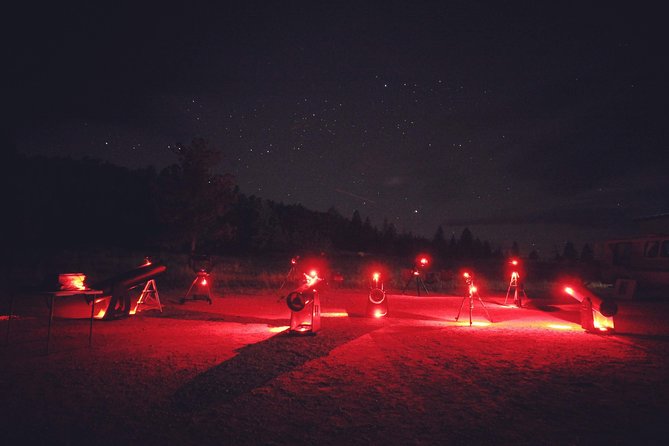
The trailhead location offers convenience, but it also shapes the quality of the sky. Boulder is visible from the site, and city light can reduce contrast around the faintest stars. You should not expect the same darkness you would find at a remote national park or a designated dark-sky reserve.
Foot traffic and passing vehicles can also affect the mood. Headlights are especially disruptive when your eyes are adjusting to the dark. The setting may feel more like an accessible astronomy gathering than a wilderness night.
That is not automatically a reason to skip it. For many people, a short drive from Boulder or the Denver area is more realistic than a long trip into the mountains. You gain a professional guide, multiple telescopes, and a convenient meeting point without committing to a late-night backcountry outing.
Clouds are another variable. One evening may offer a crisp view of several planets and deep-sky objects, while another may reveal only some stars. The tour requires good weather, and a poor-weather cancellation brings the choice of another date or a full refund.
Same dark skies, a different way to see them:
- Big Island GOAT Experience: Mauna Kea Summit, Sunset & Stars
★ 5.0 · 1,706 reviews - Big Island: Mauna Kea Summit and Stars Small-Group Adventure Tour
★ 5.0 · 1,545 reviews - Miami: Frost Museum of Science and Planetarium Entry Ticket
★ 4.5 · 429 reviews - The Original Sedona UFO and Stargazing Night Tour
★ 4.5 · 269 reviews
What to wear and bring
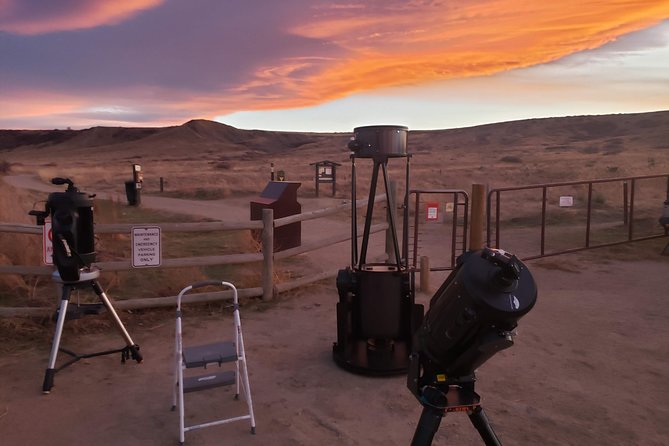
Bring more clothing than you think you need. The tour details specifically warn that the night can turn cold even on hot days, and jackets, warm layers, and blankets are not supplied.
You will likely spend much of the program standing still while waiting for your turn at a telescope or listening to the guide. That makes cold feel sharper than it does during a walk. A warm jacket, hat, gloves, and an extra layer are sensible choices. Comfortable shoes are also useful, though no hiking footwear is required for the activity itself.
Cookies and other snacks are listed as included. However, hot drinks are not promised, and one account of the experience reported that no snacks or drinks were available. I would treat the food as a pleasant extra rather than the reason to book, and I would eat beforehand if you need a full evening meal.
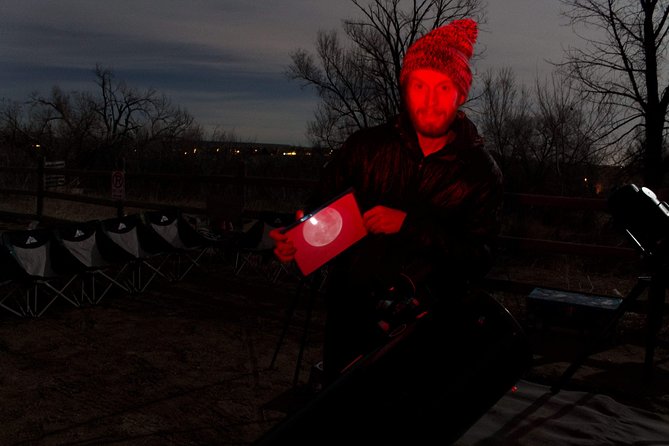
A red flashlight can help you move around without ruining your night vision, but the supplied information does not confirm that you should bring one or that one will be provided. The safest plan is to follow the guide’s instructions at the meeting point.
Is $45 a fair price?
At $45 per person, the tour is priced as an accessible introduction to astronomy rather than a luxury night-sky expedition. You are paying for an expert-led session, several telescopes, equipment setup, instruction, and the chance to view objects that would be difficult to identify on your own.
The value is strongest if you have little experience with astronomy. You could bring binoculars to a dark location for free, but you would not necessarily know where to look or understand the faint objects in front of you. Here, the guide does the technical work and helps connect a small point of light with the larger story behind it.
The price is less compelling if your priority is total darkness, mountain solitude, or professional-grade astrophotography. Boulder remains visible, and passing traffic can affect the view. This tour is about learning and looking through shared equipment, not taking home long-exposure photographs.
The group cap of 22 helps protect the value. Several telescopes also matter, since you are less likely to spend the entire evening waiting at one instrument. Still, ask yourself what you want from the night: accessible science and telescope viewing, or a remote dark-sky escape. At $45, the first option is the better match.
Who will enjoy it most
This outing suits first-time stargazers, families, couples, and anyone who wants an evening activity near Boulder without a hike. You do not need prior astronomy knowledge. The guide explains the objects as you see them, and the question period makes it easy to follow your own interests.
It also works well for people visiting the Denver area who want something different from the usual daytime sightseeing. The tour runs for about two hours, so it can fit into an evening without taking over an entire day.
Space fans will get the most from it, especially if you enjoy comparing planets, galaxies, and nebulae through different instruments. The chance to see Saturn or Jupiter through a telescope can be memorable even for people who already know the basics.
It may not suit you if you dislike standing outside in the cold, need a fully quiet setting, or expect a completely dark sky. People seeking an easy-access activity should see the location as a benefit. People seeking wilderness solitude should see it as a limitation.
Service animals are allowed, and most people can participate. The activity ends back at the meeting point, so you do not need to arrange a second pickup location.
Booking, timing, and weather flexibility
The tour is commonly booked about 12 days ahead, so reserving early is sensible if your Boulder schedule is fixed. It is offered in English and uses a mobile ticket, making arrival straightforward.
You can cancel for a full refund if you do so at least 24 hours before the start time. Cancellations or changes made inside that 24-hour window are not accepted for a refund, and the cut-off follows local time.
Weather deserves attention when planning. If poor conditions force a cancellation, you are offered a different date or a full refund. That policy is useful because clouds can make or break a telescope program, and there is little point in trying to force the experience under a covered sky.
Should you book this astronomy tour?
Book it if you want an easy, guided introduction to the night sky with real telescope time and a convenient Boulder location. The strongest parts are the multiple instruments, the chance to see planets and deep-sky objects, and the patient question period led by guides such as Luke, Massie, or Koda.
Go in with realistic expectations. This is not a remote dark-sky preserve, and city glow or passing cars may interfere with the view. Bring warm layers, do not count on hot drinks, and understand that the exact objects depend on the date and weather.
For $45, I think it is a good choice for curious beginners and casual astronomy fans. If you want the darkest possible sky, search for a more remote setting. If you want a practical, low-effort evening that turns the stars into something you can understand, this Boulder session is worth booking.
FAQ
Where does the astronomy tour meet?
The tour meets at Boulder Valley Ranch Trailhead, 3900 Longhorn Road, Boulder, Colorado 80302.
Is hiking required?
No. The activity takes place at an easy-to-access trailhead, and no hiking is involved.
How long does the tour last?
The scheduled experience lasts about two hours. You may stay afterward and continue looking at the sky while the equipment is packed away.
What might I see through the telescopes?
Possible sights include Venus, Saturn, Jupiter and its moons, nebulae, star clusters, galaxies, and other stars. Exact visibility depends on the date and weather.
Are snacks included?
Cookies and other snacks are listed as included. Hot drinks are not listed as included, so you should not rely on the tour for a warm beverage.
What happens if the weather is poor?
If the tour is canceled because of poor weather, you can choose a different date or receive a full refund.
Just added around the USA
- Private Under the Stars Night-Time Tour of DC (Up to 5 Guests)★ 5.0 · 24 reviews
- Stargazing and Milky Way Portrait in Capitol Reef National Park★ 4.5 · 13 reviews
- Temecula Wine Country Stargazing Tour★ 5.0 · 2 reviews
- Skyway Light Show Tour Under the Stars★ 5.0 · 5 reviews
- Astronomy and Stargazing Tour in Utah★ 5.0 · 8 reviews
- PRIVATE Sedona Jeep Tour 4X4 Stargazing Tour at Night★ 4.5 · 11 reviews
- Sunset Sedona Sacred Places -gourmet picnic dinner and stargazing★ 5.0 · 12 reviews
- Private Stargazing – Sequoia National Park★ 4.5 · 14 reviews
USA Stargazing Tours, compared.
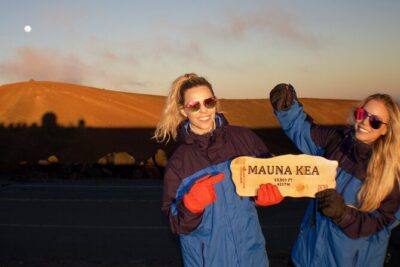
Big Island GOAT Experience: Mauna Kea Summit, Sunset & Stars
Read our review →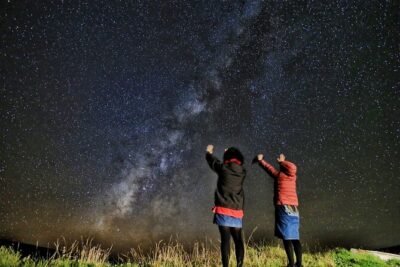
Small Group Big Island Twilight Volcano and Stargazing Tour
Read our review →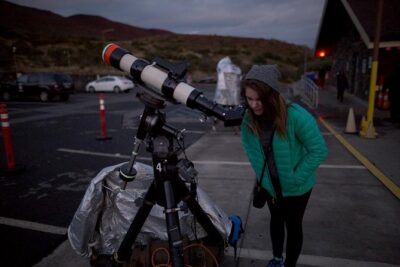
Mauna Kea Summit and Stars Small-Group Adventure Tour
Read our review →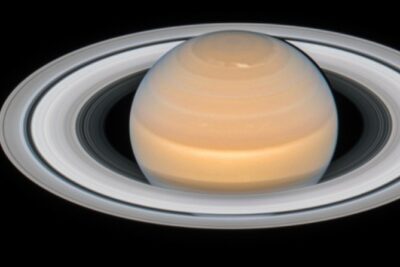
Mauna Kea Summit, Sunset, & Stargazing Experience
Read our review →
Miami: Frost Museum of Science and Planetarium Entry Ticket
Read our review →
The Original Sedona UFO and Stargazing Night Tour
Read our review →
Browse the lists this tour appears in