
REVIEW · NATIONAL PARK STARGAZING
Astro-Photo, Hiking and Stargazing Tour in Arches National Park
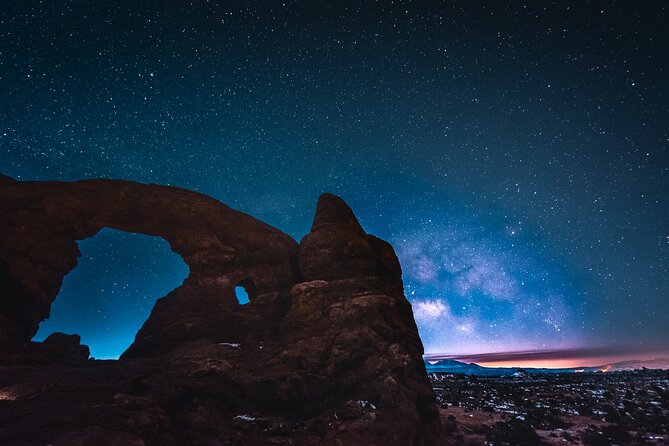
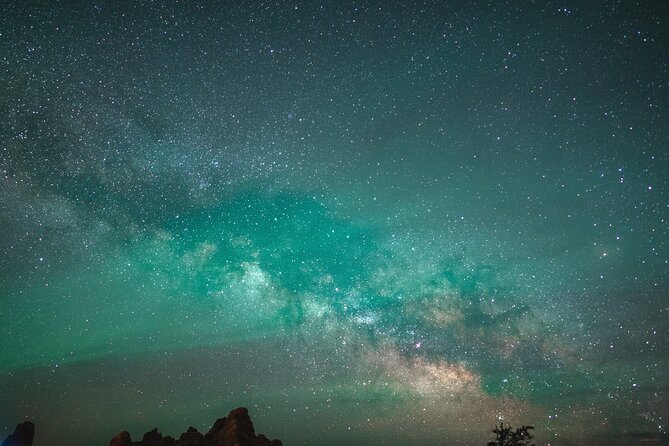
Arches National Park changes character after sunset. The red rock cools, the trails grow quiet, and the stars appear above the stone arches like pinholes in black paper. This two-hour outing combines a short night hike, basic stargazing, and hands-on astrophotography, so you do more than simply look up.
I like the small maximum group of six, which gives you a real chance to ask about camera settings. I also like the provided headlamps and tripods, especially if you are not used to walking or framing photos in the dark. The main catch is getting yourself to the Windows Section Parking Lot. The drive on dark park roads can be tricky, and transportation to the meeting point is not provided.
Key points to know before booking
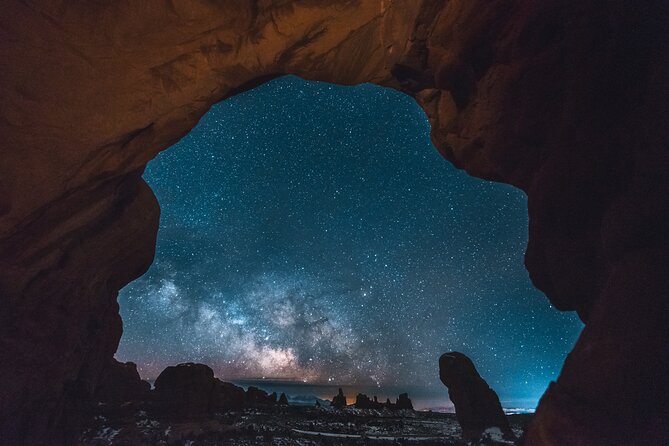
- The Milky Way becomes part of the scenery: Arches and the night sky work together as natural photo frames.
- You get practical camera help: Guides such as Sam and Brandon assist with phone settings, SLR cameras, and tripod setup.
- The group stays very small: No more than six people can join, which suits anyone who wants personal instruction.
- Headlamps and tripods are provided: These add safety and make night photography far easier.
- The tour lasts about two hours: It is focused and manageable, but not a full-night astronomy program.
- There is no listed telescope: Expect stargazing and photography instruction rather than telescope viewing.
Why Arches after dark feels so different
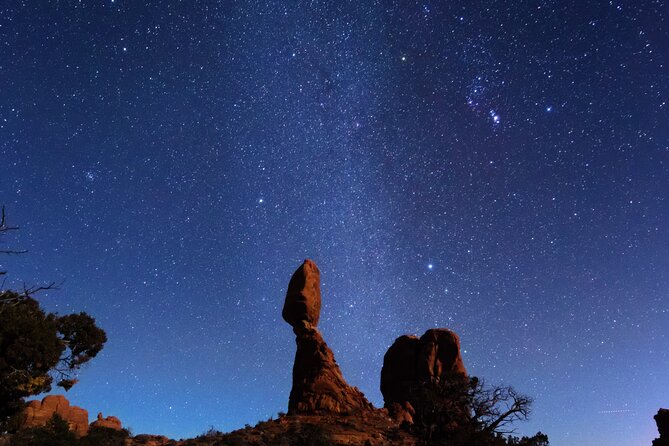
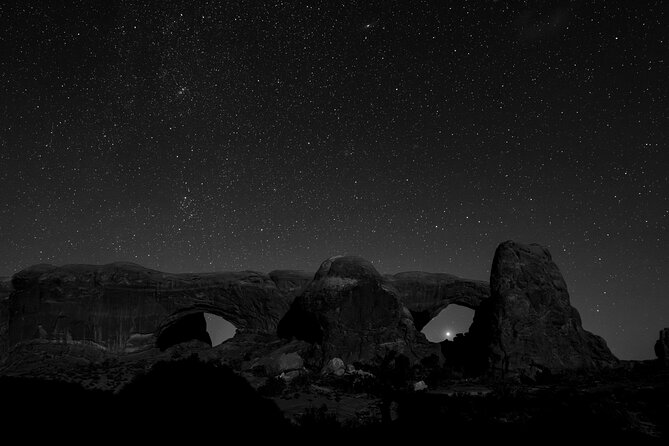
Arches is famous for daylight drama: bright sandstone, sharp shadows, and broad views across Utah’s red rock country. At night, the details soften. An arch no longer looks only like a slab of stone. It becomes a dark outline around constellations and the Milky Way.
The tour takes place in the Windows Section, one of the park’s best-known areas for enormous rock openings and short walking routes. You move through this natural rock garden with a guide, stopping to consider how the arches formed before turning your attention skyward.
I like this combination because it gives the evening a clear rhythm. First, you get oriented among the rocks. Then you learn where to point your camera. Finally, you wait for the longer exposure to record more starlight than your eyes can see.
The lack of crowds is a major part of the appeal. During the day, popular Arches sites can feel busy, with people waiting for a clear view or a clean photo. At night, the park offers a quieter setting and cooler temperatures. That does not make the outing silent or effortless, but it changes the mood in a way a daytime visit cannot match.
More National Park Stargazing in the USA:
- Sedona Stargazing Tours LLC
★ 4.5 · 881 reviews - The Original Sedona UFO and Stargazing Night Tour
★ 4.5 · 269 reviews - The Night Sky Star Story, Galaxy, and Sedona Story Tour
★ 4.5 · 243 reviews
The Windows Section meeting point
You meet at the Windows Section Parking Lot in Arches National Park, and the activity ends there. This simple out-and-back setup is useful because you do not need to arrange a second pickup location after the tour.
The practical issue is arrival. You drive yourself to the meeting point, and one person specifically found the dark roads challenging on a first evening in the park. I would plan to arrive with plenty of time, especially if you are unfamiliar with Arches or are visiting after a long day of sightseeing.
There is no transportation option included in the information provided. If you are hoping for hotel pickup or a ride from Moab, confirm that before booking rather than assuming it comes with the price.
The meeting area is close to trails, which helps keep the experience focused. You are not spending the two hours on a long transfer. Instead, the time goes toward walking, setting up equipment, discussing the stars, and making photos.
What happens during the two-hour outing
The experience begins with a guided route through the Windows Section. The wording of the tour suggests a mix of walking and stops rather than a demanding hike. You look at the arches, consider the forces that shaped them, and then use those formations as foreground subjects for night photographs.
The walking matters because the best image is not always available from the parking lot. A small shift in position can place an arch beneath the Milky Way or frame a constellation inside a natural opening. The guide helps you find those picture opportunities instead of leaving you to guess where to stand.
Once the group reaches a useful position, the photography lesson begins. Headlamps help you move safely, while tripods keep the camera still during long exposures. A tripod is especially important at night because even a slight hand movement can turn stars into blurry streaks.
You do not need to arrive as an experienced night photographer. Brandon, one of the guides associated with the experience, has helped beginners improve photos far beyond what they expected. He has also shown people how to get better results with phones, so bringing an SLR camera is not required.
Sam has been praised for explaining stars, arches, and camera settings in a clear way. The most useful part of this kind of instruction is not simply being handed a finished photo. You learn why the camera needs different settings after dark and how to repeat the process later.
Phone photography is part of the experience
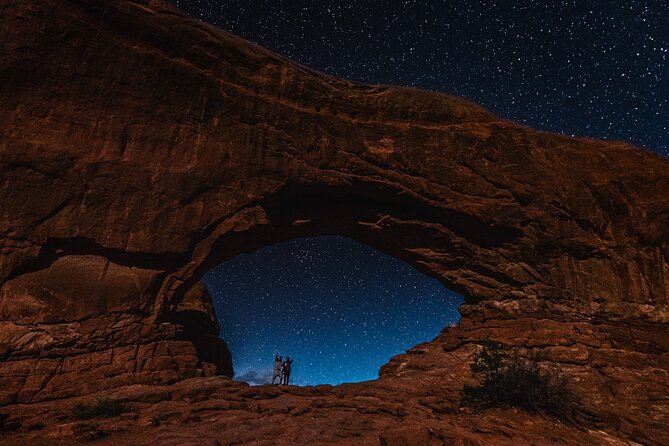
Many visitors arrive at national parks with a phone rather than a dedicated camera. That does not rule you out here. The guides can help you make the most of your phone, and families have used the advice to photograph both the stars and a small stuffed trip mascot.
That detail says something useful about the tone of the tour. It is not limited to serious photographers who already own expensive equipment. A phone user can take part, ask basic questions, and still leave with a memorable image.
Your results will depend on your device and the conditions, so you should keep expectations sensible. The guide can improve your setup, but no tour can guarantee a perfect Milky Way photo. Clear skies, darkness, focus, and steady equipment all matter.
If you bring a camera, bring the gear you know how to use. The provided tripod is helpful, but the experience is not described as a full camera rental service. The strongest benefit comes from combining your own device with the guide’s instructions.
More Stargazing Hikes and Night Walks in the USA:
- Big Island GOAT Experience: Mauna Kea Summit, Sunset & Stars
★ 5.0 · 1,706 reviews - Big Island: Mauna Kea Summit and Stars Small-Group Adventure Tour
★ 5.0 · 1,545 reviews - Hilo: Mauna Kea Summit, Sunset, & Stargazing Experience
★ 4.8 · 629 reviews - MaunaKea Summit SUNSET and Star Tour with Photo
★ 4.8 · 220 reviews
The stargazing side: stars, constellations, and the Milky Way
The night sky is the star of the second half of the experience. Away from city lights, Arches offers a strong setting for viewing the Milky Way and identifying constellations. The guide points out what you are seeing and connects the sky above you with the rock formations around you.
This is stargazing without a formal observatory feel. The activity does not list a telescope, and one person booked it expecting one. That is an important distinction. You should book this for dark-sky viewing and photography help, not for a telescope session or a technical astronomy lecture.
The guide’s role is still valuable. Looking at a sky full of stars can be overwhelming when you do not know where to begin. A few pointers can turn a mass of bright dots into recognizable patterns. The experience also gives you time to notice how the sky seems to rotate above the arches during the evening.
The changing sky adds motion to an otherwise solid scene. The rocks have been in place for ages, while stars shift gradually overhead. A long exposure can show that movement and make the photograph feel tied to the place rather than copied from a generic night-sky setup.
Equipment, comfort, and safety after sunset
The tour provides headlamps and tripods. Those are practical inclusions, not decorative extras. Headlamps help you see the trail and keep your hands free, while tripods support the long exposures needed for night photography.
You should still treat the outing as a nighttime walk in a national park. The provided equipment helps, but it does not remove the need for sensible clothing and careful footing. The evening temperatures are cooler than during the day, which is welcome after Utah heat, but you may want an extra layer.
The description says most people can participate, and the walking is presented as manageable within the two-hour format. It does not provide a detailed difficulty rating, trail distance, or information about specific mobility needs. If you require those details, ask the operator before booking.
The small group makes safety guidance easier to follow. A guide can help six people move between viewpoints and set up equipment without the confusion that comes with a large bus group. It also means you will likely have more space and less waiting when it is time to make a photo.
Is $175 a fair price?
The cost is $175 per person, which is not a casual add-on for a night out in Moab. The value depends on what you want from the evening.
If you already know night photography, carry a tripod, and only want a quiet place to view the stars, the price may feel high. You can visit Arches on your own and look up for free once you are in the park. One person felt the excursion was overpriced, and that concern is reasonable.
The calculation changes if you are new to astrophotography. You are paying for a guide, a small group, provided headlamps and tripods, help with phone or camera settings, and access to a carefully chosen setting among the arches. Avoiding trial and error can save time, especially during a short visit to Moab.
I see the best value for people who want a finished photo and the knowledge to make another one later. The guide can help you move from a black phone screen to a usable image of the Milky Way. That lesson may be more valuable than simply borrowing a telescope for a few minutes.
Group discounts are available, though the exact discount is not specified. Since the group limit is six, friends or family members may find the outing more appealing when they can share the experience and split the planning effort.
Who will enjoy this most
This tour suits first-time night photographers, couples looking for a quiet evening, and families with older children who can manage a short nighttime walk. One family particularly enjoyed the experience with children aged 12 and 14, and the guide kept them involved with constellations and phone photography.
It also works well for someone who has spent the day visiting Arches and wants a different view of the park. The cooler evening air and lack of daytime crowds provide a clear change of pace.
You may want something else if your main goal is an extended hike, a large astronomy program, or detailed telescope viewing. The activity lasts about two hours and focuses on a compact area, so it is not designed as an all-night expedition.
Serious photographers should also decide what kind of instruction they need. The tour is friendly to beginners and phone users, but the supplied information does not promise advanced instruction in editing, star trails, or specialized camera equipment.
Booking, weather, and timing
The tour is often reserved well ahead of time, with an average booking lead time of 81 days. That suggests you should not wait until the day before if your Moab dates are fixed, especially if you want a particular evening.
Weather matters. If poor conditions force a cancellation, you can choose another date or receive a full refund. You can also cancel for a full refund if you do so at least 24 hours before the start time. Changes or cancellations made inside that window are not accepted for a refund.
Because this is a night-sky activity, the weather policy is more important than it might be for a standard walking tour. Clouds can block the stars, and poor conditions can make dark trails less pleasant. Keep your evening schedule flexible if possible.
The activity is offered in English. Confirmation arrives when you book, and the maximum group size is six. Those details make it easier to plan, but the key planning task remains getting yourself to the Windows Section Parking Lot.
Should you book the Arches night tour?
Book it if you want Arches after dark with hands-on help, especially if you are new to taking star photos. The strongest reasons are the tiny group, the supplied headlamps and tripods, and guides such as Sam and Brandon who can work with both cameras and phones.
Think twice if you expect a telescope, hotel transportation, or a long guided hike. The $175 price is easiest to justify when you value instruction and a carefully framed photo, not simply access to the night sky.
For a first visit to Moab, I like this as a focused evening add-on. Plan your drive carefully, arrive prepared for cooler temperatures, and see the tour as a photography lesson in one of Utah’s most striking settings. If the sky cooperates, the arches may give you a photo that looks far more polished than anything you could make alone.
FAQ
Where does the tour meet?
The tour meets at the Windows Section Parking Lot in Arches National Park, Utah. The activity ends back at the same meeting point.
How long does the experience last?
The tour lasts approximately two hours.
How many people can join?
The maximum group size is six people.
Is transportation to Arches National Park provided?
Transportation to the park or meeting point is not listed as an included feature. You should plan to reach the Windows Section Parking Lot yourself.
Are tripods and headlamps provided?
Yes. Headlamps and tripods are provided for safety and night photography.
Do I need an SLR camera?
No. The guides can help you improve photos with a phone, and the activity is suitable for people without an SLR camera.
Does the tour include a telescope?
A telescope is not listed as part of the experience. The activity focuses on stargazing and photography using provided tripods and your phone or camera.
What happens if bad weather cancels the tour?
If poor weather causes the tour to be canceled, you can choose a different date or receive a full refund. You can also cancel at least 24 hours before the start time for a full refund.
More Walking and Hiking Trips in the USA
- Sedona Dark Sky Sunset & Night Hike With a Private Guide
★ 5.0 · 86 reviews - Page: Antelope Valley Canyon Stargazing Night Hike
★ 4.5 · 37 reviews - Moab: The Windows Astro-Photography and Stargazing Hike
★ 4.8 · 36 reviews - Sedona Night Hike and Stargazing
★ 5.0 · 7 reviews
Just added around the USA
- Private Under the Stars Night-Time Tour of DC (Up to 5 Guests)★ 5.0 · 24 reviews
- Stargazing and Milky Way Portrait in Capitol Reef National Park★ 4.5 · 13 reviews
- Temecula Wine Country Stargazing Tour★ 5.0 · 2 reviews
- Skyway Light Show Tour Under the Stars★ 5.0 · 5 reviews
- Astronomy and Stargazing Tour in Utah★ 5.0 · 8 reviews
- PRIVATE Sedona Jeep Tour 4X4 Stargazing Tour at Night★ 4.5 · 11 reviews
- Sunset Sedona Sacred Places -gourmet picnic dinner and stargazing★ 5.0 · 12 reviews
- Private Stargazing – Sequoia National Park★ 4.5 · 14 reviews
National Park Stargazing, compared.
Teide National Park Sunset & Stargazing with Dinner (Star Safari)
Read our review →
Teide National Park: Sunset & Stargazing Safari with Dinner
Read our review →
Pinnacles Desert: Sunset BBQ & Stargazing Tour +Sandboarding
Read our review →
Pinnacles Desert Sunset Dinner and Stargazing Tour
Read our review →

Pinnacles Sunset and Stargazing Tour with Dinner
Read our review →Browse the lists this tour appears in