
REVIEW · GUIDED
Boulder: Guided Astronomy Tour
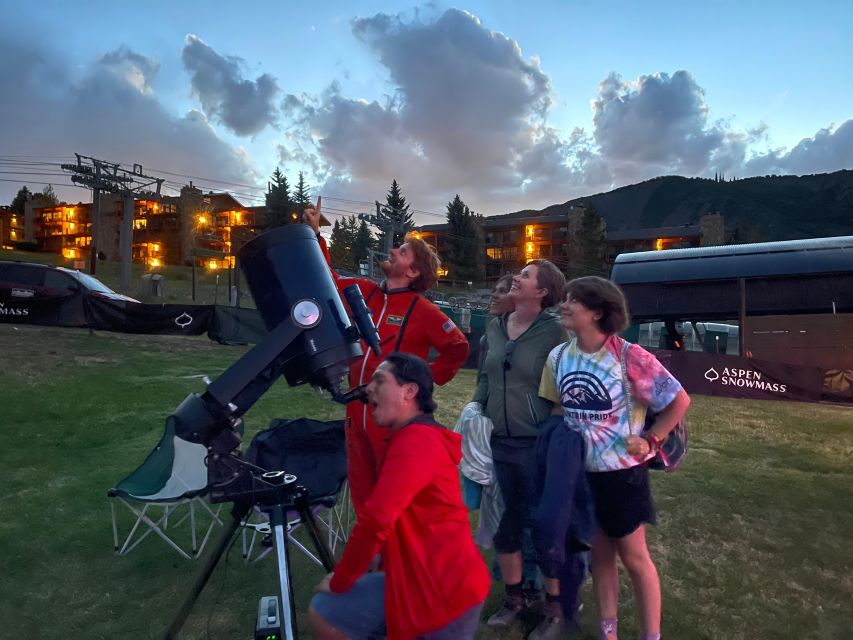
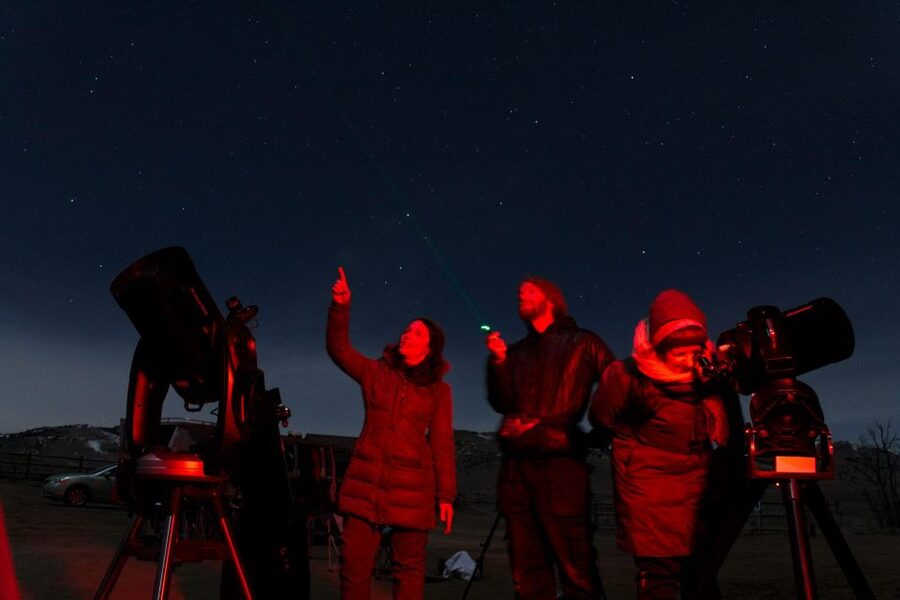
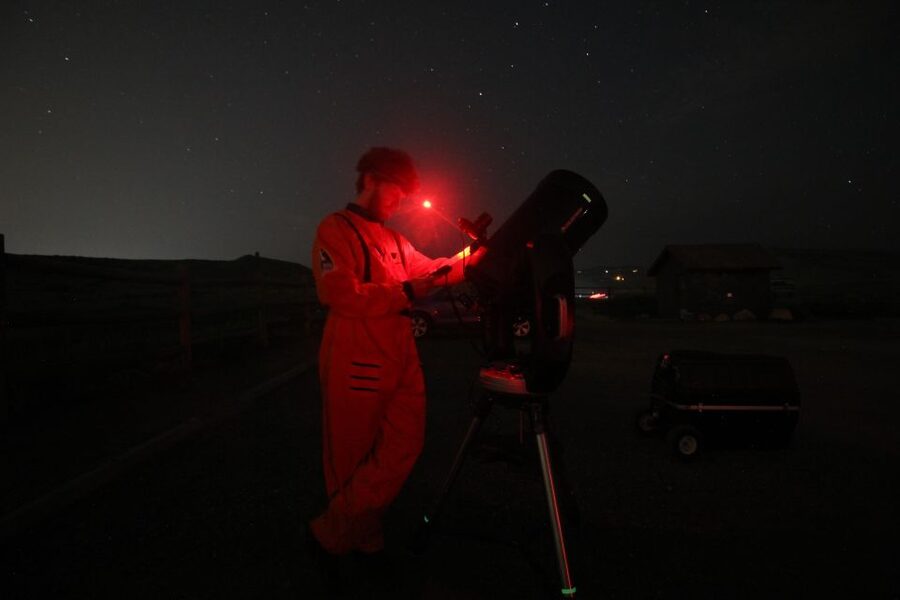
Boulder’s night sky gets the main event here. At sunset, you settle into a camp chair at Boulder Valley Ranch and watch the sky change from glowing horizon to a field of stars, with a professional astronomer guiding each step. Large telescopes bring planets, nebulae, clusters, and galaxies within clear view, while a laser pointer helps you make sense of the sky above.
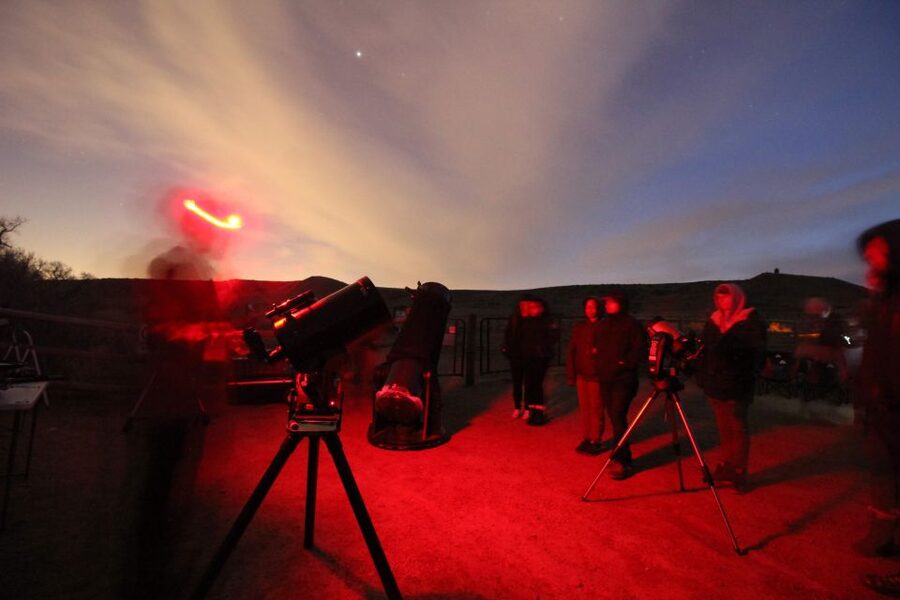
I like the easy setup: there is no hike, the ground is flat, and red flashlights help you move around without ruining your night vision. I also like the small group size, capped at seven, which gives you more time at the eyepiece and more room for questions. The main drawback is simple but important: cloudy weather can cancel the tour, and temperatures can drop sharply after sunset.
- Large telescopes make the sky personal: You look through the eyepiece yourself rather than relying on a screen or photograph.
- The tour begins at sunset: You get a changing sky, possible sunset views, and a gradual move into nighttime stargazing.
- Hailey and Kota are among the astronomy guides: The tour is led in English by an experienced professional astronomer.
- Boulder Valley Ranch requires no hiking: The flat trailhead parking lot makes this a practical choice for many ages and mobility levels.
- Small groups keep the experience focused: A maximum of seven people allows time for questions and telescope viewing.
- Warm clothing matters: Blankets, scarves, and hand warmers may be available, but you should bring thermal layers.
Why Boulder’s Sunset Sky Makes a Good Starting Point
This is not a late-night drive into a remote wilderness area. You meet at Boulder Valley Ranch Trailhead, just outside Boulder, and begin around sunset. That timing gives you a useful transition: first you can see the area in daylight, then you watch the stars appear as the sky darkens.
I like this approach for first-time stargazers. You are not dropped into total darkness and handed a telescope. The astronomer can point out the first visible objects, explain how the sky changes, and help you get oriented before the main viewing begins.
The setting also offers more than stars. The area may provide sunset views and wildlife sightings before night takes over. Those details are not guaranteed, but they give the opening part of the tour a wider sense of place.
The meeting point is the Boulder Valley Ranch Trailhead parking lot. Search for Boulder Valley Ranch Trailhead in Google Maps rather than entering the street address directly, since the address can sometimes send drivers the wrong way. Once you arrive, look in the southeast corner of the lot, opposite the bathroom, for telescopes and astronomy equipment.
There is a pit toilet at the trailhead. That is a modest amenity, but it matters during a two-hour outdoor activity, especially when the tour begins before the coldest part of the evening.
Two Hours With Telescopes, Lasers, and Real Questions
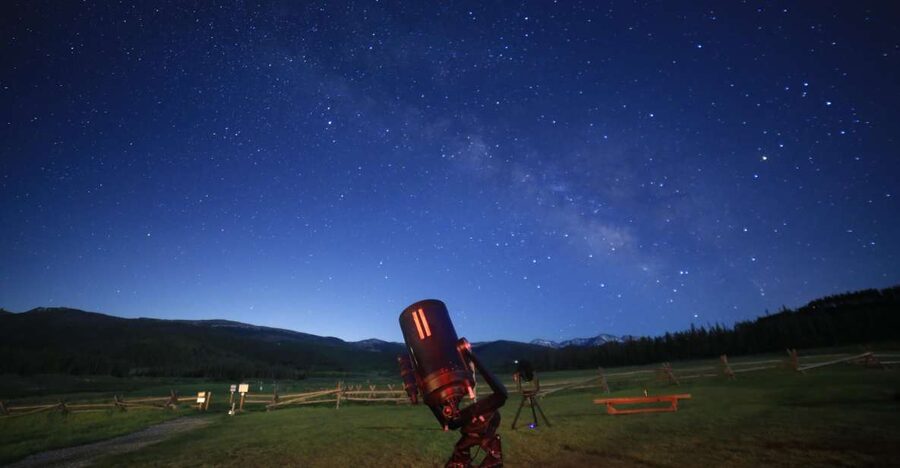
The heart of the experience is a guided tour of the sky using several large telescopes and a laser pointer. Instead of simply being told what you are seeing, you get a chance to look through the equipment with your own eyes.
That distinction matters. A photograph of a galaxy can be more colorful and dramatic than what you see through an eyepiece, but the eyepiece gives you a direct view. You are standing under the same sky, waiting your turn, then seeing the object yourself. The experience feels less like watching a presentation and more like learning to observe.
The guide may cover planets, constellations, star navigation, satellites, nebulae, clusters, galaxies, and shooting stars. No single night can promise every item on that list. What appears depends on the date, the season, the time of night, and the weather.
The laser-guided portion helps turn scattered points of light into recognizable patterns. You can ask how to find a constellation, how to use stars for direction, or why a particular object is visible that night. Bring your own space questions. The guide is there to explain, not simply to point.
The group limit of seven is one of the better features for this kind of activity. Telescope viewing naturally involves taking turns, and a large crowd can make each turn feel rushed. With a small group, you have a better chance to ask follow-up questions and spend a useful amount of time at the eyepiece.
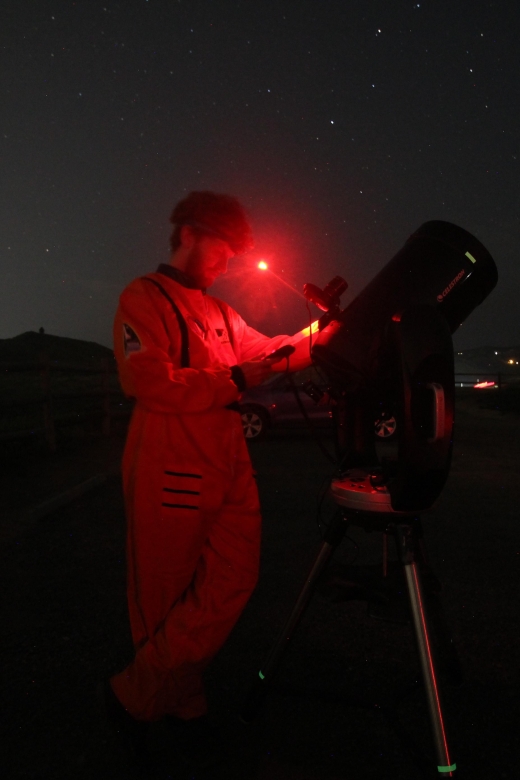
Hailey and Kota are among the guides associated with the tour, and both have been specifically praised for their astronomy skills and friendly help. Since the guide on your date can vary, book this as a professional-led English tour rather than expecting a particular person unless the provider confirms it.
More Guided Trips in the USA:
- Sedona Dark Sky Sunset & Night Hike With a Private Guide
★ 5.0 · 86 reviews - Sedona: Private Stargazing Tour with a Local Guide
★ 4.8 · 8 reviews - Teide: Guided Sunset & Stargazing Tour by Night with Dinner
★ 4.7 · 1,339 reviews
What You See Through the Eyepiece
The exact objects will change from night to night. A planet may be the focus on one evening, while a cluster, nebula, or galaxy takes center stage on another. The tour cannot guarantee a particular celestial event or object, so keep your expectations broad.
Planets are often rewarding because they can show visible detail through a telescope. Star clusters offer a different sight, with many stars gathered into one field. Nebulae and galaxies may appear subtler, and your view can depend greatly on darkness and atmospheric conditions.
The guide also uses a solar system model and actual meteorites during the educational part of the evening. These physical objects give you something concrete to handle and examine, which helps connect the distant objects above you with the material found here on Earth.
Satellites may cross the sky during the session, and a shooting star is possible if luck cooperates. Neither is guaranteed. That uncertainty is part of outdoor astronomy, but it is also why you should not book this expecting a fixed checklist of sights.
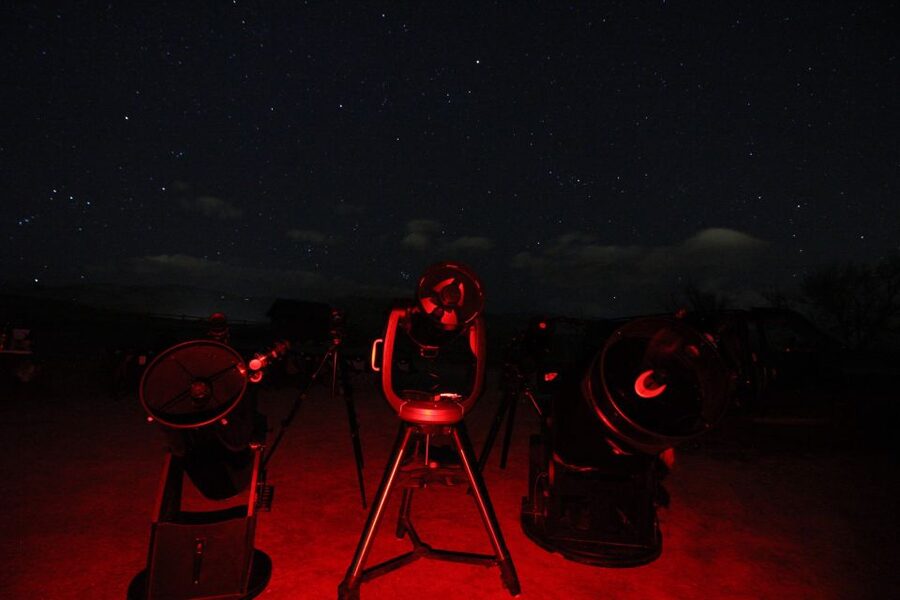
The red flashlight is another thoughtful touch. White light can make it harder for your eyes to adjust to darkness, while red light lets you move around with less disruption. You receive one for navigating the viewing area, and the guide can help you use it appropriately.
Comfort at the Trailhead, Not a Backcountry Camp
You do not need to hike to reach the viewing area. The tour takes place on flat ground at the trailhead, with camp seating provided. A cane for stability and a step stool for reaching telescope eyepieces are available as accessibility aids.
The experience is wheelchair accessible, but outdoor conditions still matter. The ground is described as flat and easy to access, yet you should bring any personal mobility equipment you normally need and check with the provider if you have specific access concerns.
The most important item to bring is warm clothing. Once the sun goes down, the temperature can fall quickly, even if the afternoon felt mild. Thermal layers are the sensible choice. A jacket, hat, gloves, and warm socks are more useful than relying on the forecast from earlier in the day.
Blankets and scarves are available, and hand warmers can be requested. Bottled water and snacks are provided, and water can also be requested. Still, I would treat the supplied comfort items as a backup, not a reason to pack lightly.
Bug spray is provided as well. Conditions vary, but this is useful during the early part of the tour when you are still close to sunset and outdoor insects may be present.
The program is aimed at a mature audience. Very young children may fall asleep during a late evening activity, and babies under one year are not suitable for the tour. Older children who can stay awake, listen, and wait their turn may get a great deal from the hands-on format.
Getting There Without Guesswork
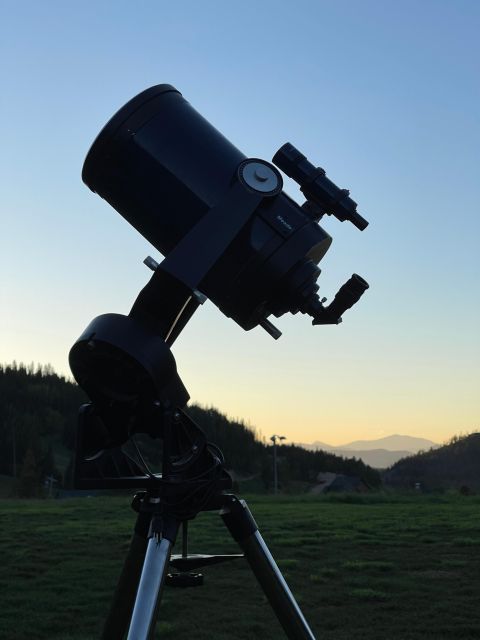
You can reach the meeting point by car, taxi, Lyft, or Uber. If you use a rideshare, make sure the driver enters the trailhead name rather than relying on the physical address.
The setup is in the southeast corner of the parking lot, opposite the bathroom. Telescopes and astronomy gear make the guide easy to find once you are there.
Public transportation from Denver is addressed through the provider’s directions page, but the available information does not promise a simple direct route. If you are coming from Denver without a car, check the detailed directions before booking and allow time to reach the trailhead.
Arrive with enough time to find the correct corner of the parking lot and put on your warm layers before the program starts. Sunset is part of the experience, so arriving late can mean missing both the opening explanation and the best remaining light.
More Stargazing Tours in the USA:
- Small Group Big Island Twilight Volcano and Stargazing Tour
★ 5.0 · 1,619 reviews - Sedona Stargazing Tours LLC
★ 4.5 · 881 reviews - Hilo: Mauna Kea Summit, Sunset, & Stargazing Experience
★ 4.8 · 629 reviews - Miami: Frost Museum of Science and Planetarium Entry Ticket
★ 4.5 · 429 reviews
Is $45 a Fair Price?
At $45 per person, this is priced as an accessible guided activity rather than a luxury private astronomy session. You receive two hours with a professional astronomer, several high-powered telescopes, educational equipment, red lights, seating, refreshments, and small take-home items.
The value depends on what you want from stargazing. If you only need a dark place to look at the sky, you can find cheaper options by going outside on your own. But doing that requires finding the right location, knowing what to look for, carrying suitable gear, and dealing with the steep learning curve of telescope use.
Here, the equipment and instruction are already in place. The astronomer helps you identify what is visible and explains how to read the sky. For a first astronomy experience, that guidance can make the difference between seeing a few bright stars and understanding what you are looking at.
The group limit also supports the price. You are not paying for a large bus tour with a short lecture. A maximum of seven people gives the guide more time to work with each person.
You also receive astronomy-themed postcards and stickers, along with a business card that includes a quick reference guide to the topics and sights covered. These are small extras, but they help you remember what you saw and continue learning later.
Private group pricing is flexible. If you are arranging an outing for family or friends, contact AstroTours.org for a custom rate rather than assuming the public per-person price applies.
Weather Is the One Big Variable
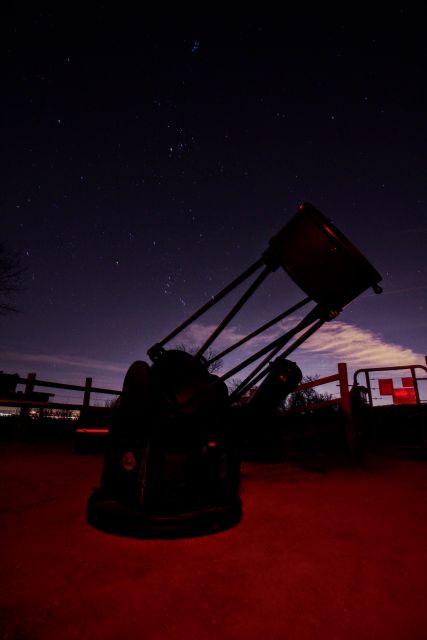
The tour can be canceled if clouds prevent useful stargazing. That is not a minor possibility. Astronomy depends on clear skies, and a cloudy evening can block nearly everything the tour is designed to show.
You can cancel up to 24 hours in advance for a full refund, and the reserve-now, pay-later option keeps you from paying at the time of booking. Check the availability calendar for start times, since the schedule follows sunset and changes through the year.
If your visit to Boulder is tightly scheduled, think carefully about where this fits. A weather cancellation may leave you without the activity, so it is wise not to make this your only evening plan. If you have several nights in town, placing the tour early in your stay gives you more room to reschedule if availability allows.
Clouds are not the only reason the exact program can vary. Seasonal visibility, moonlight, and the objects available at the time of your visit all affect the evening. Go for guided sky watching rather than a guaranteed list of planets and galaxies.
Who Will Get the Most From This Tour?
I would recommend this for first-time stargazers, families with older children, couples looking for a quiet evening activity, and anyone who wants expert help using a telescope. The flat meeting area and lack of hiking make it easier than many outdoor night-sky programs.
It also suits people who enjoy asking questions. You can bring curiosity about planets, star navigation, meteorites, or the scale of the universe and get a more useful evening than someone who simply wants a quick photo.
It is less suitable for babies, toddlers, and people who dislike sitting outdoors in cool conditions. The two-hour length is not extreme, but the late timing and falling temperature can be tiring for small children.
You should also be comfortable with uncertainty. A shooting star may appear or may not. A particular galaxy may be difficult to see. Even excellent equipment cannot control clouds or the objects available overhead.
Small Details That Improve the Night
Wear thermal clothing from the start, not only after you feel cold. Once you lose body heat, it is harder to concentrate on a faint object in a telescope.
Bring questions in advance. You might ask how to recognize a constellation, how satellites differ from stars, or why some objects appear brighter than others. The guide can shape the discussion around the group, and specific questions make the session more personal.
Keep your phone use limited during the viewing. A bright screen works against night vision, even when the screen is dimmed. Use the provided red light when you need to move around.
Use the reference card after the tour. It can help you remember the names of objects and continue looking upward during the rest of your trip.
Should You Book the Boulder Astronomy Tour?
Book it if you want a hands-on introduction to the night sky without hiking, buying equipment, or learning the basics alone. The combination of a small group, professional guidance, large telescopes, physical meteorites, and a flat trailhead setup gives you a lot for $45.
I would be especially comfortable recommending it to adults and older children who can handle a cool two-hour evening. Pack warm layers, confirm the trailhead directions, and keep your schedule flexible enough to handle weather.
Skip it if you need a guaranteed sighting of a specific planet or event, have only one tightly planned evening, or are bringing a baby or very young child. For everyone else, this is a practical and genuinely engaging way to look beyond Boulder’s daytime scenery and learn to read the sky for yourself.
FAQ
Where does the Boulder astronomy tour meet?
The meeting point is the Boulder Valley Ranch Trailhead parking lot. Search for Boulder Valley Ranch Trailhead in Google Maps rather than entering the physical address directly. Look for the setup in the southeast corner of the lot, opposite the bathroom.
How long does the tour last?
The guided astronomy experience lasts two hours and begins around sunset. Starting times vary, so check availability for the date you want.
Is hiking required?
No. The tour takes place at an easy-to-find trailhead with flat ground, and no hiking is required to reach the viewing area.
What should I bring?
Bring thermal clothing and warm layers because temperatures can drop after sunset. You may also want to bring questions about space and astronomy. Blankets, scarves, red lights, snacks, and bottled water are provided, with hand warmers available upon request.
Is the tour wheelchair accessible?
Yes. The activity is wheelchair accessible and takes place on flat ground. A cane for stability and a step stool for reaching telescope eyepieces are also available.
Can the tour be canceled because of weather?
Yes. The tour may be canceled when clouds make stargazing impractical. You can cancel up to 24 hours in advance for a full refund, and the reserve-now, pay-later option lets you book without paying immediately.
Just added around the USA
- Private Under the Stars Night-Time Tour of DC (Up to 5 Guests)★ 5.0 · 24 reviews
- Stargazing and Milky Way Portrait in Capitol Reef National Park★ 4.5 · 13 reviews
- Temecula Wine Country Stargazing Tour★ 5.0 · 2 reviews
- Skyway Light Show Tour Under the Stars★ 5.0 · 5 reviews
- Astronomy and Stargazing Tour in Utah★ 5.0 · 8 reviews
- PRIVATE Sedona Jeep Tour 4X4 Stargazing Tour at Night★ 4.5 · 11 reviews
- Sunset Sedona Sacred Places -gourmet picnic dinner and stargazing★ 5.0 · 12 reviews
- Private Stargazing – Sequoia National Park★ 4.5 · 14 reviews
Guided, compared.
Guided Sunset & Stargazing Tour by Night with Dinner
Read our review →
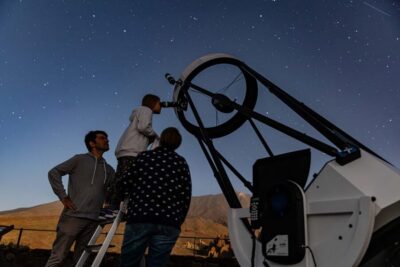
Teide National Park: Guided Large Telescope Stargazing Tour
Read our review →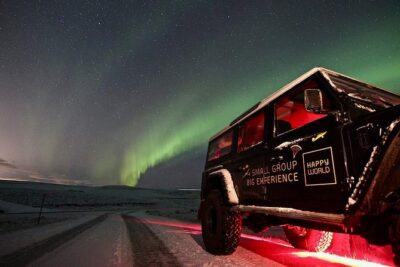
Northern Lights and Stargazing Small-Group Tour with Local Guide
Read our review →
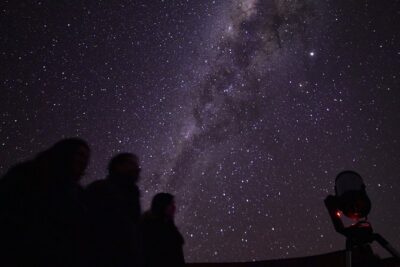
Astronomical Tour with Guide and Pick Up San Pedro de Atacama
Read our review →
Browse the lists this tour appears in