
REVIEW · NATIONAL PARK STARGAZING
Stargazing in Zion National Park’s International Dark Sky
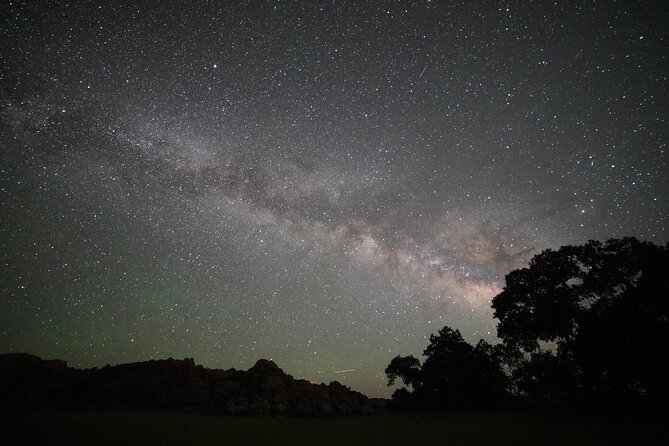
Zion is famous for red cliffs by day, but its sky is the real surprise after dark. This two-hour outing takes you to a field beside Zion National Park’s International Dark Sky Park, where guides use powerful telescopes, laser pointers, and binoculars to make the Milky Way, planets, and distant galaxies easier to understand. I like the zero-gravity Yogibo pods and the chance to see objects such as Saturn and its rings through serious equipment.
I also like the small-group feel, with no more than 18 people, plus blankets and hot chocolate, coffee, or tea. The main drawback is the weather: clouds, wind, and cold can change the evening, even after a warm day. You also need to arrange your own transportation to the meeting point near La Verkin.
Key points to know before booking
- A 10-minute walk leads to the dark-sky site: The walk is described as mellow, but you will be outdoors in the dark.
- Each person gets a Yogibo pod and binoculars: You can recline comfortably while scanning the sky with Celestron Outland X binoculars.
- The telescope viewing is the main event: Expect close views of planets, galaxies, nebulae, and star clusters when conditions cooperate.
- The guides shape the whole evening: Matt, Justice or Justin, Devin, Macie, Deon, Hannah, Chris, and others have led sessions, with astronomy stories and plenty of time for questions.
- Cold-weather planning matters: Blankets are supplied, but even September can feel cold, and wind can make the open field much chillier.
- The $199 price buys equipment and instruction, not a ride: Transportation is not included, so plan your drive to the La Verkin meeting point.
Why Zion looks different after sunset
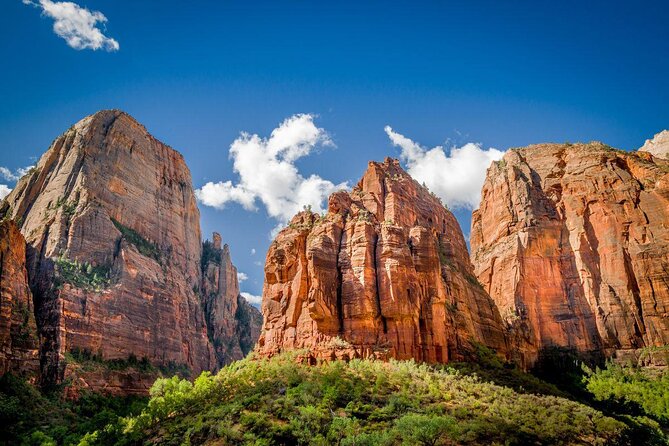
A visit to Zion often means hiking hard, watching the sun strike canyon walls, and spending most of the day on your feet. Stargazing Zion offers a slower change of pace. You leave the busy daytime rhythm behind and spend the evening looking upward, with the canyon region’s low light pollution helping the stars show more clearly.
The setting is a field beside the newly dedicated International Dark Sky Park. That location matters. In a city, bright streets and buildings wash out the faintest stars. Here, the sky can reveal far more than the handful of bright points you usually see at home. One striking fact shared during the experience is that many people have never seen the Milky Way clearly. For anyone from a bright urban area such as Chicago or Las Vegas, the difference can be startling.
This is not simply time to lie down and look at stars. The guide gives you a map of what you are seeing. As astronomical twilight begins, the sky changes gradually, and the guide uses a laser pointer to connect stars into constellations. That turns a confusing spread of lights into something you can follow.
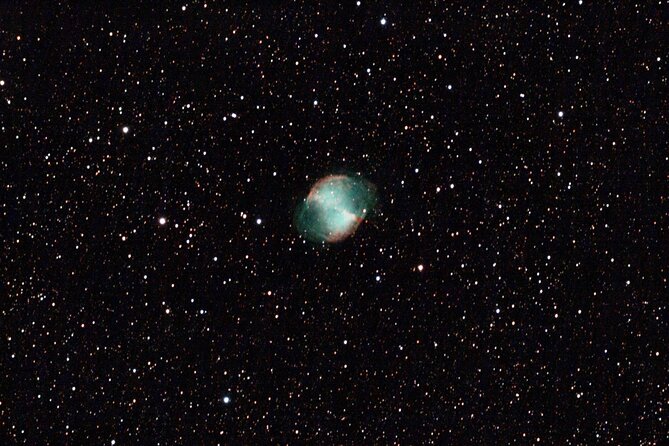
The explanations also cover galaxies, nebulae, clusters, planets, and the way astronomers study them. You do not need a background in science. The strongest sessions are built for curious beginners, while people already interested in astronomy can use the question time to go further.
More National Park Stargazing in the USA:
- Sedona Stargazing Tours LLC
★ 4.5 · 881 reviews - The Original Sedona UFO and Stargazing Night Tour
★ 4.5 · 269 reviews - The Night Sky Star Story, Galaxy, and Sedona Story Tour
★ 4.5 · 243 reviews
The 10-minute walk to the viewing field
You meet at 8V7R+CJ La Verkin, Utah, and the activity ends at that same meeting point. No transportation is provided, so you need your own way there. The exact directions to the site are supplied through the booking message center after you provide an email address.
From the meeting point, expect a brief walk of about 10 minutes to the dark-sky location. It is described as mellow rather than strenuous, but you should still wear shoes suitable for an outdoor path and bring an extra layer. The walk is part of the transition from ordinary evening to a darker, quieter setting.
A practical point: this is not a sightseeing drive through Zion. You are not being picked up at a hotel, and the tour does not include a park shuttle or other transport. Check the directions carefully before leaving your lodging, especially if you are visiting from outside the area and are not familiar with La Verkin.
The field itself is intentionally simple. You are there for the sky, not for buildings, entertainment, or a long list of stops. That simplicity is an advantage, though people expecting a polished indoor observatory should adjust their expectations.
Reclining in a Yogibo pod with binoculars
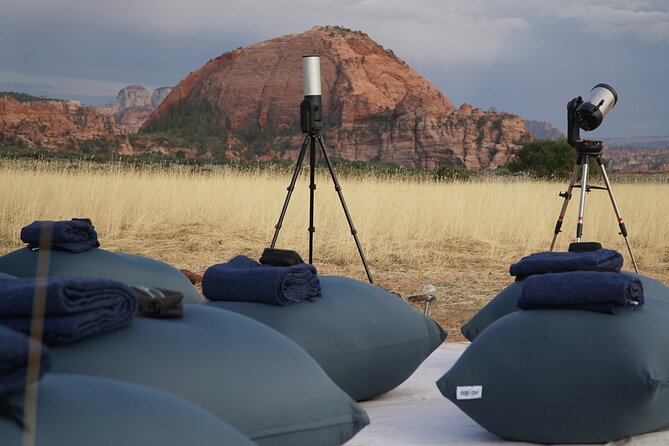
Once you reach the site, each person gets a Yogibo lounger. These soft pods conform to your body and reduce pressure points, allowing you to recline while looking almost straight up. After a long day of Zion hikes, that comfort is more than a cute extra. It lets you settle in without fighting a stiff chair or craning your neck.
You also receive a pair of Celestron Outland X binoculars. The binoculars give you an active role in the evening. Instead of waiting for your turn at a telescope, you can scan the sky from your own pod while the guide explains what to seek.
Blankets are supplied, and hot chocolate, coffee, and tea are available. Still, do not treat those provisions as a substitute for warm clothing. One September evening was cold despite a daytime high of 89 degrees, and another session was described as very windy. Night temperatures and wind can make a major difference in an open field.
Bring layers, and consider a hat or gloves if you tend to get cold. The listing does not promise heated seating or shelter. Comfort depends partly on the weather and partly on how well you prepare.
Following constellations with the guides
The guide-led portion begins as twilight fades. A laser pointer helps identify constellations and bright objects, while the narration supplies the story and science behind them. The best part of this format is that you are not just shown one object at a time. You learn how to find your way around the sky.
The guide team varies by date. Names associated with sessions include Matt, Justice or possibly Justin, Devin, Macie, Deon, Hannah, and Chris. Matt has been praised for keeping the evening engaging and adapting when clouds appeared. Devin is noted for making astronomy accessible through clear explanations and obvious enthusiasm. Macie has been described as a strong storyteller.
That variety is worth noting because the guide is central to the experience. The equipment can show you Saturn, but a good guide explains why the view matters and helps you notice details. Questions are welcome, and guides have sometimes stayed longer to address them, though you should not assume every session will run beyond the planned two hours.
The group limit of 18 keeps the experience from feeling like a huge lecture. It also gives you a reasonable chance to look through the telescopes several times. The mood is educational but relaxed, with humor and conversation rather than a formal classroom presentation.
More Stargazing Tours in the USA:
- Small Group Big Island Twilight Volcano and Stargazing Tour
★ 5.0 · 1,619 reviews - Hilo: Mauna Kea Summit, Sunset, & Stargazing Experience
★ 4.8 · 629 reviews - Miami: Frost Museum of Science and Planetarium Entry Ticket
★ 4.5 · 429 reviews - Mauna Kea Stargazing Experience + Photos
★ 5.0 · 261 reviews
The telescopes and what you may see
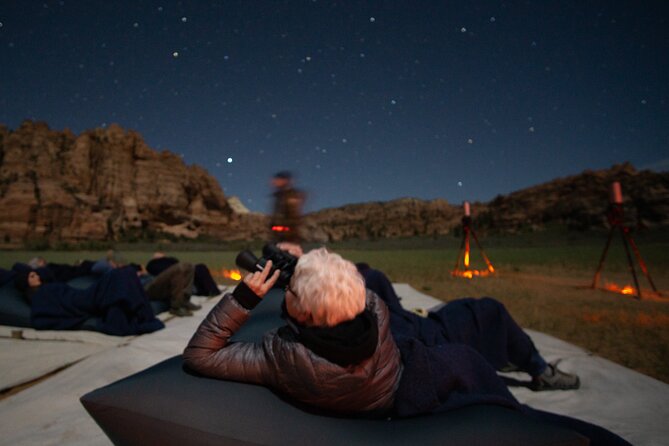
The powerful telescopes are the centerpiece. When the sky is clear, you may view planets, galaxies, nebulae, and star clusters in close detail. The exact objects depend on the date, time of year, visibility, and weather, so no responsible operator can promise a fixed list.
Saturn and its rings have provided a memorable highlight during at least one session. Seeing a familiar planet as a small but distinct object through a telescope can be far more powerful than looking at a bright dot with the naked eye. The Milky Way is another major draw, especially if you have spent years under city skies.
The binoculars and telescopes serve different purposes. The binoculars help you survey a wide area and take part throughout the session. The telescope narrows your view and reveals distant objects with more detail. That combination gives you both a broad sense of the sky and a close look at selected targets.
Clouds can interrupt this part of the evening. A session may still be worthwhile because the guide can talk about astronomy and adjust the program, but the visual payoff will be lower when the sky is covered. The provider may cancel for poor weather and offer another date or a full refund, but conditions can also be merely imperfect rather than bad enough to cancel.
What the $199 price includes
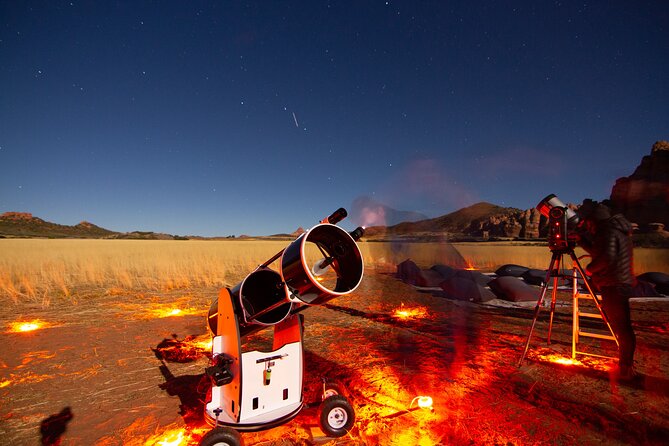
At $199 per person, this is not a cheap add-on to a Zion vacation. The value depends on what you want from an evening. You are paying for a two-hour guided program, a small group, telescope access, individual binoculars, a dedicated lounger, blankets, drinks, and instruction from astronomy guides.
The price makes more sense if you would not know how to find constellations or operate a telescope on your own. It also makes sense if you want a planned evening after a demanding day outdoors. The equipment is described as high quality, and the session gives you access to objects you are unlikely to see clearly with the naked eye.
The value is weaker if you already own good astronomy gear, prefer independent stargazing, or mainly want a scenic night with no commentary. You are also paying for the guide’s time and the chance to use several pieces of specialized equipment, not for transportation or lodging.
A free photo is another appealing extra mentioned during the experience. The team has taken photographs of participants with the Milky Way behind them and emailed them along with telescope images. Treat this as a welcome bonus, not the main reason to book, since the information does not promise the same photo setup on every date.
Timing, weather, and practical comfort
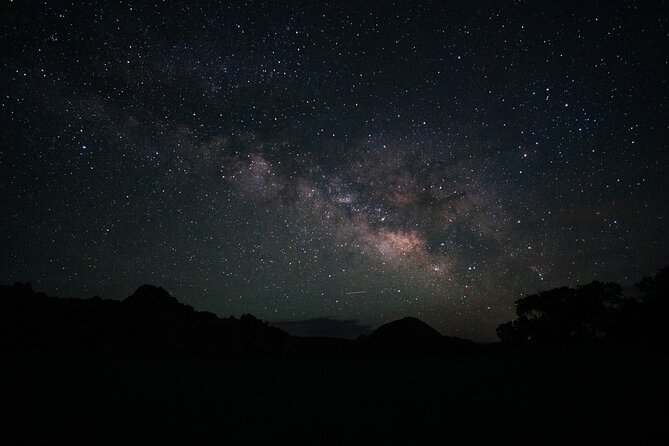
The activity lasts about two hours, plus the 10-minute walk to the viewing location. It is offered in English and confirmed at booking. The experience can accommodate most people, but you should be comfortable walking to an outdoor field and sitting or reclining there for the program.
Weather deserves more attention than it might receive in a daytime tour description. Clear skies are essential for the best telescope views. Clouds led one guide to adjust the program, while wind and cold affected another otherwise excellent night. A warm afternoon in Zion does not guarantee a warm evening.
The cancellation policy is friendly: cancel at least 24 hours before the start time for a full refund. Changes made inside that window are not accepted, and late cancellations are not refunded. If poor weather forces the operator to cancel, you can choose another date or receive a full refund. The same applies if the minimum number of participants is not reached.
Because the experience averages 59 days of advance booking, popular dates may fill well before your trip. That does not mean you need to book blindly. First check your Zion schedule, then choose an evening when you can tolerate a weather-related change.
Who will enjoy this most
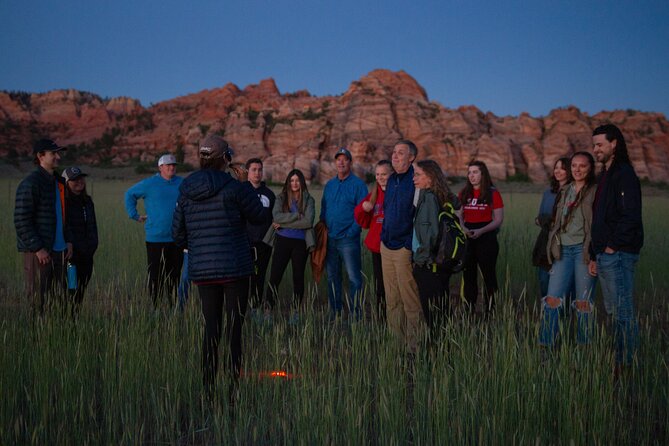
I would recommend this to couples, families, solo visitors, and friends who want something different from another hike. It works especially well after several active days, when a relaxed evening feels welcome but you still want a real activity.
Families with curious children may enjoy the binoculars, laser-pointer tour, and telescope targets, though the supplied information does not set a minimum age. The two-hour length requires some patience, and the outdoor cold may be more challenging for young children.
It is also a good choice for anyone who has rarely seen a dark sky. If you live in a bright city, the Milky Way alone may make the outing worthwhile. Astronomy fans will appreciate the equipment and the chance to ask detailed questions, but the guide’s explanations are aimed at a broad audience rather than only experts.
You may want to skip it if you dislike sitting outside at night, have no interest in guided commentary, or cannot arrange transportation to La Verkin. You should also think twice if a cloud-covered evening would feel like a major disappointment, even though the operator offers weather-related alternatives when cancellation is necessary.
Should you book Stargazing Zion?
Book it if you want a calm, memorable counterpoint to Zion’s daytime hikes. The combination of a dark-sky location, powerful telescopes, personal binoculars, comfortable pods, hot drinks, and enthusiastic guides gives the evening real substance.
The main cautions are the $199 cost, the lack of transportation, and the uncertainty of outdoor weather. Pack warm layers, read the meeting directions carefully, and keep your schedule flexible enough to handle a weather change.
For a first serious look at the night sky, I think this is a strong choice. You may arrive expecting a few stars and leave with a new sense of Saturn, the Milky Way, and the vast space beyond Zion’s cliffs.
FAQ
How long does the stargazing experience last?
The guided program lasts approximately two hours, with a brief walk of about 10 minutes to the dark-sky viewing location.
Where does the activity start and end?
It starts at 8V7R+CJ La Verkin, Utah, and ends back at the same meeting point.
Is transportation included?
No. You must arrange your own transportation to and from the meeting point. Specific directions to the site are provided through the booking message center after you supply an email address.
What equipment is provided?
You receive access to powerful telescopes, Celestron Outland X binoculars, a Yogibo lounger, and a blanket. Hot chocolate, coffee, and tea are also provided.
What happens if the weather is poor?
The experience requires good weather. If the operator cancels because of poor conditions, you can choose another date or receive a full refund.
Can I cancel for a full refund?
Yes. You can cancel at least 24 hours before the start time for a full refund. Cancellations or changes made less than 24 hours before the start time are not accepted for a refund.
Just added around the USA
- Private Under the Stars Night-Time Tour of DC (Up to 5 Guests)★ 5.0 · 24 reviews
- Stargazing and Milky Way Portrait in Capitol Reef National Park★ 4.5 · 13 reviews
- Temecula Wine Country Stargazing Tour★ 5.0 · 2 reviews
- Skyway Light Show Tour Under the Stars★ 5.0 · 5 reviews
- Astronomy and Stargazing Tour in Utah★ 5.0 · 8 reviews
- PRIVATE Sedona Jeep Tour 4X4 Stargazing Tour at Night★ 4.5 · 11 reviews
- Sunset Sedona Sacred Places -gourmet picnic dinner and stargazing★ 5.0 · 12 reviews
- Private Stargazing – Sequoia National Park★ 4.5 · 14 reviews
National Park Stargazing, compared.
Teide National Park Sunset & Stargazing with Dinner (Star Safari)
Read our review →
Teide National Park: Sunset & Stargazing Safari with Dinner
Read our review →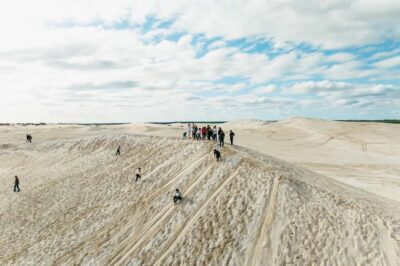
Pinnacles Desert: Sunset BBQ & Stargazing Tour +Sandboarding
Read our review →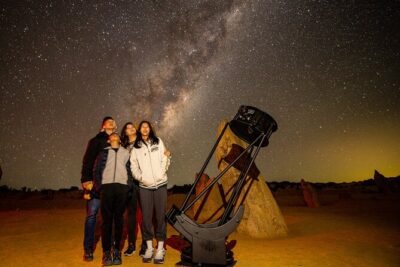
Pinnacles Desert Sunset Dinner and Stargazing Tour
Read our review →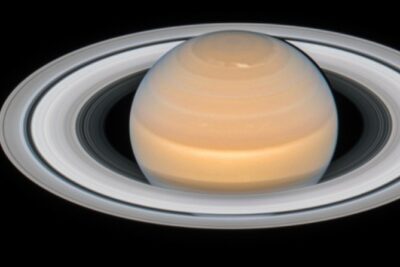

Pinnacles Sunset and Stargazing Tour with Dinner
Read our review →Browse the lists this tour appears in