
REVIEW · MOUNT TEIDE
Teide National Park: Stargazing Experience
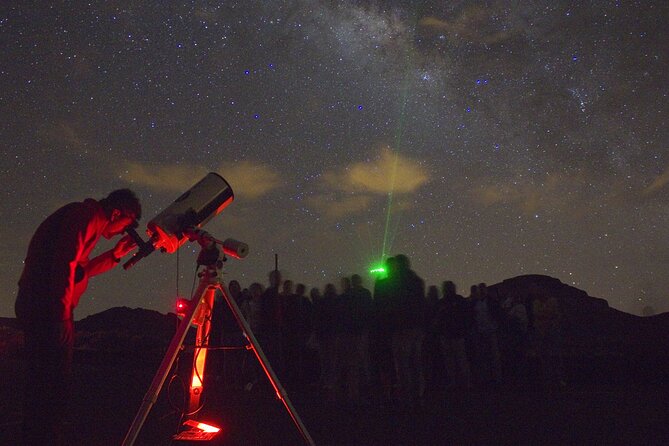
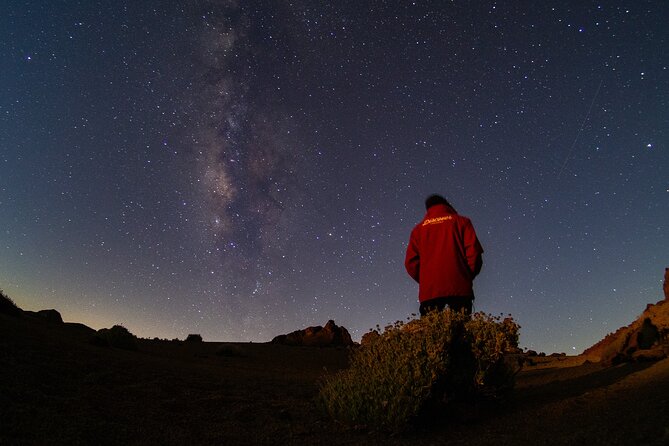
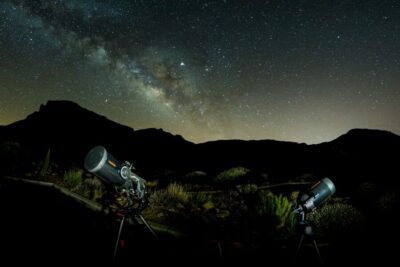
Teide’s high, dark setting gives this short outing its real magic. You begin with the naked eye, learning to pick out stars, planets, and constellations, then move to powerful telescopes for closer views of objects such as Saturn, Jupiter, the Moon, nebulae, and distant galaxies. The Milky Way can be visible without a telescope, and the mountain scenery adds a dramatic backdrop.
I like the clear teaching from guides such as Miguel, Adrián, and Óscar, plus the chance to see telescope images turned into striking astrophotographs. I also like that the session works for families and complete beginners, not only amateur astronomers. The catch is simple but important: Teide is cold after dark, and the tour does not include transport or dinner.
Key points at a glance
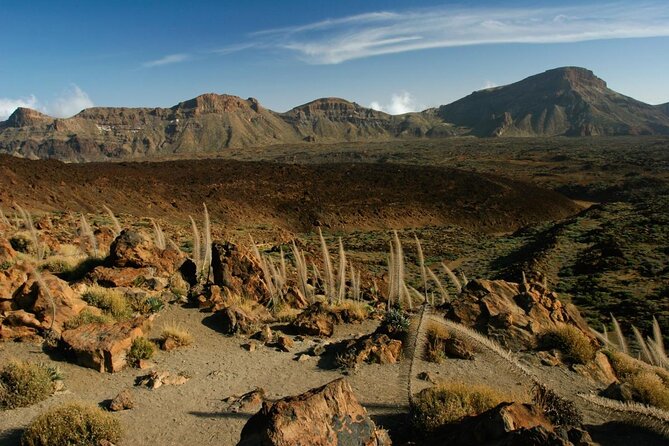
- The setting: Stargazing takes place at Mines of San Jose inside Teide National Park, beneath one of Tenerife’s clearest night skies.
- The format: A guide explains the sky with the naked eye before directing you to telescope targets.
- What you may see: Planets, the Moon, star clusters, nebulae, galaxies, constellations, and the Milky Way, depending on the date and weather.
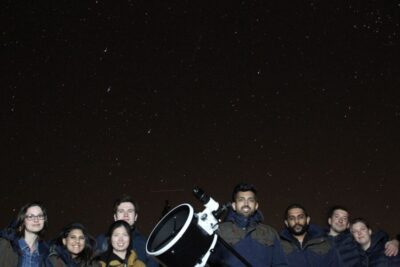
- The group size: The maximum is 20 people, small enough for questions and a fair turn at the telescope.
- The practical catch: Transport and dinner are not included, and warm clothing is essential.
- The price: At $42.33 per person, the tour offers solid value if you want a guided introduction rather than simply driving up to look at the stars.
Why Teide is such a strong place for stargazing
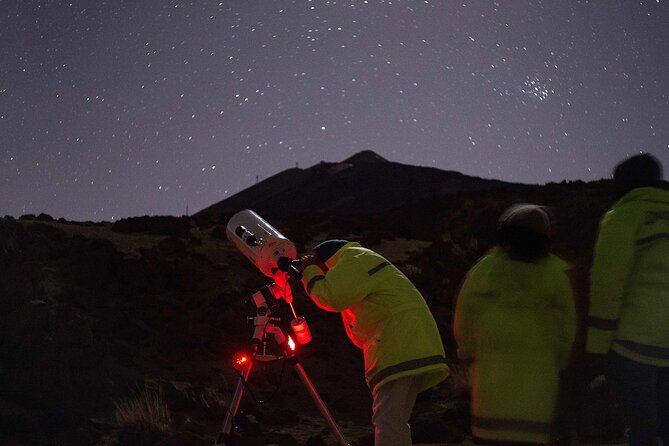
Tenerife has many fine evening activities, but this one takes you away from the island’s bright coastal resorts. Teide National Park puts you high in the mountains, where the night sky is darker and the volcanic scenery feels almost unreal after sunset.
The location matters more than fancy equipment. A telescope cannot fully overcome city lights, clouds, or haze. At Teide, you have a much better chance of seeing a broad spread of stars with your own eyes. Several sessions have included clear views of the Milky Way, which is often the most memorable part of the night.
You do not need to know the difference between a planet and a constellation before arriving. The guide starts with the basics and builds from there. A laser pointer helps connect the dots in the sky, while the spoken explanation gives you a sense of what you are seeing and why it matters.
That makes the experience more useful than simply lining up at a telescope. You learn how to look upward with some confidence. After the tour, you may not become an astronomer, but you should be better at spotting familiar shapes and understanding the scale of what is above you.
More Mount Teide Stargazing Tours:
- Tenerife: Teide National Park Sunset & Stargazing Tour
★ 4.2 · 3,812 reviews - Tenerife: Sunset and Stargazing at Teide National Park
★ 4.7 · 2,826 reviews - Teide National Park Sunset & Stargazing with Dinner (Star Safari)
★ 5.0 · 2,601 reviews
The 80-minute evening at Mines of San Jose
The meeting point is Mines of San Jose, in Teide National Park, with a scheduled start at 7:30 pm. The activity ends back at the same place, so you are not left wondering where to go after the final telescope viewing.
The session lasts about 1 hour and 20 minutes. That is long enough for a proper introduction and several telescope observations, but short enough to fit into a larger evening plan. You should allow extra time for your own drive to and from the park, since transport is not part of the booking.
The exact order of targets depends on the date, season, visibility, and weather. On different nights, the telescopes may be aimed at planets, the Moon, star clusters, nebulae, or galaxies. Saturn, Jupiter, and the Moon have all been particularly popular sights when visible.
This is worth keeping in mind before you book. You cannot treat a stargazing session like a fixed museum display. If a certain planet is your main goal, it may not be in a good position on your chosen evening. One visitor arrived hoping for planets but found that the timing was not right. The night was still worthwhile, but expectations should stay flexible.
Starting with the naked eye
The first part is about learning to read the sky without equipment. The guide points out stars and constellations, explains basic astronomy, and shares facts about planets and other objects overhead.
I like this approach because it gives the night a sense of order. Without guidance, a dark sky can look like a jumble of bright points. With a guide and laser pointer, you can begin to separate a constellation from a planet and understand where the Milky Way crosses the sky.
The explanations suit beginners, families, and people who have never attended a stargazing session. Children can follow the stories and visual references, while adults with a casual interest in astronomy get enough context to make the telescope views more meaningful.
The session is not aimed only at children. If you already know the major constellations or follow astronomy closely, the introductory material may feel basic. One experienced observer still found the location worthwhile, but the teaching may not satisfy someone looking for advanced astrophysics or detailed star charts.
What the telescopes add
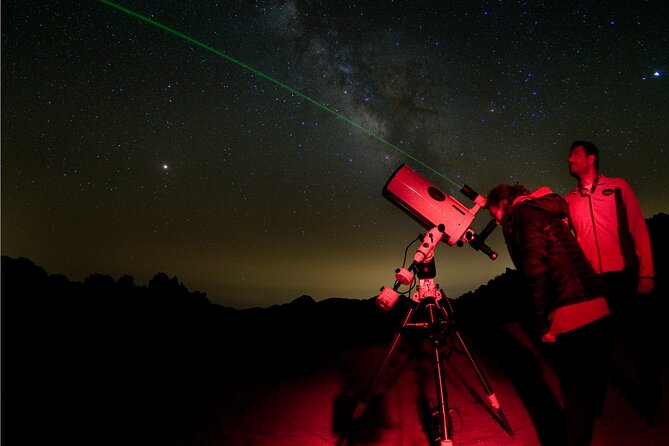
After the naked-eye lesson, you observe selected objects through telescopes. This is where the experience changes from a broad lesson into a series of close looks at specific points in the sky.
A telescope can make a planet feel far more real. Saturn’s rings, Jupiter, or the Moon can become the focus of the evening when conditions line up. Families with children have found this part especially exciting, and the chance to see Saturn directly through the eyepiece has been a highlight for many people.
You may also view star clusters, nebulae, or galaxies. These objects do not always appear as bright, colorful shapes like the images used in astronomy books. Their appearance depends on the equipment, the conditions, and your own eyesight. Still, seeing a distant object through a telescope gives you a useful sense of scale and distance.
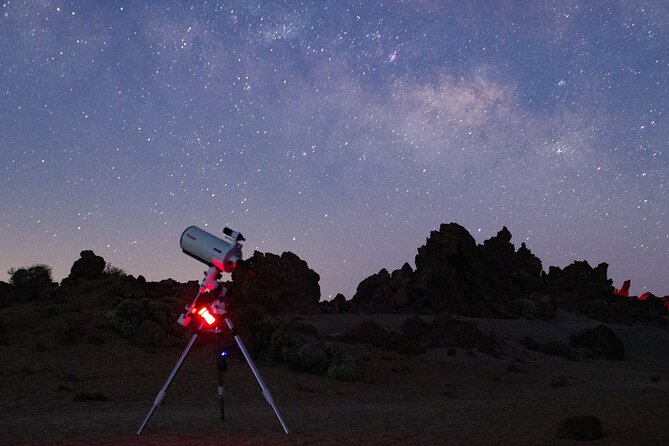
The provider also uses an astrophotographic telescope, allowing the view to be turned into an image. That adds a modern touch to a simple outdoor activity. You are not only looking through an eyepiece, you may also see a clearer photographic record of the object being discussed.
The exact objects are never guaranteed. Clouds, atmospheric conditions, moonlight, and the night’s astronomical position all affect the program. The tour works best when you treat the telescope list as a possibility rather than a promise.
More National Park Stargazing in Tenerife:
- Teide National Park: Sunset & Stargazing Safari with Dinner
★ 4.6 · 2,115 reviews - Teide National Park: Guided Large Telescope Stargazing Tour
★ 4.9 · 319 reviews - Tenerife. Stargazing in Teide National Park
★ 4.9 · 319 reviews - Teide National Park: Stargazing Experience
★ 4.7 · 220 reviews
Guides who make the difference
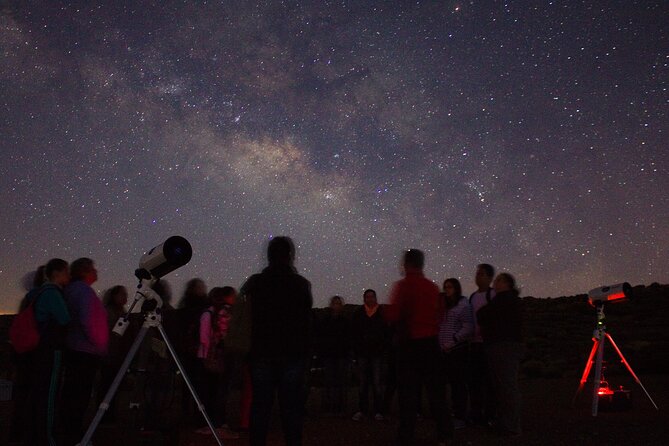
The guide is central to the experience. The most useful part is not only pointing a telescope at something bright. It is explaining what you are seeing, answering questions, and keeping the group moving at a comfortable pace.
Guides named in the feedback include Miguel, Adrián, and Óscar. Óscar received particular praise for his explanations of the Moon and Saturn, while Miguel was noted for a warm welcome and clear descriptions of stars, the Milky Way, zodiac constellations, and other objects.
The tour is offered in English. A French-language account also noted that Spanish may be possible, but you should confirm the language arrangement when booking if Spanish is important to you. The guide-led format makes this a more personal experience than using a self-guided astronomy app in a car park.
A maximum of 20 people keeps the group from becoming unwieldy. It is not a private tour, and you may need to wait briefly for your turn at the telescope, but the size should still allow room for questions and a clear view of the guide’s presentation.
The cold is the main practical issue
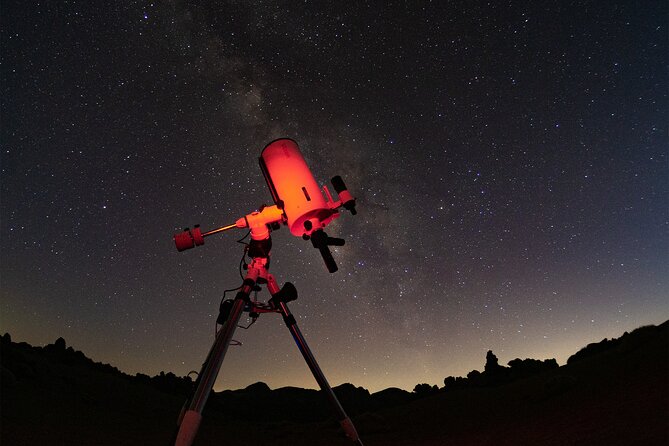
The most repeated piece of useful advice is also the easiest to ignore: bring warm clothing. Teide can feel cold after sunset, even if Tenerife was warm at the coast during the day.
A sweatshirt may not be enough. Bring a proper warm jacket and dress in layers. Several people found the cold the only real drawback, while others said the experience was worth it despite the temperature. The provider has also been reported to have some warm clothing available if you forget, but you should not rely on that as your main plan.
You will spend much of the time standing outside. Warm clothes make it easier to focus on the explanations and enjoy the telescope views. Comfortable shoes also make sense, though the supplied information does not describe a hike or long walk.
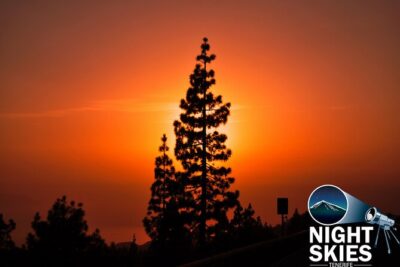
The sunset can add another pleasant part to the evening. One account enjoyed both the fading light and the stars afterward. Still, the main activity is night observation, so arrive prepared for darkness and dropping temperatures.
Is $42.33 a fair price?
At $42.33 per person, this is a reasonable price for a guided introduction to Teide’s night sky. The fee includes the astronomy explanation, telescope observation, an astronomical guide, the astrophotographic telescope element, and insurance during the activity.
The value is strongest if you would otherwise struggle to identify anything in the sky. You are paying for the location, the equipment, and the guide’s ability to turn a dark mountain evening into a structured experience.
The price looks less attractive if you already own good astronomy equipment or have advanced knowledge of the sky. The session may repeat facts you know, and it is not designed as a specialist observing workshop.
You should also add the cost and effort of getting to Mines of San Jose. Transport is not included, and neither is dinner. This is not an all-in evening package. It is a focused stargazing activity that you arrange around your own transport and meal plans.
For families, the price can still make sense because all ages can participate and children must be accompanied by an adult. For a couple or solo visitor with a strong interest in astronomy, the setting and telescope access may be enough to justify it.
Who will enjoy this most
I would recommend this outing to:
- First-time stargazers who want clear guidance
- Families with children or teenagers
- Couples looking for a quiet mountain evening
- Visitors staying in Tenerife who want something beyond the coast
- People curious about planets, constellations, and the Milky Way
- Casual astronomy fans who value the Teide setting more than advanced instruction
It is less suited to anyone expecting a long, technical astronomy course. It is also not ideal if you dislike standing outdoors in cold conditions or cannot arrange your own way to the meeting point.
The family appeal is strong. Children have stayed engaged through the presentation and telescope viewing, especially when the Moon, Jupiter, or Saturn were visible. Teenagers who rarely show interest in organized activities may also respond to the direct visual impact of the telescope.
Weather, timing, and flexibility
This activity depends on good weather. If poor conditions force a cancellation, you are offered another date or a full refund. That safeguard is useful because cloud cover can make a major difference to the night.
You can cancel for a full refund up to 24 hours before the scheduled start. Cancellations or changes made less than 24 hours before the experience are not accepted for a refund, and the cut-off follows local time.
The activity is usually booked around 22 days ahead, so it is sensible to reserve before your trip if your schedule is tight. The mobile ticket also makes the booking easy to keep on your phone.
Do not choose the final night of your holiday if missing the session would leave you without another chance. Weather can interfere, and a spare evening gives you more flexibility if a new date is offered.
A good first step into astronomy
What I like most is the balance between looking and learning. You are not simply handed a telescope and left to guess what you see. You first get a map of the sky, then use the equipment to inspect selected objects.
The experience also has an appealing sense of place. Teide after sunset is not just a dark viewing site. The volcanic surroundings, the high mountain air, and the wide open sky make the evening feel separate from the resort areas below.
The main limitation is that astronomy is controlled by nature. You may see Saturn one night and miss it another. You may get a crisp Milky Way or a less dramatic selection of objects. That uncertainty is part of the activity, but it is worth accepting before you pay.
The 4.9 rating from 118 reviews and recommendation from 98 percent of bookers suggest a very strong level of satisfaction, but the practical warnings remain important. The high score does not remove the need for warm clothes, personal transport, and flexible expectations about what appears in the telescope.
Should you book this Teide stargazing tour?
Book it if you want an easy, guided introduction to the night sky in one of Tenerife’s best-known mountain settings. The combination of naked-eye teaching, telescope viewing, family suitability, and a small maximum group makes it a strong choice for beginners.
I would be especially keen to book when the Moon or a visible planet is high on your wish list, while remembering that the exact target depends on the date. If you already understand astronomy at an advanced level, choose it for the setting and equipment rather than the depth of the lesson.
Bring a genuinely warm jacket, arrange your own transport, and check the forecast. Do those three things, and $42.33 buys a memorable hour and 20 minutes under the stars.
FAQ
Where does the stargazing tour meet?
The meeting point is Mines of San Jose in Teide National Park, 38300, Santa Cruz de Tenerife, Spain.
What time does the activity start?
The scheduled start time is 7:30 pm.
How long does the experience last?
The stargazing session lasts approximately 1 hour and 20 minutes.
Is transport included?
No. Transport to and from Mines of San Jose is not included. The activity ends back at the meeting point.
What language is the tour offered in?
The experience is offered in English. Spanish may also be possible, but you should confirm this when booking.
Can children take part?
Yes. The activity is suitable for people of all ages, and children must be accompanied by an adult.
What happens if the weather is poor?
The experience requires good weather. If it is canceled because of poor conditions, you will be offered another date or a full refund.
Just added around Tenerife
- Tenerife Exclusive & Private Gastronomic, Sunset-Stargazing★ 5.0 · 3 reviews
- Small Group Teide Stargazing Tour with Picnic at Sunset★ 5.0 · 3 reviews
- “Stargate” Tenerife stargazing★ 5.0 · 13 reviews
- TEIDE NIGHT Astronomy Stargazing Bus Tour, Meal & Drinks included!★ 4.0 · 15 reviews
- Stargazing Tour in Tenerife★ 3.0 · 2 reviews
- Polestar SELF-DRIVE Sunset Stars Tour in Teide National Park★ 5.0 · 19 reviews
- Private stargazing trip in Teide★ 5.0 · 3 reviews
- Stargazing Experience with Dinner & Drinks★ 4.0 · 23 reviews
Mount Teide Stargazing Tours, compared.
Teide National Park Sunset & Stargazing with Dinner (Star Safari)
Read our review →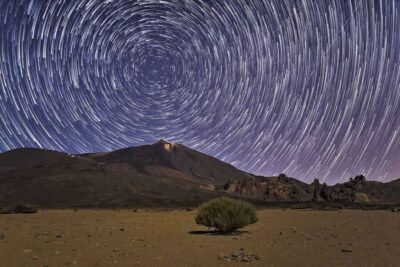
Teide National Park: Sunset & Stargazing Safari with Dinner
Read our review →
Teide by Night: Sunset & Stargazing with Telescopes Experience
Read our review →
Guided Sunset & Stargazing Tour by Night with Dinner
Read our review →
Roque de los Muchachos Stargazing Tour with Wine
Read our review →Browse the lists this tour appears in