
REVIEW · STARGAZING HIKES & NIGHT WALKS
Miyako Island: Stars & Jungle Night Walking Tour
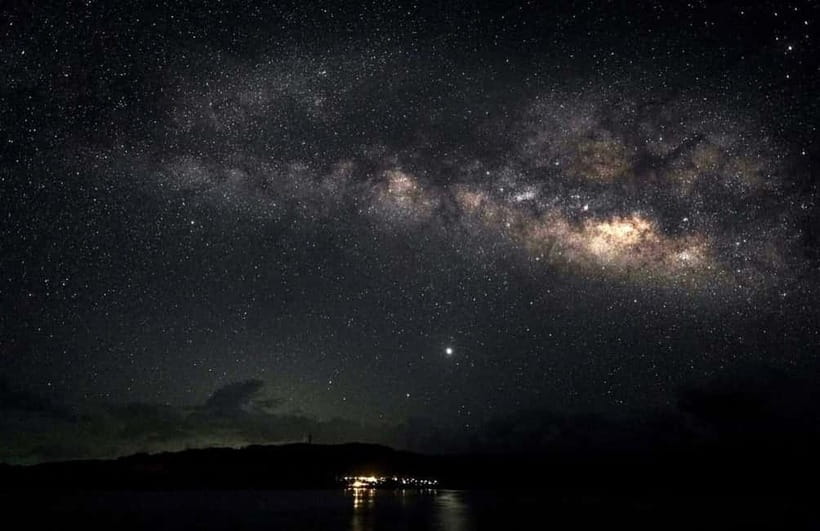
Miyakojima gets most of its attention in daylight, but this 90-minute night walk shows you a different island. You follow a guide through the dark forest near Tako Park, searching for coconut crabs, spiders, and other creatures that appear after sunset. On a clear night, the low light pollution can reveal an impressive sky full of stars.
I like the chance to see Miyako’s subtropical ecosystem at night, when the island’s familiar paths feel new. I also like the simple format: a local guide, a flashlight, and a slow search rather than a packed sightseeing schedule. The main caution is that wildlife and stars are never guaranteed, and the English service can vary by date.
Key things to know before you book
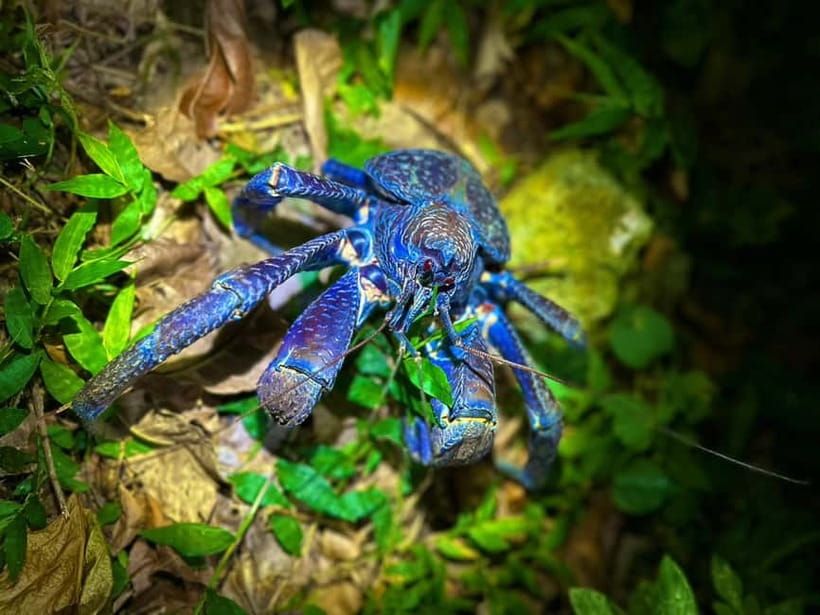
- Coconut crabs are the star find: Some outings spot these large island creatures, though sightings depend on nature and luck.
- The walk is short but genuinely outdoors: Expect about one hour of walking, with the full activity lasting 90 minutes.
- Stargazing depends on the moon and clouds: A nearly full moon can make the walk pleasant while washing out faint stars.
- Guide quality matters: Kyoka and Hinata have been praised for lively explanations, but English may not always be available.
- You meet at Kurima Island Center: Transportation is not included, so you need to reach the parking lot in front of the center yourself.
- It suits active children and older adults: The stated age range is 3 to 65, but the tour is not suitable for wheelchair users, pregnant women, or people with certain medical conditions.
A different side of Miyakojima after sunset
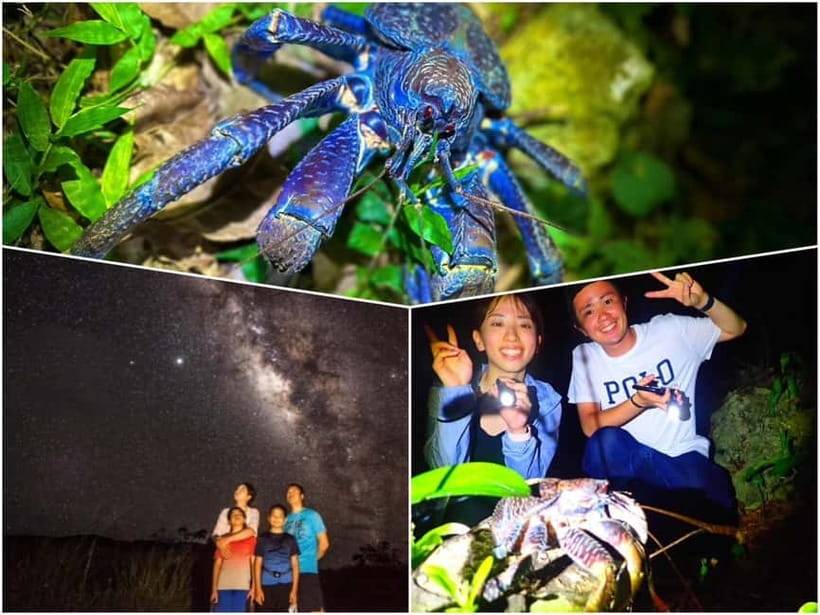
At night, Miyakojima changes character. The forest is no longer just green scenery beside a road. You listen for movement, scan the ground with a beam of light, and wait for a shape that would be easy to miss during the day.
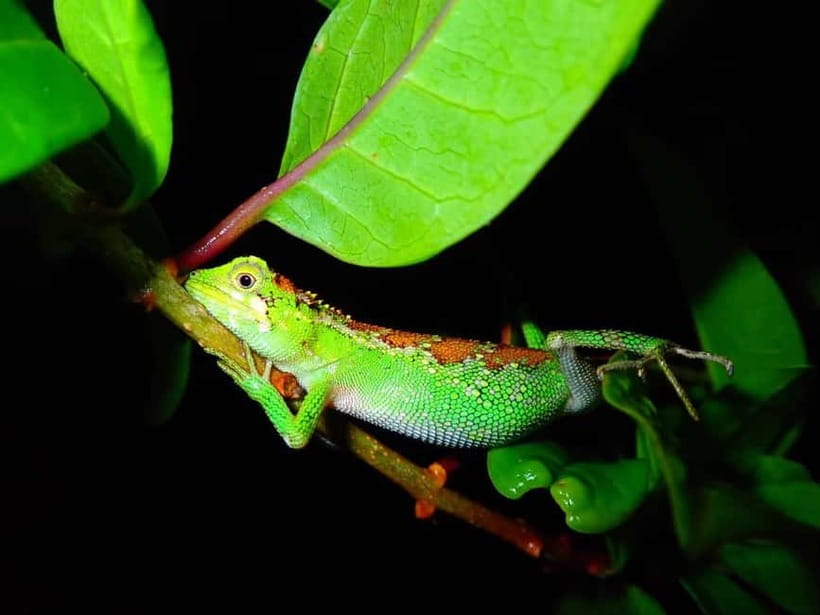
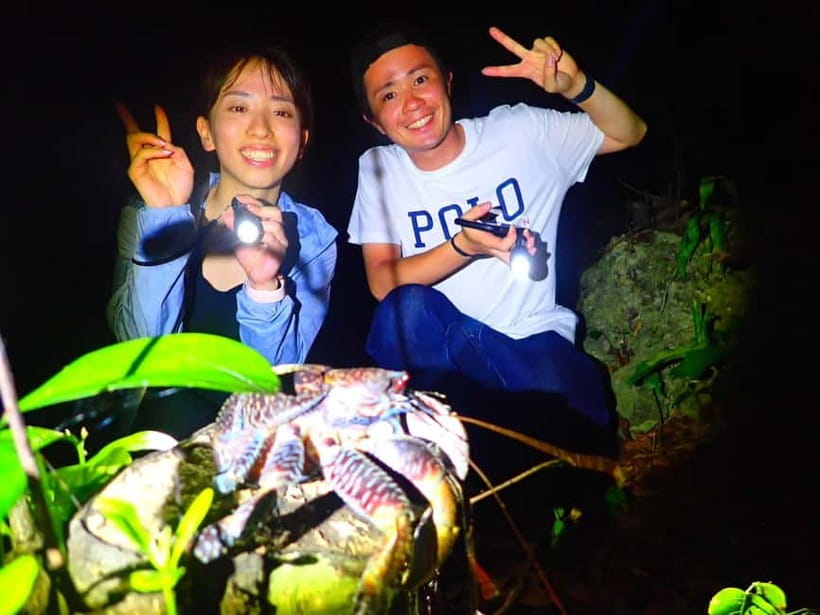
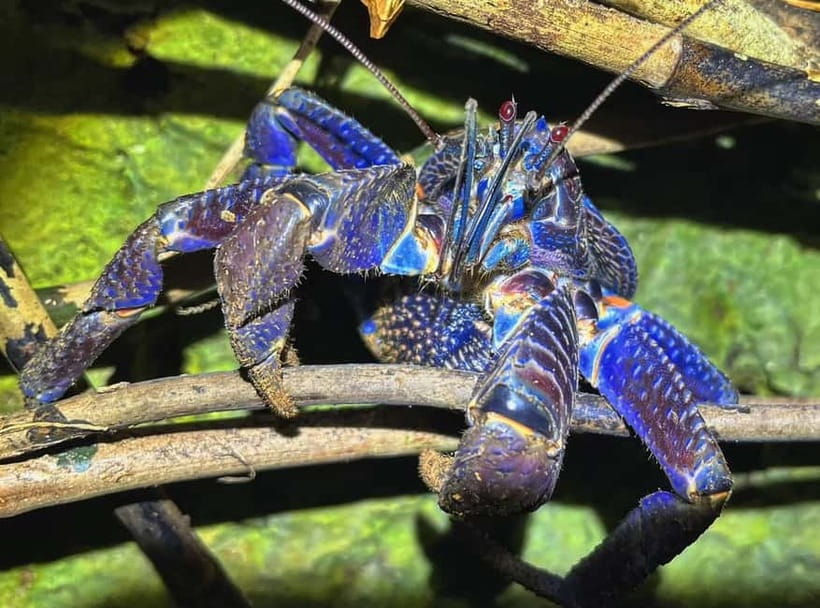
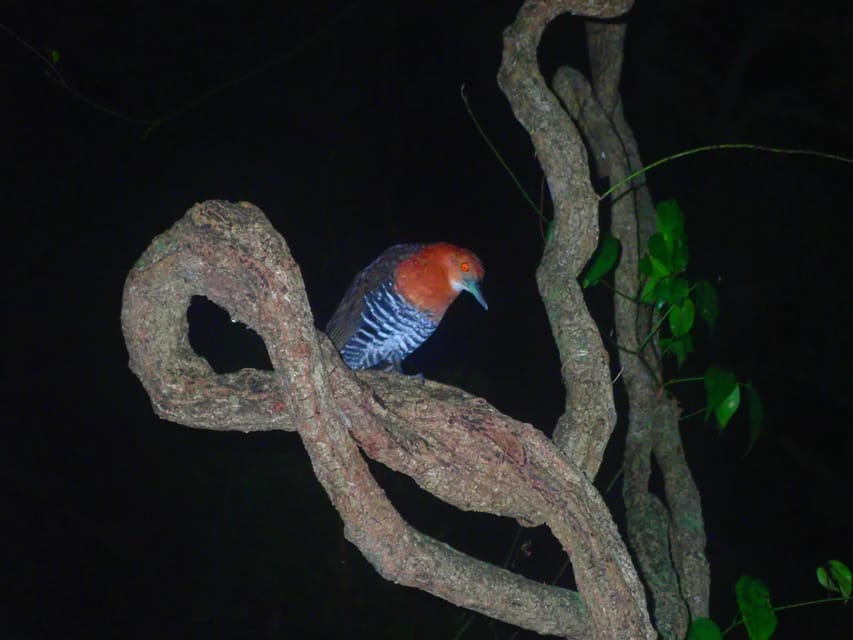
The tour focuses on the island’s nocturnal animals and plants. Coconut crabs are the main prize, and they can be remarkably large. One reported sighting described a crab as huge, while another outing found its only coconut crab on the road outside the forest. That detail tells you exactly how unpredictable a nature tour can be: the animal may appear in an obvious place, or you may walk past it without noticing.
You may also see spiders of different sizes, insects, and other night-active creatures. Some walks produce several animal sightings. Others are quieter. The guide’s skill in spotting movement and explaining what you are seeing makes a real difference.
This is not a zoo visit or a guaranteed animal encounter. You should book it because you enjoy looking and waiting, not because you need a particular creature to appear.
More Stargazing Hikes and Night Walks in the world:
- Dubai: Sunset Camel Trek, Al Khayma Camp, Stargazing & BBQ
★ 4.8 · 2,588 reviews - Edge Of The World Hike(Dinner under stars,village,bats cave,camp)
★ 4.5 · 675 reviews - Hilo: Mauna Kea Summit, Sunset, & Stargazing Experience
★ 4.8 · 629 reviews
From Kurima Island Center to the night walk
The meeting point is the parking lot in front of Kurima Island Center. You are responsible for getting there, since transportation is not part of the package. Arrive on time, and use the restroom before meeting the guide because there are no toilets at the site.
The route includes a walk of about one hour through the Tako Park area. The activity description also refers to the adventure as an Imgya Park night tour, so check the final confirmation email for the exact meeting instructions and route details. The provider sends the meeting place and time by 6:00 PM on the day before the tour.
At the start, the guide gives you a flashlight and explains how to move through the area. Bring your own light as a backup, but use it carefully. A bright beam can make it harder to spot a creature outside the center of the light, and you should never touch animals or plants.
Wear comfortable shoes. You will be walking outdoors at night, and the ground may feel less certain when you cannot see every surface clearly. Water and insect repellent are sensible additions, especially in Miyakojima’s subtropical climate.
Searching for coconut crabs and island creatures
The most interesting part of the walk is the search itself. Your guide points out signs of nighttime activity and helps you scan the edges of the path. A coconut crab may be visible near the road, beside vegetation, or farther into the forest. The excitement comes from not knowing what will appear next.
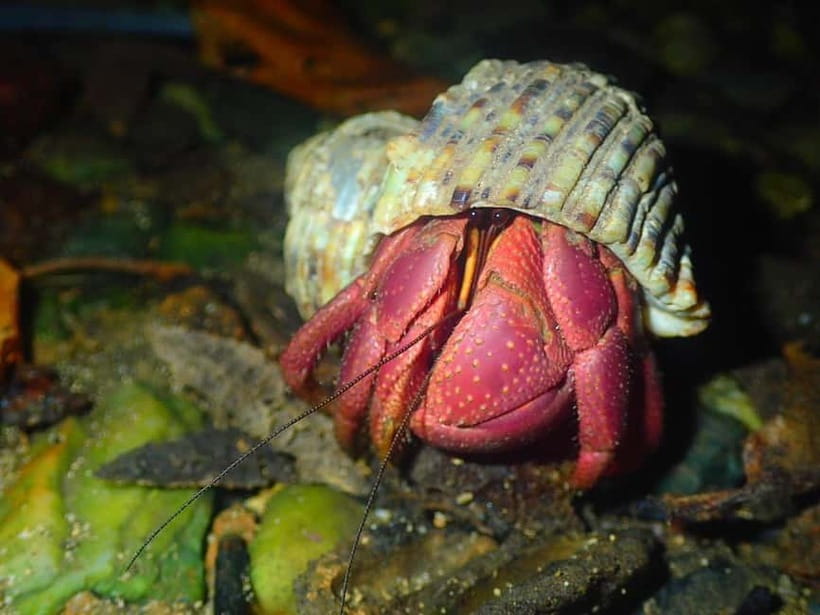
Coconut crabs are land-dwelling relatives of hermit crabs, but the tour information does not promise a biology lecture or a set number of sightings. The quality of the explanation depends partly on the guide and language used that evening. Guides Kyoka and Hinata have received especially warm praise for clear nature information, friendly energy, and entertaining commentary.
There is a fair warning here. One outing became heavily focused on spiders, with webs across much of the route, while the only coconut crab appeared outside the forest. If you dislike spiders or webs, this may not be your ideal evening activity. You should also expect to look rather than simply follow a guide who points out animals every few minutes.
The rules are straightforward: no touching animals, no touching plants, no littering, no smoking, and no alcohol or drugs. These rules protect both you and the fragile night environment. They also help keep the experience focused on watching rather than handling wildlife.
What the night sky adds
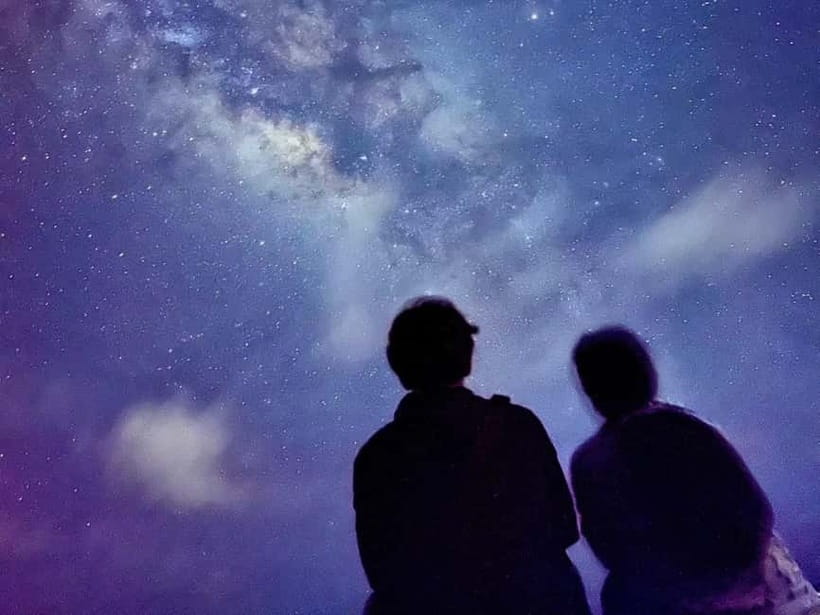
Miyakojima has limited light pollution, so a clear night can bring a fine view of the stars. The forest walk and the sky work well together. You spend part of the time looking down for movement, then stop and look up at a much wider view.
The stargazing portion is not a separate astronomy program with a guaranteed list of constellations. Star visibility changes with cloud, weather, and the moon. One outing had a nearly full moon, which made the walk pleasant but left little opportunity for stargazing. That is a useful point when choosing your date: a darker moon can offer better stars, while a bright moon can make the path feel easier.
The guide is described as someone who knows both creatures and stars, but the balance between the two may change according to conditions. If the forest is active, the group may spend more time watching animals. If wildlife is scarce but the sky is clear, the stars may become the evening’s main feature.
Do not treat the sky as a promise. Think of it as an extra reward that appears when conditions line up.
More Walking Tours in the world:
- The Banff Stargazing Tour – 2hr Walking Tour
★ 5.0 · 189 reviews - Ishigaki: Jungle Walk and Stargazing Night Tour
★ 4.5 · 149 reviews - Cabo de Gata: Guided Night Walk with Stargazing
★ 4.7 · 36 reviews - Canmore: Stargazing and Nature by Nightfall Walking Tour – 2hr
★ 5.0 · 31 reviews
A family walk with real limits
The stated age range is 3 to 65, making this a useful option for families who want a short evening activity. A child who likes bugs, animals, and flashlights may find the search thrilling. A child who dislikes darkness, webs, or walking on uneven ground may find it less comfortable.
The tour is not suitable for children under 3, pregnant women, wheelchair users, people with back or heart problems, or anyone over 65. The activity information also asks you to consult the provider if you have a fear of the dark or confined spaces, or another health concern.
The walk is not described as strenuous, but darkness changes how your body handles an ordinary path. You may step more carefully and pause often. Comfortable shoes, water, and insect repellent matter more here than they would on a quick paved stroll.
The guide provides a flashlight, and the tour includes liability insurance. Still, you should bring a flashlight of your own and stay within the group. No alcohol is allowed before or during the activity.
How much value do you get for $31?
At $31 per person, this is reasonably priced if you want a guided introduction to Miyakojima’s nighttime nature. You are paying for local searching skills, the equipment provided, the structure of the outing, and the chance to learn what you are seeing. You are not paying for a fixed animal show.
The price feels strongest when the guide is active and informative. A good guide scans ahead, explains the creatures, answers questions, and keeps everyone included. Kyoka was praised for preparation and lively energy, while Hinata was praised for showing many things and explaining Miyakojima’s nature. Photos were also taken on one outing and shared the same evening, though you should not assume that will happen every time unless the provider confirms it.
The value feels weaker if you expect fluent English, constant animal sightings, or a private walk. One outing had a guide who spoke little English, and the group had to rely partly on other participants for translation. Another person felt that the guide did not search actively enough and that the group spent time waiting because several tours were using the same path.
That variation is important. The advertised languages are Japanese and English, but the activity may be conducted in Japanese only depending on the reservations that day. If detailed English explanations are essential to you, contact the provider before booking.
Crowds, timing, and weather
This is not necessarily a solitary forest experience. Several groups may be using the same route, and busy sections can create pauses. That may reduce the quiet, mysterious feeling you hoped for, but it also means you are not necessarily alone in a dark outdoor setting.
Start and end times vary by season and field conditions. The exact schedule is confirmed close to the date. Plan your evening with some flexibility rather than booking a tightly timed dinner or another activity immediately afterward.
The tour operates in light rain. Miyakojima weather can change, and a damp forest may bring out more activity, but safety comes first. The provider may cancel if conditions make the field unsafe. If the minimum of two participants is not reached, the tour can also be canceled without charge, with notice given the day before.
You can cancel up to 24 hours in advance for a full refund, and the reserve-now-pay-later option keeps you from paying immediately. Those policies make it easier to fit the walk into a changeable island itinerary.
Japanese or English, and what that means
The provider offers the tour in Japanese or English. In practice, the language of the group can affect your experience. If most participants are Japanese, the guide may give more of the live explanation in Japanese, even if an English option is shown when you book.
That does not make the tour unusable for English speakers. You can still watch the search, enjoy the setting, and follow basic directions. But you may miss the finer details about animals, plants, and stars. Ask in advance about the language on your specific date if that information matters to you.
A guide who brings energy can make a big difference during slow stretches. This activity includes waiting, scanning, and walking quietly. A warm personality and clear explanations help turn those pauses into part of the experience rather than dead time.
Practical packing list for the forest
Keep your preparation simple:
- Comfortable walking shoes
- Water
- Insect repellent
- A flashlight, in addition to the one supplied
- Clothing suitable for a subtropical outdoor night
Do not bring a baby carriage. It is not permitted, and the route is not designed for it. Leave alcohol and other intoxicating substances behind, and do not plan to smoke during the activity.
Because there are no toilets at the site, use one before meeting the guide. Arriving early also gives you time to find the parking area and avoid losing your place because of a late arrival. Unnotified lateness or a no-show may be treated as a cancellation fee.
Who should book this Miyako night tour?
I would choose this walk if you enjoy nature without needing a guaranteed result. It suits families with children aged 3 and up, couples who want a low-key evening, and anyone curious about the creatures that appear after dark.
It is especially appealing if you have already seen Miyakojima’s beaches and want something different. The walk gives you a closer look at the island’s natural life, and the sky can add a memorable final touch.
I would think twice if you dislike spiders, darkness, or uncertain conditions. I would also ask about the guide’s language before booking if you want detailed commentary in English. The experience may be less satisfying if you expect a private group, a smooth paved walk, or guaranteed coconut crabs.
Should you book it?
Book this tour if your idea of a good evening is using a flashlight, moving slowly, and hoping nature provides a surprise. The strongest outings combine a lively guide, several creature sightings, and clear skies. The weaker ones can feel expensive if the English explanations are limited or the wildlife stays hidden.
At $31, the risk is manageable, especially with free cancellation up to 24 hours before the start. Just set the right expectations: this is a guided search, not a wildlife show. If you can accept that, Miyakojima’s coconut crabs, night insects, and starry sky may give you one of the island’s more distinctive evening experiences.
FAQ
Where does the tour meet?
It meets at the parking lot in front of Kurima Island Center. Transportation to the meeting point is not included.
How long does the tour last?
The full activity lasts 90 minutes. The listed walking portion takes about one hour.
What might I see?
You may see coconut crabs and other nocturnal animals, including spiders and insects. Specific wildlife sightings cannot be guaranteed.
Is stargazing guaranteed?
No. Star visibility depends on clouds, weather, and the moon. A bright moon can make the walk pleasant but reduce the number of visible stars.
Is the tour held in the rain?
The tour proceeds in light rain. It may be canceled if conditions make the route unsafe.
What languages are available?
The activity is offered in Japanese and English. Depending on the reservations that day, it may be conducted in Japanese only.
What should I bring?
Bring comfortable shoes, water, insect repellent, and a flashlight. The guide also provides a light.
Can young children join?
Children must be at least 3 years old. The stated suitable age range ends at 65, and the activity is not suitable for wheelchair users, pregnant women, or people with back or heart problems.
More Evening Trips in the world
- Tenerife: Teide National Park Sunset & Stargazing Tour
★ 4.2 · 3,812 reviews - Tenerife: Sunset and Stargazing at Teide National Park
★ 4.7 · 2,826 reviews - Teide National Park Sunset & Stargazing with Dinner (Star Safari)
★ 5.0 · 2,601 reviews - Teide National Park: Sunset & Stargazing Safari with Dinner
★ 4.6 · 2,115 reviews
Just added around the world
- Blue Mountains: Stargazing with a Telescope and Astronomer★ 4.4 · 21 reviews
- ( canyon hurghada & stargazing )★ 4.9 · 16 reviews
- Zermatt: Outdoor fondue “group experience under the stars”★ 4.7 · 3 reviews
- Doha: Night Desert Safari With Stargazing and Inland Sea★ 5.0 · 9 reviews
- Villajoyosa: Moonlight kayaking and dinner under the stars★ 5.0 · 5 reviews
- Vialattea: Night Snowshoeing under the Stars★ 4.5 · 5 reviews
- Ubud: Romantic Floating Dinner Under the Stars★ 5.0 · 2 reviews
- Vincentia: Jervis Bay Beach Stargazing with an Expert★ 4.9 · 19 reviews
Stargazing Hikes & Night Walks, compared.

Sunset Camel Trek, Al Khayma Camp, Stargazing & BBQ
Read our review →
Big Island GOAT Experience: Mauna Kea Summit, Sunset & Stars
Read our review →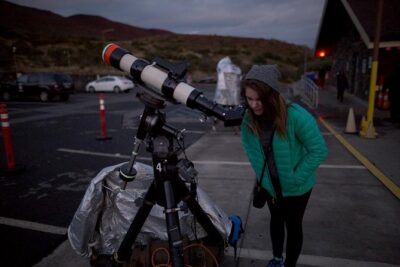
Mauna Kea Summit and Stars Small-Group Adventure Tour
Read our review →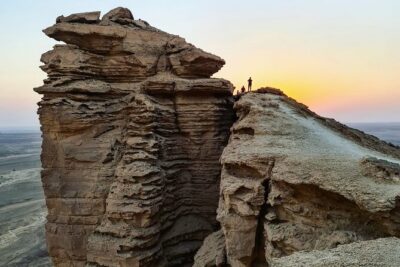
Edge Of The World Hike(Dinner under stars,village,bats cave,camp)
Read our review →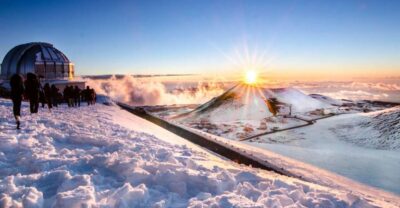
Mauna Kea Summit, Sunset, & Stargazing Experience
Read our review →Sunset Camel Trek, Al Khayma Camp, Stargazing & BBQ
Read our review →
MaunaKea Summit SUNSET and Star Tour with Photo
Read our review →
Browse the lists this tour appears in