
REVIEW · JAPAN
Ishigaki: Jungle Walk and Stargazing Night Tour
Ishigaki’s wild side comes alive after dark. On this two-hour outing, you walk through a subtropical jungle with a flashlight, listening for movement and watching for coconut crabs, bats, frogs, snakes, spiders, and small crabs. Later, you head toward a darker spot where the stars may come out.
I like two things here: the guide-led searching turns a simple walk into a real treasure hunt, and the low price of $31 makes this an easy addition to an Ishigaki stay. Guides such as Yuki, Akari, Sebastian, Jiro, and Diego are praised for explaining animals, plants, constellations, and local life in clear English.
The main caution is that nature sets the schedule. Clouds can hide every star, moonlight can weaken the night sky, and there is no promise of seeing a coconut crab or any other animal. Groups can also reach eight or nine people, which may make it harder to hear or get a clear view.
Key points to know before you book
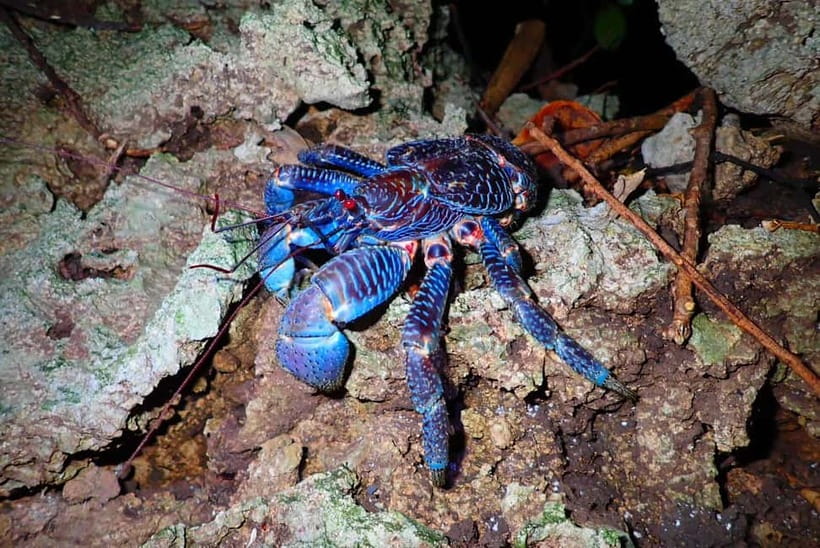
- Coconut crabs are the star find: You might also see blue crabs, coral crabs, hermit crabs, snakes, bats, frogs, insects, and spiders.
- The jungle is genuinely nocturnal: Darkness, animal sounds, caves, coral walls, and narrow paths make this feel different from a daytime nature walk.
- Stargazing depends on the sky: Ishigaki has relatively little light pollution, but clouds and the moon can change the experience.
- Guides make the difference: Yuki, Akari, Sebastian, Jiro, and Diego have been noted for their English, local stories, animal spotting, and help with photographs.
- Meet at the red mailbox: The meeting point is beside the central entrance of Euglena Ishigaki Ferry Terminal.
- Plan for basic outdoor conditions: Wear suitable shoes, use the restroom first, provide your shoe size when booking, and expect light rain unless conditions become unsafe.
Why a night walk suits Ishigaki
Ishigaki is not just a base for beaches and boat trips. Its subtropical setting supports animals you will not normally see on a mainland Japan holiday, and many are active only after sunset. This tour gives you a way to meet that side of the island without arranging a rental car, researching remote roads, or trying to identify wildlife alone.
The experience begins at Euglena Ishigaki Ferry Terminal. Look for the red mailbox beside the central entrance. After a quick meeting with the guide, you travel toward a quieter area on the west side of Ishigaki. The exact timing and destination can change with the season and conditions, so do not plan a tight dinner reservation immediately afterward.
The listed duration is two hours. That includes the meeting, transfer, night walk, wildlife search, stargazing, and return to the terminal. The walking portion is listed at about one hour, so this is not a strenuous trek across the island. It is more of a slow, careful search in the dark.
That pace matters. At night, you need time to stop, listen, point a light at the ground, and let your eyes adjust. The fun comes from noticing small movement rather than covering lots of distance.
More Walking Tours in the world:
- The Banff Stargazing Tour – 2hr Walking Tour
★ 5.0 · 189 reviews - Cabo de Gata: Guided Night Walk with Stargazing
★ 4.7 · 36 reviews - Canmore: Stargazing and Nature by Nightfall Walking Tour – 2hr
★ 5.0 · 31 reviews
Following the flashlight into the jungle
At the nature site, you receive a flashlight and the equipment needed for the walk. Your guide leads the group along a route where nocturnal animals are more likely to appear. The guide’s knowledge of the area is important here, since spotting wildlife in darkness takes patience and a good sense of where to look.
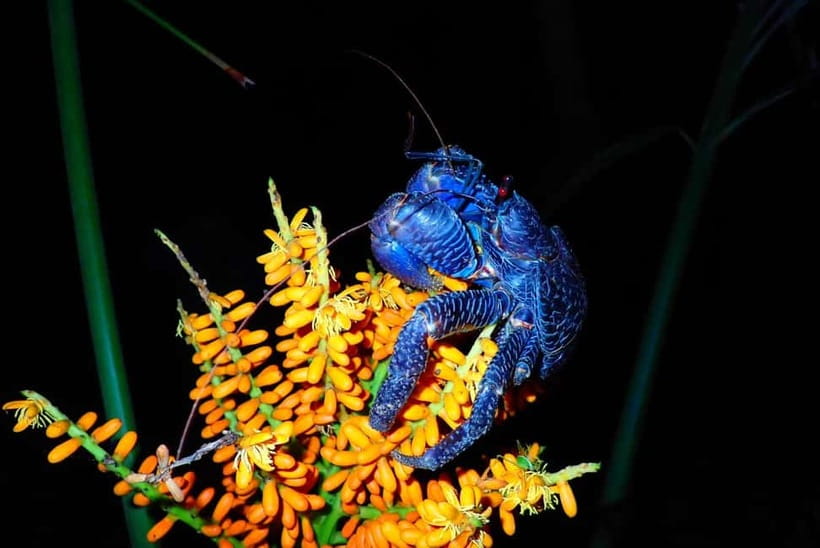
Coconut crabs are the prize most people hope to see. These large land crabs are closely linked with Ishigaki in the public imagination, but they are still wild animals, not guaranteed attractions. Several outings have found them, sometimes more than one, while other nights focus on smaller creatures.
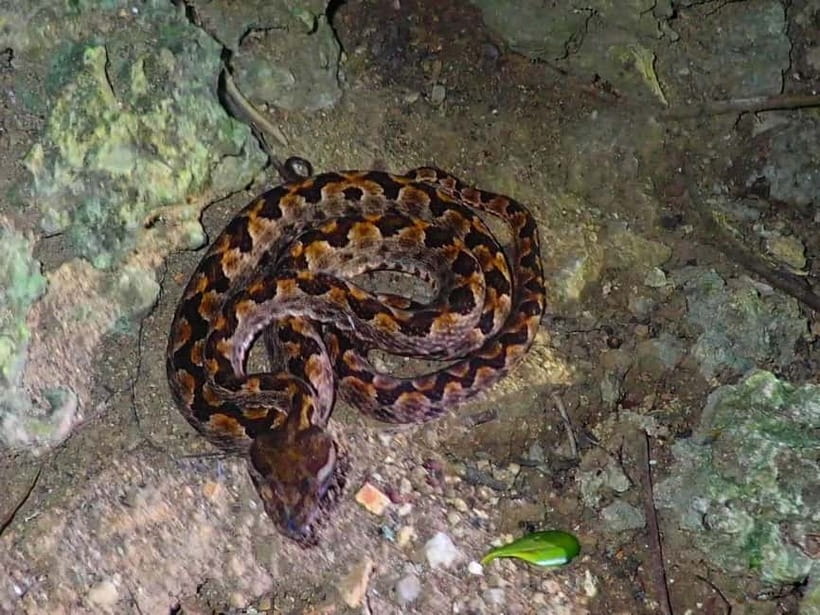
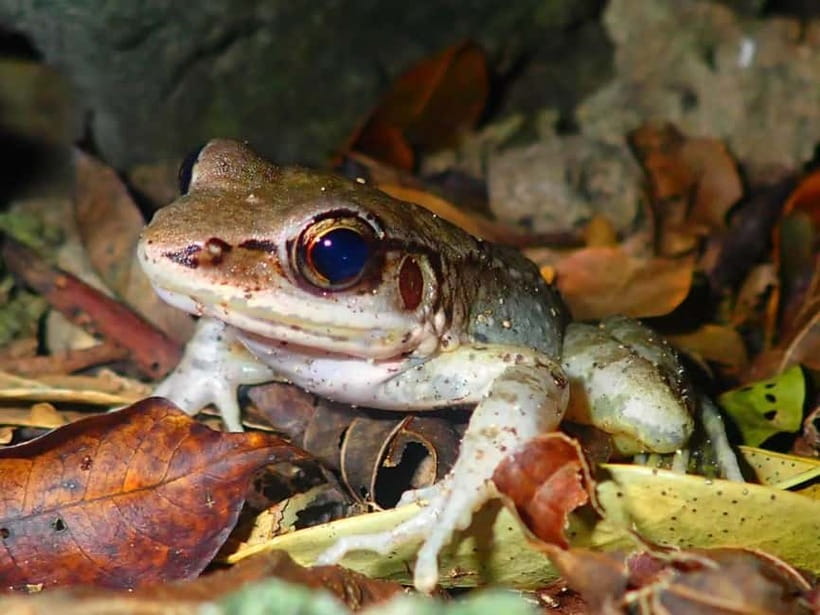
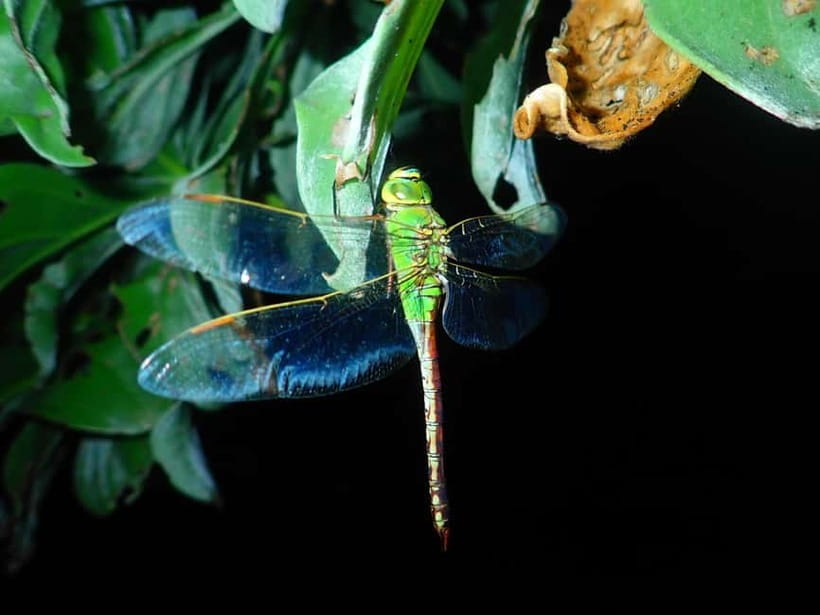
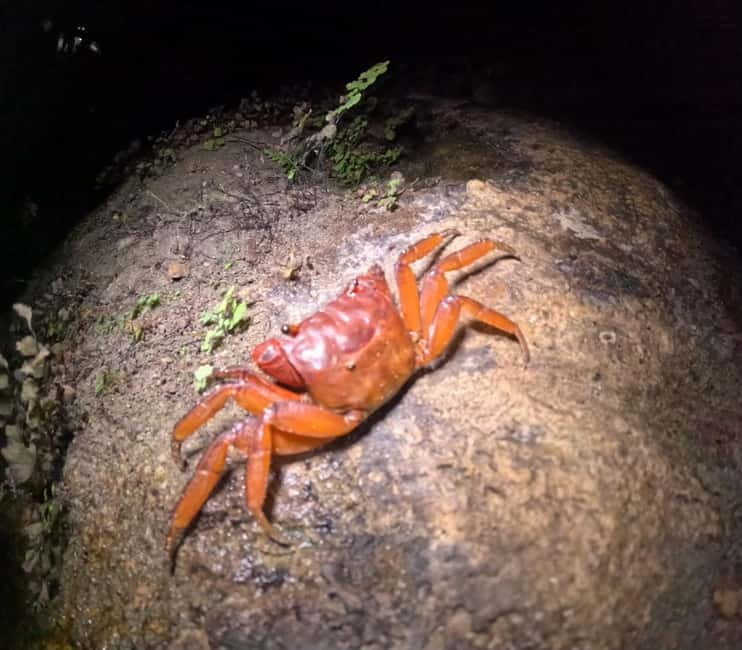
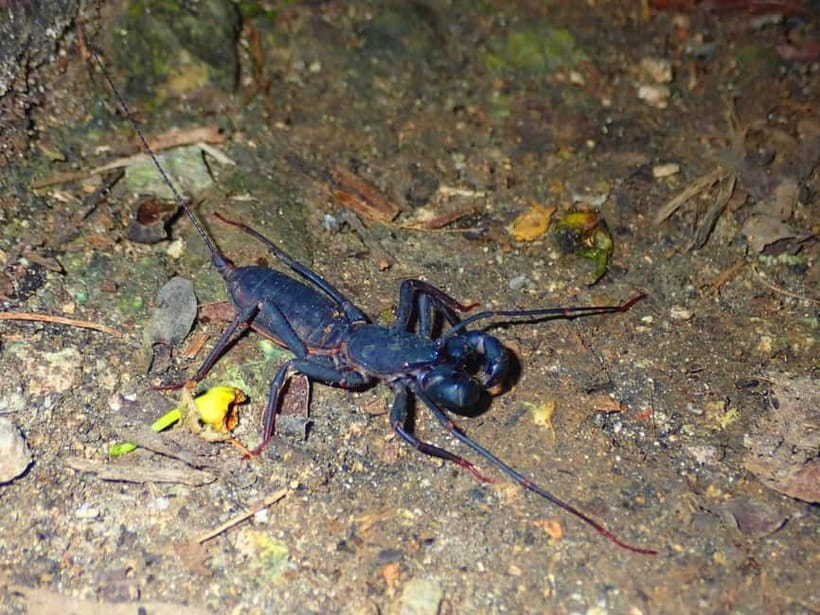
The list of possible sightings is wide. Depending on the night, you might see blue crabs, coral crabs, purple crabs, hermit crabs, frogs, bats, fish, sea snakes, scorpions, centipedes, spiders, millipedes, and other insects. One outing included a cave with crickets, a bat, a baby crab, and centipedes. Another included an owl along with coconut crabs and hermit crabs.
That variety is one of the tour’s strengths. You are not simply waiting for one famous animal. A tiny crab can be just as interesting as a large one when the guide explains what you are seeing and shows you where it is hiding.
The route can include coral walls, caves, jungle growth, and areas near the shore. Some sightings may be close to the ground, while others could be in trees or around rocks. Pay attention to where you put your hands and feet, and follow the guide’s instructions rather than wandering ahead with your flashlight.
The darkness adds a little suspense. Several people found the animals exciting and even a bit frightening, especially when snakes, large insects, or centipedes appeared. If you dislike bugs or unexpected movement, this may not be your ideal evening activity. If you enjoy nature with a mild edge of surprise, it is a good fit.
Guides who turn sightings into stories
The guide is the central part of this experience. A flashlight alone will show you a crab, but a good guide helps you understand why it is there and what makes Ishigaki’s ecosystem different.
Several guides have been praised by name. Yuki is repeatedly described as energetic, friendly, and well informed about the island, plants, animals, and stars. Akari has been noted for her English, enthusiasm for nature, animal spotting, and restaurant recommendations. Sebastian has received praise for explaining wildlife and constellations, sharing photographs, and making sure children feel included.
Jiro and Diego have also been singled out for strong English and entertaining conversation. Ayaka has been appreciated for putting the group’s needs first and handling the drive well. The guide you meet depends on the date and staffing, but the pattern is clear: the experience depends heavily on who leads your group.
The transfer is part of the evening rather than dead time. Guides may explain Ishigaki, Okinawan culture, local food, and places to eat or have a drink. If you want those recommendations, ask. They can add useful local color to an otherwise short outing.
The advertised languages are English and Japanese. You should still confirm the language arrangement before departure because, depending on the reservations, a particular outing may operate in Japanese only. If clear English explanations matter to you, contact the provider before booking rather than assuming every departure will be bilingual.
Stargazing after the animal search
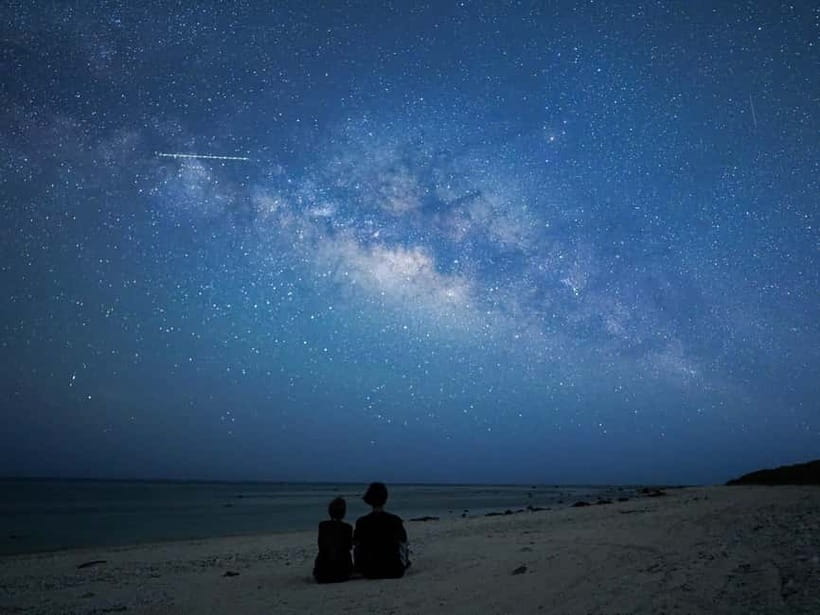
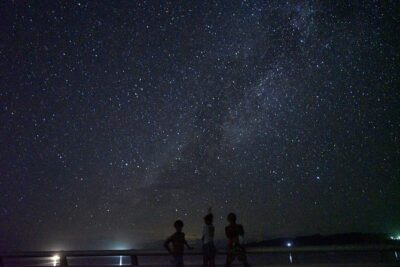
The second half of the experience shifts from the jungle floor to the sky. Ishigaki is a popular place for stargazing compared with mainland Japan because it has less light pollution. On a clear night, you may see a dense spread of stars, and some outings have included an impressive view of the Milky Way.
The guide can point out constellations and explain the night sky. This gives the stargazing more shape than simply standing on a beach and looking upward. You may also get a quieter moment after the excitement of finding crabs and insects.
Do not book this tour only for a guaranteed star field. Clouds can roll in, especially after rain, and the stars may vanish completely. One outing enjoyed the jungle animals but saw no stars because of cloud cover. Another had clouds and rain earlier in the day, then caught a few stars when the sky cleared on the return.
The moon matters, too. A bright moon can make the sky easier to navigate but can wash out fainter stars. If stargazing is your top priority, check the moon phase and weather forecast before choosing your date. Even then, Ishigaki’s tropical weather can change quickly.
This is best understood as two linked chances: wildlife if the animals cooperate, and stars if the sky cooperates. That uncertainty is not a flaw in the natural setting, but it is important to accept before you pay.
More Evening Trips in the world:
- Tenerife: Teide National Park Sunset & Stargazing Tour
★ 4.2 · 3,812 reviews - Tenerife: Sunset and Stargazing at Teide National Park
★ 4.7 · 2,826 reviews - Teide National Park Sunset & Stargazing with Dinner (Star Safari)
★ 5.0 · 2,601 reviews - Dubai: Sunset Camel Trek, Al Khayma Camp, Stargazing & BBQ
★ 4.8 · 2,588 reviews
Rain, comfort, and the small practical details
The tour operates in light rain, and wet weather does not necessarily ruin the jungle portion. Crabs and other wildlife may remain active, and the walk can still be enjoyable with the right clothing. In heavier rain or unsafe conditions, the provider may cancel.
Wear shoes that can handle uneven outdoor ground. You are asked to provide your shoe size in Japanese or American sizing, presumably so the operator can prepare appropriate equipment. Bring clothing that suits the season, since Ishigaki evenings can feel cool and windy at times, while summer nights can be warm and humid.
Use the restroom before leaving. There is no restroom at the jungle site. This is a small point, but it matters on a two-hour outing with a transfer and a walk away from town.
Alcohol and drugs are not allowed, and you cannot take part under the influence of alcohol. Baby carriages and electric wheelchairs are also not permitted. The tour is limited to ages 3 through 65, and pregnant people, children under three, and those with medical conditions cannot join for safety reasons.
The activity is described as family-friendly for children from age three. That does not mean every child will love it. A five-year-old or nine-year-old who enjoys animals and nighttime exploration may have a great time, while a child who dislikes insects, darkness, or waiting quietly may struggle.
Group size and what you can really see
The activity can work well with a mixed group, but group size affects the viewing. A larger party may make it harder to hear the guide or get close to an animal. One account specifically noted that eight or nine people sometimes blocked the view and made the explanations harder to follow.
That is worth considering if you want a quiet, photographic nature experience. The tour is not presented as a private walk, and there is no promise of a small group. If you are near the back, move carefully when the guide invites the group to look, and ask for a second look if you cannot see the animal.
Guides may take photographs and share them, depending on the outing and guide. Do not count on a professional photo package, but it is worth asking if you want a record of the night. Your own phone can be useful, though night wildlife photography is difficult and flash use should follow the guide’s instructions.
The activity is about finding and learning, not collecting a long checklist. Some nights may produce several crabs, a snake, bats, and insects. Other nights may offer fewer sightings but a better sky. Go with curiosity rather than a fixed target.
Is $31 a fair price?
At $31 per person, this is one of the more accessible paid nature activities on Ishigaki. The price includes the guide, nighttime walk, flashlight, and liability insurance. For a two-hour outing with a transfer to the west of the island and specialist local guidance, I consider it good value if you want an easy evening activity.
The value is strongest when you use it as an introduction to Ishigaki’s wildlife. You do not need to identify a route, carry specialized lighting, or guess where nocturnal creatures might be active. The guide handles the searching and adds information about the island, stars, and local culture.
The value is weaker if you want guaranteed coconut crabs, guaranteed stars, private transportation, or a serious astronomy session. Transportation is not listed as an included item, and hotel pickup is not available. You must reach the Euglena Ishigaki Ferry Terminal yourself, and the terminal is both the meeting and return point.
Free cancellation is available up to 24 hours before the activity, and you can reserve now and pay later. Those terms help if your Ishigaki plans depend on weather, but you still need to arrive on time. If you are late without notice, the booking may be canceled and a fee can apply.
Who should book this night tour?
I would recommend it to you if you enjoy wildlife, do not mind insects, and want something beyond a daytime beach visit. It also suits families with children aged three and above, provided the children can manage darkness, walking, and an uncertain wait for animals.
It is a good choice for first-time visitors who want local orientation. The drive can bring useful suggestions for restaurants and evening spots, while the walk introduces the island’s less visible side.
You should think twice if you need accessible equipment, hotel pickup, a private group, or a firm schedule. The age and safety limits are strict, and the route’s outdoor conditions are not suitable for everyone. You should also skip it if you would be disappointed by a cloudy sky or an empty search for coconut crabs.
Should you book it?
Book this tour if you see the night jungle as an adventure rather than a wildlife guarantee. The best part is the combination of close-up animal searching and a chance to see Ishigaki’s stars, with guides who can add useful local knowledge along the way.
For the price, it offers a memorable change of pace from beaches and ferry trips. Choose a night with a favorable forecast if possible, check the moon phase when stargazing matters most, arrive early at the red mailbox, and wear practical shoes. If you can accept a little rain, a few large insects, and nature’s refusal to follow a script, this is a strong value.
FAQ
Where does the Ishigaki night tour meet?
Meet at the red mailbox beside the central entrance of Euglena Ishigaki Ferry Terminal. The tour returns to the same terminal.
How long does the activity last?
The full experience lasts about two hours. The wildlife walking portion is listed at approximately one hour, with the remaining time used for meeting, transfer, stargazing, and returning to the terminal.
What animals might I see?
Possible sightings include coconut crabs, blue crabs, coral crabs, purple crabs, hermit crabs, frogs, bats, snakes, fish, spiders, millipedes, centipedes, scorpions, insects, and owls. No particular animal is guaranteed.
Will I definitely see stars?
No. Ishigaki has relatively little light pollution, but clouds, rain, and moonlight can affect the view. The stars may not be visible during your outing.
Is the tour available in English?
The tour is offered in English and Japanese. Depending on the reservations, a particular departure may be Japanese only, so confirm the language before booking if you need English guidance.
Who cannot take part?
The activity is limited to people aged 3 through 65. Pregnant people, children under three, and those with medical conditions cannot join. Alcohol, drugs, baby carriages, and electric wheelchairs are not allowed.
Just added around the world
- Blue Mountains: Stargazing with a Telescope and Astronomer★ 4.4 · 21 reviews
- ( canyon hurghada & stargazing )★ 4.9 · 16 reviews
- Zermatt: Outdoor fondue “group experience under the stars”★ 4.7 · 3 reviews
- Doha: Night Desert Safari With Stargazing and Inland Sea★ 5.0 · 9 reviews
- Villajoyosa: Moonlight kayaking and dinner under the stars★ 5.0 · 5 reviews
- Vincentia: Jervis Bay Beach Stargazing with an Expert★ 4.9 · 19 reviews
- Vialattea: Night Snowshoeing under the Stars★ 4.5 · 5 reviews
- Ubud: Romantic Floating Dinner Under the Stars★ 5.0 · 2 reviews
Japan Stargazing Tours, compared.
Okinawa Miyako Star Gazing & Subtropical Jungle Night Tour
Read our review →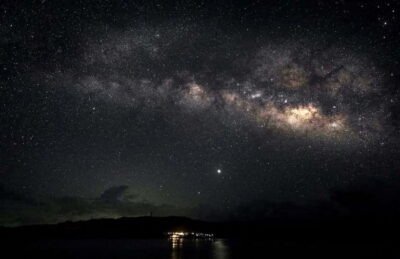
Miyako Island: Stars & Jungle Night Walking Tour
Read our review →
Private Stargazing Photography Tour In Kabira Bay
Read our review →Private Stargazing Photography Tour In Kabira Bay
Read our review →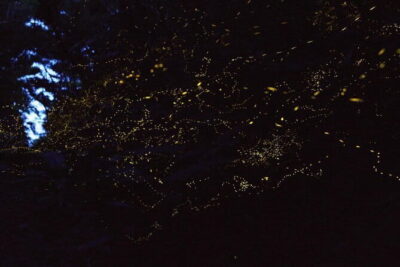
【March-June】Private Firefly Viewing & Stargazing tour
Read our review →Browse the lists this tour appears in