
REVIEW · MOUNT TEIDE
Teide National Park: Stargazing Experience
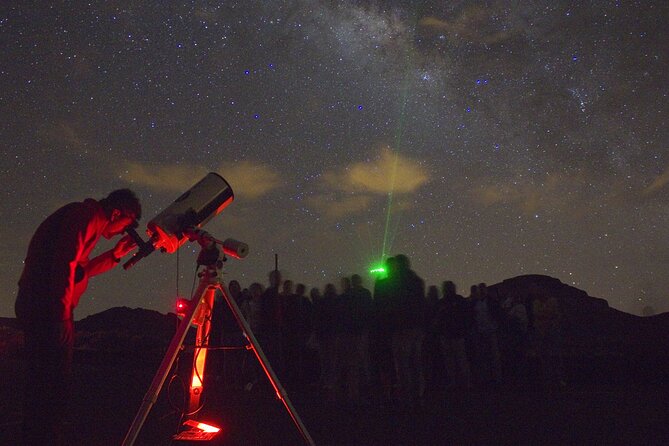
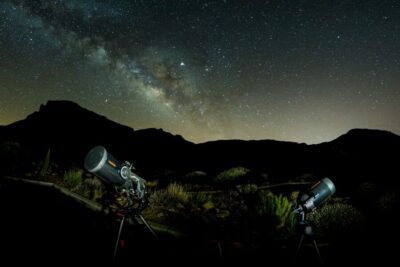
At Teide National Park, the night sky becomes the main attraction. Far above Tenerife’s coastal lights, you begin with the naked eye, learning to find Polaris, the celestial north pole, the zodiac line, and familiar constellations before turning to powerful telescopes. Miguel and the other astronomy guides make the science easy to follow, with Greek mythology adding a human story to all those distant stars.
I like two things in particular: the clear step-by-step orientation, which helps beginners understand what they are seeing, and the chance to view planets, star clusters, galaxies, and moons through proper equipment. The astrophoto telescope may also give you striking images to take home. The main drawback is simple but serious: it can be very cold, even when Tenerife is warm below.
Key points at a glance
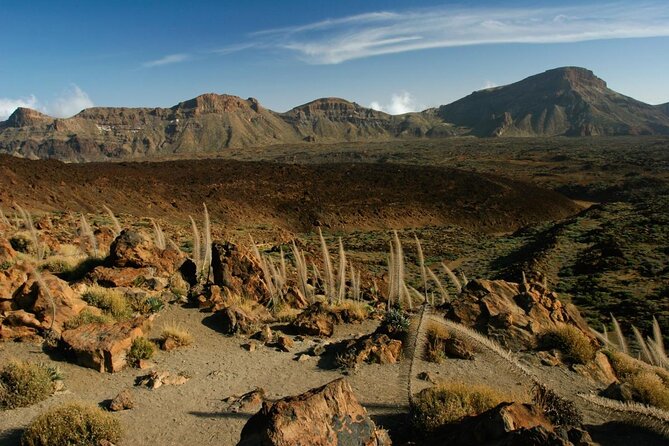
- Teide’s dark mountain sky: The national park offers far less town light than the coast, making faint stars and the Milky Way easier to see.
- A guided introduction first: You learn the major stars and constellations with your eyes before using the telescopes.
- Planets and deep-sky objects: Depending on the season and conditions, you might see Jupiter and its moons, Saturn, Mars, Orion’s Nebula, Andromeda, or a star cluster.
- Science with a human touch: Greek mythology, the zodiac, and sky navigation keep the explanation lively rather than overly technical.
- An 80-minute evening activity: This is short enough to fit into a Tenerife holiday, but long enough for an organized look at the sky.
- Warm clothing is essential: Bring insulated layers and warm shoes. Mountain temperatures can feel far colder than those at your hotel.
Why Teide is such a strong place for stargazing
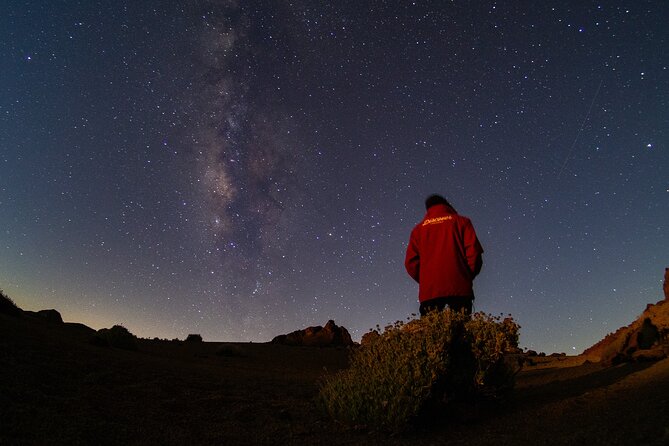
Tenerife is famous for sunny beaches, but Teide National Park offers a completely different experience after dark. The high setting and reduced light pollution allow you to see far more stars than you normally can from a town or resort.
That difference matters. In an urban sky, the brightest stars often appear as isolated points. In Teide, the sky can feel crowded with detail. You may notice the Milky Way, clusters of stars, and patterns that are easy to miss when streetlights wash out the darkness.
The setting also gives the experience a sense of scale. You are not simply looking through a telescope in a city observatory. You are standing in a protected mountain area, with the darkness helping your eyes adjust to the sky.
The meeting point is the parking area directly in front of the natural environment of Minas de San José. If you approach from the south, it is the second car park on the right. From the north, it is the first car park on the left. Check this carefully before setting out, especially if you are driving after sunset.
More Mount Teide Stargazing Tours:
- Tenerife: Teide National Park Sunset & Stargazing Tour
★ 4.2 · 3,812 reviews - Tenerife: Sunset and Stargazing at Teide National Park
★ 4.7 · 2,826 reviews - Teide National Park Sunset & Stargazing with Dinner (Star Safari)
★ 5.0 · 2,601 reviews
The first lesson starts without a telescope
The tour begins after sunset with the naked eye. This is one of its best features because it gives you a map before the equipment comes out.
Your guide points out the most important stars and helps you recognize the main constellations. You will learn where Polaris sits and how it marks the celestial north pole. That may sound basic, but it gives you a useful reference point for understanding how the sky appears to move.
The guide also explains the ecliptic, the apparent path followed by the Sun across the sky, and the zodiac line connected with it. This is astronomy rather than fortune telling. The zodiac becomes a way to understand the positions of certain constellations and the movement of the planets.
Greek mythology adds another layer. Instead of memorizing random star patterns, you hear the stories linked with the shapes and positions of the constellations. That makes the lesson easier to remember, particularly if you are new to astronomy.
I appreciate this order. A weaker stargazing session might put a telescope in front of you and expect the equipment to do all the work. Here, the naked-eye explanation helps you understand the larger sky before you focus on one object at a time.
What you may see through the telescopes
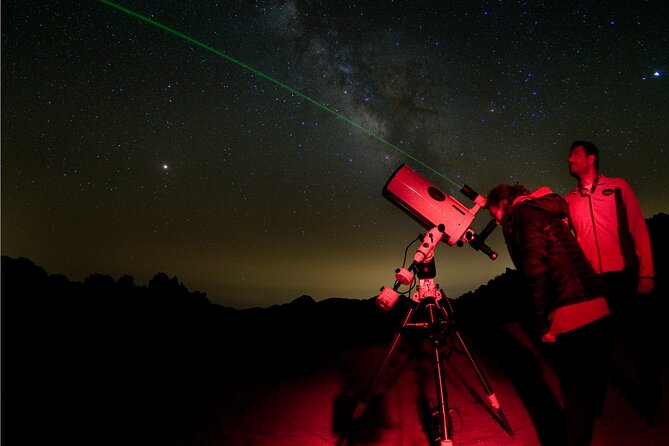
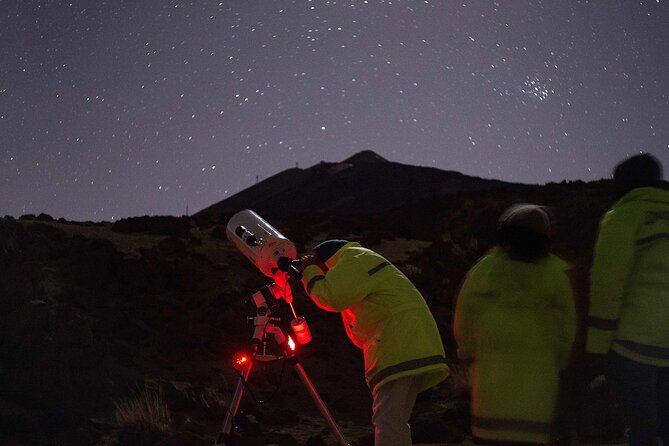
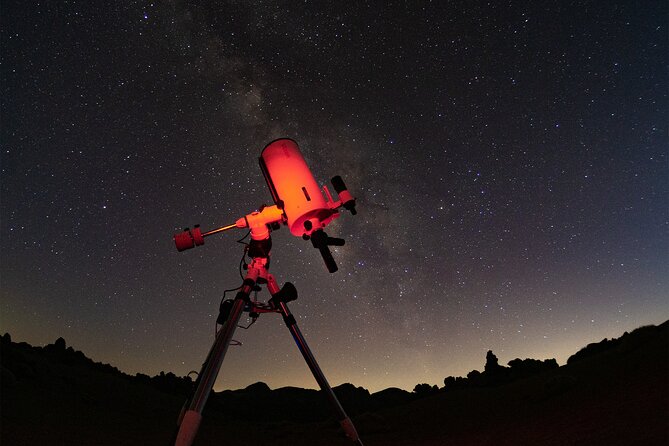
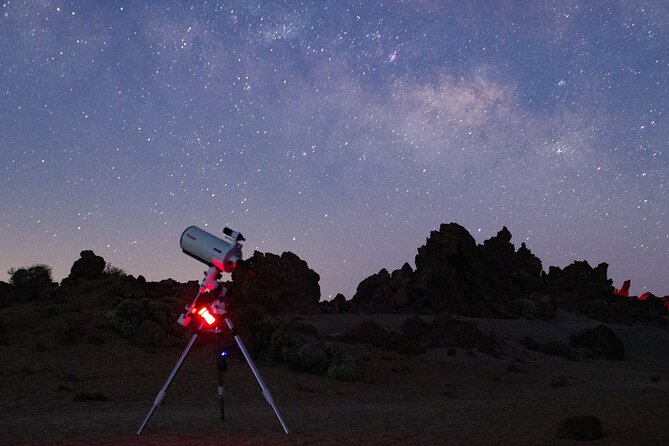
Once you have your bearings, the guides turn to astronomical observation with high-grade telescopes. The exact objects depend on the season, the weather, the moon, and what is visible on the night of your visit.
Past sessions have included Jupiter and its moons, Saturn, Mars, Orion’s Nebula, the Andromeda Galaxy, star clusters, and the Milky Way. You may also look at the moon or other planets and prominent celestial objects.
Seeing Jupiter as more than a bright point is a memorable moment. Through a telescope, the planet’s moons can appear as small points nearby, giving you a sense that you are looking at another planetary system rather than a single light in the sky.
Saturn is another likely highlight when its position is suitable. The telescope turns a tiny speck into a distinct planet with its famous rings. Mars can be more subtle, and deep-sky objects such as Andromeda or Orion’s Nebula may appear as soft, pale forms rather than colorful photographs. That is normal. Telescope viewing is not the same as seeing a processed image from a space agency.
The activity includes an astrophoto telescope, which can turn what you observe into images. One session included a photograph of a star cluster and a galaxy sent afterward. Treat this as a welcome extra rather than the main reason to book. The most valuable part is still learning how to find and understand the objects overhead.
The guides make the difference
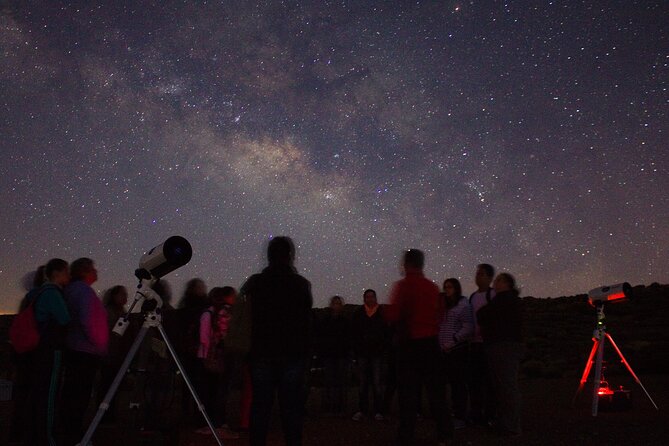
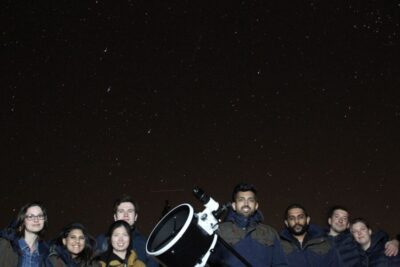
The guide leads the evening in Spanish or English. Several guides have been singled out by name, including Miguel, Manuel, and Luke, and the strongest descriptions of the activity point to clear explanations, humor, and real enthusiasm for the subject.
Miguel’s approach, in particular, has been described as easy to understand and entertaining while still covering a lot of information. That balance matters. Astronomy can become dense very quickly, especially when terms such as celestial pole, ecliptic, and constellation are introduced in the same short session.
You do not need a background in science. The structure is designed to take you from simple observation to more advanced telescope viewing. At the same time, the session offers enough detail to interest someone who already knows the major constellations.
The mythology helps keep the pace varied. One moment you are learning how to locate a star, and the next you are hearing the story connected with a constellation. The mix of practical sky navigation, science, and mythology is more engaging than a talk filled only with technical facts.
More National Park Stargazing in Tenerife:
- Teide National Park: Sunset & Stargazing Safari with Dinner
★ 4.6 · 2,115 reviews - Teide National Park: Guided Large Telescope Stargazing Tour
★ 4.9 · 319 reviews - Tenerife. Stargazing in Teide National Park
★ 4.9 · 319 reviews - Sunset and Stars at Teide National Park
★ 4.5 · 168 reviews
A cold night is the real price of admission
The biggest practical issue is temperature. Teide National Park can be cold after sunset, and wind makes it feel colder still. Several people have described freezing conditions after standing outside for a long period, even during months when the lower parts of Tenerife were warm.
Do not dress for the coast. Bring comfortable shoes, warm shoes, and several warm layers. A coat, hat, and gloves are sensible choices, especially in autumn and winter. Summer does not guarantee mild conditions at altitude either. One August experience involved temperatures around 14 degrees Celsius with strong wind while the coast was much warmer.
You will spend much of the activity outdoors and may remain still while waiting for a turn at the telescope. That makes warmth more important than stylish holiday clothing. If you get cold easily, add more layers than you think you need.
The physical setting also explains some of the health restrictions. This experience is not suitable for people with heart problems or respiratory issues, or for anyone who has gone diving within the previous 24 hours. Unaccompanied minors are not allowed, and pets cannot join the activity.
Timing, moonlight, and what affects the view
The moon deserves attention when you choose your date. Its cycle changes the character of the evening. A bright moon can be beautiful through a telescope, but it also adds light to the sky and may make faint stars and galaxies harder to see.
A darker moon phase can offer better conditions for seeing star fields and deep-sky objects. You should not assume that a full or bright moon ruins the evening, since the guides can still discuss the sky and observe suitable objects. But moonlight affects what you can see, so check the lunar phase before booking if your main goal is the Milky Way or faint galaxies.
The start time may change with the season and with bookings made far in advance. The provider confirms the schedule through WhatsApp or email after booking. Keep an eye on those messages, especially if you reserve months ahead.
The 80-minute length is enough for a useful introduction, but it is not an all-night observing session. You receive an organized overview, several telescope observations, and a guide to the main features of the sky. If you want long periods of quiet observation or advanced astrophotography, you may find the format too short.
Is the $41 price good value?
At $41 per person, the experience is reasonably priced for a guided evening in Teide National Park. The fee includes the naked-eye astronomy explanation, telescope observation, a professional astronomy guide, and insurance during the activity.
The value comes from access to the location and equipment, not just from standing under a dark sky. You could look upward on your own for free, but you would not necessarily know which stars you were seeing or how to find Polaris, the ecliptic, and the major constellations. You would also miss the telescope views of planets, moons, clusters, and galaxies.
The price does not include hotel pickup, drop-off, or dinner. You need to arrange your own transport to Minas de San José and plan food separately. That makes the activity easier for people who already have a car or are joining another Teide outing, but less convenient if you want an all-inclusive evening from your hotel.
The cost feels strongest for first-time stargazers and families with older children. The guide gives you a foundation you can use later, even when you look at the night sky from home. If you already own a good telescope and regularly observe the sky, the short format may offer less value.
Who will enjoy this most?
I would recommend this for curious beginners, couples looking for a quiet evening activity, and families whose children can stay outside in the cold. It also works well for anyone who wants more than a standard sightseeing stop in Tenerife.
You do not need to be an astronomy enthusiast. The explanations begin at an accessible level, and the constellation stories make the subject friendly. The activity can also appeal to people who enjoy photography, although the supplied astrophoto images should be viewed as a bonus rather than a full photography workshop.
This is not the right choice if you dislike cold weather, cannot comfortably stand outdoors, or need hotel transport included. It is also not designed for people seeking a private, highly technical astronomy course.
Practical advice before you go
Wear your warmest practical clothes, not just a light sweater. Warm footwear matters because cold feet can ruin an otherwise enjoyable evening.
Check the meeting-point directions before leaving. The Minas de San José parking area is easy to identify by its position, but the correct side of the road depends on whether you approach from the north or south.
Watch for the provider’s WhatsApp or email confirmation. The starting time can shift, particularly when you book far ahead.
Finally, check the moon phase and keep your expectations realistic. The sky may not look like a colorful space photograph through the telescope, but seeing a planet, moon, nebula, or galaxy with your own eyes has its own quiet power.
Should you book the Teide stargazing experience?
Book it if you want a clear, friendly introduction to the night sky in one of Europe’s better-known stargazing settings. The strongest parts are the dark mountain location, the simple naked-eye orientation, the quality telescopes, and guides such as Miguel who can make the subject understandable and fun.
Think twice if cold weather, outdoor standing, or arranging your own transport will be difficult. Also remember that the moon and season affect what you see.
For most first-time visitors to Tenerife, I think the $41 cost is fair. You leave with more than a few telescope glimpses. You learn how to look up, recognize patterns, and understand why the sky above Teide has drawn so much attention.
FAQ
Where does the stargazing activity meet?
Meet in the parking area directly in front of the natural environment of Minas de San José. From the south, it is the second car park on the right. From the north, it is the first car park on the left.
How long does the experience last?
The stargazing experience lasts 80 minutes.
What languages are available?
The live guide is available in Spanish and English.
Is hotel pickup included?
No. Hotel pickup and drop-off are not included, so you must arrange your own transport to the meeting point.
What should I wear?
Wear comfortable shoes, warm clothing, and warm shoes. Temperatures can be low after sunset, and warm clothing is especially important in autumn and winter.
Can I cancel the booking?
You can cancel up to 24 hours in advance for a full refund. The reserve-now-and-pay-later option lets you book without paying immediately.
Just added around Tenerife
- Tenerife Exclusive & Private Gastronomic, Sunset-Stargazing★ 5.0 · 3 reviews
- Small Group Teide Stargazing Tour with Picnic at Sunset★ 5.0 · 3 reviews
- TEIDE NIGHT Astronomy Stargazing Bus Tour, Meal & Drinks included!★ 4.0 · 15 reviews
- “Stargate” Tenerife stargazing★ 5.0 · 13 reviews
- Stargazing Tour in Tenerife★ 3.0 · 2 reviews
- Polestar SELF-DRIVE Sunset Stars Tour in Teide National Park★ 5.0 · 19 reviews
- Private stargazing trip in Teide★ 5.0 · 3 reviews
- Stargazing Experience with Dinner & Drinks★ 4.0 · 23 reviews
Mount Teide Stargazing Tours, compared.
Teide National Park Sunset & Stargazing with Dinner (Star Safari)
Read our review →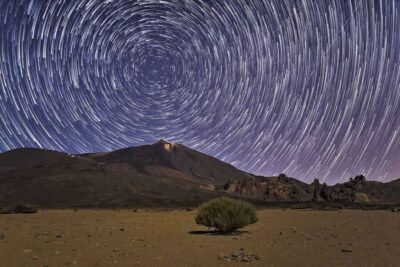
Teide National Park: Sunset & Stargazing Safari with Dinner
Read our review →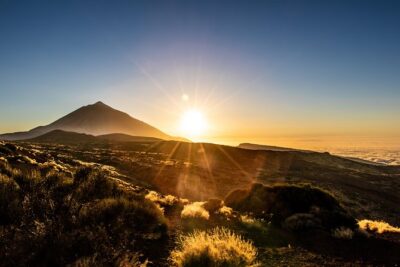
Teide by Night: Sunset & Stargazing with Telescopes Experience
Read our review →
Guided Sunset & Stargazing Tour by Night with Dinner
Read our review →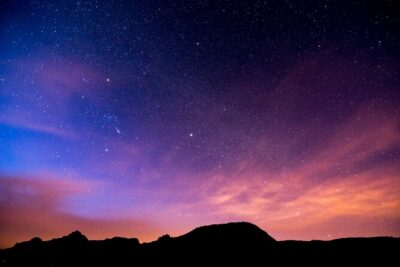
Roque de los Muchachos Stargazing Tour with Wine
Read our review →Browse the lists this tour appears in