
REVIEW · GUIDED
Fuerteventura: Guided Stargazing Calderón Hondo Volcano Tour
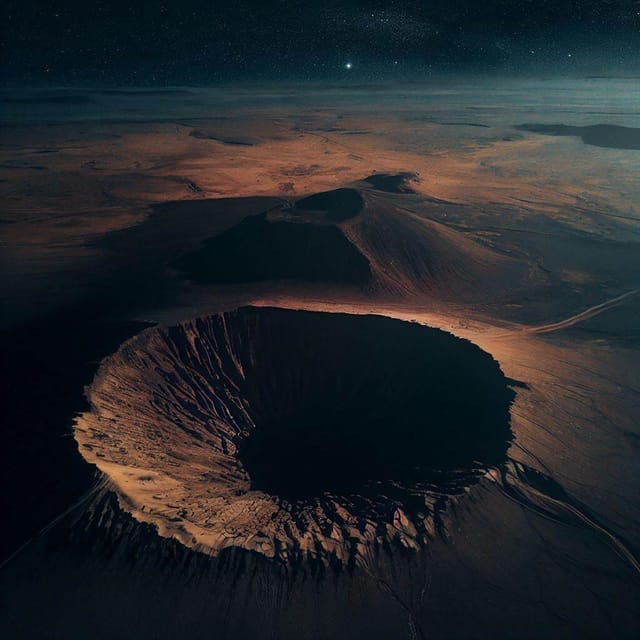
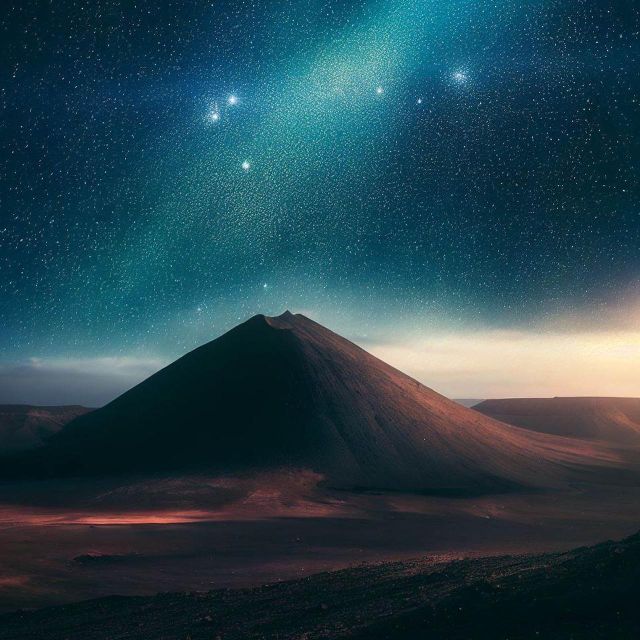
Fuerteventura’s Calderón Hondo crater gives this stargazing trip a setting most astronomy tours cannot match. You walk up a volcanic cone after sunset, look across to Lajares, Corralejo’s dunes, and Lanzarote, then turn your attention upward to the Milky Way.
I like two things here: the mix of geology and astronomy, and the warm, lively guiding. Victor is often the guide, with Alfredo also leading some departures. Both bring stories about the island, local traditions, fire, and the sky. The main drawback is simple: clouds can hide the stars, and there is no refund just because the weather spoils the view.
Key points to know before booking
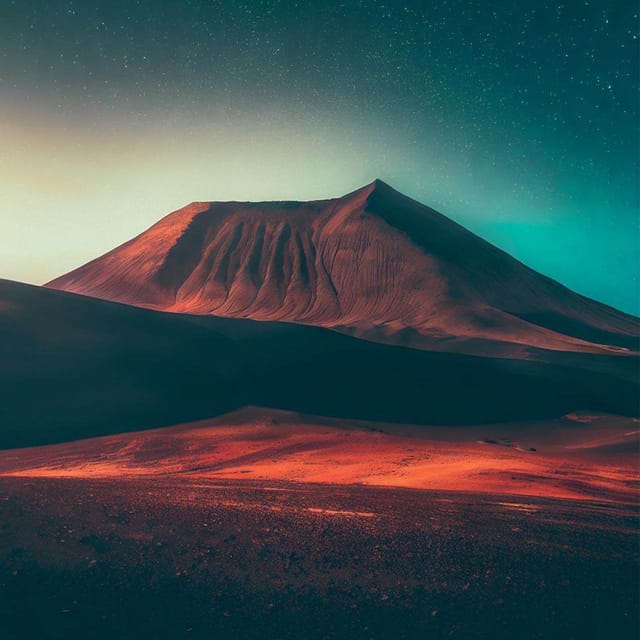
- Calderón Hondo after dark: Walk to the crater edge and experience one of Fuerteventura’s most unusual night settings.
- Astronomy with context: Learn about constellations, planets, mythology, and how the sky helped native islanders mark the seasons.
- Victor’s lively guiding: Expect humor, music on some minibus journeys, and explanations in English, Italian, or Spanish.
- A rocky uphill walk: Good closed-toe shoes are essential, and the route is not suitable for anyone uneasy with heights or rough ground.
- Stars are never guaranteed: Some evenings reveal the Milky Way, Saturn, Jupiter, and many constellations. Cloudy nights can limit the show.
- Three hours with optional transport: Pickup is available from Corralejo, El Cotillo, and Puerto del Rosario when you select the transfer option.
Why a volcano makes this stargazing tour different
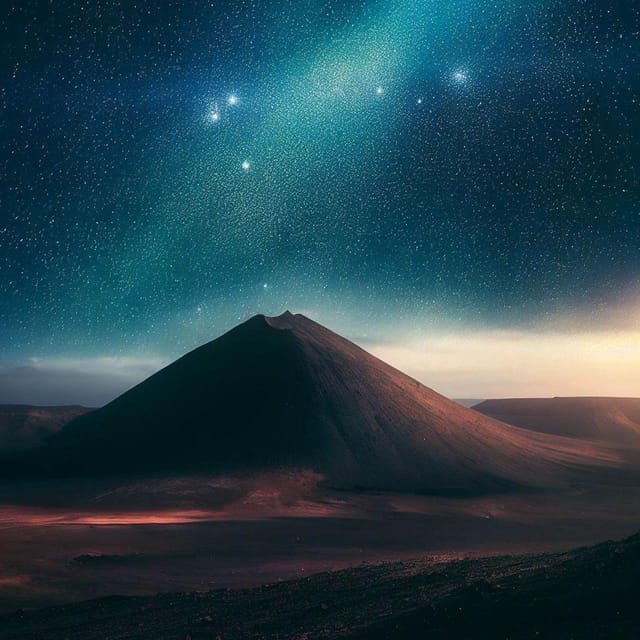
A dark sky is useful anywhere, but a volcanic crater gives the evening a strong sense of place. You are not simply sitting beside a road with a telescope. You are walking over ground shaped by eruptions and standing inside or near Calderón Hondo, described as Fuerteventura’s last active volcano.
The volcano adds a second subject to the night. Before you look at planets and constellations, you learn how the island was formed and why the black, rust-colored earth around you looks so different from the beaches and resort areas. The guide explains the volcanic setting as you walk, so the geology becomes part of the experience rather than a quick fact at the beginning.
At the rim, the views reach toward Lajares, the dunes of Corralejo, and Lanzarote. In daylight, this is a broad island panorama. After sunset, the view changes character. The horizon darkens, the crater becomes a quiet bowl, and the sky takes over.
I especially like this combination for people who have already spent time on Fuerteventura’s beaches. It gives you a look at the island’s interior and its night-time personality. You get scenery, science, folklore, and a moderate physical challenge in one short outing.
More Guided Trips in Spain:
- Teide: Guided Sunset & Stargazing Tour by Night with Dinner
★ 4.7 · 1,339 reviews - Teide National Park: Guided Large Telescope Stargazing Tour
★ 4.9 · 319 reviews - Cavalleria: Guided Stargazing at the Beach with Telescope
★ 4.9 · 87 reviews
The walk to Calderón Hondo after sunset
The evening usually begins with a minibus pickup if you choose the transfer option, or at the Repsol h2go service station if you arrange your own way there. The exact activity time is set according to the season and your pickup location. The guide sends the final time by email 24 hours before the tour, so do not rely only on the time first shown at booking.
The walk leads toward the volcano as daylight fades. A headlamp is provided, which matters once the path grows dark. You still need to watch your footing. The ground is rocky, and the final uphill section can feel steep if you are not used to uneven paths.
This is not a technical hike, but it is not a smooth promenade either. Wear proper closed-toe shoes with a firm sole. Sandals and thin fashion trainers are poor choices here, especially on the descent. A jacket or coat is just as important. Fuerteventura can feel mild in town and cold or windy on an exposed volcano at night.
At the top, you have time for photographs and views before the full astronomy session. The crater itself is the visual hook. Even if clouds later block much of the sky, the volcano and the walk still give the trip a clear purpose.
What you learn about fire, folklore, and the island
The guiding goes beyond naming stars. The tour connects the sky with the culture of Fuerteventura’s native inhabitants, including the role of fire and celestial signs in local traditions. You learn how people used the position of stars to understand the changing seasons and orient themselves.
This cultural layer keeps the astronomy from becoming a string of technical terms. A guide such as Victor explains the subject with humor and energy, while also talking about the island’s geography and volcanoes. Several departures have included mixed-language groups, with explanations in English, Italian, and Spanish.
Victor is frequently praised for making solo visitors feel comfortable and for keeping families involved. Children as young as eight have enjoyed the outing, according to the supplied experiences, while older teenagers have also found enough here to hold their attention. The guide’s personality is part of the value, particularly during cloudy spells when the stars cannot carry the whole evening.
Some journeys in the minibus include music and extra conversation about Fuerteventura. That can make the transport feel like part of the tour rather than a silent transfer. If you prefer a quiet, highly formal astronomy lecture, this may feel more relaxed and playful than expected.
The stargazing session: constellations, planets, and the Milky Way
After the volcano walk, the group moves to a clearer, flatter place for the main sky-watching session. The guide uses a laser pointer and an astronomy app on a tablet to identify what you are seeing. This is helpful because constellations are not always obvious when you first look up.
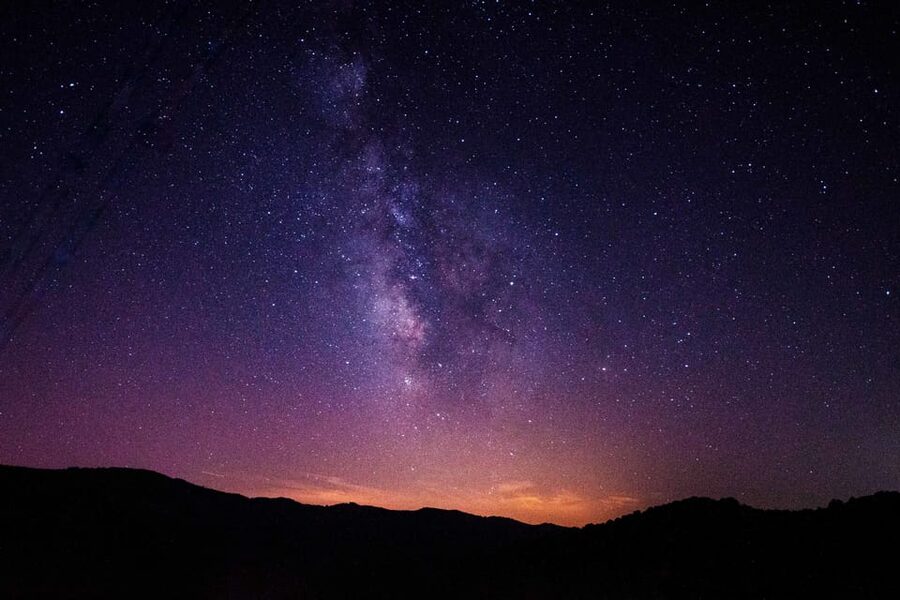
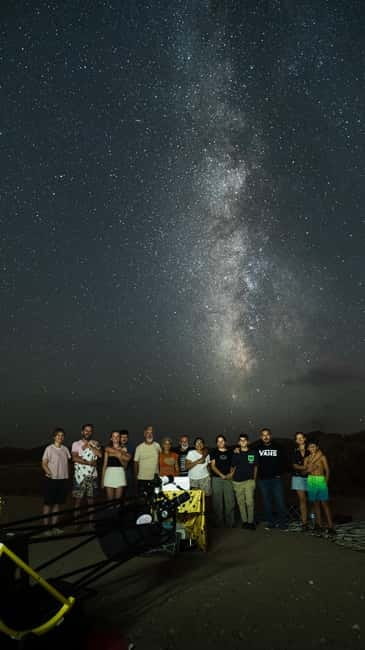
On a clear night, you might see several constellations, planets, and the Milky Way with the naked eye. Some departures have spotted Saturn, including its rings, Jupiter, satellites, and stars with different colors. One session also included a glimpse of the moon through a telescope. These details depend on the time of year, the moon, and the cloud cover.
The guide first shows an image or map of a constellation, then points it out in the actual sky. That two-step method is useful for beginners. You do not need to know astronomy before arriving, and the explanations are designed to help you recognize the patterns for yourself.
The Milky Way is the big prize, but it is not guaranteed. Cloud cover has interrupted some evenings, while other groups have had clear breaks that revealed a spectacular band of stars. Strong moonlight can also make fewer stars visible, although it does not end the session. Guides have still identified constellations on bright-moon nights.
The honest way to book this tour is to treat the stars as a possibility, not a promise. The operator asks you to reserve at least three days ahead so the weather can be checked, but the stated policy does not offer a refund if stars are hidden by clouds. That makes the volcano, the guide, and the cultural explanations important parts of the value.
More Stargazing Tours in Spain:
- Tenerife: Teide National Park Sunset & Stargazing Tour
★ 4.2 · 3,812 reviews - Tenerife: Sunset and Stargazing at Teide National Park
★ 4.7 · 2,826 reviews - Teide National Park Sunset & Stargazing with Dinner (Star Safari)
★ 5.0 · 2,601 reviews - Teide National Park: Sunset & Stargazing Safari with Dinner
★ 4.6 · 2,115 reviews
How much time do you really get for $53?
At $53 per person, the price is reasonable if you want a guided evening rather than simply driving to a dark area and looking up on your own. You receive about three hours of guiding, the crater walk, astronomy instruction, water, and a headlamp. The cost also covers the knowledge and safety support needed on a dark, rocky route.
Pickup and drop-off from Corralejo, El Cotillo, and Puerto del Rosario are included only when you select the transfer option. The duration can vary depending on your location, so a pickup farther away may make the overall evening longer. Some experiences describe an additional transport charge of about €10, so check the exact option and price before paying.
Driving yourself may save money, but the transfer can be worthwhile. The road and approach are described as tricky, and you miss some of the guide’s commentary during the minibus journey if you travel separately. If you are unfamiliar with the area, the transport also removes the stress of finding the meeting point and returning in the dark.
Food is not included. Eat before you go or bring something if permitted, but do not expect a meal during the activity. Water is provided.
Who will enjoy this, and who should skip it?
This trip suits couples looking for a different evening, families with older children, solo visitors who want a social activity, and anyone interested in both volcanoes and astronomy. It is also a good choice if you have already seen the island’s main beaches and want a quieter inland experience.
The activity is not suitable for babies under one year, cruise ship passengers, people afraid of heights, or people over 65 according to the stated restrictions. That age limit is broad, so anyone near that threshold should ask the operator before booking. The rocky path also makes this a poor fit for anyone with mobility problems.
You do not need specialist equipment. Comfortable closed-toe shoes, a warm jacket, and a willingness to walk uphill are the main requirements. The guide supplies headlamps, and water is included.
Families should prepare children for a late, dark outing rather than a quick viewpoint stop. The volcano walk, waiting for clear patches, and astronomy explanations make the evening feel unhurried. Children who enjoy asking questions will get more from it than children who need constant activity.
Weather, clouds, and the risk you are taking
Cloud is the tour’s biggest uncertainty. Some evenings begin under thick cover and later produce short, rewarding gaps. On other nights, the cloud remains and the stars are barely visible. Guides such as Victor have kept groups engaged by discussing the volcano, the island, and astronomy even when the sky does not cooperate.
That flexibility matters, but it cannot change the refund rule. You should book this only if you would still find value in a night walk around Calderón Hondo and a lesson about Fuerteventura if the sky stays cloudy.
The best attitude is to see stargazing as a bonus built into a wider experience. A clear night can make the tour unforgettable, with the Milky Way, planets, and constellations above a volcanic crater. A cloudy night can still deliver the crater, the views, the guide, and a look at a side of the island that many holiday plans miss.
Practical details that make the evening easier
Book at least three days ahead. This gives the operator time to check conditions and helps with transport planning.
Watch your email for the final start time. It can change with the season and your pickup location, and the exact time is sent 24 hours before the activity.
Bring:
- Closed-toe walking shoes
- A warm jacket or coat
- Comfortable clothing for a rocky uphill route
- A phone or camera if you want to photograph the crater and sky
Do not count on photographing the Milky Way with a basic phone. You may capture a few stars, but the best part of the night is often the guided explanation and the view with your own eyes.
The tour is offered in English, Italian, and Spanish. Victor has handled multilingual groups, and Alfredo has also led departures. The style is friendly and informal, with jokes and personal attention rather than a dry lecture.
Should you book the Calderón Hondo stargazing tour?
I would book it if you want a three-hour experience that combines a volcano walk, island culture, and astronomy. The setting is unusual, the guides bring plenty of personality, and the transport option can make the evening much simpler.
I would hesitate only if seeing the stars is your sole reason for going. Clouds, moonlight, and changing conditions can limit the sky show, and the no-refund rule applies when stars are not visible. If you can accept that risk, Calderón Hondo gives you a strong plan B: volcanic scenery, wide views, local stories, and a memorable night away from the resort lights.
FAQ
How long is the Calderón Hondo stargazing tour?
The activity lasts about three hours, although the total duration can vary depending on your pickup location.
Where is the meeting point?
The meeting point is the Repsol h2go service station. Pickup and drop-off from Corralejo, El Cotillo, and Puerto del Rosario are available when you select the transfer option.
What languages does the guide speak?
The tour is offered in English, Italian, and Spanish.
Is transport included?
Bus pickup and drop-off are included only with the transfer option. Check the option details when booking, as transport may involve an extra charge.
What should I wear?
Wear comfortable closed-toe shoes and bring a jacket or coat. The route is rocky, and it can be windy and cold at night.
Are stars guaranteed?
No. Cloud and other weather conditions can block the stars, and refunds are not provided when stars are not visible.
Is the tour suitable for people with mobility problems?
The route includes a rocky walk and an uphill section, so it is not suitable for people with mobility problems. The stated restrictions also exclude people over 65, people afraid of heights, cruise ship passengers, and babies under one year.
Just added around Spain
- Villajoyosa: Moonlight kayaking and dinner under the stars★ 5.0 · 5 reviews
- Tenerife Exclusive & Private Gastronomic, Sunset-Stargazing★ 5.0 · 3 reviews
- Small Group Teide Stargazing Tour with Picnic at Sunset★ 5.0 · 3 reviews
- TEIDE NIGHT Astronomy Stargazing Bus Tour, Meal & Drinks included!★ 4.0 · 15 reviews
- “Stargate” Tenerife stargazing★ 5.0 · 13 reviews
- Stargazing Tour in Tenerife★ 3.0 · 2 reviews
- Polestar SELF-DRIVE Sunset Stars Tour in Teide National Park★ 5.0 · 19 reviews
- Private stargazing trip in Teide★ 5.0 · 3 reviews
Guided, compared.
Guided Sunset & Stargazing Tour by Night with Dinner
Read our review →
Teide National Park: Guided Large Telescope Stargazing Tour
Read our review →
Northern Lights and Stargazing Small-Group Tour with Local Guide
Read our review →
Astronomical Tour with Guide and Pick Up San Pedro de Atacama
Read our review →
Cavalleria: Guided Stargazing at the Beach with Telescope
Read our review →Browse the lists this tour appears in