
REVIEW · DESERT STARGAZING TRIPS
Tabernas Desert: Stargazing with Telescopes
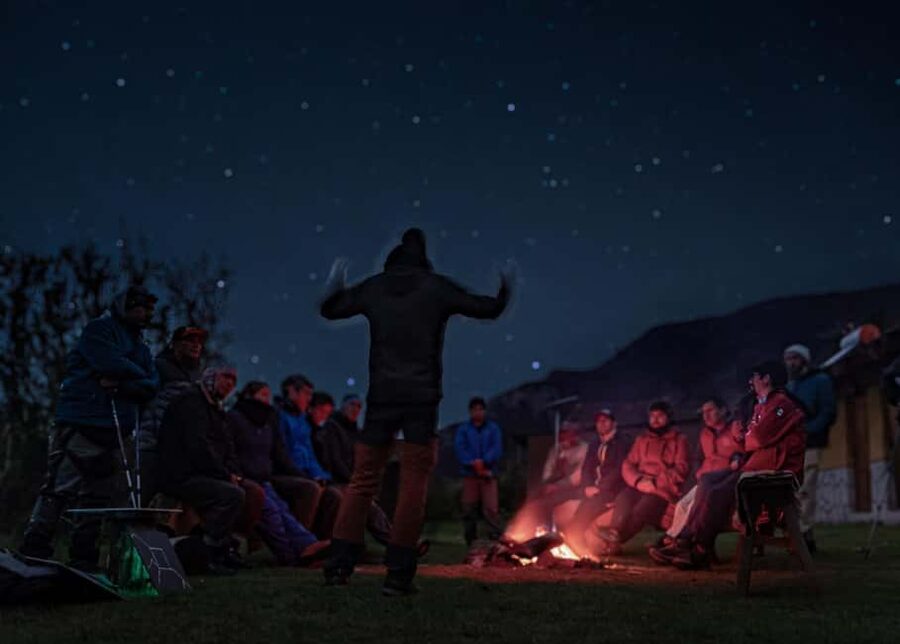
The Tabernas Desert turns into a natural planetarium after dark. Away from city lights, you’ll use a 305 mm telescope and a Seestar S50 to see the Moon’s craters, planets, star clusters, and other distant objects while guide Gonzo explains what you’re seeing.
I especially like the mix of science and old human star lore, plus the practical lesson in finding constellations and the North Star. The blankets are a thoughtful touch, and the final group photo gives you a real souvenir rather than just a fading memory. The main catch is the cold, dark setting: bring warm clothes, and expect some viewing difficulty if wind or clouds move in.
Key points at a glance
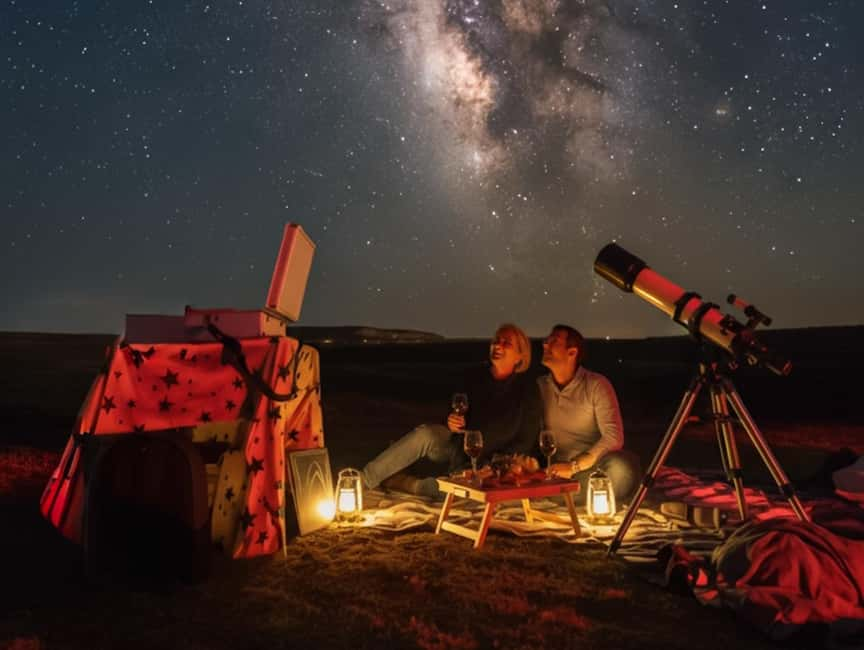
- See the sky through two serious instruments: The Explore Scientific 305 and Seestar S50 give you different ways to view planets, clusters, binary stars, and other objects.
- Start 45 minutes after sunset: The exact meeting time changes with the season and weather, so watch for the operator’s message two days before.
- Guide Gonzo brings the subject to life: His presentation blends clear astronomy lessons, cultural stories, and plenty of enthusiasm.
- The Moon can be a star of the show: When it is visible, you may see its craters in sharp detail and learn how they formed.
- You sit or lie on blankets: Chairs are not included, though the team may try to bring one if you have a back problem.
- You finish with a group night photo: The provider sends the photo as a keepsake, giving the evening a nice closing touch.
A desert sky far from city lights
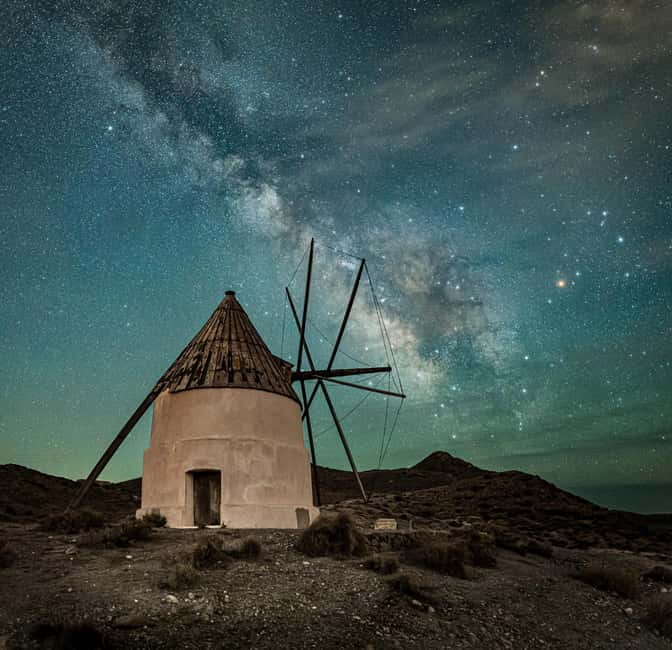
The Tabernas Desert is a strong setting for stargazing because the experience takes you away from urban glare. In a city, bright lights wash out many stars before your eyes even have a chance to adjust. Here, the darkness is part of the experience.
You begin at one of three nearby meeting points listed around Tabernas. The exact point depends on the option you book, so check the confirmation carefully rather than assuming every group meets in the same spot. From there, you walk about five minutes into the desert.
That short walk matters. You are not setting up beside a busy road or walking far into remote country, but you should still wear shoes suited to uneven ground. The desert is dark at night, and a small amount of preparation makes the arrival easier.
The activity begins 45 minutes after sunset. This is a useful detail to understand before booking. You are not arriving at a fixed time such as 8 p.m. all year. The start shifts with sunset, and the team contacts you two days before the activity to check the weather and give you the exact meeting time.
More Observatory and Telescope Tours in Spain:
- Teide by Night: Sunset & Stargazing with Telescopes Experience
★ 4.5 · 1,492 reviews - Teide National Park: Guided Large Telescope Stargazing Tour
★ 4.9 · 319 reviews - Tenerife: Mount Teide Observatory Astronomical Tour
★ 4.4 · 126 reviews
What the two-hour schedule feels like
The advertised two hours break down into roughly five minutes of walking, 105 minutes of guided astronomy, and 10 minutes for the final photo. Most of your time goes into looking at the sky and listening to the guide.
The first part is about getting oriented. Gonzo points out the main constellations visible that night and explains the basics of positional astronomy. This is more useful than simply hearing a list of star names. You learn how the sky is arranged and how certain points, including the North Star, can help you find your way around it.
You then move between naked-eye viewing and the telescopes. That change of scale is one of the best parts of the evening. First, you learn to notice a shape or pattern overhead. Then the telescope brings a distant object into a much tighter view.
The final 10 minutes are set aside for a group photograph with the stars behind you. It is a simple idea, but it gives the experience a clear ending. The image is sent to you afterward, so you do not need to worry about taking a good night portrait yourself.
Gonzo’s mix of stories and science
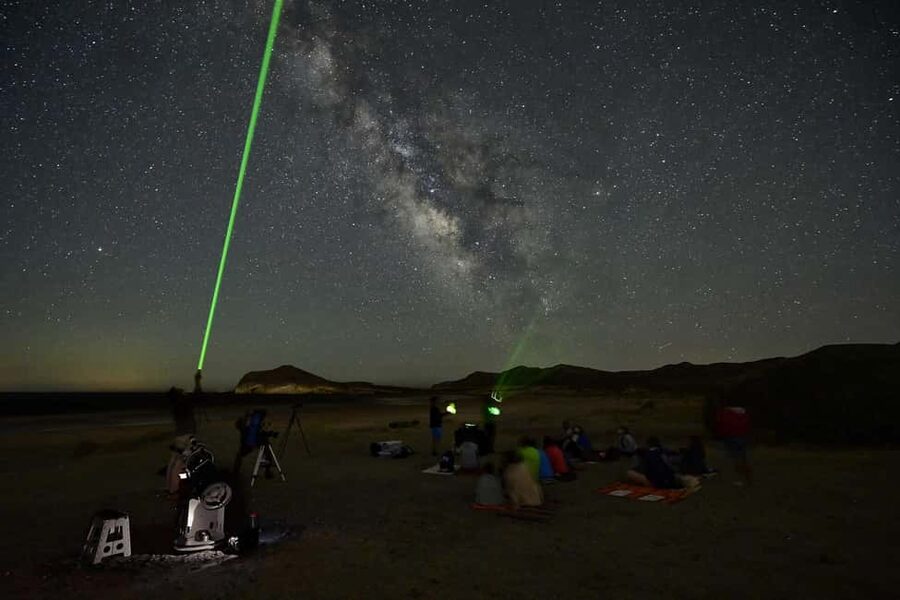
The guide makes a big difference on an activity like this. A telescope can show you an object, but it cannot explain why it matters or help you connect one point of light to the wider sky.
Gonzo’s approach combines astronomy with stories from human culture. You learn about scientific discoveries, but also about the way people have used stars to tell stories, mark direction, and make sense of the universe. That keeps the evening from feeling like a technical demonstration.
His energy is especially helpful for families. Children and teenagers may not want a long lecture about star charts, but they usually respond better when the guide keeps the subject active and personal. The experience has worked well for families with children and teenagers, including ages 12 and 16.
You should still know what kind of activity this is. It is not a fast-moving desert excursion with lots of stops. You spend much of the time standing, sitting, or lying still while the guide explains what is overhead and waits for people to take their turn at the telescope.
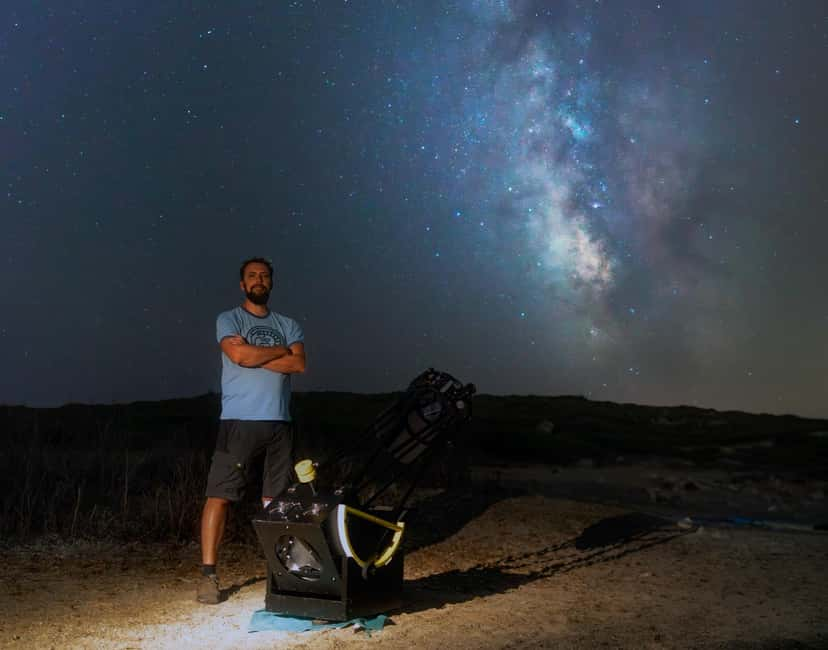
The Explore Scientific 305 telescope
The Explore Scientific 305 is the larger of the two professional instruments used during the activity. Its purpose is to give you a close look at objects that are only faint points, or invisible, to the unaided eye.
Depending on the night, you may see the Moon, planets, open clusters, globular clusters, binary stars, or nebulae. The exact objects change with the season, the position of the sky, the weather, and the brightness of the Moon. That uncertainty is normal in astronomy, not a flaw in the tour.
Past viewing sessions have included Jupiter, Saturn, the Moon, Orion’s Nebula, star clusters, and a galaxy. One particularly strong session included Saturn’s rings and the shadow they cast on the planet. Those details show what the telescope can reveal when conditions cooperate, but you should not treat every object as guaranteed on every date.
The Moon is another highlight. If it is visible during your visit, Gonzo can show you craters in detail and explain how they formed over time. A bright Moon can make some faint objects harder to see, but it also gives you one of the clearest and most satisfying targets in the night sky.
More Desert Stargazing Trips in Spain:
- Stargazing Night in the Tabernas Desert
★ 5.0 · 18 reviews - Dubai Red Dunes ATV, Camels, Stargazing & 5* BBQ Al Khayma Camp
★ 5.0 · 21,620 reviews - Dubai: Sunset Camel Trek, Al Khayma Camp, Stargazing & BBQ
★ 4.8 · 2,588 reviews - Dubai: Overnight Safari, Dinner, Stargazing & Al Khayma Camp
★ 4.8 · 2,562 reviews
The Seestar S50 and deep-sky viewing
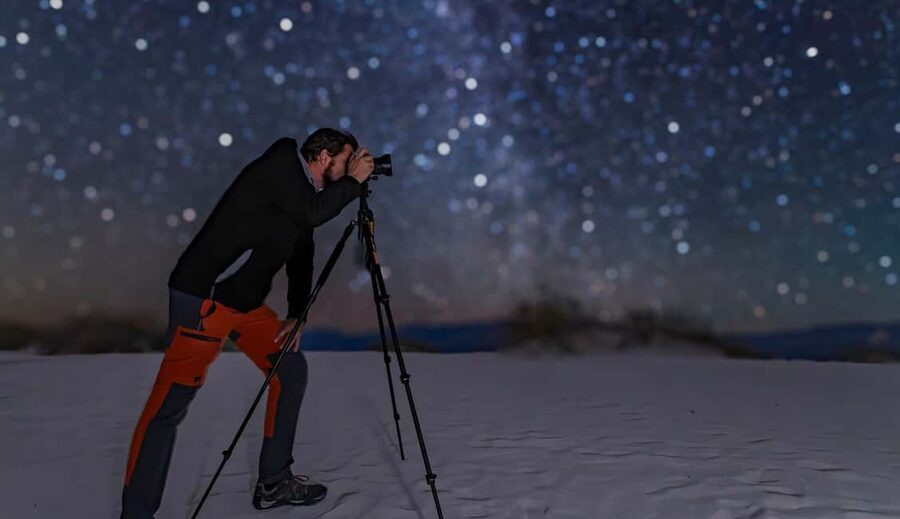
The second instrument is the Seestar S50, a smart telescope designed to help show distant objects in another way. Having two instruments adds variety to the session and lets the guide present different types of targets.
The program includes open clusters, globular clusters, and binary stars. An open cluster is a loose group of stars formed in the same area. A globular cluster is a much tighter, rounded group. Binary stars are paired stars that orbit one another. These distinctions give you something specific to watch for instead of treating every bright point as the same.
You may also look at nebulae and a galaxy. These are far beyond the crisp, familiar detail of the Moon, so the viewing experience depends heavily on darkness and weather. The guide helps by explaining what you are seeing and putting its distance and scale into context.
Some nights also bring unexpected sights. One session included a line of roughly 30 satellites moving from the horizon before spreading toward their assigned paths. That kind of moment cannot be scheduled, which is part of the appeal of spending time under an open sky.
Weather, darkness, and comfort
The desert may feel warm during the day, but nighttime is another matter. Bring warm clothing even if your daytime visit to Andalusia requires short sleeves. You may be outside for two hours, with periods of sitting or lying still, so a light jacket may not be enough in cooler weather.
Blankets are provided for sitting or lying on the ground. This makes the viewing more comfortable and helps you settle in while waiting for your eyes to adjust. Chairs are not part of the standard equipment. If you have a back problem and need one, tell the provider in advance, and the team will try to bring one.
Wind can affect the experience. Strong gusts may make telescope work harder and can reduce the time available for clear viewing. Weather is checked before the activity, but a clear forecast cannot guarantee a perfectly calm night.
Cloud cover can also change the plan. Since the team contacts you two days before the activity to check conditions, keep your schedule flexible if possible. Free cancellation up to 24 hours before the activity and the reserve-now, pay-later option also help if your Andalusia plans are still moving around.
Smoking is not allowed during the activity. The experience is not suitable for wheelchair users, and the short walk into the desert plus the ground-level seating are important practical limits.
Is $41 a fair price?
At $41 per person, this is a reasonable price for a focused two-hour astronomy session, especially if you value a guide who can explain what you see rather than simply point a telescope at the sky.
The price includes the astronomy monitor, both telescopes, blankets, and the group photo. You are also paying for access to a certified astronomy guide connected with the Starlight Foundation of the Canary Islands Institute of Astrophysics. That certification does not guarantee perfect weather, but it signals that the activity has a trained astronomy focus.
The value is strongest for people who would otherwise struggle to identify anything beyond the Moon or a few bright stars. The positional astronomy lesson gives you a skill you can use again. Afterward, you may find yourself spotting the North Star or recognizing a constellation without help.
It is less compelling if you want a private session, a long multi-location excursion, or guaranteed views of a particular planet. The experience is a small-group option, but it is still a shared activity, and telescope time is divided among the people present.
Families, couples, and first-time stargazers
Families are a natural fit. The guide’s storytelling and hands-on telescope viewing give children something to do, while the range of objects keeps the evening from depending on one target. Teenagers can follow the science without needing previous astronomy experience.
It also works well for couples or friends looking for a quiet evening outside the usual sightseeing routine. The desert setting, darkness, and final photo make it feel distinct from another restaurant meal or sunset viewpoint.
First-time stargazers may get the most from it. You do not need to arrive knowing constellations or telescope terms. The guide starts with the basics and builds from there.
People who dislike sitting on the ground, feel uncomfortable in cold weather, or need step-free access should think carefully before booking. The activity is simple, but the setting is outdoors and the comfort level depends on your clothing and ability to manage the short walk and ground seating.
Should you book the Tabernas Desert stargazing experience?
I would book it if you want a clear introduction to astronomy, a memorable family evening, or a chance to see planets and star clusters through proper equipment. Gonzo’s lively delivery is a major part of the experience, and the combination of practical star-finding, cultural stories, and telescope viewing gives the two hours good variety.
Book with realistic expectations about nature. You may see the Moon, Jupiter, Saturn, nebulae, clusters, or a galaxy, but the night’s exact program depends on the sky. Wind, clouds, moonlight, and seasonal visibility all matter.
Bring warm clothes, confirm the meeting point, and keep the evening flexible until the weather check. If you are comfortable outdoors and do not mind sitting or lying on a blanket, $41 buys a personal, well-guided look at the Andalusian sky, with a photo to remember it by.
FAQ
Where does the stargazing activity take place?
It takes place in the Tabernas Desert in Andalusia, Spain. There are three possible starting points around Tabernas, and the meeting point depends on the option booked.
How long does the experience last?
The activity lasts two hours. The schedule includes about five minutes of walking, 105 minutes of guided astronomy, and 10 minutes for the final group photo.
What time does the tour start?
The start time is always 45 minutes after sunset. The exact time changes during the year, and the provider contacts you two days before the activity to check the weather and confirm the meeting time.
Which languages are available?
The live guide is available in English and Spanish. Some content may be presented in its original language.
What telescopes are used?
The experience uses an Explore Scientific 305 telescope and a Seestar S50 smart telescope.
What should I bring?
Bring warm clothing. Blankets are provided, but chairs are not included. If you need a chair because of a back problem, contact the provider in advance so the team can try to bring one.
Is the activity suitable for wheelchair users?
No. The activity is not suitable for wheelchair users. Smoking is also not allowed.
Just added around Spain
- Villajoyosa: Moonlight kayaking and dinner under the stars★ 5.0 · 5 reviews
- Tenerife Exclusive & Private Gastronomic, Sunset-Stargazing★ 5.0 · 3 reviews
- Small Group Teide Stargazing Tour with Picnic at Sunset★ 5.0 · 3 reviews
- TEIDE NIGHT Astronomy Stargazing Bus Tour, Meal & Drinks included!★ 4.0 · 15 reviews
- “Stargate” Tenerife stargazing★ 5.0 · 13 reviews
- Stargazing Tour in Tenerife★ 3.0 · 2 reviews
- Polestar SELF-DRIVE Sunset Stars Tour in Teide National Park★ 5.0 · 19 reviews
- Stargazing Experience with Dinner & Drinks★ 4.0 · 23 reviews
Desert Stargazing Trips, compared.
Dubai Red Dunes ATV, Camels, Stargazing & 5* BBQ Al Khayma Camp
Read our review →
Sunset Camel Trek, Al Khayma Camp, Stargazing & BBQ
Read our review →
Overnight Safari, Dinner, Stargazing & Al Khayma Camp
Read our review →
Dubai Overnight Desert Safari, BBQ & Stargazing at Al Khayma Camp
Read our review →
Evening Desert Safari with Camel Ride & Stargazing
Read our review →
Sea & Desert Horse Tour, Stargazing, Dinner & Show
Read our review →
Pinnacles Desert: Sunset BBQ & Stargazing Tour +Sandboarding
Read our review →
Pinnacles Desert Sunset Dinner and Stargazing Tour
Read our review →Browse the lists this tour appears in