
REVIEW · LA PALMA
La Palma: Stargazing in the best sky in the world
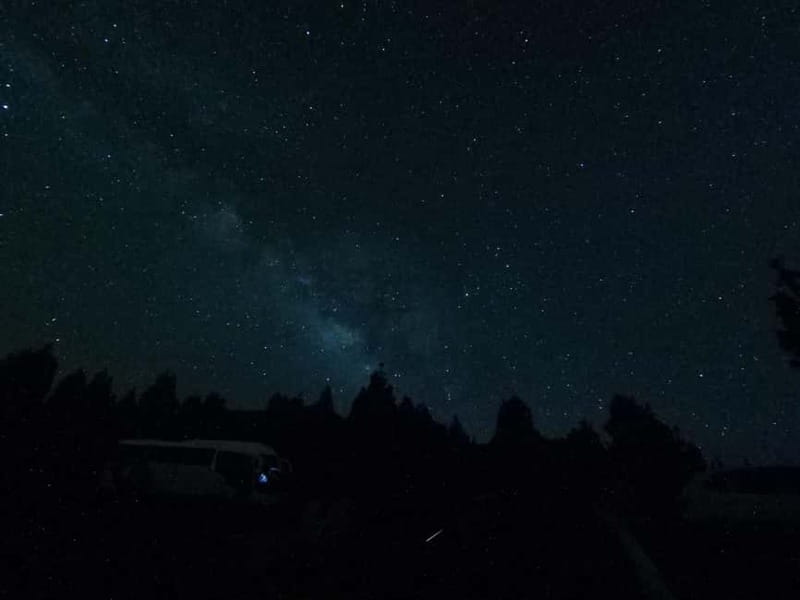
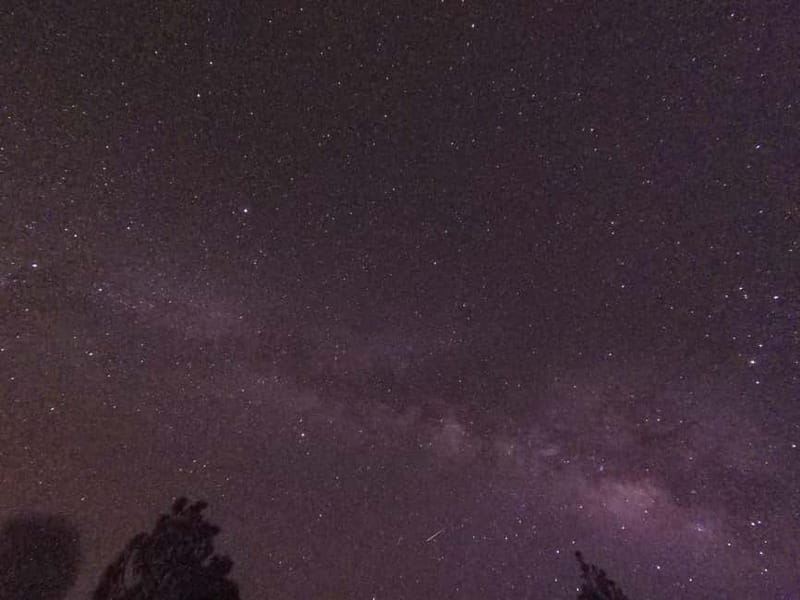
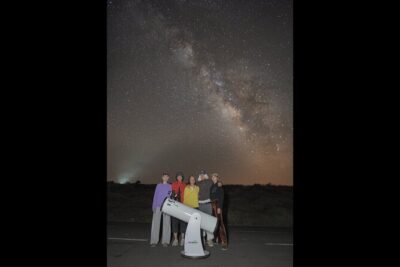
La Palma’s night sky is the real star here. Away from the island’s towns, you’ll look up with the naked eye, follow constellations with a red astronomical laser, then move from binoculars to a serious telescope. Jupiter, Saturn, the Moon, star clusters, nebulae, and distant galaxies may all take a turn.
I like the small groups of 10 to 15 people, which make it easier to ask questions and get time at the telescope. I also like that you can adjust the telescope for your own eye, a small touch that makes the experience feel hands-on rather than like a quick look through an instrument.
The main catch is the weather. The meeting point and start time can change on the day, and clouds, wind, humidity, haze, government alerts, or even the position of objects can affect the plan. You need to watch your phone for the final instructions and bring genuinely warm clothing.
Key points to know
- Three levels of stargazing: Start with constellations and satellites by eye, move to binoculars for broad sky views, then use an advanced telescope for the Moon, planets, stars, nebulae, and galaxies.
- A small group matters: With roughly 10 to 15 people, you get a better chance to ask questions and look through the telescope without being rushed.
- The location is flexible: The activity may meet at Llano del Jable, Llano de Las Ventas, or a private site at San Antonio Volcano, depending on conditions.
- The guides add meaning: María José and Nicolás explain astronomy, physics, star chemistry, myths, and stories from different cultures in English or Spanish.
- Plan for mountain cold: Comfortable shoes, warm shoes, comfortable clothing, and warm layers are essential, even if your hotel feels mild.
- The Moon changes the evening: A full moon can brighten the sky and reduce the view of faint objects, but the program then gives the Moon special attention.
Why La Palma is such a strong place for stargazing
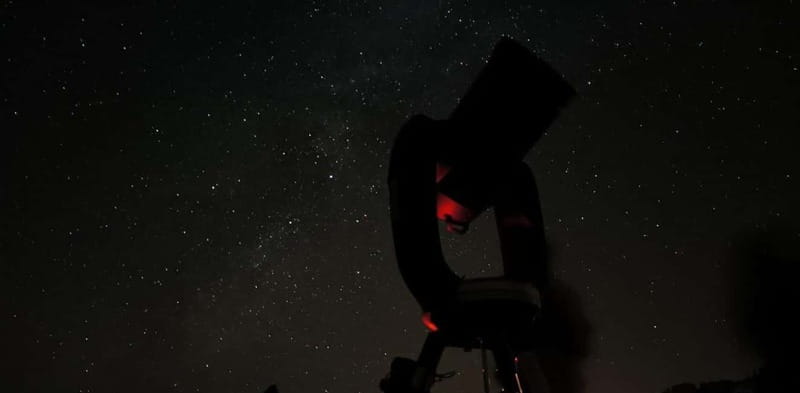
La Palma is known for its clear, dark skies, and this activity takes you to an astronomical viewpoint rather than asking you to peer at stars from a hotel terrace. The usual sites are high up, at about 1,320 to 1,341 meters above sea level, where the air and darkness can offer a better view of the night sky.
That height also explains the need for warm clothes. You may arrive after a pleasant day on the coast and find a very different night at the viewpoint. Pack a proper jacket and warm shoes. Comfortable footwear helps too, since this is an outdoor activity and you will be moving between viewing points and equipment.
The experience lasts about 1.5 hours, sometimes extending to 1 hour and 45 minutes if the group has plenty of questions. That is a sensible length. You get enough time to look through several instruments and hear the explanations, but the evening does not become an all-night astronomy course.
The dark sky is useful, but the guide is just as important. A sky full of stars can be beautiful and confusing. Without help, you may see a bright point and have no idea if it is a planet, a star, or a moving satellite. The astronomical laser gives you a clear starting point.
More Stargazing Tours in Spain:
- Tenerife: Teide National Park Sunset & Stargazing Tour
★ 4.2 · 3,812 reviews - Tenerife: Sunset and Stargazing at Teide National Park
★ 4.7 · 2,826 reviews - Teide National Park Sunset & Stargazing with Dinner (Star Safari)
★ 5.0 · 2,601 reviews
The opening act: constellations, satellites, and the moving sky
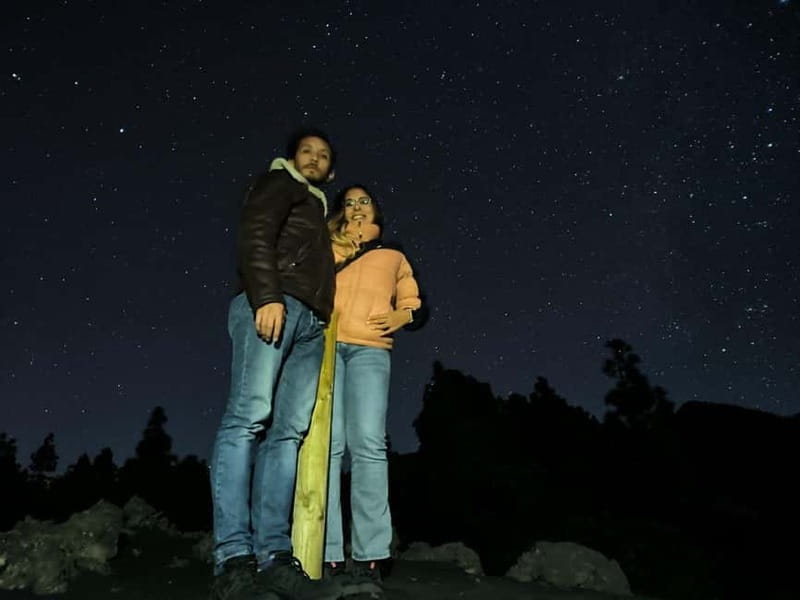
At the center of the viewpoint, look for the red light used by the team. The guides ask you to arrive about 15 minutes early and approach discreetly if you cannot see them. If possible, turn off your car lights and keep white light pointed at the ground. Bright light quickly spoils night vision for everyone nearby.
The first part uses your own eyes. The guide points out constellations and explains how to recognize them. An astronomical laser makes the lesson much easier because you can follow a precise line across the sky instead of guessing which stars belong together.
You may also watch satellites and other moving objects. This is one of the most useful parts for beginners. A satellite does not look like a glowing spaceship. It appears as a moving point of light, and the guide helps you understand what you are seeing.
The explanations go beyond names and labels. You hear about the physics of the Cosmos, the chemistry that produces stars, and myths and legends from different cultures. That combination gives the night some human scale. You are not only memorizing constellations. You are hearing how people in different places have made sense of the same sky.
This portion is also the easiest for children and adults who do not know much about astronomy. You do not need to prepare beforehand. The guide starts with what you can see and builds from there.
Binoculars reveal the wide view
The binocular section changes the way you look at the sky. A telescope gives you a closer view of a smaller target, while binoculars show wider areas and help you understand how stars are grouped together.
The activity uses binoculars to show regions containing nebulae and star clusters. These objects may not look like sharp photographs from a space agency. Real astronomical viewing is subtler. You might see a hazy patch, a concentration of stars, or a shape that becomes clearer after your eyes adjust.
That is still valuable. The binoculars help bridge the gap between naked-eye stargazing and telescope viewing. You begin to notice that the sky is not just a scattering of individual lights. It has structure, clouds of gas, clusters, and objects far beyond the Solar System.
The guide can also explain what you are seeing in terms of distance and time. Light takes time to reach Earth, so looking outward also means looking into the past. The program uses this idea to make the scale of space easier to grasp without turning the evening into a technical lecture.
The telescope brings the Moon and planets close
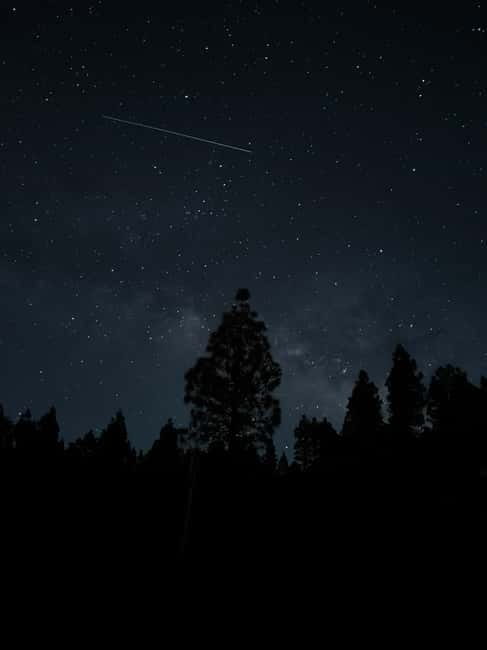
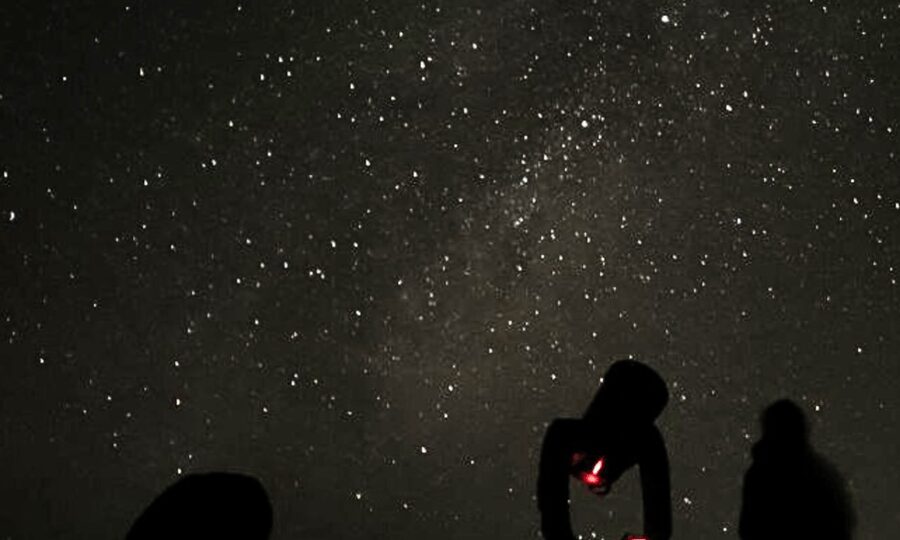
The advanced astronomical telescope is the centerpiece. Depending on the season, sky conditions, and the objects visible that night, you may view the Moon, Jupiter with its four Galilean moons, Saturn, individual stars, nebulae, or galaxies.
The exact menu is not fixed. That is important. Astronomy depends on what is above the horizon, what the weather allows, and how clearly you can see it. The activity checks the sky and visible objects each day, so the order and focus may shift.
The Moon is often the most immediately rewarding target. Through the telescope, its surface becomes more than a bright disk. You may see its markings and get a closer sense of its uneven surface. On a full moon night, the bright lunar light can make faint deep-space objects harder to see, but the program then focuses more closely on the Moon’s beauty and meaning.
Jupiter offers a different thrill. The planet’s four Galilean moons can appear as small points near it, giving you a simple visual lesson in motion and scale. Saturn, when visible and conditions cooperate, can show its famous ringed form. These are the moments when astronomy feels less abstract because you are looking at an actual planet rather than a textbook image.
You get time at the telescope without being hurried through a single glance. The small group helps here. You can adjust the instrument for your eye, and the team gives you a chance to look carefully. This personal adjustment is especially helpful if you wear glasses or have trouble finding the target at first.
A VIP telescope access option is available for an additional fee. The basic experience already includes telescope viewing, so treat this as an optional upgrade rather than a requirement. It may appeal to someone who wants faster access or extra telescope time, but the standard visit is designed to include the main observing experience.
Same dark skies, a different way to see them:
- Teide National Park: Sunset & Stargazing Safari with Dinner
★ 4.6 · 2,115 reviews - Teide by Night: Sunset & Stargazing with Telescopes Experience
★ 4.5 · 1,492 reviews - Teide: Guided Sunset & Stargazing Tour by Night with Dinner
★ 4.7 · 1,339 reviews - Sunset & Stargazing Experience From Teide
★ 4.5 · 1,129 reviews
From the Solar System to galaxies and nebulae
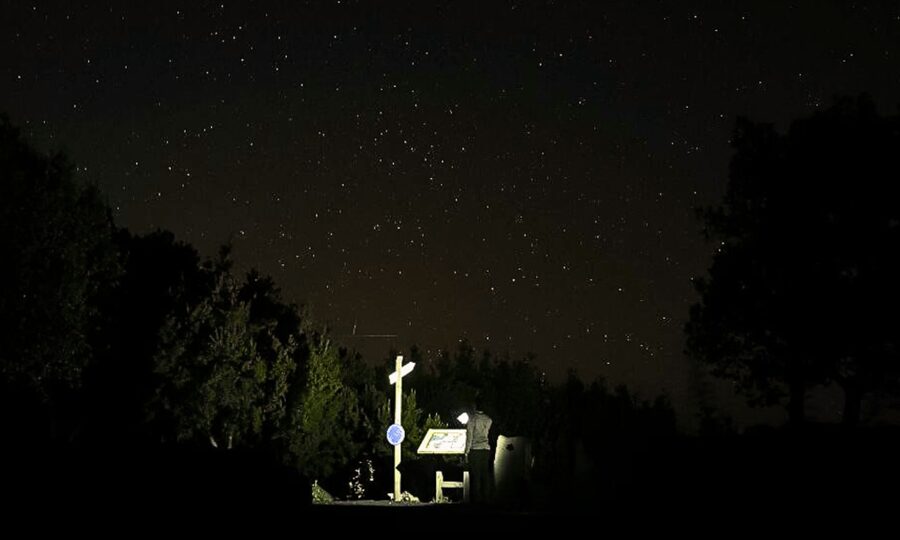
After the Moon and planets, the guide may take you farther out. Galaxies and nebulae become the focus, and the sense of distance changes sharply.
A planet is part of our own Solar System. A nebula may be a vast cloud of gas and dust, while a galaxy contains enormous numbers of stars. Seeing these objects through a telescope can be less visually dramatic than a polished photograph, but the guide helps you understand what your eye is receiving.
This is where the science portion earns its place. The explanations connect the appearance of an object with the processes behind it. You learn about the matter that forms stars and the forces that shape the Cosmos. The subject stays grounded in what you can see rather than drifting into a long classroom talk.
The storytelling also keeps this part accessible. Myths and legends give the constellations a cultural frame, while physics and chemistry explain the modern scientific view. I like that the experience makes room for both. You get facts, but you also get the stories people have told about the sky for centuries.
Choosing among the three possible locations
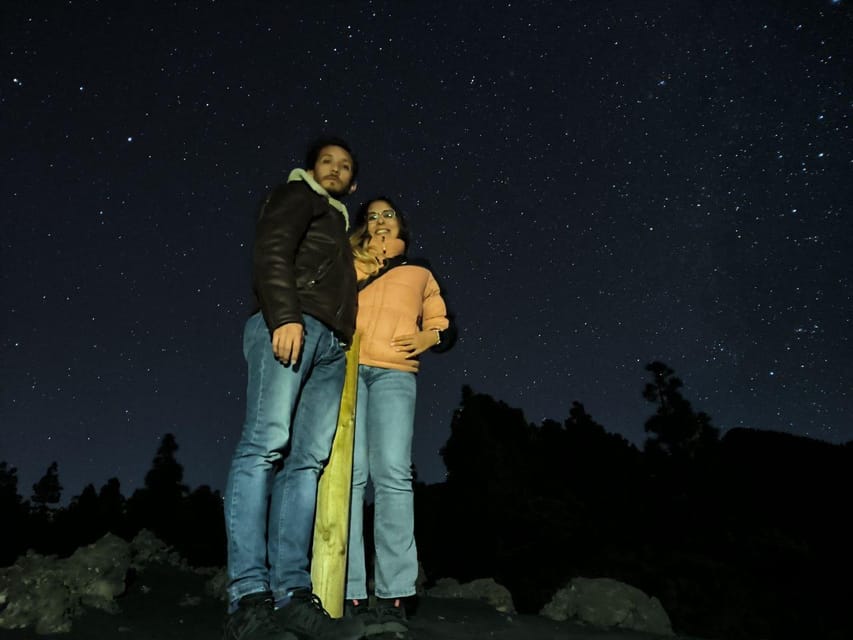
The exact meeting place is confirmed on the day. The usual options are Llano del Jable Astronomical Viewpoint, at about 1,341 meters, and Llano de Las Ventas Astronomical Viewpoint, at about 1,320 meters. They are about five minutes apart and roughly 39 minutes from Santa Cruz, Los Cancajos, and Los Llanos.
A third option is San Antonio Volcano in Fuencaliente. This is a private location at about 633 meters above sea level. It is around 40 minutes from Santa Cruz, Los Cancajos, and Los Llanos, and about 15 minutes from the Princess Hotel.
You do not receive a fixed location far in advance because the team chooses based on wind, humidity, cloud, haze, official alerts, site occupancy, and the location of the objects you hope to see. That flexibility is sensible, but it requires patience from you.
There is no transfer from your hotel to the meeting point. You need to arrange your own transport, and the activity does not include food. No bathroom is listed at the viewing site, so plan ahead before leaving your accommodation.
The meeting point described for the itinerary is Llano del Jable, but do not assume that is the final site. Check WhatsApp, email, or SMS on the day. If you do not use WhatsApp, tell the provider in advance.
Weather can change the plan at the last minute
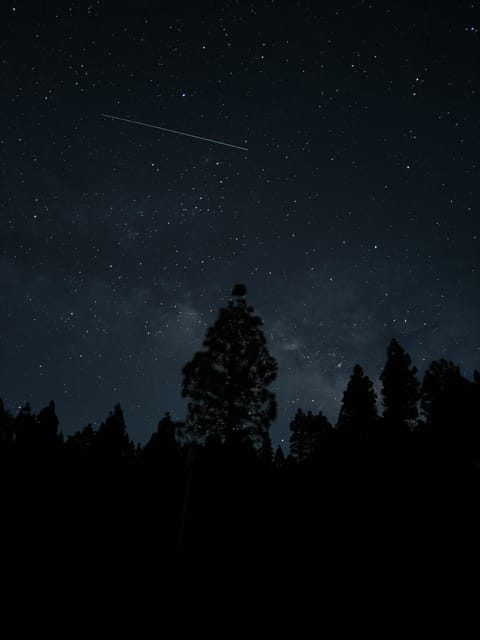
This is an outdoor astronomy experience, not a fixed indoor show. The team checks weather radar and the expected celestial objects each day, then confirms the location and approximate start time.
Clouds, wind, haze, humidity, and official safety alerts can lead to a postponement, relocation, or cancellation. If the normal viewpoints are unsuitable, the activity may move to a private indoor or sheltered location when one is available. That option is intended to preserve a useful astronomy session, but it does not guarantee the same conditions or views.
The start time changes with sunset and the visibility of the sky. You should keep your phone nearby on the day and arrive 15 minutes early once the details are confirmed. A little flexibility is part of the price of seeing real celestial objects rather than watching a predictable presentation.
The safety instructions also matter for the quality of the group experience. Turn off car lights when you arrive, avoid shining a white flashlight across the site, and use a red light if possible. Red light is less disruptive to night vision, which helps both you and the people around you.
What $45 buys you
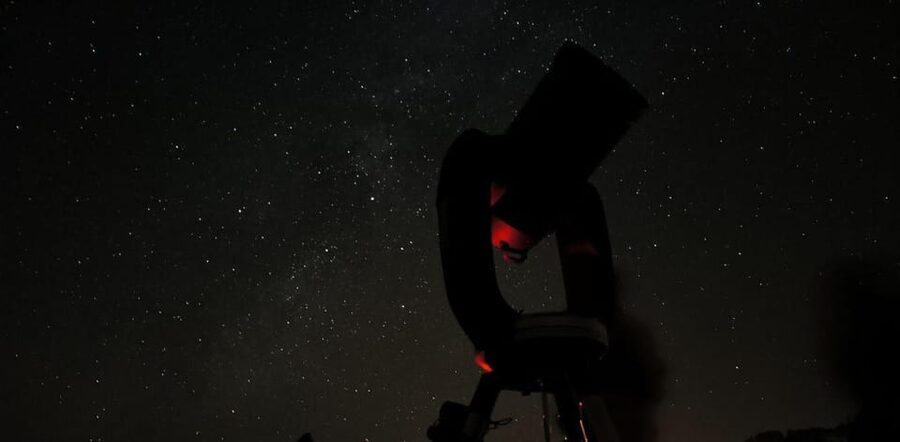
At $45 per person, the value depends on how much you want from the evening. You are paying for a guided 90-minute astronomy session, a small group, binoculars, an advanced telescope, naked-eye instruction, and explanations in English or Spanish.
You are not paying for transportation, dinner, a hotel pickup, or access to the Roque de Los Muchachos observatory. That last point is worth noting. This activity uses astronomical viewpoints and private locations, but it is not a visit to the Roque de Los Muchachos site.
I think the price is fair for someone who wants help making sense of the sky. Buying access to a telescope alone would not provide the same guidance, and a casual viewpoint stop would not give you the same progression from constellations to galaxies.
The value is weaker if you already have strong astronomy experience and prefer to observe alone. It is also harder to judge in advance because weather may shift the location or limit what you see. Still, the small group and hands-on telescope time make this more than a quick star-themed photo stop.
A group photo with the stars is available if you select that add-on. It is not part of the basic inclusions, so check the booking choices if a keepsake matters to you.
Who will enjoy this most
I would recommend this for first-time stargazers, families, couples, and anyone who wants a clear introduction to astronomy without spending an entire night at a formal observatory. The guides explain complicated subjects in an approachable way, and the format gives you several ways to look at the sky.
It also suits people who enjoy stories. The mix of myths, cultural traditions, physics, and star chemistry gives the evening more shape than a simple list of planets.
The activity is wheelchair accessible, though you should still ask for current meeting-point details if mobility needs are important to your plans. The location can change, and the activity takes place outdoors.
This may not suit you if you need a guaranteed start time, a guaranteed list of planets, or a warm indoor venue. It may also disappoint anyone expecting large, colorful views like those in space photography. A real telescope view can be delicate, and the sky decides what is available.
Practical preparation for a better night
Wear more warmth than you think you need. The high viewpoints can feel cold after sunset, so bring warm layers, warm shoes, and comfortable clothing. You will enjoy the telescope more if you are not spending the whole session trying to stay warm.
Eat before you go, since food is not included. Also use a bathroom before departure, because no bathroom is listed at the viewing site.
Keep the confirmation message easy to find. The team may send the final location and time through WhatsApp, email, or SMS on the same day. If you cannot find the guides at the center of the viewpoint, contact them and look for the red light.
Ask questions. The tour can extend beyond 1.5 hours when the group is interested, and the small size makes this a good setting for asking about a particular planet, constellation, or instrument.
The strongest practical tip is simple: do not judge the evening by the weather at your hotel. La Palma can have different conditions at different heights and locations. Wait for the day-of message before deciding what kind of sky you will get.
Should you book this La Palma stargazing experience?
Book it if you want a guided, hands-on introduction to the night sky and you are willing to accept changing weather and meeting details. The combination of a small group, laser-guided constellations, binoculars, and a telescope gives you a well-shaped 90-minute experience for $45.
I especially recommend it if you are curious but not an astronomy expert. Guides María José and Nicolás bring clear explanations and storytelling to subjects that can otherwise feel distant. The chance to adjust the telescope to your own eye is another useful touch.
Skip it if you need hotel transport, food, a fixed location, or guaranteed views of a particular planet. For everyone else, pack warm clothes, watch your phone, and give the night sky room to surprise you.
FAQ
How long does the stargazing activity last?
The activity lasts about 1.5 hours. It can extend to around 1 hour and 45 minutes depending on the group’s questions and interest.
What languages are available?
The live tour guide is available in English and Spanish.
Where does the activity meet?
The usual meeting points are Llano del Jable Astronomical Viewpoint and Llano de Las Ventas Astronomical Viewpoint. The activity may also use a private location at San Antonio Volcano in Fuencaliente. The exact site is confirmed on the day.
When will I receive the final meeting point and time?
The team sends the details on the day of the activity after checking weather and sky conditions. Check WhatsApp, email, or SMS.
What can I see through the telescope?
Depending on conditions and visibility, you may see the Moon, Jupiter and its four Galilean moons, Saturn, stars, nebulae, and galaxies.
Does the tour include transportation?
No. Transportation to the meeting point and transport from your hotel are not included.
What should I wear and bring?
Bring comfortable clothes, warm clothing, comfortable shoes, and warm shoes. The activity takes place outdoors, and the higher viewpoints can be cold at night.
Is the Roque de Los Muchachos observatory included?
No. The activity takes place at astronomical viewpoints or a private location and does not include observation at Roque de Los Muchachos.
Can I cancel the booking?
You can cancel up to 24 hours in advance for a full refund. The activity also offers reserve now and pay later booking.
Just added around Spain
- Villajoyosa: Moonlight kayaking and dinner under the stars★ 5.0 · 5 reviews
- Tenerife Exclusive & Private Gastronomic, Sunset-Stargazing★ 5.0 · 3 reviews
- Small Group Teide Stargazing Tour with Picnic at Sunset★ 5.0 · 3 reviews
- TEIDE NIGHT Astronomy Stargazing Bus Tour, Meal & Drinks included!★ 4.0 · 15 reviews
- “Stargate” Tenerife stargazing★ 5.0 · 13 reviews
- Stargazing Tour in Tenerife★ 3.0 · 2 reviews
- Polestar SELF-DRIVE Sunset Stars Tour in Teide National Park★ 5.0 · 19 reviews
- Private stargazing trip in Teide★ 5.0 · 3 reviews
La Palma Stargazing Tours, compared.
Roque de los Muchachos Stargazing Tour with Wine
Read our review →
Stargazing Private Tour at Roque De Los Muchachos in La Palma
Read our review →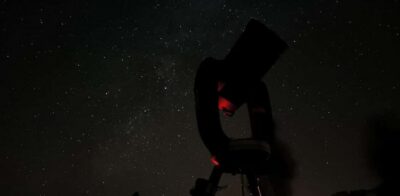
Browse the lists this tour appears in