
REVIEW · OBSERVATORY & TELESCOPE TOURS
Ioannina Astronomy: Telescope Stargaze Greece’s night sky
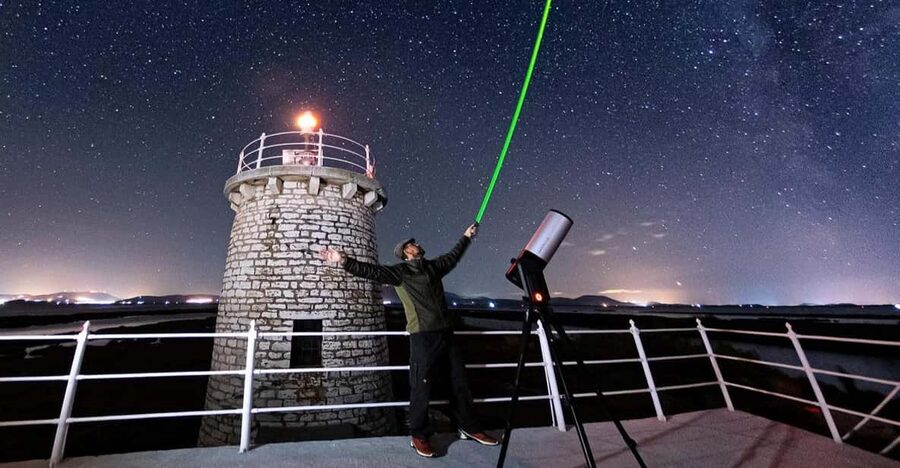
Just outside Ioannina, the night sky becomes the main attraction. From the dark Acropolis of Kastritsa, an astronomer uses a green laser and powerful telescopes to connect Greek mythology with planets, nebulae, star clusters, and even colliding galaxies.
I especially like two things here: you get both the naked-eye wonder of the Milky Way and close telescope views, and the Unistellar eVscope lets you save images of the cosmos directly to your phone. Sotiris, the guide, brings a lively mix of science and stories, though you should know that cold weather and changing start times are part of the deal.
Key points to know before booking
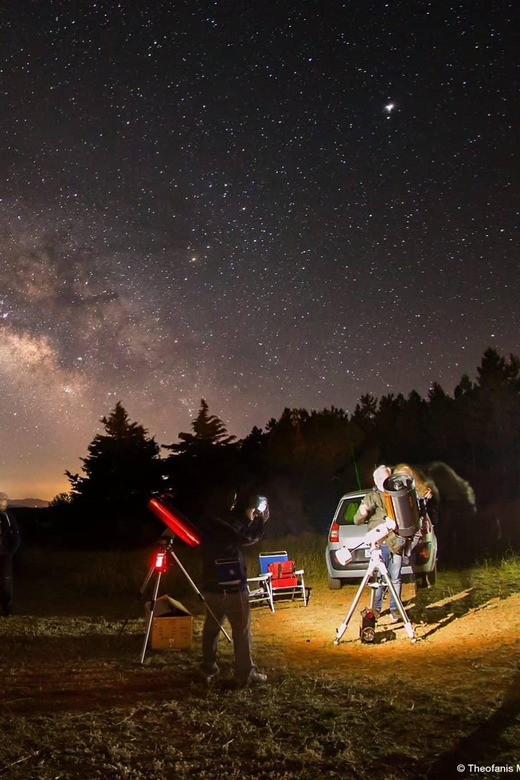
- Colliding galaxies through an eVscope: See distant objects that are impossible to make out with your eyes alone.
- Greek mythology in the sky: A green laser points out constellations while the guide explains their old stories.
- Kastritsa gives you more than stars: The free archaeological site has broad views of Ioannina and Lake Pamvotis before the session begins.
- The Moon and planets depend on timing: An 8-inch telescope is used when these objects are visible.
- Bring serious warm clothing: Even a summer night can feel cold at the open-air viewing point.
- A good first astronomy tour: The session is designed for beginners and children aged six and older.
Watching the sky from Kastritsa’s ancient hilltop
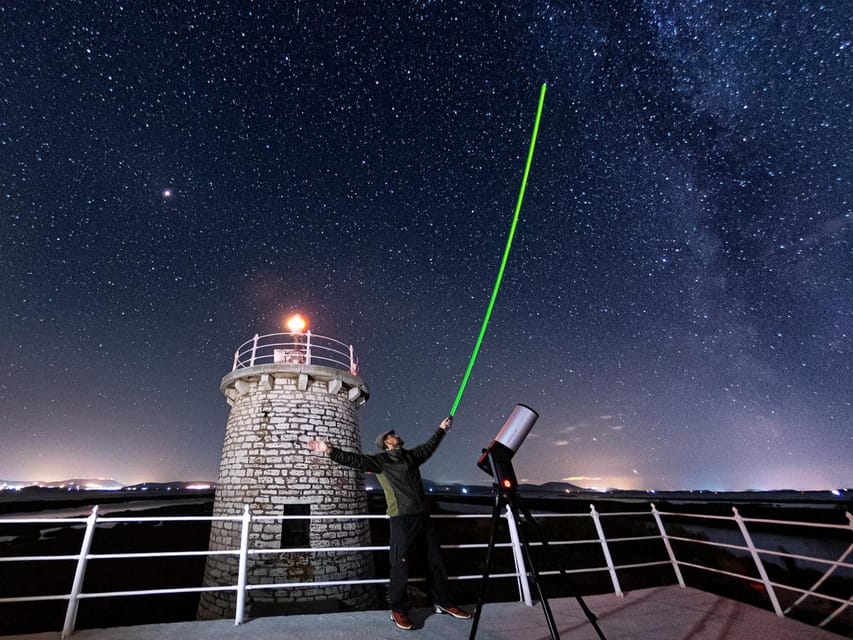
The meeting point is the Acropolis of Kastritsa, an archaeological site just outside Ioannina. It is described as the darkest place available near the city, which matters more than fancy equipment when you are trying to see faint stars and the pale sweep of the Milky Way.
You can visit the site before the astronomy session because it is open and free of charge. Its views toward Ioannina and Lake Pamvotis give you something worthwhile to see before darkness settles in. I would arrive with enough time to look around, get oriented, and settle into the evening rather than pulling in at the last minute.
The setting is also the main practical trade-off. This is an outdoor astronomy point, not a visitor center with indoor seating and facilities. There are chairs for the audience, but no toilets or cafes close to the stargazing location. Bring water and use facilities before you arrive.
The ancient site adds a sense of place without distracting from the sky. You are not sitting in a city planetarium with a controlled ceiling overhead. You are looking up from a real archaeological site in Epirus, with the surrounding darkness doing much of the work.
More Observatory and Telescope Tours in the world:
- Teide by Night: Sunset & Stargazing with Telescopes Experience
★ 4.5 · 1,492 reviews - Miami: Frost Museum of Science and Planetarium Entry Ticket
★ 4.5 · 429 reviews - Uluru: National Park Astronomy Tour with Telescope and Photo
★ 4.4 · 357 reviews
How the two-hour astronomy session unfolds
The listed duration is about two hours, though the exact rhythm depends on the season, the sky, and the objects visible that night. Start times shift with sunset: around 21:30 in summer, 20:00 in spring and autumn, and 18:30 in winter.
The operator confirms the exact meeting time through WhatsApp on the day of the tour after 10:00. This is useful because sunset changes throughout the year, but it also means you should keep your schedule flexible on the day. Check your messages before setting out.
The first part usually builds your basic sense of the sky. The guide may point out bright stars and their colors, then explain what stars are made of. That simple question opens the door to larger ideas about temperature, age, and the different stages of a star’s life.
You also hear about red giants and white dwarfs. These are not just labels to memorize. They give you a way to understand that stars change over time, and the bright points above you are not all alike. A good guide can turn a scattered field of stars into a group of objects with different stories.
Following Greek myths with a green laser
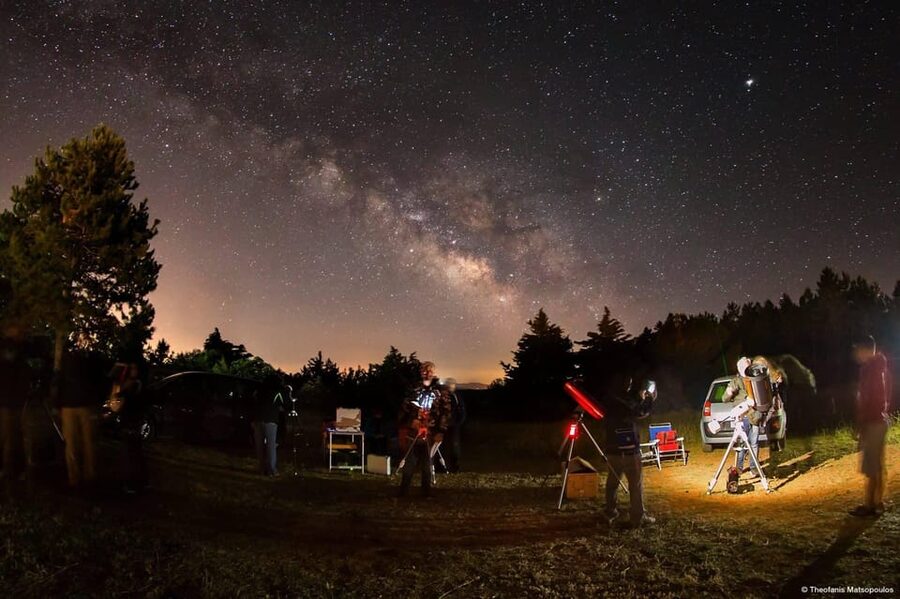
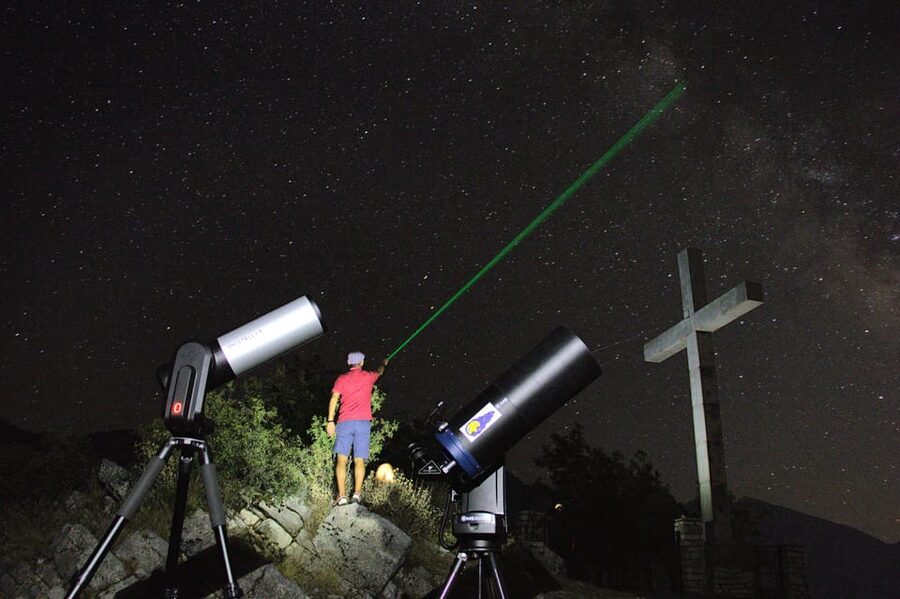
The green laser constellation tour is one of the most distinctive parts of the evening. Rather than giving you a long list of star names, the guide traces shapes in the sky and links them to Greek mythology.
This works especially well in Greece, where the myths connected with many familiar constellations have a natural local setting. The laser gives you a clear line to follow, which is helpful when you are new to astronomy and cannot yet tell one star pattern from another.
I like this part because it serves two kinds of curiosity at once. You get the practical skill of finding constellations, and you get the stories that helped earlier cultures remember them. It also keeps the session from becoming a purely technical lecture.
The tour is conducted in English. You should be comfortable following spoken explanations in English, since the science, mythology, and viewing instructions are all delivered that way.
Seeing the Moon, planets, and the colors of stars
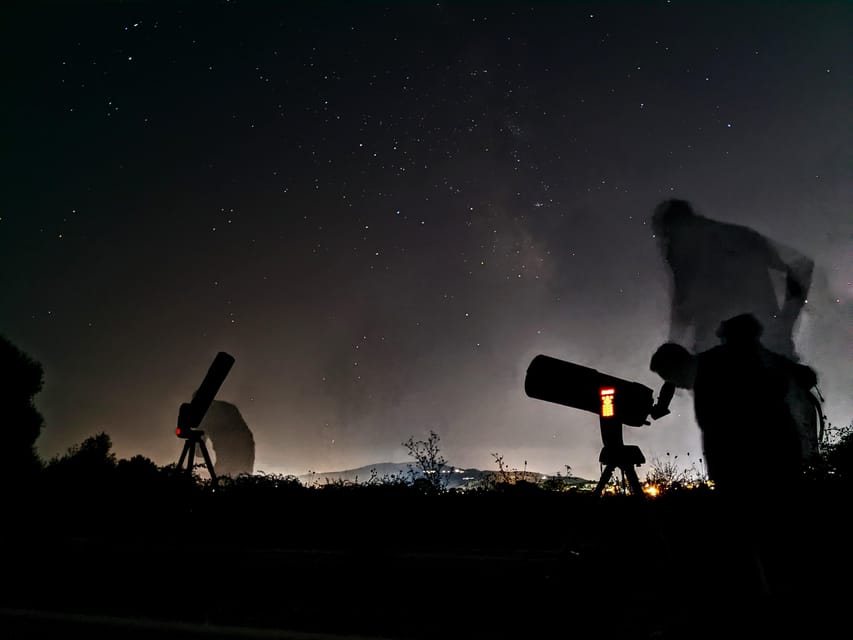
The Moon and planets are observed when they are in the sky. That timing is important. You should not book this expecting a guaranteed planet lineup on every date, since the visible objects change with the season and the hour.
When the Moon is available, the included 8-inch telescope is used for a closer look. The telescope is also used for planets when they are visible. The supplied information does not promise a specific planet or lunar phase, so treat these views as date-dependent bonuses rather than fixed parts of the program.
The guide also points out bright stars and their colors. To your unaided eye, most stars appear white or slightly blue-white, but careful viewing can reveal differences. The explanation of what creates those colors gives you a useful bridge between simple observation and real astronomy.
This is a good place to manage expectations. A telescope does not make every object look like a glossy space photograph. Some views will be small, faint, or subtle. The value comes from knowing what you are looking at and understanding how far away it is.
More Evening Trips in the world:
- Tenerife: Teide National Park Sunset & Stargazing Tour
★ 4.2 · 3,812 reviews - Tenerife: Sunset and Stargazing at Teide National Park
★ 4.7 · 2,826 reviews - Teide National Park Sunset & Stargazing with Dinner (Star Safari)
★ 5.0 · 2,601 reviews - Dubai: Sunset Camel Trek, Al Khayma Camp, Stargazing & BBQ
★ 4.8 · 2,588 reviews
The Milky Way and the big payoff for your eyes
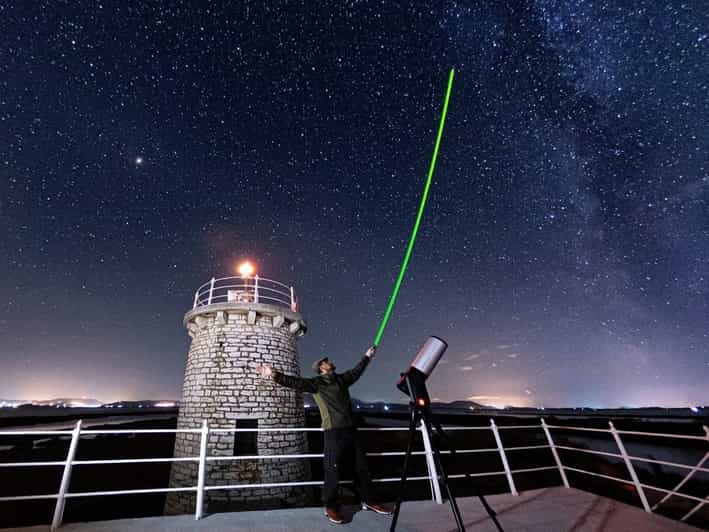
The Milky Way may be the most impressive sight of the night, and you see it without a telescope. Away from Ioannina’s city lights, the band of our galaxy can become much clearer, especially when the sky is dark and cloud-free.
This is why the location matters so much. The telescope provides detail, but the dark setting lets you see the scale of the sky around you. You can look through an eyepiece at a distant object, then step back and take in the much larger field of stars overhead.
The sight will depend heavily on weather and visibility. Clouds, haze, moonlight, and nearby light can all affect what you see. The session can be canceled for poor weather as late as 10:00 on the same day, so do not treat a clear morning as a guarantee of a clear night.
If you are visiting Ioannina for several nights, placing this activity early in your stay gives you a little flexibility. A weather cancellation is less painful when you have another evening available.
Distant galaxies through the Unistellar eVscope
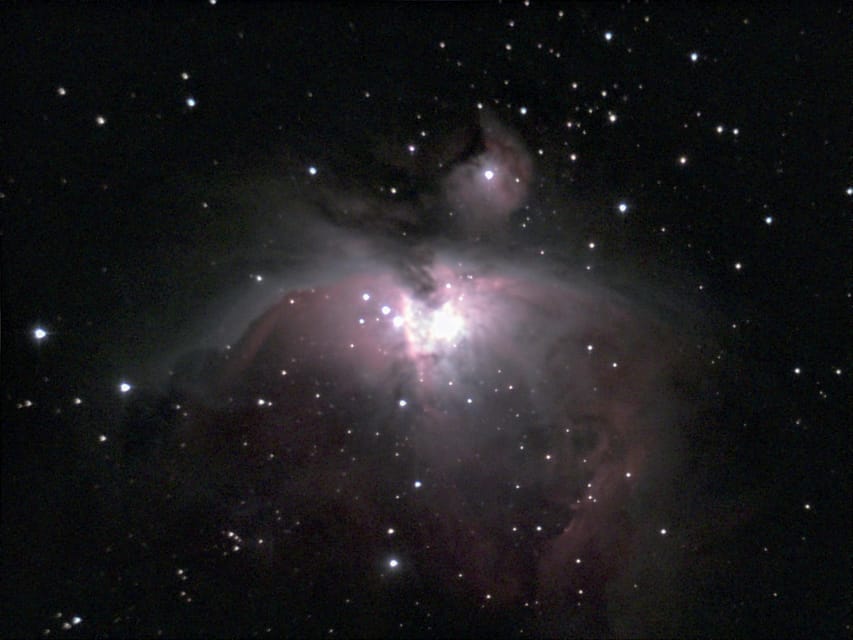
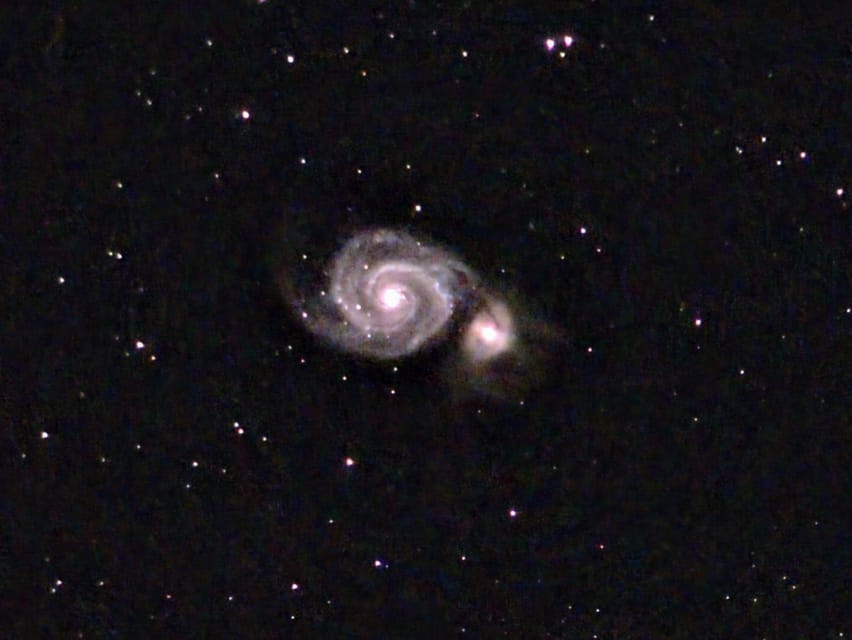
The most ambitious part of the program uses an Unistellar eVscope, a sophisticated telescope designed to reveal faint deep-sky objects. The guide may show you star clusters, nebulae, and distant galaxies, including galaxies that are colliding.
That list sounds grand, but it has real meaning. You are not looking only at bright objects within our own solar system. You are being shown structures far beyond it, with some galaxies containing hundreds of billions of stars.
The eVscope is particularly useful for a beginner because it helps reveal objects that may be too faint for a casual visual look through a smaller telescope. The guide supplies the context, so you can understand why a dim patch matters rather than wondering if you are simply looking at a blurry star.
You can save images of the cosmos directly to your mobile phone. This is a practical touch. The images will not replace professional observatory photographs, but they give you a personal record of what you saw and make it easier to remember the objects explained during the session.
The experience is at its best when you let the guide do more than point the telescope. Sotiris is praised for his enthusiasm, stories, and ability to explain the subject clearly. One evening reportedly stretched to three hours, although the listed duration is two hours. That suggests the pace can be generous when the sky and group allow, but you should plan around the official two-hour length.
Why the guide makes a difference
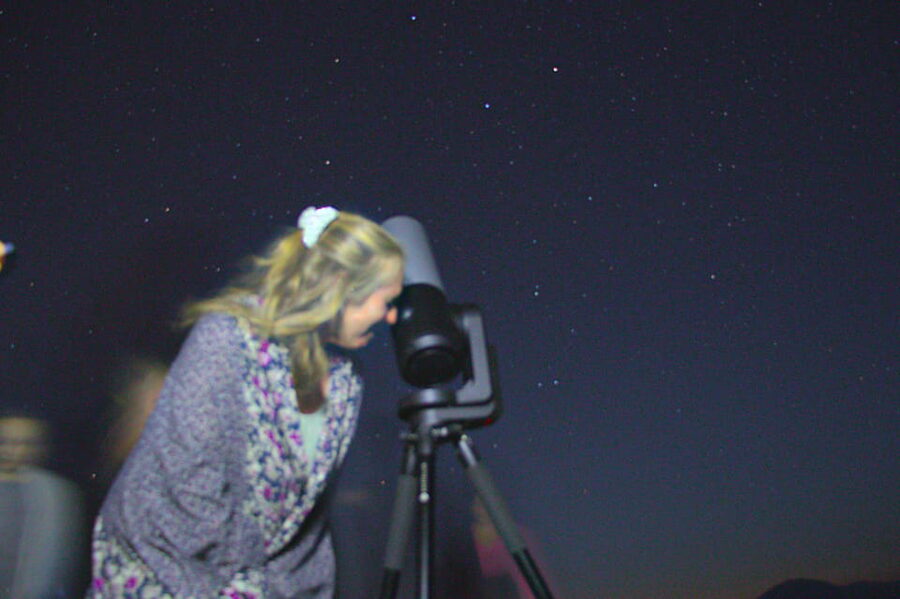
Astronomy can quickly become a string of unfamiliar terms. Red giants, white dwarfs, nebulae, star clusters, and galaxies are easier to grasp when someone explains what you are seeing in plain language.
Sotiris is the named guide associated with this experience. His approach combines science, storytelling, and direct observation. The strongest praise focuses on his enthusiasm, clear teaching, and ability to hold attention through a long evening beneath the sky.
That matters because the equipment alone is not the whole experience. A telescope can show you a faint shape, but the guide tells you why it matters, how far away it is, and where it fits into the larger story of the universe.
I would choose this tour for someone who enjoys asking questions and listening. It is not simply a quick stop to look at the Moon. You get more from it if you want to understand how stars change, how constellations were named, and what lies beyond our own galaxy.
Is $47 a fair price?
At $47 per person, the price is reasonable if you value instruction and access to astronomy equipment rather than just a short look through a telescope. The cost includes the guided stargazing session, the Unistellar eVscope, the 8-inch telescope when the Moon or planets are visible, the laser constellation tour, chairs, and mobile images.
You are paying for a specialist-led evening, not a meal or a full sightseeing package. Dinner is not included, and there are no nearby cafes at the site, so plan food separately. You may want to eat before the session, particularly in winter when the earlier start time can place the activity around dinner.
The value is strongest for beginners. You do not need to arrive with astronomy experience, and the guide handles the difficult task of finding and explaining the objects. Families can also get good value if children are genuinely interested in the night sky.
For a casual visitor who only wants a few quick telescope views, the price may feel less compelling. Weather can change the plan, and not every evening will offer the same Moon, planets, or deep-sky objects. The experience rewards curiosity more than a checklist of guaranteed sights.
What to wear and what to bring
Take the cold warning seriously. Even in summer, the night can become chilly, especially at an exposed or higher viewing point. Warm clothing and warm shoes are specifically advised.
I would bring:
- A warm outer layer, even on a mild day
- Closed, warm shoes
- Water and any snack you need
- A fully charged mobile phone for saving cosmic images
- A light layer that you can add or remove as the temperature changes
Chairs are provided, which makes the session more comfortable than standing for the full period. Still, you are outdoors for a long time, and cold feet can spoil an otherwise excellent evening.
The site has no nearby toilets or cafes. Handle those needs before reaching the Acropolis of Kastritsa. This is a small detail, but it can make a big difference during a nighttime activity.
Who will enjoy this most?
This is a strong choice for first-time stargazers, couples looking for a quiet evening outside Ioannina, and families with children aged six and older. The mixture of mythology, simple science, and telescope viewing gives children several ways into the subject.
Older children may especially enjoy saving images to a phone and seeing the difference between a bright planet, a star cluster, and a distant galaxy. The session is not listed as suitable for children under six, so families should follow that age limit.
You should also be comfortable being outside at night and listening in English. The activity is not suitable for visually impaired people, according to the supplied accessibility information.
This is less suitable if you need a warm indoor venue, nearby food, fixed timing, or a guaranteed list of planets. It is also not the right pick if you want a short, self-guided look at the stars. The astronomy explanations are a central part of the experience.
Weather, timing, and cancellation planning
The sky controls the evening. Poor weather can lead to cancellation on the same day, with the decision made by 10:00 in the morning. You can cancel your own booking up to 24 hours ahead for a full refund, and the reserve-now, pay-later option keeps your plans flexible.
The exact meeting time arrives by WhatsApp after 10:00 on the day of the tour. Since the listed start times are seasonal rather than fixed year-round, keep an eye on your phone and avoid making a tight dinner reservation afterward.
I would also avoid planning an important late-night connection after the session. The official length is two hours, but the pace may change, and the supplied experience has run longer on at least one evening.
Should you book the Kastritsa stargazing tour?
Book it if you want a guided introduction to the night sky with real telescopes, Greek mythology, and a dark setting close to Ioannina. The combination of the Milky Way overhead, an eVscope showing distant galaxies, and Sotiris’s clear storytelling gives the evening more substance than a simple telescope viewing.
Think twice if you dislike cold outdoor settings, need nearby facilities, or want guaranteed views of a particular planet. Check the weather, wear more clothing than you think you need, and keep your schedule flexible.
For curious beginners, families with children over six, and anyone who wants to see Epirus after dark, this is a well-priced and memorable choice. Just remember that the sky makes the final decision.
FAQ
Where does the Ioannina astronomy experience take place?
It takes place at the Acropolis of Kastritsa, just outside Ioannina. The archaeological site offers views of Ioannina and Lake Pamvotis and is free to visit.
How long does the stargazing tour last?
The listed duration is two hours. The experience information also describes a one to two-hour range, and the actual pace can vary with the sky and the session.
What time does the tour start?
The listed seasonal start times are 21:30 in summer, 20:00 in spring and autumn, and 18:30 in winter. The exact meeting time is sent by WhatsApp on the day after 10:00.
What telescopes are included?
The experience includes an Unistellar eVscope. An 8-inch telescope is used if planets or the Moon are visible.
Can I take home photographs from the telescope?
Yes. You can save images of the cosmos directly to your mobile phone.
Is the tour suitable for children?
It is suitable for children aged six and older. Children under six are not accepted for this activity.
What should I wear?
Bring warm clothing and warm shoes. Nights can feel cold even in summer, particularly at the outdoor viewing point.
Just added around the world
- Blue Mountains: Stargazing with a Telescope and Astronomer★ 4.4 · 21 reviews
- ( canyon hurghada & stargazing )★ 4.9 · 16 reviews
- Zermatt: Outdoor fondue “group experience under the stars”★ 4.7 · 3 reviews
- Doha: Night Desert Safari With Stargazing and Inland Sea★ 5.0 · 9 reviews
- Villajoyosa: Moonlight kayaking and dinner under the stars★ 5.0 · 5 reviews
- Vialattea: Night Snowshoeing under the Stars★ 4.5 · 5 reviews
- Ubud: Romantic Floating Dinner Under the Stars★ 5.0 · 2 reviews
- Vincentia: Jervis Bay Beach Stargazing with an Expert★ 4.9 · 19 reviews
Observatory & Telescope Tours, compared.
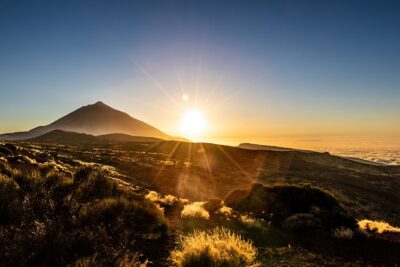
Teide by Night: Sunset & Stargazing with Telescopes Experience
Read our review →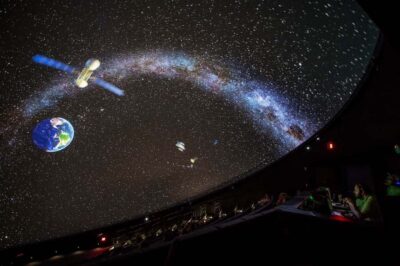
Miami: Frost Museum of Science and Planetarium Entry Ticket
Read our review →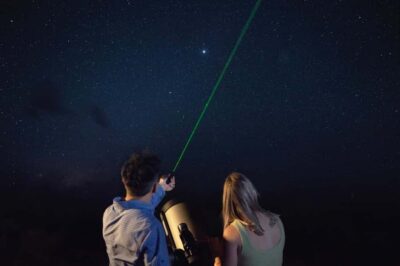
National Park Astronomy Tour with Telescope and Photo
Read our review →
Teide National Park: Guided Large Telescope Stargazing Tour
Read our review →
Levi: Northern Lights Tour and Stargazing by Telescope
Read our review →
Mount John Observatory Stargazing Experience, Tekapo
Read our review →
Houston Museum of Natural Sciences: Planetarium Ticket
Read our review →Browse the lists this tour appears in