
REVIEW · OBSERVATORY & TELESCOPE TOURS
Exploring the Skies with Newtonian Telescope
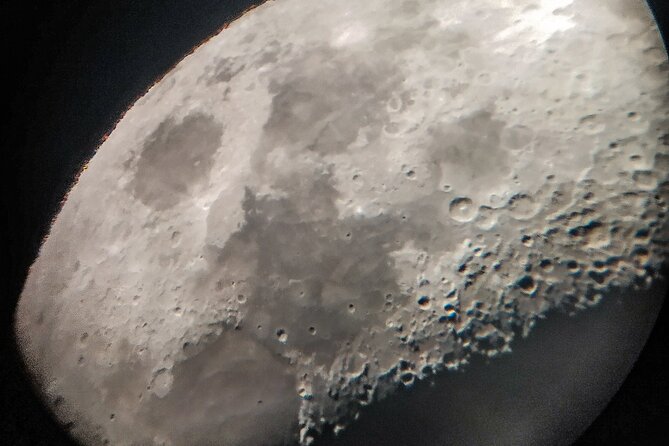
Havelock’s best night view may be above your head. This beginner-friendly stargazing session moves about 500 metres from the main road to a darker spot, where you learn the basics of a Newtonian telescope before looking at planets, stars, and constellations.
I like two things here: the guide-led storytelling makes astronomy easy to follow, and the chance to see Jupiter with four of its moons or Saturn’s rings gives the evening a real sense of discovery. Guides such as Aditya and Harshal keep the discussion friendly rather than technical.
The main drawback is weather. Cloud can stop the session, and the activity may run closer to two hours, with no recliner chairs provided. If you need a fast, tightly timed evening, plan carefully.
Key things to know before you book
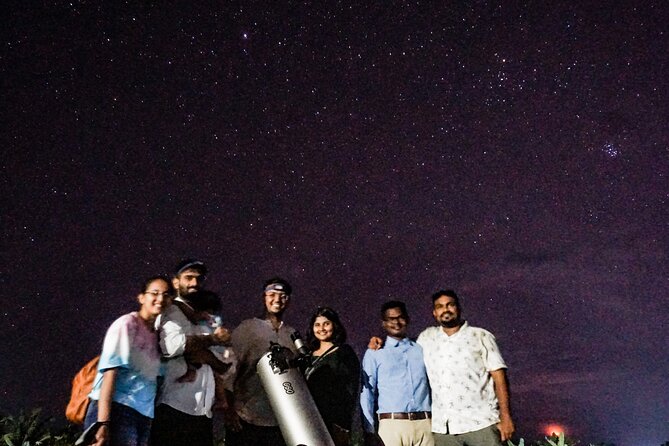
- You walk 500 metres to darker skies: The meeting point is at SeaShell, but the telescope session takes place away from the brighter main street.
- Jupiter and Saturn may be the stars of the night: Past sessions have included Saturn’s rings, Jupiter, and four of Jupiter’s moons.
- The format suits beginners: You start with the telescope, then learn to identify constellations with the naked eye.
- The guides add stories, not just labels: Expect simple explanations about moon phases, navigation, sun signs, and star patterns.
- The group is capped at 15 people: That keeps the session fairly small, though telescope viewing is still shared.
- Clear weather matters: If clouds cancel the activity, you can choose another date or receive a full refund.
Why Havelock’s night sky deserves an evening
Havelock is best known for water, beaches, and forest. After sunset, though, the island offers a different kind of show. Step away from the main road and the artificial light drops. That gives your eyes a better chance to pick out stars and lets the telescope do its work without as much glare.
This is not an observatory visit with a large dome, polished displays, or a formal lecture hall. It is a small outdoor astronomy session. That matters because the setting remains part of the experience. You are standing beneath the actual sky, listening to explanations while the objects above you change with the time of year and the weather.
The session is aimed at people who are curious about the universe but do not already know astronomy. You do not need to recognize constellations before arriving. You also do not need to understand telescope design. The activity begins by explaining the equipment in plain terms, then builds from what you can see with your own eyes.
That approach makes the experience a good change of pace from a schedule full of beach time. It also gives you something to do after dinner without turning the evening into a demanding excursion.
More Observatory and Telescope Tours in the world:
- Teide by Night: Sunset & Stargazing with Telescopes Experience
★ 4.5 · 1,492 reviews - Miami: Frost Museum of Science and Planetarium Entry Ticket
★ 4.5 · 429 reviews - Uluru: National Park Astronomy Tour with Telescope and Photo
★ 4.4 · 357 reviews
Walking from SeaShell to a darker viewing spot
You meet at SeaShell, Havelock No. 02, Swaraj Dweep, Beach, Govind Nagar, Havelock Island. From there, the activity begins at a spot about 500 metres away. The short move is important, not decorative. Less light from streets and buildings means better conditions for stargazing.
The meeting point is also the finishing point, so you return there at the end. The activity runs in the evening, with operating hours listed from 8:00 PM to 10:00 PM every day. The exact viewing time fits within that window.
I would treat the timing as a guide rather than a promise of a precise 90-minute finish. The listed duration is about one hour and 30 minutes, but one session was described as lasting close to two hours. Astronomy conversations can stretch when the sky is clear and the group has questions.
Wear something comfortable for standing outdoors. The information provided does not promise seating, and one practical suggestion was to add recliner chairs for a more comfortable view. If you find long periods of looking upward tiring, this is worth considering before you book.
First lesson: how the Newtonian telescope works
The opening explanation covers the telescope itself. You learn what a Newtonian telescope does and how it gathers and magnifies light. For a beginner, this step makes the rest of the evening easier. You are not simply waiting for the guide to point at something. You gain a basic sense of how the instrument creates the view.
That short introduction also sets sensible expectations. Telescope images are not like sharp, close-up photographs from a space agency. You are looking through an optical instrument at objects many millions of miles away. The reward is the direct connection: the bright point in the eyepiece is a real planet or moon above Havelock, not a picture on a screen.
Guides including Aditya and Harshal have led sessions. Aditya is described as warm and patient, with a talent for keeping explanations light. Harshal is also noted for giving detailed explanations. The experience can vary slightly by guide, but the stated format remains beginner level and discussion-based.
Looking up first, before looking through glass
After the telescope introduction, the session moves to naked-eye observation. This is one of the strongest parts of the format because you learn to use the sky without equipment.
The guide points out constellations and explains how to find patterns among the stars. You may also hear why stars were used in navigation, why the Moon always shows the same face to Earth, and why the familiar set of 12 sun signs does not represent every constellation in the sky.
These details give the session a human side. The stars are not treated as a list of scientific names. You connect them with navigation, stories, calendars, and the way people have tried to make sense of the night for centuries.
The storytelling is basic rather than academic. That is good news if you are new to astronomy. You can ask questions without feeling that you should already know the difference between a planet, a star, and a constellation.
Families should think about the group mix. Children who are fascinated by planets may enjoy the telescope, while a child who loses interest during explanations can make the shared session less smooth. The format works best when everyone is willing to spend time listening as well as looking.
More Stargazing Tours in the world:
- Dubai Red Dunes ATV, Camels, Stargazing & 5* BBQ Al Khayma Camp
★ 5.0 · 21,620 reviews - Sharm El-Sheikh: Ultimate ATV Quad, Stargazing & BBQ Dinner
★ 4.7 · 4,084 reviews - Tenerife: Teide National Park Sunset & Stargazing Tour
★ 4.2 · 3,812 reviews - Tenerife: Sunset and Stargazing at Teide National Park
★ 4.7 · 2,826 reviews
The telescope targets: Jupiter, Saturn, and more
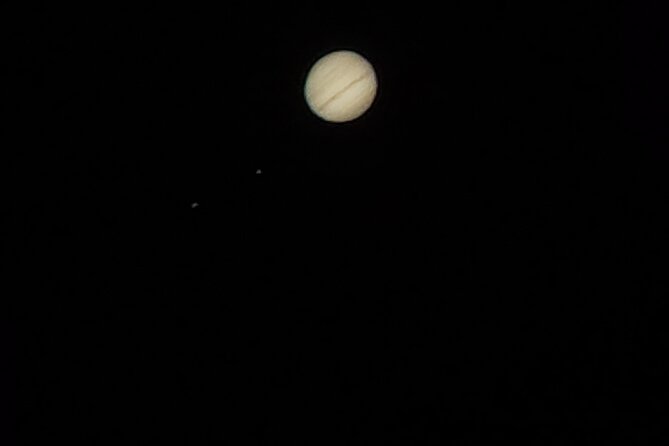
The telescope portion gives the evening its memorable moments. Past viewing has included Jupiter, Saturn, and several other celestial patterns. One session included Jupiter and four of its moons, while another focused on Saturn’s rings.
Seeing Saturn’s rings is the sort of small, powerful moment that makes the price easier to understand. Saturn is not just a bright dot. Through the telescope, its shape becomes more distinct, giving you a direct view of a distant planet that is usually reduced to a picture in a book or on a phone.
Jupiter can be equally rewarding. Seeing four of its moons helps you understand that this is a whole planetary system, not simply a bright object in the sky. The guide can place what you see in context, explaining why the moons appear near the planet and how their arrangement can change.
What you see depends on the date, the hour, and the clouds. No responsible stargazing experience can guarantee a particular planet every night. The best reason to book is the chance to observe the sky with guidance, not a fixed promise of one exact object.
The telescope is shared by the group, which has a maximum of 15 people. That is small enough for a personal activity, but you should still expect pauses while everyone takes a turn. A clear night may also encourage extra questions and extend the session.
Stories that make astronomy easier to remember
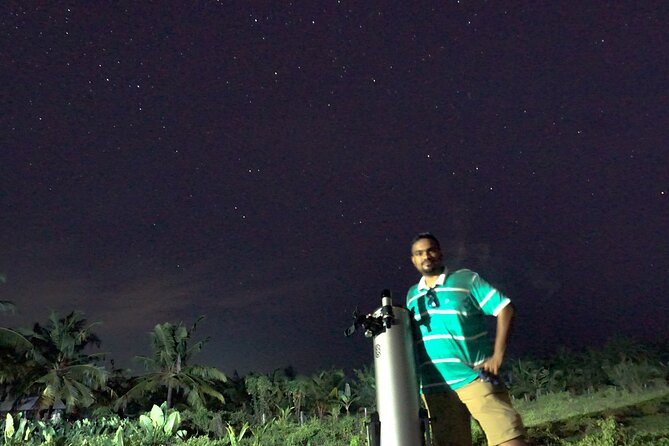
The guide-led discussion is where this activity goes beyond simply setting up a telescope. You may hear why only one side of the Moon is visible from Earth, how sailors and other navigators used stars, and how constellations became connected with cultural stories.
These explanations help you remember what you see. A point of light becomes part of a pattern. A moon becomes evidence of another world orbiting a distant planet. A group of stars becomes a tool once used to find direction.
I like this style for a first astronomy experience because it does not demand specialist vocabulary. The guide can explain the science, then connect it to an everyday question. Why do we see one lunar face? Why are there 12 zodiac signs if the sky contains many more constellations? Those are simple questions with answers that make the night feel more surprising.
The activity is not designed as advanced astronomy training. If you already use star charts, know major constellations, or regularly observe through a telescope, you may find the material familiar. For a newcomer, though, the friendly pace is an advantage.
Price and value at $33.71
At $33.71 per person, this is not the cheapest way to spend an evening in Havelock. You can look at the stars for free from a beach or quiet road. The fee pays for the telescope, the darker viewing location, the guide’s preparation, and the explanations that help you understand what you are seeing.
I think the value is strongest if you are new to astronomy. Without guidance, a clear night can still feel like a scatter of bright dots. Here, you get a planned introduction, a chance to view planets through a telescope, and simple stories that give the sky some order.
The price is harder to justify if you want only a short look through an eyepiece or if you already know the night sky well. It is also less appealing if clouds are likely and your schedule has no spare evening. Since the activity depends on good weather, keep that risk in mind when planning your Havelock days.
The group limit of 15 helps the price feel fair. You are not paying for a private session, but you are also not joining a huge crowd. The experience remains focused on a single guide, one telescope setup, and the shared sky.
Weather is the key condition
Cloud cover is the one factor you cannot control. This activity requires good weather, and poor conditions can lead to cancellation. If that happens, you are offered a different date or a full refund.
That policy is useful, but it does not remove the scheduling problem. If your final night in Havelock is the only night available, a weather cancellation means you may miss the experience. I would book early enough to leave room for another evening, especially if stargazing is high on your list.
The experience is often booked around 13 days ahead, so popular dates may not remain open close to your visit. Confirmation is provided at booking, and the activity can be canceled free of charge up to 24 hours before the start time. Cancellations inside that window are not refunded, and late changes are not accepted.
The weather rule is different from a personal change of plan. If the provider cancels because conditions are poor, you can move the booking or receive a full refund.
Who will enjoy this most
I would choose this for couples, solo visitors, and families with older children who want a quiet activity after the beach. It is also a good pick if you have already done the usual Havelock water activities and want something completely different.
You will get the most from it if you enjoy asking questions and are happy to spend much of the session listening, waiting your turn, and looking upward. Curiosity matters more than prior astronomy experience.
The activity may not suit anyone who dislikes standing outdoors at night, needs a strict end time, or wants guaranteed views of a particular planet. Young children who are not interested in the subject may also find the explanations long.
Service animals are allowed, and the activity is near public transportation. Most people can participate, but the supplied details do not describe specific seating or full accessibility arrangements. If you need those, confirm before booking.
My practical verdict for Havelock
I would book this if you want a thoughtful break from the island’s daytime routine. The combination of a darker viewing spot, a Newtonian telescope, and approachable guides gives you more than a casual look at the stars.
The strongest moments are likely to be seeing Saturn’s rings, spotting Jupiter and its moons, and realizing that the sky can be read without equipment. The main cautions are the weather, shared telescope time, and the possibility of a session closer to two hours.
Choose a night with flexibility, arrive ready for an outdoor session, and do not judge the activity only by how many objects you see. Its real value is learning how to look. For a beginner, that makes this one of Havelock’s more unusual evening activities and a sound choice at $33.71.
FAQ
Where does the stargazing activity meet?
It meets at SeaShell, Havelock No. 02, Swaraj Dweep, Beach, Govind Nagar, Havelock Island, Andaman and Nicobar Islands 744211, India.
Where does the telescope session take place?
The activity begins at a location about 500 metres from the meeting point, where light pollution is lower than on the main street.
Where does the activity finish?
The session ends back at the meeting point at SeaShell.
What time does the activity operate?
It operates Monday through Sunday between 8:00 PM and 10:00 PM.
How long does the activity last?
The stated duration is approximately one hour and 30 minutes. Some sessions may run closer to two hours.
What can I see through the telescope?
Previous sessions have included Saturn’s rings, Jupiter, four of Jupiter’s moons, and other celestial objects.
Is the activity suitable for beginners?
Yes. The session is designed for beginners and includes an explanation of the telescope, naked-eye constellation viewing, telescope observations, and basic storytelling about the sky.
How many people can join?
The activity has a maximum group size of 15 people.
What happens if the weather is poor?
The activity requires good weather. If it is canceled because of poor conditions, you can choose another date or receive a full refund.
Can I cancel my booking?
You can cancel up to 24 hours before the start time for a full refund. Cancellations or changes made less than 24 hours before the start time are not accepted for a refund.
Just added around the world
- ( canyon hurghada & stargazing )★ 4.9 · 16 reviews
- Zermatt: Outdoor fondue “group experience under the stars”★ 4.7 · 3 reviews
- Blue Mountains: Stargazing with a Telescope and Astronomer★ 4.4 · 21 reviews
- Doha: Night Desert Safari With Stargazing and Inland Sea★ 5.0 · 9 reviews
- Villajoyosa: Moonlight kayaking and dinner under the stars★ 5.0 · 5 reviews
- Ubud: Romantic Floating Dinner Under the Stars★ 5.0 · 2 reviews
- Vincentia: Jervis Bay Beach Stargazing with an Expert★ 4.9 · 19 reviews
- Vialattea: Night Snowshoeing under the Stars★ 4.5 · 5 reviews
Observatory & Telescope Tours, compared.

Teide by Night: Sunset & Stargazing with Telescopes Experience
Read our review →
Miami: Frost Museum of Science and Planetarium Entry Ticket
Read our review →
National Park Astronomy Tour with Telescope and Photo
Read our review →
Teide National Park: Guided Large Telescope Stargazing Tour
Read our review →
Levi: Northern Lights Tour and Stargazing by Telescope
Read our review →
Mount John Observatory Stargazing Experience, Tekapo
Read our review →
Houston Museum of Natural Sciences: Planetarium Ticket
Read our review →Browse the lists this tour appears in