
REVIEW · OBSERVATORY & TELESCOPE TOURS
Exclusive visit to the Astronomical Observatory of Gaia
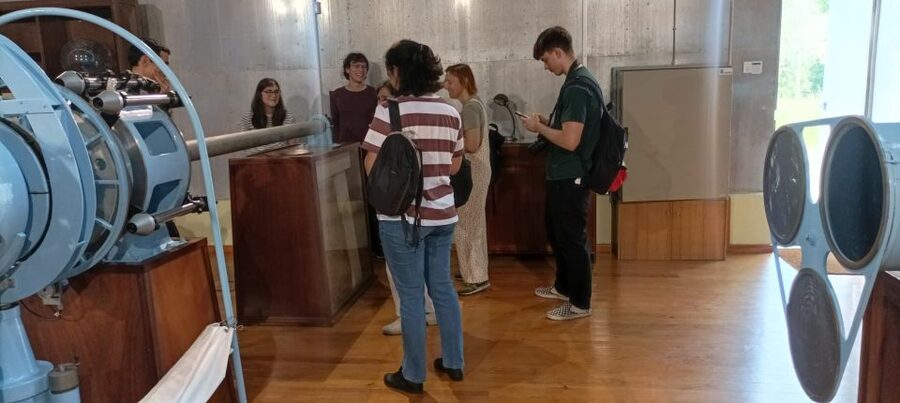
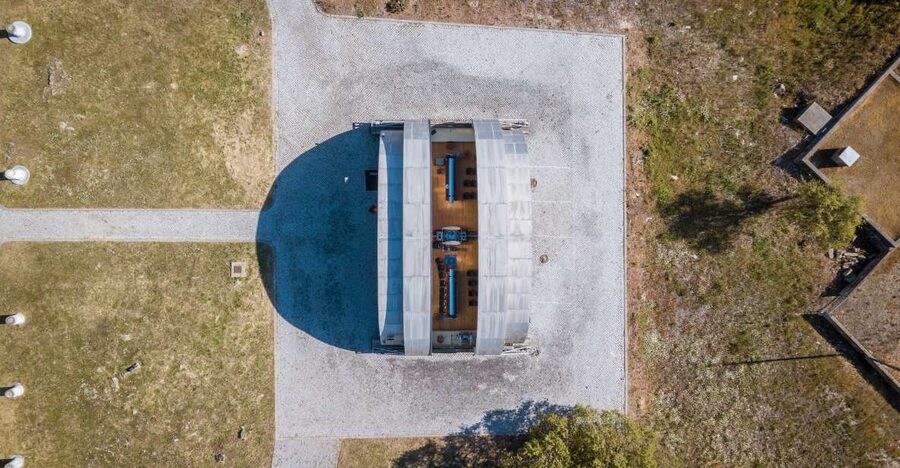
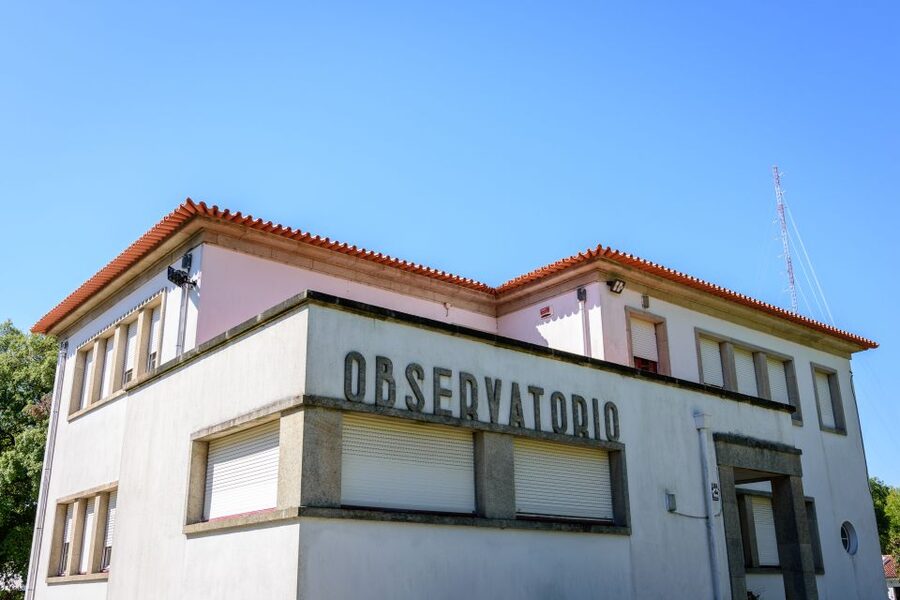
At the top of Monte da Virgem, Gaia hides an observatory with a remarkable trick: its semi-cylindrical roof slides open so stars can pass through the local meridian above a precision instrument. The star of the visit is the Mirror Meridian Circle, one of only three such devices in the world.
I like the rare machinery and the way the tour links astronomy to something ordinary, telling time. I also like the enthusiasm of the English-speaking physics students who lead the visit. The main drawback is clear: this is a daytime history and science tour, not a night of telescope viewing.
Key points
- A roof built to open to the sky: The observatory’s unusual structure was made for careful astronomical observation.
- One of only three instruments of its kind: The Mirror Meridian Circle gives the visit real rarity, not just an old telescope on display.
- Timekeeping is the central theme: You learn how the movement of stars helped people measure time.
- A short, focused visit: Allow about 60 minutes, including two five-minute walks and a 30-minute guided tour.
- English-speaking physics students: Your guides bring a student’s enthusiasm to the science and history.
- Best for visitors aged 12 and over: Flash photography and video recording are not allowed.
Gaia’s unusual observatory on Monte da Virgem
The Astronomical Observatory of Gaia is not the sort of sight you spot from a busy city street. It sits at the top of Monte da Virgem, at postal code 4430-146, in a discreet building with a very particular job.
The observatory was created in 1948 to support astronomy studies at the Faculty of Sciences. Nine years later, it opened its most notable instrument, the Mirror Meridian Circle. That date matters because this was not built as a grand public monument. It was a working place for careful observation, measurement, and teaching.
I like that starting point. You are not simply looking at a beautiful old telescope. You are entering a place designed to answer a practical question: how can people measure the movement of the sky accurately enough to measure time?
The building itself helps answer that question. Its roof slides open, exposing the instruments to the sky. The design is unusual enough to be one of the main reasons to visit, even if you are not an astronomy expert.
More Observatory and Telescope Tours in the world:
- Teide by Night: Sunset & Stargazing with Telescopes Experience
★ 4.5 · 1,492 reviews - Miami: Frost Museum of Science and Planetarium Entry Ticket
★ 4.5 · 429 reviews - Uluru: National Park Astronomy Tour with Telescope and Photo
★ 4.4 · 357 reviews
The five-minute walk sets the pace
The visit begins at 4430-146, followed by a walk of about five minutes to the observatory. That is a short transfer, but it is worth allowing a little extra time so you do not arrive rushed.
The route is part of the experience in a small way. You leave the starting point and approach a working scientific site rather than a major museum with a large entrance hall. The observatory’s discreet setting suits its story. Its importance comes from the equipment inside, not from a flashy exterior.
After the guided visit, you walk for another five minutes. The total activity lasts about one hour, so this is easy to fit into a day in Gaia or Porto. It is also short enough to pair with other plans, provided you leave enough time to reach the meeting point.
No transport ride is included in the stated plan. The listed movements are on foot, with five minutes to the observatory and five minutes back.
The Mirror Meridian Circle is the main event
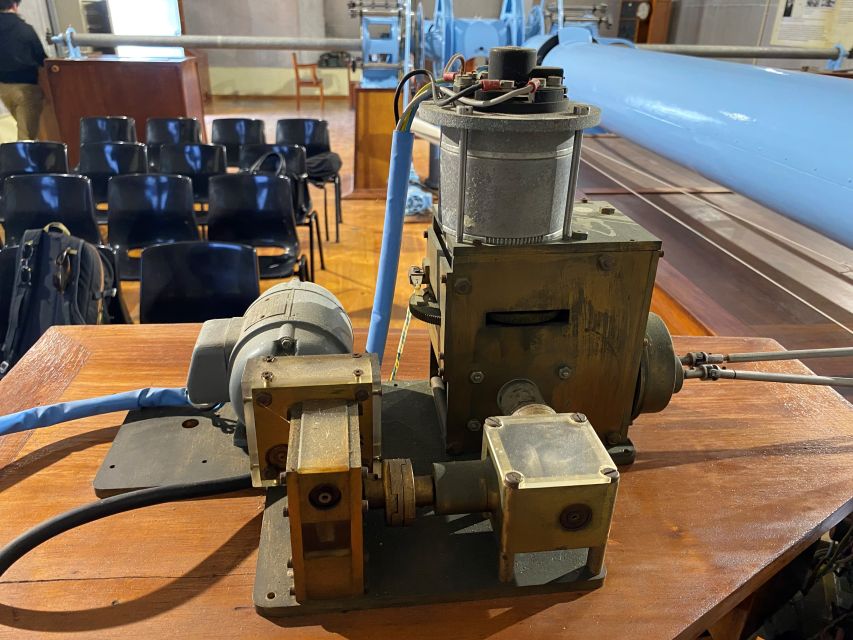
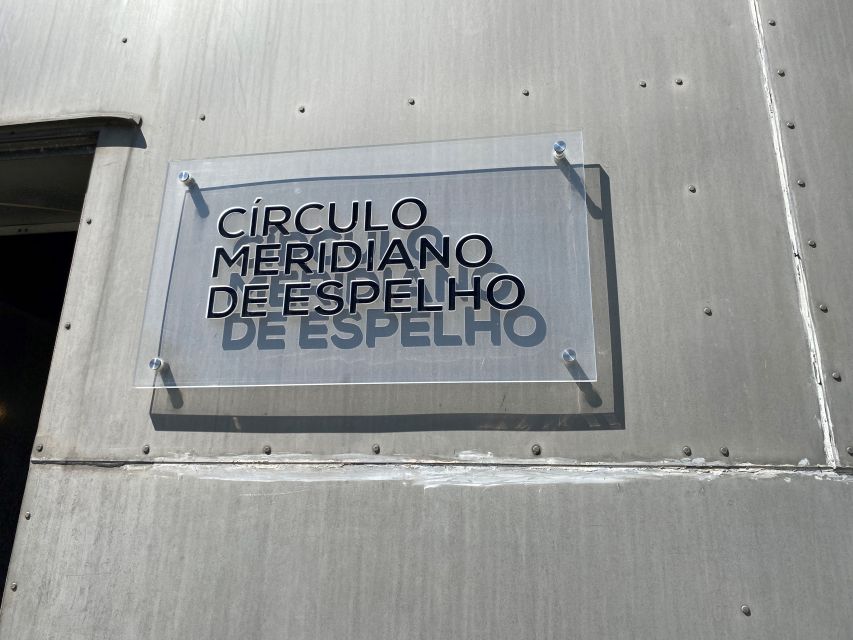
The Mirror Meridian Circle is the reason to book this visit. It is a rare instrument, with only two others in the world. That fact gives the tour a strong focus and keeps it from becoming a general talk about astronomy.
The device was used to observe stars as they crossed the local meridian, an imaginary line running across the sky. By noting the exact moment a star passed that line, astronomers could make precise calculations. Those observations helped establish time and improve the accuracy of astronomical records.
You do not need a technical background to appreciate the instrument. The useful question is simple: before modern systems made timekeeping feel instant, how did people know what time it really was?
The answer involved the regular movement of the heavens. Stars offered a dependable reference, and instruments such as the Meridian Circle turned that movement into measurements. The visit explains the mechanisms that helped people tell time through the ages, connecting an old scientific method to something you use every day.
The two telescopes also raise a practical question: what were they used for when the observatory opened, and what role do they have now? That change from active research equipment to an object of study is an important part of the visit.
A sliding roof made for precise observation
The observatory’s roof is not just an architectural curiosity. It was built to let astronomers observe the sky without the roof blocking the exact part of the heavens they needed to study.
The semi-cylindrical building gives the instrument room to work while protecting it when observations are not taking place. When the roof opens, the telescope can be aligned with the local meridian and used for precise measurements.
That unusual design is likely to be the most memorable visual moment of the tour. You get a better sense of the observatory as a working scientific space because the building and the instrument were made for one another.
There is also a nice contrast here. A modern visitor may expect astronomy to mean giant mirrors, computer screens, and dramatic images of distant galaxies. This place shows a quieter side of the subject, where accuracy came from careful alignment, patient observation, and mechanical skill.
More Stargazing Tours in the world:
- Dubai Red Dunes ATV, Camels, Stargazing & 5* BBQ Al Khayma Camp
★ 5.0 · 21,620 reviews - Sharm El-Sheikh: Ultimate ATV Quad, Stargazing & BBQ Dinner
★ 4.7 · 4,084 reviews - Tenerife: Teide National Park Sunset & Stargazing Tour
★ 4.2 · 3,812 reviews - Tenerife: Sunset and Stargazing at Teide National Park
★ 4.7 · 2,826 reviews
Thirty minutes with an English-speaking physics student
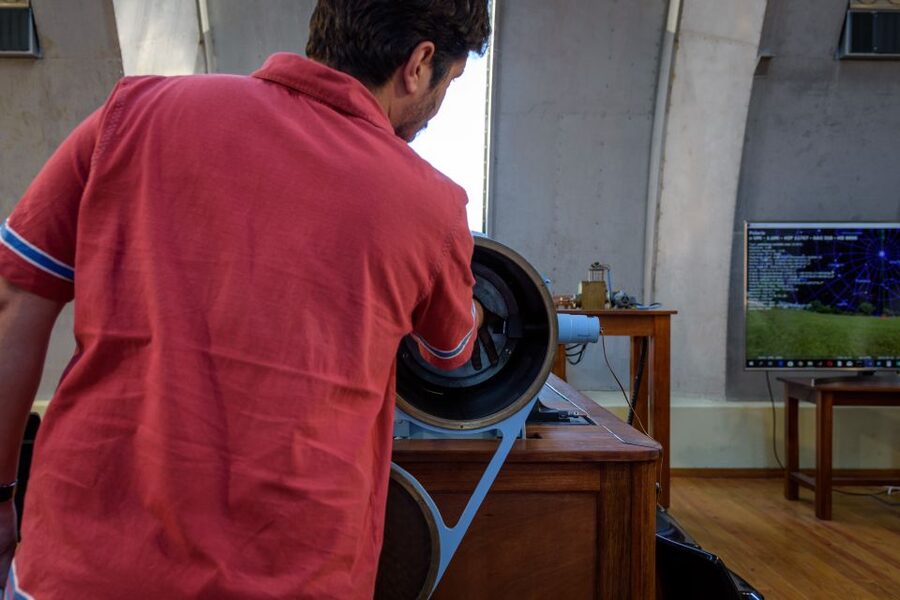
The guided portion lasts about 30 minutes. The remaining time covers the short walks and the movement through the site, making the full activity about an hour.
The guides are physics students from the Faculty of Sciences, and the tour is conducted in English. That is a good match for this subject. You are hearing about a university-linked observatory from people who are still close to the world of physics and astronomy.
The guides’ enthusiasm is one of the strongest parts of the experience. A visit like this could become dry if it focused only on dates and equipment. The student guides help give the science a human scale, explaining why these instruments mattered and how people used them.
The information supplied for this experience does not name the individual guides, so you should not expect a particular person by name. What you can expect is an English-speaking guide with a physics background and a clear focus on the observatory’s instruments and timekeeping.
I would ask questions if the format allows it. For example, you can ask how the Mirror Meridian Circle differs from a standard telescope, what the two telescopes do today, and how astronomers used star passages to establish accurate time.
This is about time as much as astronomy
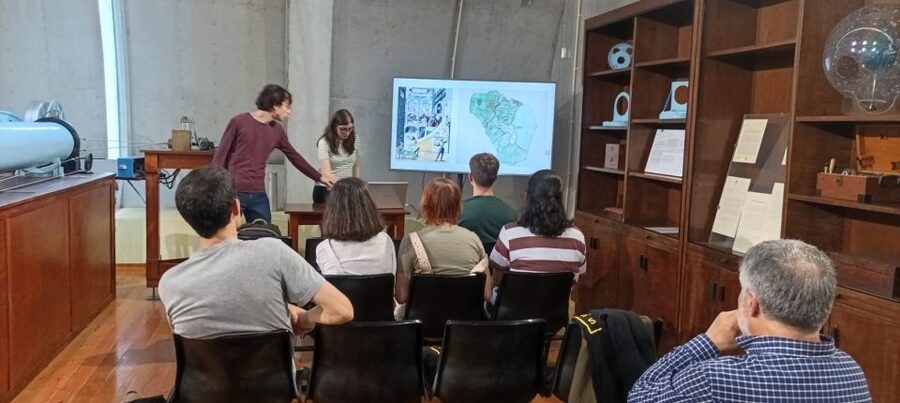
The title may draw you in with stars, but the deeper subject is time. The observatory shows that time has not always been something read from a watch, phone, or clock on a wall.
Astronomers used the sky as a reference. The regular motion of stars could help establish a reliable measure, but only if the observations were precise. That is where the observatory’s instruments mattered.
This gives the tour a wider appeal. You can enjoy it as a small piece of scientific history, but you can also see it as a lesson in how people built systems around the natural world. The visit explains not only what the instruments are, but why anyone needed them.
I find that practical angle more rewarding than a simple list of telescope facts. The instrument becomes easier to understand when you see the problem it was designed to solve.
Do not book this expecting nighttime stargazing
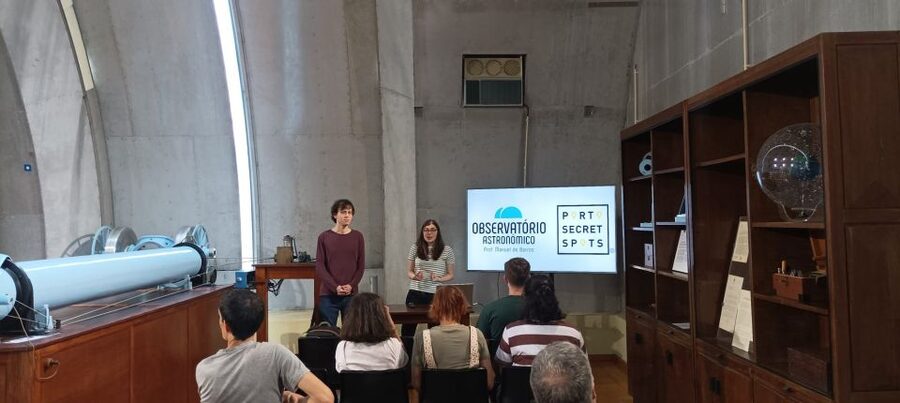
This point deserves plain treatment. The visit does not promise nighttime observations, and the supplied information describes a guided tour of the observatory rather than an evening telescope session.
The two available comments specifically express a wish to use the telescope at night and see the stars. That tells you exactly how to set your expectations. The instruments and roof are fascinating, but you should not book this as a replacement for a stargazing tour.
If you want to understand astronomical equipment, the history of time measurement, and the way a rare observatory works, the visit fits well. If your main goal is to look through a telescope at planets or stars, you may find the experience limited.
That is not a flaw in the subject itself. It is simply the difference between an educational daytime visit and an observing session after dark.
What the $17 price gives you
At $17 per person, the value depends on what you want from a short tour. You receive about an hour at a rare scientific site, an English-speaking live guide, access to the observatory, and an explanation of the Mirror Meridian Circle and its role in measuring time.
The strongest value comes from the instrument’s rarity. Only three Mirror Meridian Circles exist worldwide, so this is not a standard astronomy exhibit that you can easily replace with another stop.
The price is also reasonable for a focused specialist visit, especially if you enjoy science, historic machinery, or unusual university sites. It is less compelling if you want a long tour, a broad collection of exhibits, or actual nighttime viewing.
I would think of the fee as paying for access and interpretation rather than duration. The tour is brief, but the subject is specific and difficult to find elsewhere.
Who will enjoy this one-hour visit
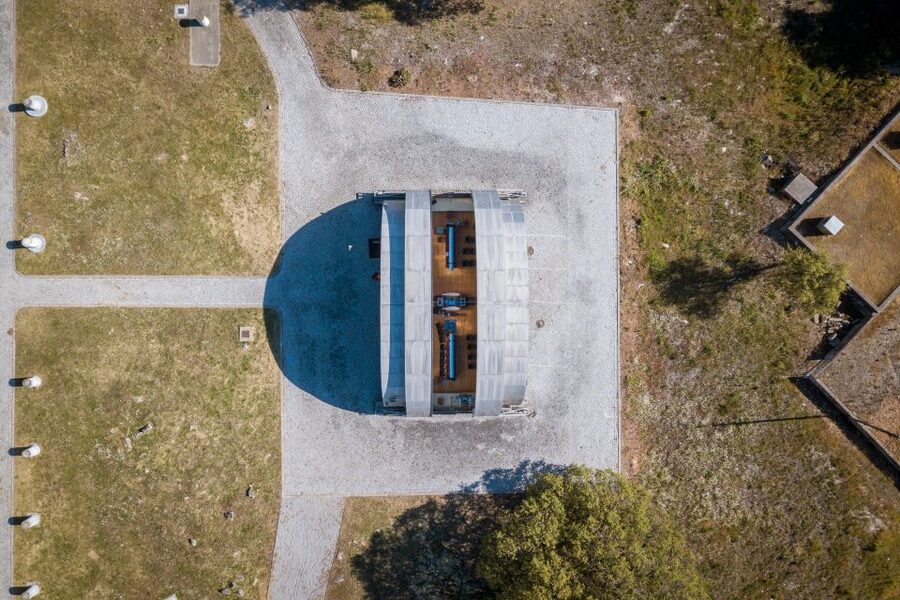
This activity suits adults and children aged 12 or older who like astronomy, physics, engineering, clocks, or the history of scientific ideas. You do not need to be an expert. Curiosity is enough.
It also works well for someone who has already seen Porto’s churches, viewpoints, and riverfront and wants a different kind of stop in the Gaia area. The observatory offers a quieter change of pace and a subject that most city sightseeing does not cover.
You may enjoy it particularly if you like seeing how old equipment solved real problems. The Mirror Meridian Circle is not presented simply as an antique. It helps explain how astronomers recorded star movements and connected those observations to time.
Families should note the age rule. Children under 12 are not suitable for this activity, so this is not a general family outing for younger children.
Simple rules protect the instruments
Flash photography is not allowed, and video recording is also prohibited. Plan to watch and listen rather than document the visit on your phone.
Those rules may feel strict for a short tour, but they suit a scientific instrument that requires care and concentration. You will get more from the visit if you focus on the building, the equipment, and the guide’s explanation.
The format is in English only. If you need another language, this is not the right choice based on the information available.
You can cancel up to 24 hours in advance for a full refund, and you can reserve now and pay later. Those options make it easier to fit the visit into a changing Portugal itinerary without paying immediately.
Should you book the Astronomical Observatory of Gaia?
Book it if you want a rare scientific object, a short English-language tour, and a clear explanation of how astronomy helped people measure time. The sliding roof and the Mirror Meridian Circle give the visit a strong sense of place, while the physics student guides add energy to a subject that could otherwise feel technical.
Skip it if your priority is nighttime stargazing, a long museum visit, or a hands-on telescope session. The tour explains the observatory and its equipment, but it does not promise evening observations.
For the right visitor, $17 is fair. You are paying for a very unusual building, one of only three instruments of its kind, and a compact lesson in the history of time. That is a good hour for anyone who likes looking at the machinery behind familiar ideas.
FAQ
How long does the Astronomical Observatory of Gaia visit last?
The full activity lasts about one hour. This includes a five-minute walk to the observatory, a guided visit of about 30 minutes, and a five-minute walk afterward.
Is the tour conducted in English?
Yes. The visit includes a live English-speaking guide, and the guides are physics students from the Faculty of Sciences.
Will I be able to observe stars through the telescope at night?
Nighttime telescope observations are not included in the stated activity. The visit focuses on the observatory, its instruments, and the history of measuring time.
What is the Mirror Meridian Circle?
It is a rare astronomical instrument used to observe stars as they passed through the local meridian. The instrument is housed in a semi-cylindrical building with a roof that opens to the sky.
Are children allowed on the tour?
The activity is not suitable for children under 12 years old.
Can I take photographs or record video?
Flash photography and video recording are not allowed during the visit.
Just added around the world
- Blue Mountains: Stargazing with a Telescope and Astronomer★ 4.4 · 21 reviews
- ( canyon hurghada & stargazing )★ 4.9 · 16 reviews
- Zermatt: Outdoor fondue “group experience under the stars”★ 4.7 · 3 reviews
- Doha: Night Desert Safari With Stargazing and Inland Sea★ 5.0 · 9 reviews
- Villajoyosa: Moonlight kayaking and dinner under the stars★ 5.0 · 5 reviews
- Vincentia: Jervis Bay Beach Stargazing with an Expert★ 4.9 · 19 reviews
- Vialattea: Night Snowshoeing under the Stars★ 4.5 · 5 reviews
- Ubud: Romantic Floating Dinner Under the Stars★ 5.0 · 2 reviews
Observatory & Telescope Tours, compared.

Teide by Night: Sunset & Stargazing with Telescopes Experience
Read our review →
Miami: Frost Museum of Science and Planetarium Entry Ticket
Read our review →
National Park Astronomy Tour with Telescope and Photo
Read our review →
Teide National Park: Guided Large Telescope Stargazing Tour
Read our review →
Levi: Northern Lights Tour and Stargazing by Telescope
Read our review →
Mount John Observatory Stargazing Experience, Tekapo
Read our review →
Houston Museum of Natural Sciences: Planetarium Ticket
Read our review →Browse the lists this tour appears in