
REVIEW · SAN PEDRO DE ATACAMA
Astronomical Tour with Guide and Pick Up San Pedro de Atacama
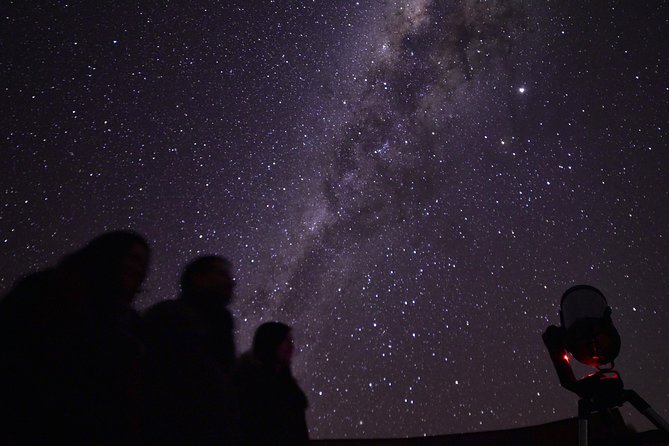
San Pedro de Atacama is famous for its dry, dark skies, and this tour gives you a practical way to see far more than you can with the naked eye. Telescopes reveal planets, star clusters, galaxies, and the Moon, while a laser pointer helps you identify southern constellations that may be unfamiliar if you come from the Northern Hemisphere. I especially like the clear explanations and the chance to finish with a professional photo beneath the stars.
I also like the small comforts: hotel pickup, blankets, chairs, hot drinks, snacks, and a little wine or other alcohol. The main caution is that the experience can slow down when the group is large, and the English explanation may feel brief if most of the group speaks Spanish. Moonlight, clouds, and wind can also change what you see.
Key points at a glance
- Patricio’s astronomy talks: He explains complex ideas in simple terms and takes questions from beginners and serious sky-watchers alike.
- Telescopes with shared viewing: Depending on the evening, you may look at planets, clusters, the Moon, or other objects through computerized and manual telescopes.
- Southern Hemisphere constellations: A laser pointer helps you connect the bright stars above San Pedro with their names and patterns.
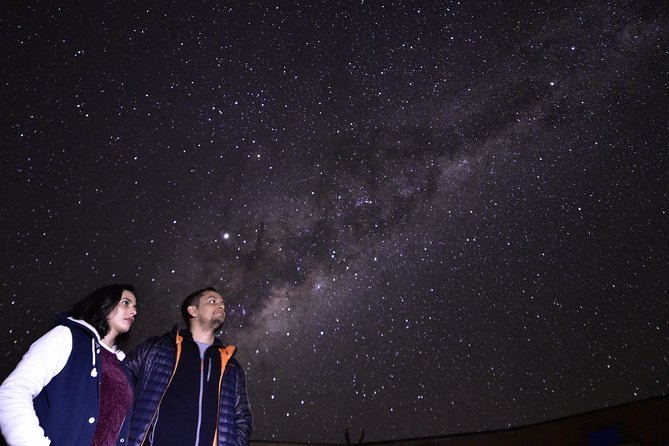
- Professional night-sky photos: Astrophotography is included on moonless nights, with photos also available as a memorable souvenir.
- A short, late-night outing: The session lasts about two and a half hours and begins around 9:30 p.m., including transfers.
- Weather and moon phase matter: A dark, clear night offers the best chance of seeing the Milky Way, while a bright Moon can limit faint objects but improve lunar viewing.
Why Atacama is a fine place to study the sky
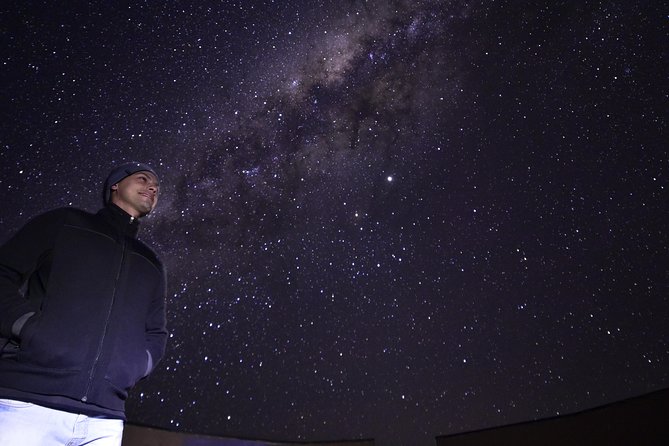
The desert around San Pedro offers the setting this activity needs: darkness and generally dry conditions. Once you leave the town center, artificial light falls away, and the sky becomes the main event rather than a background decoration.
That does not mean every night produces the same show. A bright Moon can wash out the Milky Way and faint galaxies. Clouds, wind, and atmospheric conditions can also limit the view. The operator checks conditions and may cancel when the sky is poor, which is frustrating if you have only one free evening but sensible for an astronomy activity.
The best approach is to treat this as a guided introduction to the night sky, not a guaranteed list of celestial objects. On one night you might see Saturn, Jupiter, star clusters, and the Moon. On another, the main rewards may be the constellations, the explanation of how stars form, and the sight of a dense field of stars through the telescope.
More Guided Trips in San Pedro de Atacama:
- San Pedro de Atacama: Guided Atacama Desert Stargazing Tour
★ 3.9 · 93 reviews - Antofagasta: Astronomical Tour with a Guide
★ 3.7 · 4 reviews - Teide: Guided Sunset & Stargazing Tour by Night with Dinner
★ 4.7 · 1,339 reviews
The 9:30 p.m. pickup and ride outside town
The tour begins at about 9:30 p.m. with pickup from your accommodation in San Pedro de Atacama. The ride to the observation site is short, but hotel pickups can add time, especially when several people are collected from different properties.
This matters because the advertised duration is approximately two hours and 30 minutes, not two and a half hours of continuous telescope viewing. Some of that window is used for transport, organizing the group, setting up photographs, and moving people between telescopes.
Pickup is not offered in the ayllus of Cucuter, Tulor, Coyo, Solor, or Quitor. If you are staying in one of those areas, check the meeting arrangement before paying. The starting point is San Pedro, and the activity is not near Santiago despite occasional confusion caused by broad booking-site categories.
You are taken to an outdoor observation area with chairs and blankets. Night temperatures in the desert can feel sharp, even after a warm afternoon, so the provided blankets are useful rather than decorative. Wear warm layers and closed shoes. You will spend time standing or sitting outside while the equipment is aimed and adjusted.
Looking through the telescopes
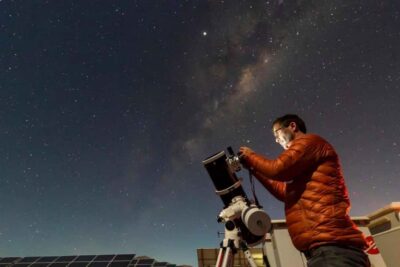
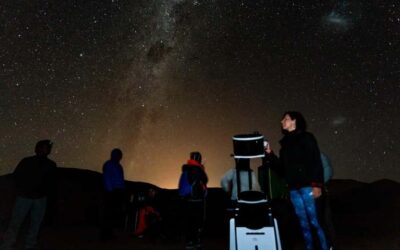
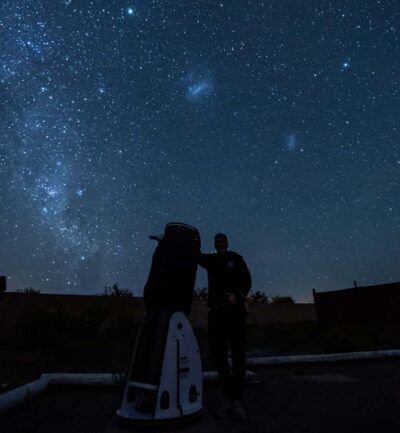
The core of the night is shared telescope viewing. The setup may include computerized and manual instruments, and the exact number can vary. One well-received evening had three telescopes for 12 people, while other outings used two telescopes. The group limit is listed as 16, although a larger holiday-period group was reported, so group size may be the biggest variable in your experience.
The process is simple. The guide selects an object, aims the telescope, explains what you are seeing, and then lets people take turns at the eyepiece. You might see the rings of Saturn, details on the Moon, Jupiter and its bright companions, a cluster of stars, or another object visible during that season.
Do not expect the color and sharpness of a major research observatory or a space telescope. These are practical viewing instruments under an atmosphere, not giant scientific installations. The reward is direct and personal: you are looking at a real object in the sky from a dark desert site, with a guide helping you understand its scale and place in the universe.
The waiting time can be noticeable. If 16 people share two telescopes, each person gets less time at the eyepiece than in a private session. Some visitors found they spent too long waiting and only had a few minutes of personal viewing. Others had three telescopes and enough time to look carefully without feeling rushed.
I would book this with the right expectation: the value comes from the complete evening, including the explanations and naked-eye sky, not only from minutes spent looking through glass. If you want repeated, uninterrupted telescope access, a private or specialist observatory program would be a better fit, if available.
Patricio, Nathan, and the explanations overhead
The strongest part of the experience is the teaching. Patricio is repeatedly singled out for his simple explanations, patience, and ability to answer questions. Nathan has also led sessions in English and helped people set up personal cameras for basic astrophotography.
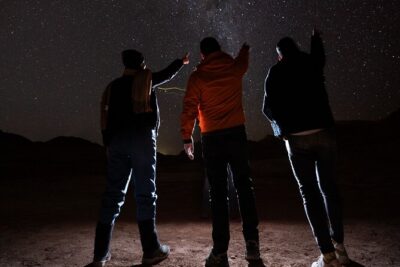
The guide uses an astronomical laser pointer to identify constellations in the Southern Hemisphere. This is especially helpful if you are used to northern skies and cannot recognize the patterns above San Pedro. You are not just shown a bright point through an eyepiece. You are given a map for understanding the whole sky.
The talk may cover the life of stars, galaxies, planets, distances, and the scale of the universe. The best sessions make the numbers feel real without requiring a science background. Families tend to benefit because children can move between a visual experience and a clear story about what they are seeing.
Language deserves careful attention. Some outings are fully in English, while others are mainly in Spanish with a second guide translating. When both guides are speaking near separate telescopes, the English parts can become rushed or hard to follow. If English is important to you, ask about the language of your departure and request the clearest available arrangement.
More Stargazing Tours in San Pedro de Atacama:
- San Pedro de Atacama: Etno-Stargazing Tour with Transfer
★ 4.8 · 629 reviews - San Pedro de Atacama: Stargazing Experience
★ 4.7 · 489 reviews - “Astronomical Adventure in San Pedro de Atacama”
★ 4.5 · 96 reviews - San Pedro de Atacama: Stargazing Experience with Transfer
★ 3.5 · 8 reviews
Moon phase, clouds, and what you may actually see
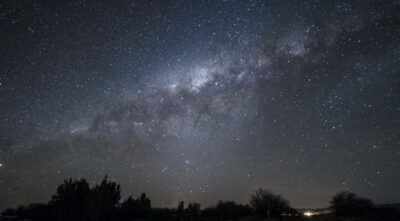
For the Milky Way, choose a night close to the new Moon. A bright Moon spreads light across the sky and makes faint stars, nebulae, and galaxies harder to see. The difference can be dramatic, especially if your main goal is a dense band of stars overhead.
A full Moon is not a wasted night. The lunar surface can be spectacular through a telescope, and guides can often show planets, clusters, and bright stars. One family with a full Moon still enjoyed seeing the Moon and star clusters in detail. The night simply becomes more lunar and less focused on faint objects.
Clouds and wind are less predictable. The operator may cancel because of poor weather, and the activity requires good conditions. If cancellation occurs, you are offered another date or a full refund. Build flexibility into your schedule if astronomy is a priority, and avoid putting this on your final night in San Pedro.
The summer period can bring unsettled conditions, including high-altitude rain patterns, though the operator says decisions are based on weather reports and satellite views rather than a fixed seasonal rule. That is a sensible policy because conditions can change quickly. Still, ask about the forecast before you commit your only evening.
Photos, drinks, and the final half hour
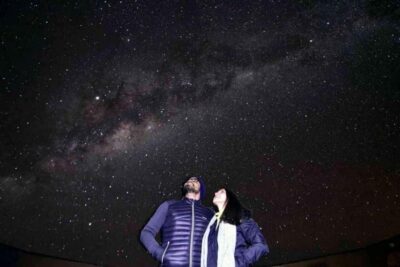
Astrophotography is included without the Moon. The guide sets up a professional camera and takes a portrait with the night sky behind you. This gives you a polished souvenir without requiring you to carry a tripod or understand long-exposure settings.
The photo process can take longer than expected. People gather around the camera, try several poses, and wait their turn. The result can be excellent, but it may reduce telescope time if the group is large. A few images have also been described as blurry, so treat the photo as a welcome extra rather than the sole reason to book.
At the end, you can have coffee, tea, soft drinks, snacks, and alcoholic drinks such as wine or spirits. The warm options are especially useful after sitting outside in the cold. Do not expect a meal. This is a small refreshment service after the observation, not a dinner stop.
The evening can end rather abruptly once photographs are finished. If you want more time to chat or keep looking at the sky, ask the guide how much time remains before the return transfer. The official duration is about two hours and 30 minutes, including the practical parts of the outing.
Is $38 good value?
At about $38 per person, this is a reasonably priced introduction to astronomy. You receive transportation from your accommodation, the guide, telescope access, chairs, blankets, refreshments, and a professional photograph on moonless nights.
The value is strongest for families, couples, and first-time sky-watchers. A child may not want a long technical lecture, but the laser pointer, telescope turns, and sight of the Moon or a planet give the subject a physical spark. Couples may appreciate the photo and the quiet desert setting. Solo visitors can ask questions and learn without needing their own equipment.
The price is less compelling if you are an experienced amateur astronomer with a camera, tripod, and rental car. You may prefer to find a dark spot outside town and spend the whole night taking your own images. You will lose the guide, the telescope, and the structured explanation, but you will gain control over the pace.
The group size decides much of the value. With 10 to 12 people and several telescopes, the price feels fair. With a crowded holiday group, long waits can make the same price feel high. Booking about three weeks ahead is common, so reserve early during busy periods, then confirm the language and pickup details.
Who should book this night out?
I would choose this activity if you want a friendly introduction rather than a technical observatory visit. It works well when you want someone else to handle transport and equipment, and it gives you a simple way to learn the southern sky.
Families should look for a clear, darker Moon night if possible. Couples may want to request or confirm the photo arrangement, especially if the occasion is special. Anyone who cares about English explanations should check that point before booking, since the language setup has varied.
You should reconsider if you dislike waiting your turn, need a fully English presentation, or want hours of personal telescope use. You should also leave room for a cancellation caused by cloud or poor visibility.
Free cancellation is available up to 24 hours before the start time. Changes made inside that period are not accepted, and late cancellations are not refunded. If the operator cancels because of bad weather, you are offered another date or a full refund.
Should you book the Atacama astronomy tour?
Yes, if you want a well-priced, guided look at the Southern Hemisphere sky and understand that conditions and group size shape the night. The best version combines a dark Moon, clear weather, a small group, and a guide such as Patricio or Nathan who can explain what you are seeing in your language.
Book it early in your San Pedro stay, not at the end, so you have room to move the date if clouds interfere. Choose a night near the new Moon for the Milky Way, or accept a brighter Moon if lunar viewing interests you. With those expectations, the telescopes, desert darkness, practical comforts, and strong astronomy teaching make this a worthwhile addition to your Atacama plans.
FAQ
Where does the astronomy tour take place?
The tour starts with pickup in San Pedro de Atacama and travels to an observation site outside the town. Pickup is not offered from the ayllus of Cucuter, Tulor, Coyo, Solor, or Quitor.
What time does the tour begin?
The listed start time is 9:30 p.m. The full activity lasts approximately two hours and 30 minutes.
How many people can join?
The stated maximum is 16 people. The number of telescopes and the group size on a particular night can affect how long you wait for each viewing turn.
Is hotel pickup included?
Yes. Pickup from accommodation is included for locations covered in San Pedro de Atacama. The excluded ayllus do not receive pickup.
Is the tour available in English?
English availability can vary. Some sessions are fully in English, while others use a Spanish-speaking guide with a second guide translating into English. Confirm the language arrangement before booking if this matters to you.
Can I see the Milky Way on the tour?
You have the best chance on a clear night with little or no Moon. A bright Moon can make the Milky Way and faint objects harder to see, although planets, star clusters, and the Moon may still be visible.
What happens if the weather is poor?
The experience requires good weather. If it is canceled because of poor conditions, you are offered a different date or a full refund. You can also cancel for a full refund up to 24 hours before the scheduled start time.
Just added around San Pedro de Atacama
- San Pedro de Atacama: Astronomical Tour★ 3.9 · 3 reviews
- San Pedro de Atacama: Stargazing Tour in the Atacama Desert★ 3.0 · 5 reviews
- San Pedro de Atacama: Stargazing Experience with Transfer★ 3.5 · 8 reviews
- San Pedro de Atacama: Etno-Stargazing Tour with Transfer★ 3.5 · 5 reviews
- San Pedro de Atacama: Astro Tour with big telescopes★ 5.0 · 6 reviews
- SAN PEDRO DE ATACAMA: ASTRONOMICAL TOUR★ 3.6 · 3 reviews
- San Pedro de Atacama: Private Dinner Under the Stars★ 5.0 · 4 reviews
- From San Pedro de Atacama: Astronomy Tour★ 5.0 · 2 reviews
San Pedro de Atacama Stargazing Tours, compared.
“Astronomical Adventure in San Pedro de Atacama”
Read our review →
Browse the lists this tour appears in