
REVIEW · SAN PEDRO DE ATACAMA
San Pedro de Atacama: Stargazing Experience with Transfer
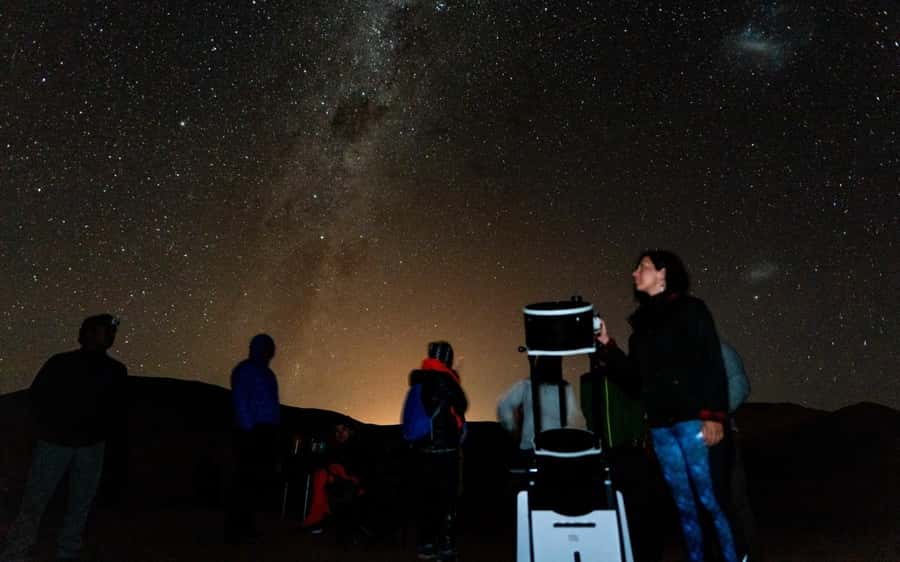
San Pedro de Atacama is one of the world’s great places for looking up. This 150-minute night tour gets you away from town, where the sky opens into a field of stars, planets, clusters, nebulae, and perhaps galaxies, depending on the season. You begin with the naked eye, then move to telescopes with an astronomer as your guide.
I like the quick 15-minute transfer and the mix of astronomy, drinks, snacks, blankets, and star photos. The ancient Greek view of the heavens adds a human touch to what could otherwise be a technical lesson. The main concern is organization: group sizes may be much larger than expected, and some departures have had chaotic transport and limited language separation.
Key points to know
- A short ride leads to a darker observation site, giving you a better view than you can get from central San Pedro.
- The naked-eye session comes first, helping you recognize the sky before looking through a telescope.
- Targets change with the season, so you may see planets, binary stars, clusters, nebulae, or galaxies.
- Drinks and warm snacks are part of the evening, with wine, pisco sour, juice, tea, coffee, and hot chocolate available.
- Astrophotography is included, giving you a starry souvenir rather than only a memory.
- Group size is the biggest question mark, with reports ranging from a pleasant outing to a poorly organized group of about 50 people.
Why San Pedro is made for stargazing
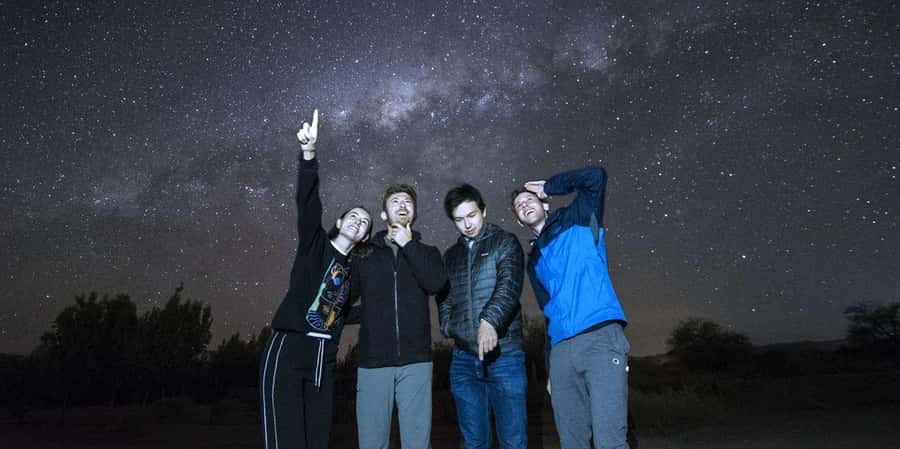
Atacama nights have a special clarity. The town sits in a famously dry part of northern Chile, and the darkness outside the center lets the sky become the main event. You do not need to know the names of stars to enjoy this. A good guide can turn a scatter of bright points into a map.
This tour begins with the naked eye, which is important. Telescopes can show remarkable detail, but you first need a sense of where to look. The guide explains the night sky, then connects it to the way ancient Greeks read patterns into the stars. That link between science, myth, and human curiosity gives the session a broader shape.
You should keep your expectations sensible. This is an introductory stargazing experience, not a private observatory visit or a full astronomy course. The sky itself is the strongest reason to go. The telescope portion adds interest, but the quality of the evening depends heavily on the guide, crowd control, and how much time you get at each instrument.
A few more stargazing nights around San Pedro De Atacama worth a look
- San Pedro de Atacama: Etno-Stargazing Tour with Transfer
★ 4.8 · 629 reviews - San Pedro de Atacama: Etno-Stargazing Tour with Transfer
★ 3.5 · 5 reviews - Antalya / Kemer : Mega Star Party Boat Trip w/ Lunch & Transfer
★ 4.5 · 10 reviews
The 15-minute ride out of town
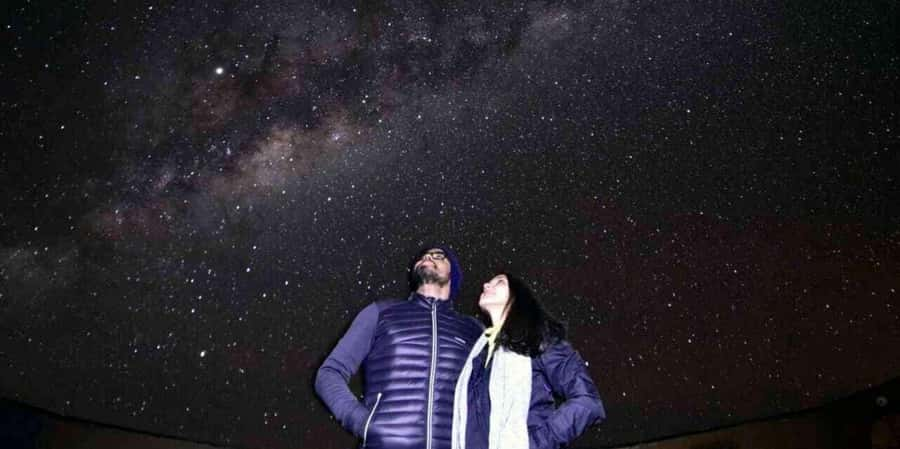
The transfer from central San Pedro takes about 15 minutes. That short journey matters because even a brief trip away from streetlights can change your view of the sky. You are not spending most of the evening in a vehicle, and the return ride is included as part of the outing.
At the observation site, expect a short introduction before the main session begins. The guide explains how the evening will work and helps you get oriented. This is also the moment to settle in, accept a welcome drink, and prepare for a night outdoors.
Transport has not always been the smoothest part of the experience. Some direct feedback describes the vehicle arrangements as poor and the overall organization as chaotic. I would keep this in mind if you need a tightly managed tour with precise timing. Leave a little flexibility around the start and finish rather than planning an important late-night connection immediately afterward.
You must provide a WhatsApp number when booking. That gives the operator a way to communicate pickup or meeting information, so use a number you will actually check while in Chile.
Starting with the naked eye
The first real stage of the tour is simply looking up. You learn to observe the sky without equipment and begin to identify patterns and objects that might otherwise blur together. This can be the most satisfying part for beginners because it gives you a skill you can use on your own later.
The ancient Greek material adds a memorable frame. You hear how people in the ancient world interpreted the night sky and connected star patterns with stories. The point is not only to name constellations. It is to see the sky as both a scientific subject and a record of how people tried to understand their place in the world.
A live guide can adjust the explanation to the group, and the tour is offered in English and Spanish. However, language separation is not guaranteed. One recent account describes groups that were not divided by language, which made the presentation less satisfying for some participants. If clear instruction in one language is important to you, confirm the arrangement before booking.
What the telescopes can show
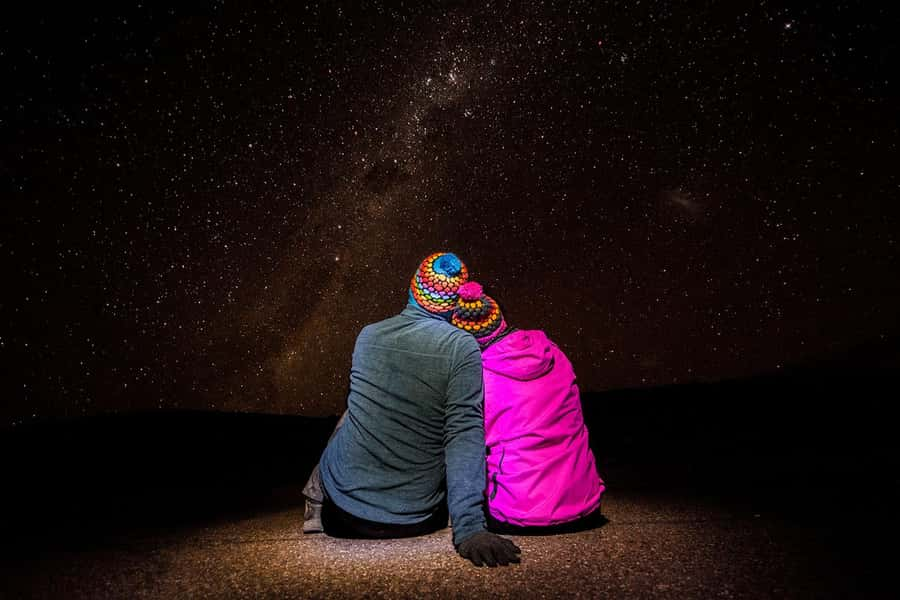
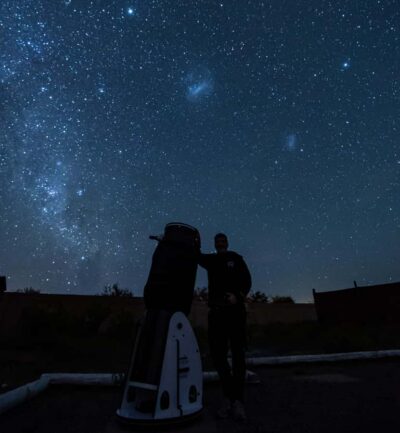
After the naked-eye introduction, the guide explains how to use the telescopes. Depending on the time of year, you may look at planets, individual stars, binary stars, star clusters, nebulae, or galaxies.
That seasonal point is worth understanding. No fixed list of telescope targets can be promised because the sky changes through the year. A planet visible during one visit may not be available during another, while a cluster or nebula may take its place. The guide chooses from what is visible on the night you go.
The telescope experience works best when you treat it as a shared viewing session. You may need to wait your turn, and a large group can mean less time at the eyepiece. Reports of groups around 50 people are a serious warning for anyone expecting an intimate astronomy lesson. At that size, the telescopes may feel more like a brief add-on than the central event.
The equipment may still be worthwhile if the sky is clear and the guide keeps things moving. But the location is doing much of the work. Even critical feedback about the telescopes still recognized that the sky itself was excellent. I would book this for the darkness and the chance to learn, not solely for a long, detailed telescope session.
More Stargazing Tours in San Pedro De Atacama:
- San Pedro de Atacama: Stargazing Experience
★ 4.7 · 489 reviews - Astronomical Tour with Guide and Pick Up San Pedro de Atacama
★ 4.5 · 145 reviews - “Astronomical Adventure in San Pedro de Atacama”
★ 4.5 · 96 reviews - San Pedro de Atacama: Guided Atacama Desert Stargazing Tour
★ 3.9 · 93 reviews
Drinks, blankets, and a warm finish
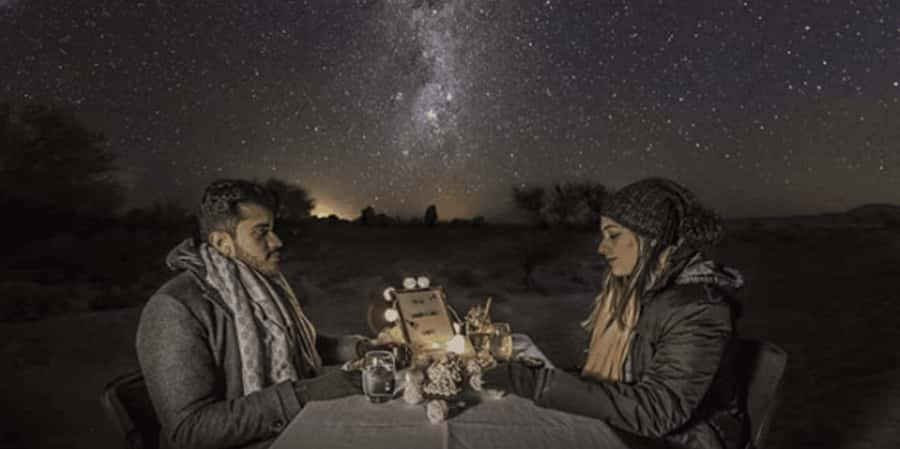
A welcome drink helps make the outdoor setting more comfortable. You can have red wine, a pisco sour, or juice. Later, tea, coffee, and hot chocolate are available, along with snacks.
The refreshments are simple, but they fit the setting. Night air in the desert can feel cold, even when the daytime temperature was high. Blankets are provided, which makes it easier to stay focused on the sky instead of counting the minutes until you can get back into a vehicle.
The snack offering is not a meal. One specific positive note singled out crackers with dip, so think of this as a small bite rather than dinner. Eat beforehand if you know you will need something substantial.
Alcohol deserves a practical note. Wine and pisco sour are offered, but you are outside, possibly in chilly conditions, and returning by vehicle. You can choose juice or a hot drink if that suits you better. No one part of the refreshment service should determine your booking decision, but the drinks and blankets add comfort at a reasonable price.
There is no bathroom included. Plan accordingly before leaving San Pedro. This is one of those small details that matters much more after you arrive at a remote observation point.
Astrophotography as your souvenir
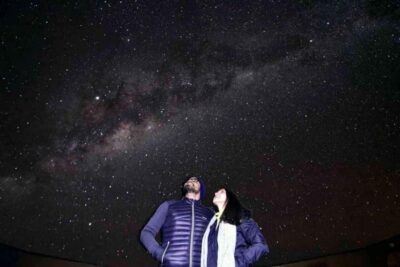
The tour includes astrophotography, so you have a chance to take star photos during the evening. This is useful because ordinary phone cameras often struggle with a dark sky, and a guided setup can produce a more meaningful souvenir than a quick handheld snapshot.
You should not treat this as a professional photography workshop. The available information does not promise individual portraits, advanced camera instruction, or a set number of edited images. The inclusion means that star photography forms part of the experience, but the exact process may depend on conditions, equipment, and the size of the group.
Clouds, visibility, and the moon can affect what appears in a photo. The tour can take you to a good observation site, but it cannot control the sky. If photography is your main reason for going, ask how the images are delivered and how much personal time you receive with the camera setup.
For most people, the value is emotional rather than technical. You look at a sky that feels much larger than the town, then take home an image that helps you remember the night.
The group-size question
This is the most important point to weigh before paying. The published experience is easy to picture as a calm gathering with an astronomer, a few telescopes, warm drinks, and room to stretch out under the stars. In practice, group size may be much larger. One report describes roughly 50 people, with poor organization and a crowded feel.
That does not mean every departure will be the same. Other feedback describes an informative, enjoyable experience with a pleasant guide, and another rates the outing highly as exciting and beautiful. Still, the difference between a small group and a crowd changes nearly everything: how long you wait, how well you hear the explanation, how much time you get with a telescope, and how personal the photography feels.
I would ask about the expected group size before booking. If the answer is vague, assume the experience may be shared with a large crowd. You can still enjoy the sky, but you should pay $44 for a guided public outing, not for private attention.
The language mix matters in the same way. The guide can speak English or Spanish, yet a mixed group may hear both languages together. That may be fine for casual learning, but it can make a technical explanation feel slower or less focused.
Is $44 a fair price?
At $44 per person, the price covers the guide, telescope use, drinks, snacks, blankets, astrophotography, and the return transfer. That is a fair package if the group is manageable and the evening runs well. You are paying for access to a dark site and for someone to help you understand what you are seeing, not simply for transportation into the desert.
The value drops if the group becomes so large that telescope time is brief or the guide cannot be heard. In that case, the sky remains impressive, but you are paying for extras that you may not fully use.
The price also makes this easier to try as a first astronomy activity. You do not need to buy equipment, learn star charts in advance, or arrange your own transport. Beginners receive structure, and experienced sky watchers can enjoy the setting even if the formal explanation covers familiar ideas.
Free cancellation up to 24 hours before the start and the option to reserve without paying immediately make the commitment less rigid. Check the available start time before booking, since the tour runs at night and the exact departure varies.
Who will enjoy this night out
I would recommend it most strongly to first-time stargazers, couples, families with older children, and anyone who wants a gentle evening activity after a day of exploring San Pedro. The ancient Greek stories, naked-eye introduction, and warm drinks keep it accessible even if astronomy is new to you.
It also suits people who want a planned outing without committing to a full-night expedition. The 15-minute transfer is short, and the total duration is two and a half hours.
I would be more cautious if you are a serious amateur astronomer, a night photographer, or someone who dislikes crowds. You may want longer telescope access, more control over your camera, or a quieter setting than this tour can guarantee.
People sensitive to poor organization should also ask direct questions before booking. Confirm the pickup details, likely group size, language arrangement, and bathroom situation. Those answers will tell you more about the likely quality of your night than the list of included drinks.
Practical ways to prepare
Wear warm layers and take the blankets as useful support, not as a replacement for proper clothing. The tour takes place outdoors at night, and the desert can feel cold once you stop moving.
Eat before you go because the included snack is light. Bring only what you need, since a telescope site is easier to manage without a large bag or fragile equipment.
Keep your phone charged if you want to use WhatsApp for communication or take photos. If you hope to make the most of the astrophotography, ask the guide how it works when you arrive rather than waiting until the final minutes.
Most of all, give the sky time. The best part of the evening may not be the telescope target with the biggest name. It may be the quiet pause after the explanation, when you look up and begin to recognize the patterns for yourself.
Should you book this stargazing experience?
Book it if you want an affordable, beginner-friendly night outside San Pedro with an astronomer, basic telescope viewing, drinks, snacks, blankets, transport, and a chance at star photos. The clear sky and the human stories about the stars are the strongest reasons to go.
Book with caution if you need a small group, polished transport, or extended telescope time. Ask about crowd size and language arrangements before committing. At $44, this can be a pleasant and memorable introduction to the Atacama night, but the value depends heavily on how well your particular departure is organized.
FAQ
How long does the stargazing experience last?
The experience lasts 150 minutes, or two and a half hours.
How far is the observation site from San Pedro de Atacama?
The drive from the city center to the observation site takes about 15 minutes.
Is transportation included?
Yes. The experience includes transport to the observation site and the return journey.
What languages are available?
The live guide speaks Spanish and English.
What can I see through the telescopes?
Depending on the time of year, you may see planets, stars, binary stars, star clusters, nebulae, and galaxies.
Are drinks included?
Yes. The included options are red wine, pisco sour, and juice. Tea, coffee, and hot chocolate are also provided.
Is food included?
A snack is included. The available information specifically mentions crackers with dip as one snack item.
Are blankets provided?
Yes. Blankets are included for the outdoor observation session.
Is there a bathroom at the observation site?
No bathroom is included as part of the experience.
Just added around San Pedro De Atacama
- San Pedro de Atacama: Astronomical Tour★ 3.9 · 3 reviews
- San Pedro de Atacama: Stargazing Tour in the Atacama Desert★ 3.0 · 5 reviews
- San Pedro de Atacama: Etno-Stargazing Tour with Transfer★ 3.5 · 5 reviews
- San Pedro de Atacama: Astro Tour with big telescopes★ 5.0 · 6 reviews
- SAN PEDRO DE ATACAMA: ASTRONOMICAL TOUR★ 3.6 · 3 reviews
- San Pedro de Atacama: Private Dinner Under the Stars★ 5.0 · 4 reviews
- From San Pedro de Atacama: Astronomy Tour★ 5.0 · 2 reviews
- Chile: Astronomical Tour in the Atacama Desert★ 4.8 · 4 reviews
San Pedro de Atacama Stargazing Tours, compared.
Astronomical Tour with Guide and Pick Up San Pedro de Atacama
Read our review →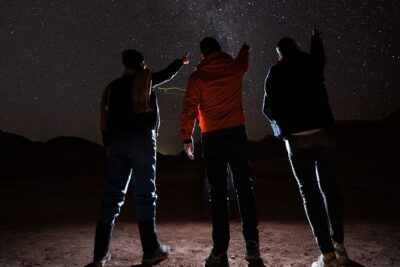
“Astronomical Adventure in San Pedro de Atacama”
Read our review →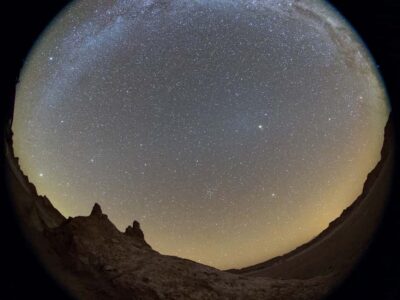
Browse the lists this tour appears in