
REVIEW · SAN PEDRO DE ATACAMA
San Pedro de Atacama: Etno-Stargazing Tour with Transfer
The Atacama night sky is the real star of this 150-minute outing. Far from San Pedro’s lamps, you learn to read the heavens in two ways: through modern astronomy and through the Andean view of animals, rivers, water, seasons, and life after death written into the Milky Way. The Southern Cross feels especially at home here.
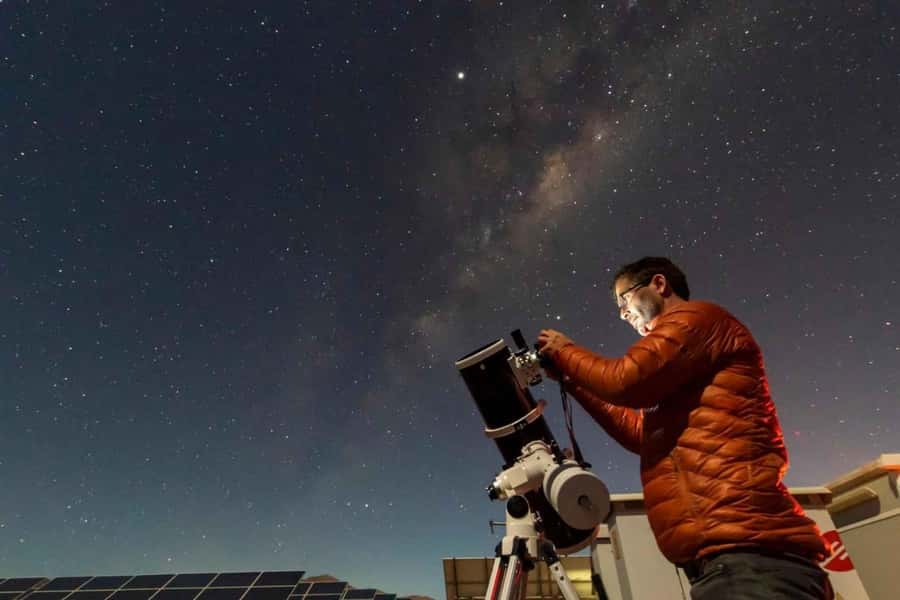
I like the patient telescope time, where the guide helps you focus on planets, star clusters, nebulae, binary stars, or galaxies. I also like the human touches: a warm drink, often a fire and snacks, plus a proper photo beneath the stars. Guides including Felipe, Claudio, Salvador, and Yvonne have earned high praise for clear explanations and an easy way with questions. The main catch is the cold, and moonlight or clouds can reduce what you see.
Key points to know before booking
- Two sky traditions: Learn Western astronomy, then hear how Andean communities interpreted the Milky Way and dark spaces between stars.
- Large telescope viewing: Depending on the season and conditions, you might see Saturn, the Moon, planets, star clusters, nebulae, galaxies, or double stars.
- Strong guides: Felipe, Claudio, Salvador, and other astronomy specialists have led sessions in English and Spanish.
- A cold desert night: Bring serious layers. Ponchos and blankets may be supplied, but the temperature can still bite.
- Moon phase matters: Bright moonlight makes faint stars harder to see and can change the included photo.
- Good value at $41: Transport, guiding, telescope use, drinks, and a digital sky photo are included.
Why the Atacama sky feels different
San Pedro de Atacama sits in one of the world’s best-known regions for stargazing. The desert is dry, dark, and far from major city lights. That does not guarantee perfect conditions every night, but on a clear evening the number of visible stars can be startling.
This experience works because it does more than point a laser at random specks. The first part explains the modern Western view: how stars differ in brightness and color, how planets fit into the solar system, and how the universe formed. You get a framework for what your eyes are seeing.
The second part adds a welcome cultural angle. The guide explains how ancient Andean communities read the Milky Way and the darker spaces within it. Instead of seeing only bright star patterns, they identified animals, waterways, schedules, and signs linked to daily life. This makes the sky feel less like a science diagram and more like a practical guide used by people who depended on careful observation.
The reference to ancient Greece helps connect the lesson with the familiar Western tradition of constellations. Still, the Andean material is the part that gives this evening its local character. You are not simply hearing the same star stories you might hear at a planetarium back home.
A few more stargazing nights around San Pedro De Atacama worth a look
- San Pedro de Atacama: Stargazing Experience with Transfer
★ 3.5 · 8 reviews - San Pedro de Atacama: Etno-Stargazing Tour with Transfer
★ 3.5 · 5 reviews - Antalya / Kemer : Mega Star Party Boat Trip w/ Lunch & Transfer
★ 4.5 · 10 reviews
The short ride out of San Pedro
Pickup is offered from Restaurant Tara on Licancabur 10, with return to Licancabur 10 or Restaurant Tara. The drive out takes about 15 minutes, followed by roughly 25 minutes on the return. Pickup is listed at 7 p.m. from April through August and around 9 to 9:20 p.m. during Chile’s summer time.
The meeting point deserves a little care. One person had trouble finding Restaurant Tara because the name was not familiar to people nearby. I would check the exact location before leaving your accommodation and arrive early. The operator may contact you if the departure time changes, especially when clouds require a later start.
The van ride is brief, which is useful after a full day around the Atacama. You are not committing to a long transfer or an overnight trip. The site is close enough to San Pedro for a comfortable evening, yet far enough out for darker skies.
Pickup does not cover the ayllus, the rural communities around San Pedro. If you are staying outside the town area, confirm how you will reach the meeting point before booking.
A lesson that keeps its feet on the ground
The astronomy talk is the backbone of the experience. A strong guide makes a major difference here, and Felipe is repeatedly praised for explaining difficult ideas in plain English and Spanish. Claudio is also noted for keeping children involved without turning the lesson into a school lecture. Salvador brings an energetic style, while Yvonne has been described as warm and well organized.
Expect plenty of questions and a relaxed pace rather than a formal observatory presentation. Guides use pointers to identify parts of the sky and explain what you are about to see through the telescope. That small step matters. If you know where to look first, the image in the eyepiece becomes easier to understand.
You may discuss star color, brightness, planets, constellations, galaxies, and the formation of the cosmos. The exact objects depend on the season, the time of night, and the conditions. This is not a fixed show with the same targets every evening.
The Andean astronomy section gives the talk a second layer. You learn how dark areas around the Milky Way could form meaningful shapes, rather than treating the bright stars as the only important features. The guide connects these readings with water, animals, rivers, timing, and the world beyond death.
For children and first-time stargazers, this combination works well. For serious amateur astronomers, the experience is more about guided access and interpretation than technical observing.
What you might see through the telescopes
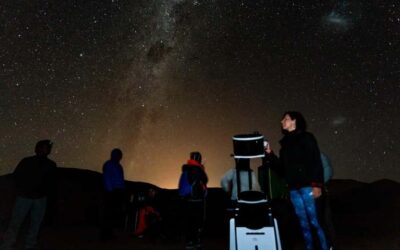
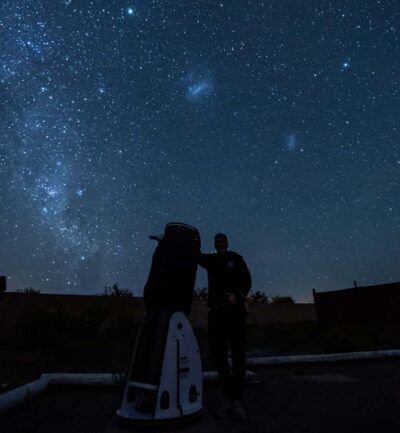
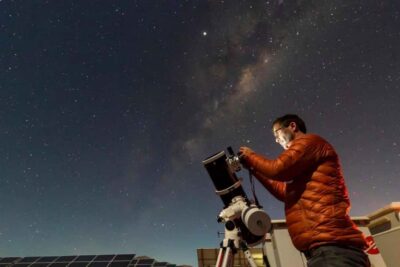
The telescope session is the most hands-on part of the night. You are not simply shown a picture on a screen. You take your turn at the eyepiece while the guide adjusts the focus and explains the object.
Depending on the date, you might see:
- Planets such as Saturn
- The Moon
- Bright stars and binary stars
- Star clusters
- Nebulae
- Galaxies
- Constellations and southern sky markers
Saturn has been a major highlight for several people, and seeing it through a large telescope can turn a distant point into a recognizable world. The Moon can also be impressive, but a bright Moon has a downside: its light washes out fainter stars.
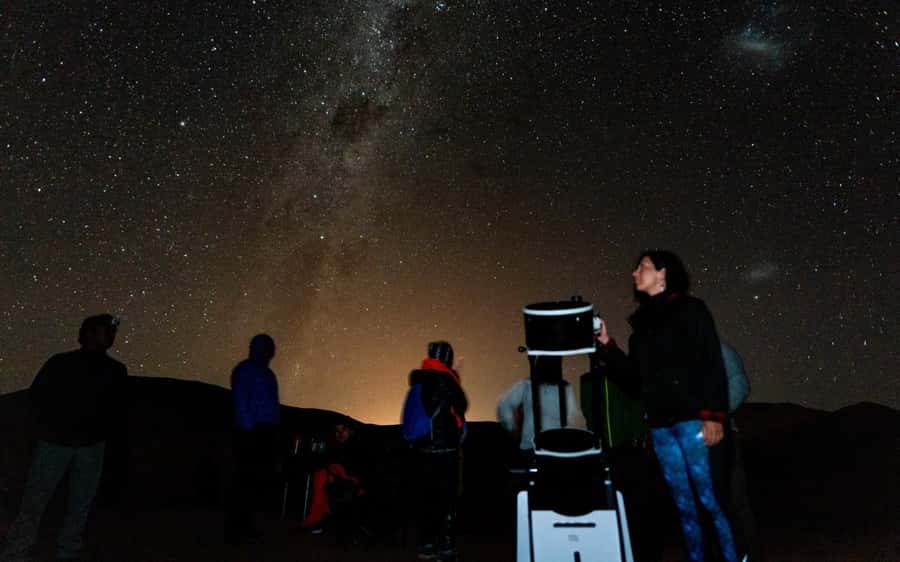
The equipment appears to vary by evening, but sessions have included two large telescopes, which can keep waiting manageable. Guides help focus each view and explain what makes the object interesting. You should still expect some standing and moving between stations, with pauses in the open air.
Do not arrive expecting every object on the list. Clouds, haze, moonlight, season, and timing all shape the program. The guide may adjust the order or move the tour later to protect the viewing conditions.
More Stargazing Tours in San Pedro De Atacama:
- San Pedro de Atacama: Stargazing Experience
★ 4.7 · 489 reviews - Astronomical Tour with Guide and Pick Up San Pedro de Atacama
★ 4.5 · 145 reviews - “Astronomical Adventure in San Pedro de Atacama”
★ 4.5 · 96 reviews - San Pedro de Atacama: Guided Atacama Desert Stargazing Tour
★ 3.9 · 93 reviews
The cold is not a minor detail
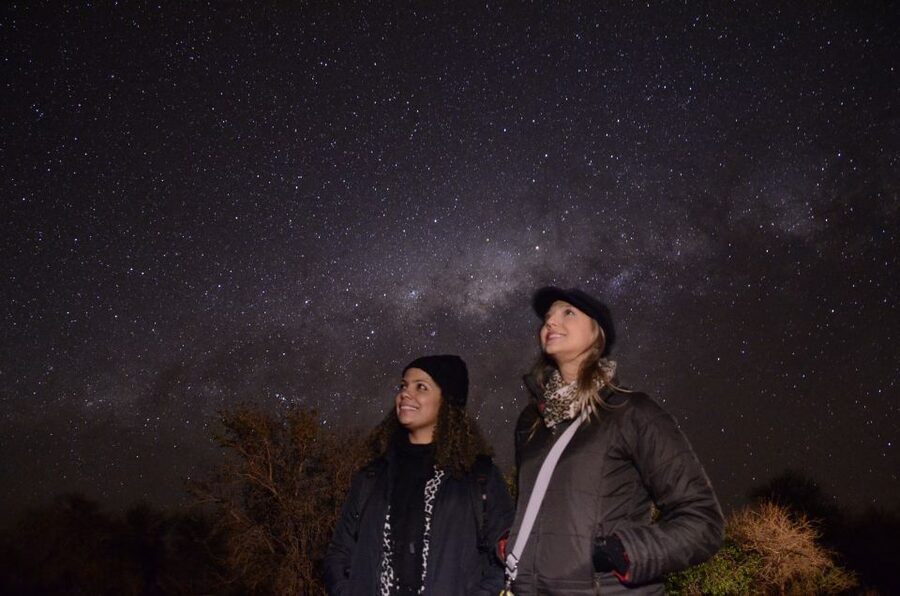
The Atacama can feel pleasant during the day and sharply cold after dark. Several people specifically appreciated the supplied ponchos, blankets, or warm seating, but you should not rely on those alone.
Wear several layers, warm trousers, and closed, comfortable shoes. Bring a hat and gloves if you have them. The official advice also lists comfortable clothing, binoculars, and a passport or identity card. Binoculars are optional, but they can help you scan the sky between telescope turns.
The cold affects the mood more than the astronomy. If you are shivering, it is hard to listen to a long explanation or hold your eye comfortably to an eyepiece. Dress for a winter evening, even if San Pedro felt warm at lunch.
The site is wheelchair accessible according to the activity details. Since the exact ground surface and seating arrangement are not described, it is sensible to confirm any specific mobility needs in advance.
Fire, drinks, and the starry photograph
The evening usually finishes with a more social pause. Coffee, tea, or red wine are included. Recent sessions have also featured a bonfire, snacks, and warm chocolate or other drinks, though the exact refreshments may vary.
This ending is more than decoration. After standing under the sky, you get time to warm up and talk about what you saw. The fire also makes the experience less rigid than a standard lecture. Some sessions have included a carefully arranged snack area and wine served in glasses rather than disposable cups.
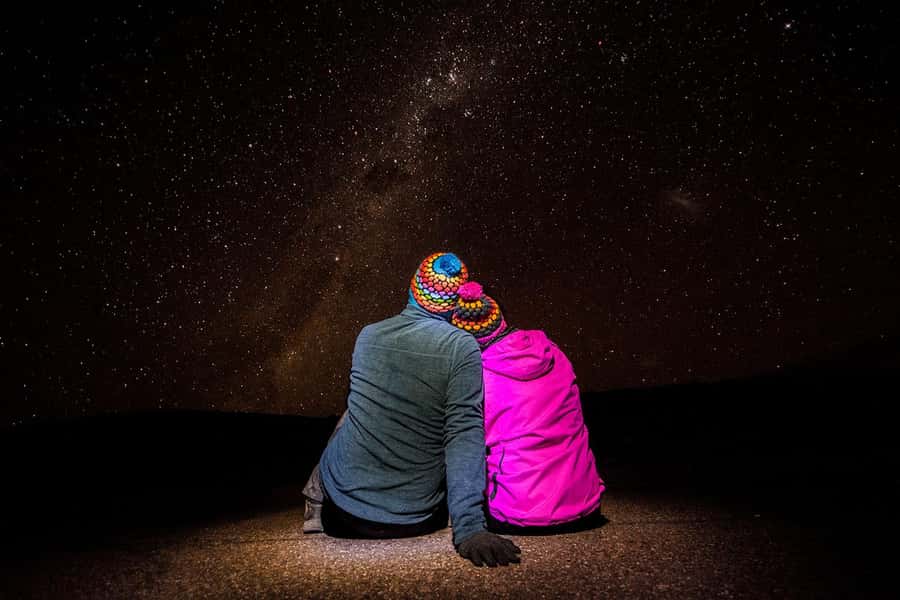
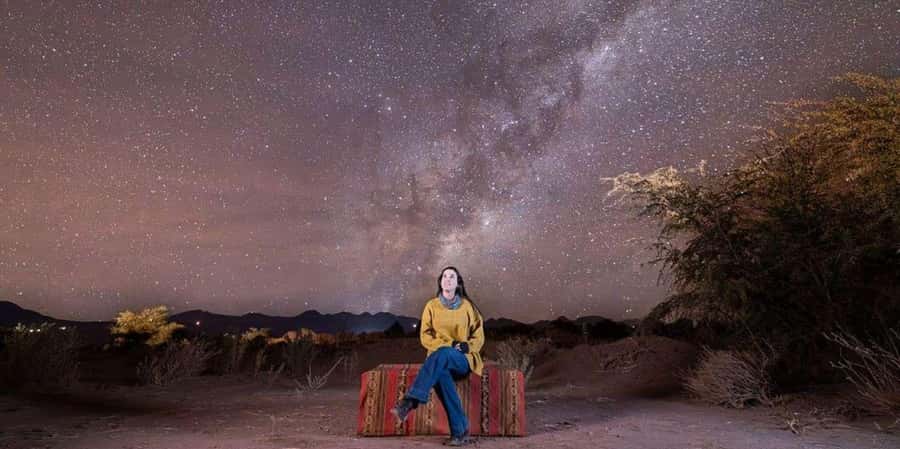
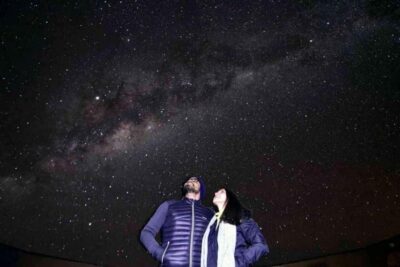
A courtesy photo is sent by email. The setup lets you pose beneath the stars, and guides or photographers may suggest where to stand. Several sessions included individual and group photos, along with images of sky objects taken through the telescope.
There is an important moonlight qualification. During periods of strong moonlight, the included portrait may be taken only through the telescope eyepiece. That can still give you a useful souvenir, but it may not be the dramatic person-under-a-sky image you have in mind.
Do not judge the experience only by the photo. The image is a pleasant extra, while the real value lies in the explanation and the telescope viewing.
Timing, weather, and the value of flexibility
The advertised duration is 150 minutes, though the evening can shift when the sky is not cooperating. If clouds or poor conditions appear, the operator may move the tour to later the same night or the following night. In some cases, cancellation and another option may be offered.
This flexibility is good news for visibility, but it can affect dinner plans, early excursions, and sleep. The tour may start at 11 p.m. when clouds are expected to clear later. If you have a 5 a.m. departure for another Atacama excursion, think carefully before booking the stargazing night.
Check the lunar calendar before choosing your date. A new or thin moon generally gives you a darker sky, while a bright moon can make the scene more dramatic for lunar viewing but reduce faint stars.
The best plan is to keep the evening open and accept that astronomy does not run on a strict bus timetable. If you need certainty, this is less predictable than a museum visit.
Is $41 a fair price?
At $41 per person, I consider this a strong value. The price includes pickup and return within San Pedro, a specialist guide, telescope equipment, drinks, and a digital photo. You are also paying for access to a dark viewing site and for someone to explain what you are seeing.
A cheaper self-guided attempt would not offer the same context or equipment. San Pedro has a remarkable sky, but simply stepping outside town does not tell you which constellations you are seeing or how to use a telescope.
The price becomes even more convincing when the evening includes two telescopes, a fire, snacks, and a careful photo session. Those extras are not described with exactly the same detail for every date, so I would treat them as likely additions rather than the sole reason to book.
This is especially good value for families. One family with children aged 10, 13, and 15 found the guide able to keep different ages interested. The format also suits couples and solo visitors who want an activity that is social without being noisy or crowded.
Who should book this evening?
You should book if you want to understand the Atacama sky rather than just photograph it. It suits first-time stargazers, curious families, couples, and anyone interested in the link between astronomy and Andean culture.
It is also a smart choice if you are nervous about using a telescope. The guide does the focusing and gives you a clear target, so you do not need prior experience.
I would hesitate if you dislike cold evenings, cannot handle a late schedule, or need a fixed start time. Bright moonlight and cloud cover can also limit the show. No astronomy tour can promise Saturn, galaxies, or a perfectly black sky on demand.
English and Spanish are available. The English explanations have been praised for being clear, but if scientific detail is important to you, confirm your preferred language when booking.
FAQ
How long does the stargazing tour last?
The activity lasts 150 minutes, including transport, the guided astronomy session, telescope viewing, and the closing refreshments and photo arrangements.
Where is pickup provided?
Pickup and drop-off are available in San Pedro de Atacama, excluding the ayllus. The listed meeting point is Restaurant Tara on Licancabur 10.
What time does pickup take place?
Pickup is listed at 7 p.m. from April through August. During Chilean summer time, pickup is around 9 to 9:20 p.m. Check the available start time for your date.
Is the tour available in English?
Yes. The live guide service is offered in English and Spanish.
Can children take part?
The provided information does not set a minimum age. A family with children aged 10, 13, and 15 took part successfully, and the guide kept the children engaged.
What might I see through the telescope?
Depending on the season and conditions, you might see planets, stars, binary stars, star clusters, nebulae, galaxies, and the Moon.
Does the tour include drinks?
Yes. Coffee, tea, or red wine are included. Some sessions also include warm chocolate, other drinks, snacks, or a bonfire, but these details may vary.
Is a photo included?
Yes. A courtesy photo with the sky is sent by email. During periods of strong moonlight, the photo may be taken only through the telescope eyepiece.
What should I wear?
Bring warm clothing, several layers, comfortable clothes, and comfortable shoes. The desert becomes very cold at night, so extra layers are strongly advised.
Can the tour time change because of weather?
Yes. Cloud or poor weather can lead to a later start the same night or the following night. If the tour must be canceled, other options may be offered.
Should you book it?
I would book this tour if the night sky is high on your San Pedro list. The combination of clear explanations, Andean sky knowledge, hands-on telescope viewing, and a warm finish gives the evening more substance than a quick look at the stars.
Choose a night with little moonlight, keep your schedule flexible, and dress far more warmly than you think necessary. At $41, it offers a practical and memorable way to meet the southern sky without needing any astronomy experience.
Just added around San Pedro De Atacama
- San Pedro de Atacama: Astronomical Tour★ 3.9 · 3 reviews
- San Pedro de Atacama: Stargazing Tour in the Atacama Desert★ 3.0 · 5 reviews
- San Pedro de Atacama: Stargazing Experience with Transfer★ 3.5 · 8 reviews
- San Pedro de Atacama: Etno-Stargazing Tour with Transfer★ 3.5 · 5 reviews
- San Pedro de Atacama: Astro Tour with big telescopes★ 5.0 · 6 reviews
- SAN PEDRO DE ATACAMA: ASTRONOMICAL TOUR★ 3.6 · 3 reviews
- San Pedro de Atacama: Private Dinner Under the Stars★ 5.0 · 4 reviews
- From San Pedro de Atacama: Astronomy Tour★ 5.0 · 2 reviews
San Pedro de Atacama Stargazing Tours, compared.
Astronomical Tour with Guide and Pick Up San Pedro de Atacama
Read our review →
“Astronomical Adventure in San Pedro de Atacama”
Read our review →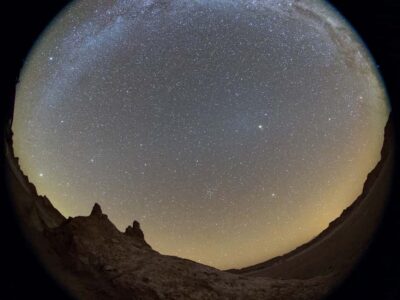
Browse the lists this tour appears in