
REVIEW · INDIA
Niel Island Star Gazing
Neil Island’s best night show does not need a stage. Away from strong lights, the sky fills with stars, and a powerful Dobsonian telescope brings the Moon, planets, nebulae, and distant clusters close enough to study. The red-light headlamps add a quiet sense of adventure as you walk to the viewing site.
I like the mix of science and old sky myths, and I like that guides such as Harshal Patil take time with questions instead of rushing people through the telescope. The main catch is weather: haze or cloud can spoil the view, and the activity may be canceled if conditions are poor.
Key points before you book
- A real dark-sky setting: You walk away from light pollution to a secluded viewing point on Neil Island.
- Dobsonian telescope viewing: Depending on the night, you might see the Moon, Saturn, Jupiter, nebulae, supergiants, or star clusters.
- Guides who explain, not just point: Harshal Patil is noted for clear astronomy explanations, constellation stories, and patient answers.
- Red-light headlamps included: The lamps help you move through the dark without washing out your night vision.
- Small group format: The maximum group size is 15 people, which matters when several people need time at the eyepiece.
- Weather matters: You can receive a new date or full refund if poor conditions force cancellation.
Why Neil Island is a fine place to look up
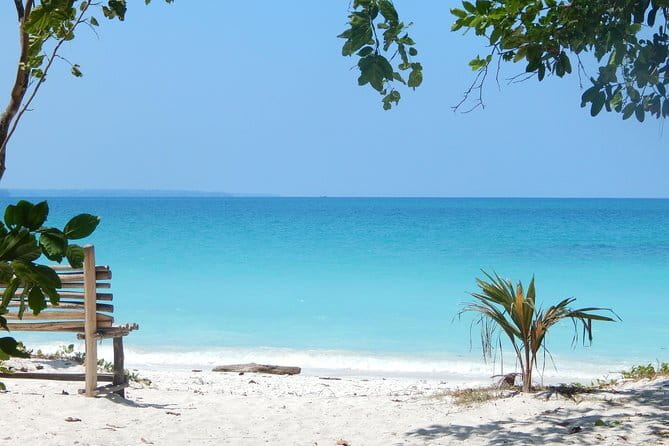
Neil Island, also known as Shaheed Dweep, is a quieter base for this kind of evening activity. The key attraction is not a special building or a polished show. It is the amount of darkness around you.
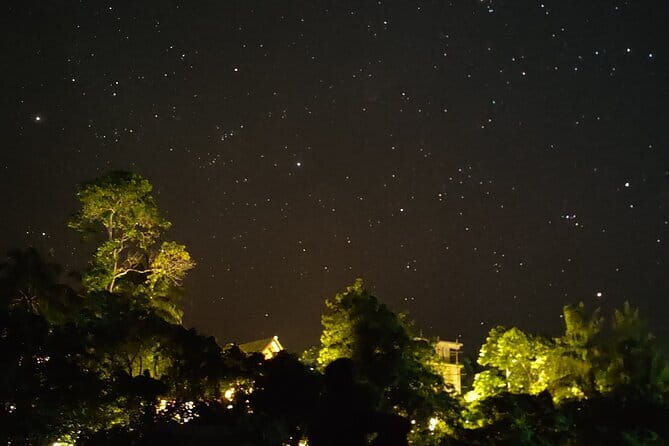
Light pollution hides many of the fainter stars in cities and busy resort areas. On Neil Island, you have a better chance of seeing a fuller sky, especially after walking away from nearby lights. That makes the experience useful even before the telescope is set up. You begin by seeing the sky as a whole, then learn to pick out individual patterns and objects.
I like this order. A telescope can be exciting, but it can also reduce astronomy to a brief look through a small eyepiece. Here, the wider sky comes first. You learn where the constellations sit, hear the stories attached to them, and then look at selected objects through the instrument.
The setting is also part of the experience. You are not simply stepping into a planetarium with a fixed program. The sky changes with the date, season, and weather. One night may favor a bright planet, while another may offer the Moon, a nebula, or an old star cluster.
More Stargazing Tours in the world:
- Dubai Red Dunes ATV, Camels, Stargazing & 5* BBQ Al Khayma Camp
★ 5.0 · 21,620 reviews - Sharm El-Sheikh: Ultimate ATV Quad, Stargazing & BBQ Dinner
★ 4.7 · 4,084 reviews - Tenerife: Teide National Park Sunset & Stargazing Tour
★ 4.2 · 3,812 reviews
Walking under red light to the viewing site
The activity begins at SeaShell Samssara, opposite the helipad near Lakshmanpur Beach. From there, you walk to a secluded spot chosen to reduce the effect of nearby lights.
That short walk is practical, not filler. Ordinary white flashlights would make it harder for your eyes to adjust to the dark. The provided red-light headlamps let you see where you are going while preserving more of your night vision. They also help the group move together without turning the path into a chain of bright beams.
You should expect darkness rather than a brightly lit trail. Wear footwear you can walk in comfortably, and keep your attention on the route. The available details do not specify the distance, surface, or exact terrain, so anyone with mobility concerns should ask the operator before booking.
The meeting point is also the end point. There is no private transportation included, so you need to reach SeaShell Samssara yourself. The activity is near public transportation, and most people can participate, but the walk to the site is an important part of the plan.
Learning the sky before using the telescope
Once you reach the viewing area, the guide introduces the telescope and explains how the session will work. The equipment is described as a Dobsonian telescope, a Newtonian-style design valued for gathering a lot of light without the fuss of a computerized observatory setup.
That matters here because faint celestial objects need light. A good telescope in a dark place can show you more than a quick look at a bright planet from a hotel garden. Still, the exact objects available depend on the sky that night. No responsible guide can promise Saturn, Jupiter, or a particular nebula at every session.
The guide first helps you find prominent constellations. This gives you a useful reference system. Instead of seeing a random scatter of lights, you begin to recognize patterns and understand how people across cultures connected them to myths and stories.
The strongest part of the guiding seems to be this blend of fact and folklore. Harshal Patil, in particular, is described as explaining both the scientific and mythical sides of the constellations and planets. That approach works well for families and first-time sky watchers because it gives you two ways to remember what you see.
You might also use astronomy apps during the session. They can help identify objects, but the guide remains important. An app may tell you the name of a star. A good guide can explain what you are seeing, why it matters, and how it fits into the larger sky.
What you might see through the Dobsonian telescope
The Moon is often the easiest target when it is visible. Through a telescope, its craters and sharp light-and-shadow lines become much more striking than they appear to the naked eye. The Moon is bright, familiar, and easy for children to appreciate.
Saturn is the great prize when its position and timing cooperate. The rings can turn a general astronomy lesson into a lasting memory because you are no longer looking at a bright point. You are seeing a planet with a clear shape.
Jupiter may also appear, and the available comments describe views of both Jupiter and Saturn. Planets are especially good telescope targets because they remain recognizable even for someone who has never used a scope before.
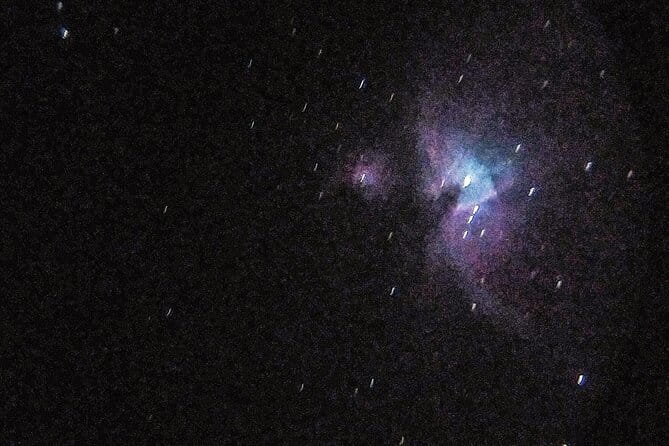
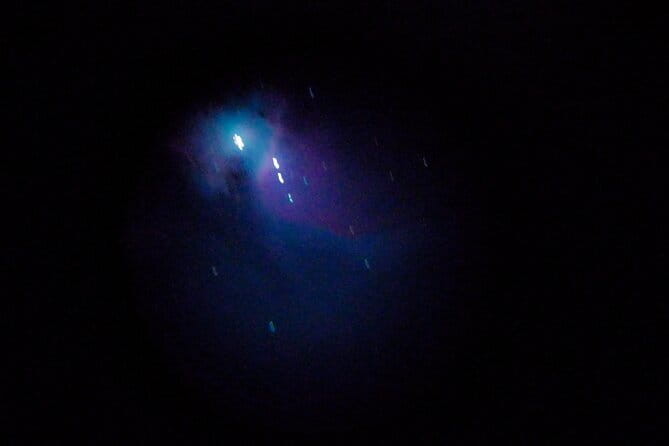
The session can also reach beyond the solar system. You might look at a nebula, a supergiant star, or an ancient star cluster. These objects are usually less obvious than the Moon or planets. The guide’s explanation matters here because the view may be a soft patch of light rather than a colorful image like those seen in space photographs.
That is worth knowing before you go. Telescope views are not always bright, full-color pictures. The reward comes from understanding what that small patch represents, perhaps a cloud of gas where stars form or a distant cluster containing many old stars. The setting and the explanation give the view its meaning.
The sky is not a fixed menu. Conditions, season, time, and the Moon all affect what can be shown. A hazy night may offer little, even with good equipment. One booking had to be called off because the sky was too hazy, which is frustrating but preferable to pretending the view will be worthwhile when it will not.
Same dark skies, a different way to see them:
- Tenerife: Sunset and Stargazing at Teide National Park
★ 4.7 · 2,826 reviews - Teide National Park Sunset & Stargazing with Dinner (Star Safari)
★ 5.0 · 2,601 reviews - Dubai: Sunset Camel Trek, Al Khayma Camp, Stargazing & BBQ
★ 4.8 · 2,588 reviews - Dubai: Overnight Safari, Dinner, Stargazing & Al Khayma Camp
★ 4.8 · 2,562 reviews
A guide-led session rather than a quick photo stop
The session lasts about 90 minutes. That is enough time for a short walk, an introduction to the equipment, constellation guidance, and several telescope targets, though the exact balance will change with the group and the sky.
A group limit of 15 is helpful. Telescope viewing is naturally slow because people take turns at the eyepiece. With a very large group, the experience can become a queue with little time for questions. Fifteen is still large enough that you should expect to share the telescope, but small enough for a guide to keep the discussion moving.
The guide’s role is central. Harshal Patil is singled out for making the session engaging, answering questions patiently, and explaining difficult ideas in a clear way. Another description identifies the session leader as someone with experience in both marine biology and astronomy, an unusual combination that suggests a broad natural-science approach.
You should not book this as a silent, private night under the stars. It is a guided group activity. The benefit is that you can ask questions and learn how to read the sky. The tradeoff is that the pace and telescope time are shared with other people.
Children appear to be a good fit when they can manage a dark walk and listen for a full session. The activity has been described as engaging and informative for kids. Adults who already know basic astronomy may still enjoy it, but beginners are likely to gain the most from the constellation work and guided explanations.
Is $35.99 a fair price?
At $35.99 per person, the price is reasonable if you value instruction and access to proper equipment rather than simply wanting a look at the stars. The fee includes the telescope, red-light headlamp, guide, taxes, and other listed fees. You do not need to arrange or rent those items yourself.
The value depends heavily on the weather. On a clear night, you get a guided walk, a lesson in the night sky, and telescope time in a low-light setting. That is a fair package for someone who would otherwise have no practical way to identify planets, nebulae, or star clusters.
The risk is that cloud or haze can remove much of the main attraction. The operator requires good weather and offers a different date or full refund if poor conditions cancel the session. That policy helps protect the value of your booking, but it does not fix the inconvenience if your island schedule is short.
You also need to arrange your own way to the meeting point. Since private transportation is not included, factor in the cost and time of reaching SeaShell Samssara. The meeting address is SeaShell Samssara, Neil Survey No./Plot No. 26, Lakshmanpur Beach, opposite the helipad.
Practical details for a smooth night
The activity runs from 7:00 PM to 11:00 PM, Monday through Sunday, within the stated operating period. That broad window does not mean every session lasts four hours. The experience itself takes about 90 minutes, with the start time arranged within the evening schedule.
Confirmation is provided when you book, and the activity accepts mobile tickets. It is wise to check the meeting time and weather forecast on the day, especially if you are arranging dinner, a ferry connection, or another evening plan.
You can cancel for a full refund up to 24 hours before the start time. Changes or cancellations made inside that 24-hour window are not accepted for a refund. The cut-off uses local time.
Service animals are allowed. The activity is near public transportation, and most people can participate. The maximum group size is 15. Since the route to the viewing place is not described in detail, contact the operator if you need specific information about surfaces, walking distance, or access.
A few simple choices will improve the experience:
- Bring patience. Telescope viewing works by turns.
- Keep white phone lights off unless the guide asks you to use them.
- Expect the sky to be different from night to night.
- Dress for an outdoor evening, though no specific clothing guidance is supplied.
- If your schedule allows, avoid placing the session on your final night. A weather cancellation is easier to handle when you have another evening free.
Who should book this stargazing experience?

I would recommend it to anyone who wants more than a quick look at a star-filled sky. Families get a clear activity with stories, planets, and visible telescope targets. Couples get a calm evening that feels different from the usual beach routine. Curious beginners get a guide who can explain the basics without assuming prior astronomy knowledge.
It is also a good choice for people who enjoy natural science. The session connects the night sky with observation, mythology, and the changing conditions of the natural world.
You may want to skip it if your trip schedule is rigid, your interest in astronomy is low, or you dislike sharing equipment. The experience depends on darkness and weather, and the exact celestial sights cannot be guaranteed.
Should you book Neil Island Star Gazing?
Book it if you have a free evening on Neil Island and can accept that nature controls the schedule. The best reasons are the dark setting, the red-light walk, the Dobsonian telescope, and the patient teaching style associated with Harshal Patil.
I would treat the $35.99 as payment for a guided introduction to the sky, not a promise of a particular planet. With clear weather, it can turn a simple island night into a memorable lesson in what you are seeing above you. If haze threatens, the refund or alternate-date policy gives you a fair way to protect your money.
FAQ
Where does the Neil Island Star Gazing activity begin?
It begins at SeaShell Samssara, Neil Survey No./Plot No. 26, Lakshmanpur Beach, opposite the helipad, Neil Island, Andaman and Nicobar Islands 744104, India.
Where does the activity end?
The experience ends back at the meeting point at SeaShell Samssara.
How long does the stargazing experience last?
The activity lasts approximately 1 hour and 30 minutes.
What is the price?
The listed price is $35.99 per person.
What does the price include?
It includes the telescope, headlamp, all fees and taxes, and a licensed or certified guide.
Is private transportation included?
No. Private transportation is not included, so you must make your own way to the meeting point.
How many people can join the activity?
The maximum group size is 15 people.
What can I see through the telescope?
Depending on the date and weather, you might see the Moon, Saturn, Jupiter, nebulae, supergiant stars, and star clusters.
What happens if the weather is poor?
The experience requires good weather. If it is canceled because of poor conditions, you will be offered another date or a full refund.
Can I cancel for a full refund?
Yes. You must cancel at least 24 hours before the experience start time to receive a full refund.
Just added around the world
- Blue Mountains: Stargazing with a Telescope and Astronomer★ 4.4 · 21 reviews
- ( canyon hurghada & stargazing )★ 4.9 · 16 reviews
- Zermatt: Outdoor fondue “group experience under the stars”★ 4.7 · 3 reviews
- Doha: Night Desert Safari With Stargazing and Inland Sea★ 5.0 · 9 reviews
- Villajoyosa: Moonlight kayaking and dinner under the stars★ 5.0 · 5 reviews
- Ubud: Romantic Floating Dinner Under the Stars★ 5.0 · 2 reviews
- Vincentia: Jervis Bay Beach Stargazing with an Expert★ 4.9 · 19 reviews
- Vialattea: Night Snowshoeing under the Stars★ 4.5 · 5 reviews
India Stargazing Tours, compared.

Overnight Camel Safari – Sleeping under the Stars
Read our review →
Amazing Overnight experience under the stars in Thar Desert
Read our review →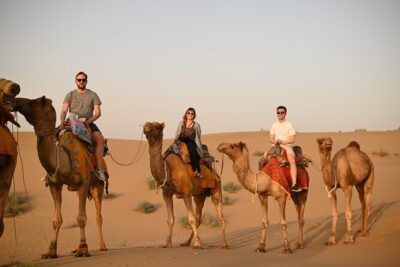
Non-Touristic Overnight Camel Safari with Stargazing Hidden Tour In Desert
Read our review →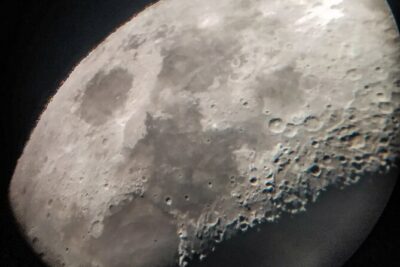

Peep’s Billions of Stars Experience with Desert & Camel Safari
Read our review →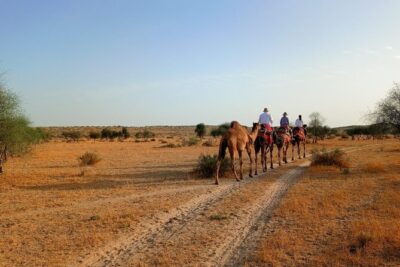
Overnight Camel Safari: Non-Touristic, Sleep Under the Stars!
Read our review →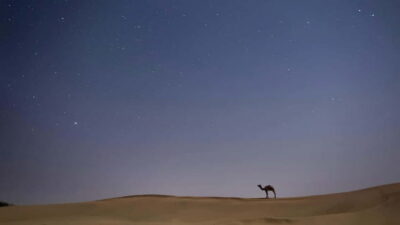
Browse the lists this tour appears in