
REVIEW · AUSTRALIA
Jervis Bay Beach Stargazing Tour with our Astronomer
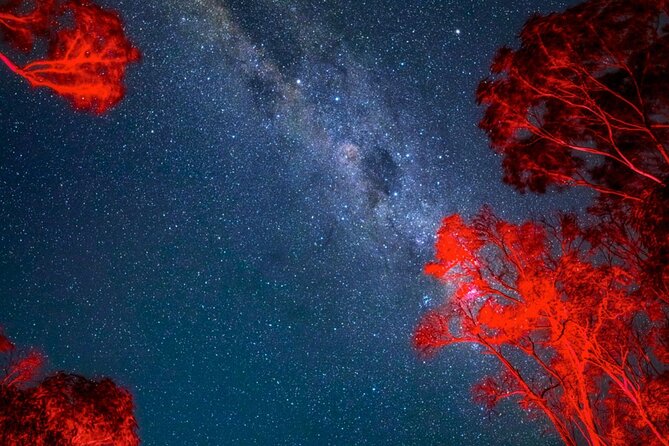
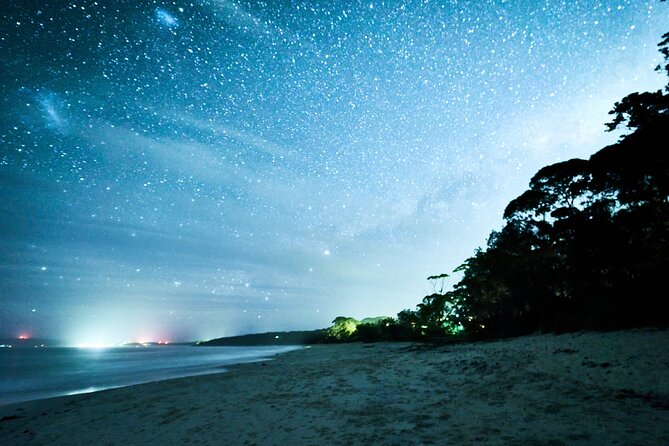
Jervis Bay’s dark coastal skies give this experience its real appeal: you can hear waves at Nelsons Beach while learning to read the Southern Sky, far from the glare of a city. Depending on the season, you may see the Moon, planets, star clusters, the Orion Nebula, the Milky Way, and perhaps a shooting star.
I like the mix of naked-eye astronomy and telescope viewing, since you first learn where to look before the equipment brings distant objects closer. I also like the chance to check the water for bioluminescence, the glowing plankton that can sometimes appear near the shore. The main drawback is simple: clouds can cancel the night, and the experience is non-refundable if you choose to cancel for your own reasons.
Key points at a glance
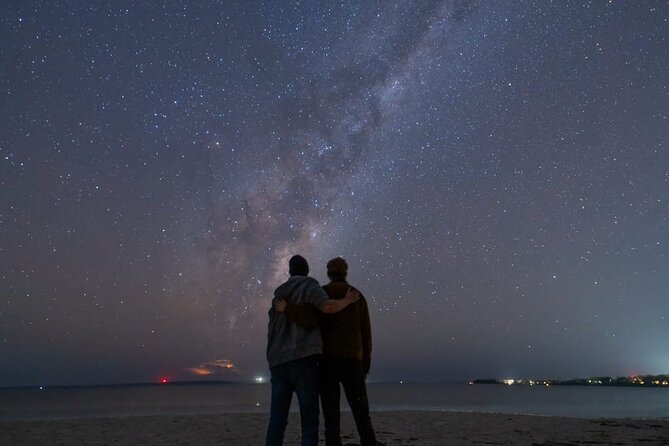
- Beach-based astronomy: Begin with wave sounds and open ocean views at Nelsons Beach rather than in a closed observatory.
- A qualified guide: Dimitri is an astrophysicist with a PhD and more than 10 years of experience, including Sydney Observatory and Mount John Observatory.
- Southern Hemisphere highlights: Learn constellations and navigation under a dark Jervis Bay sky.
- Telescope targets change: The Moon, planets, Orion Nebula, clusters, deep-sky objects, and the Milky Way depend on the date and conditions.
- Possible glowing water: The guide checks for bioluminescence, though it is a natural event and cannot be promised.
- Small-group format: The maximum group size is 20, with an advertised duration of about 90 minutes.
Why Jervis Bay is a fine place to study the stars
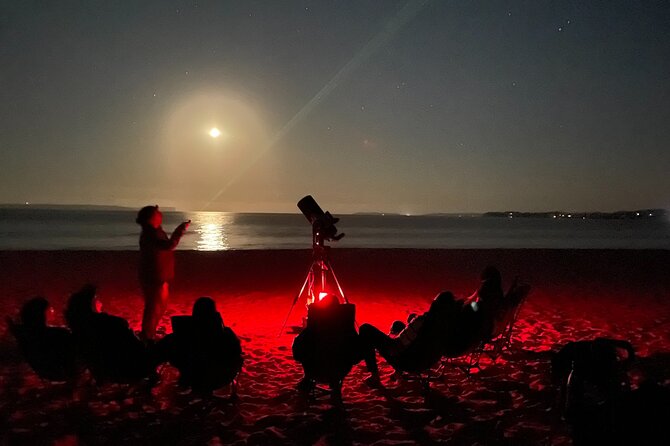
The night sky is the star of this outing, and Jervis Bay gives it room to perform. Away from city lights, the sky is dark enough for the Milky Way and many Southern Hemisphere objects to become easier to spot. You are not just looking through a telescope at a prepared indoor display. You are standing outdoors, listening to the sea, and learning how local conditions affect what you can see.
That setting makes the session different from a standard planetarium visit. A planetarium offers certainty and comfort. Here, the sky decides what appears. That brings a little risk, but also makes a clear night feel more rewarding.
The beach location adds a second layer. The sound of waves gives the opening talk a calm, natural rhythm, and the sunset views provide a pleasant lead-in before full darkness arrives. The meeting point is Moona Moona Beach Playground at 7 Tapalla Avenue in Huskisson, and the tour returns there when the session ends.
More Stargazing Tours in Australia:
- Pinnacles Desert: Sunset BBQ & Stargazing Tour +Sandboarding
★ 4.8 · 1,555 reviews - Pinnacles Desert Sunset Dinner and Stargazing Tour
★ 5.0 · 1,034 reviews - From Perth: Pinnacles Sunset and Stargazing Tour with Dinner
★ 4.7 · 803 reviews
Starting with the sky you can see without equipment
The first section uses a laser to point out stars and constellations. This is an important part of the experience because telescope viewing is much easier when you understand the larger picture first. You learn practical ways to identify stars, basic navigation tips, and stories connected with the constellations.
I prefer this approach to simply lining up for quick views through a telescope. You get a better sense of where an object sits in the sky and why it matters. The guide can also adapt the discussion to questions, which helps if you arrive knowing very little about astronomy.
The Southern Hemisphere offers sights that many northern visitors rarely encounter. The exact stars and constellations depend on the time of year, so the session should feel different across seasons. The content is not a fixed checklist in the same way as a museum exhibit.
One past session moved to 9:30 pm and had a small group, which allowed more time for questions. That kind of schedule change may not suit everyone, especially families with young children, but a smaller group can make the explanation more personal.
Telescope viewing of the Moon, planets, and nebulae
After the naked-eye introduction, you move to the telescope. The equipment is described as state of the art, but the useful point for you is not the label. It is the chance to see celestial objects with more detail than your eyes can provide.
The Moon is often the easiest target when it is visible. Its surface features can turn a familiar object into a more striking sight. Planets may also be available, depending on their position and the date. The guide selects targets based on the night rather than promising the same viewing list every time.
Possible targets include the Orion Nebula, star clusters, deep-sky objects, and the Milky Way. Some of these sights are faint, and conditions matter. Even on a clear night, the view can change with the Moon’s brightness, the season, and the position of each object.
That uncertainty is worth understanding before you book. You are paying for guided access to the night sky, not a guarantee that every named object will appear. If you want a particular planet or nebula, ask the provider about the likely targets for your date.
The session also leaves room for shooting stars. No one can schedule one, of course, so treat this as a pleasant possibility rather than part of the promised program.
A chance to look for bioluminescent water
The possible bioluminescence check is one of the more unusual features. The guide may look toward the sea for glowing plankton, which can make the water appear to sparkle when disturbed.
This is not a guaranteed attraction, and you should not book the tour solely for that reason. Bioluminescence depends on natural conditions. Still, it gives the beach setting another purpose and adds a coastal touch that a standard astronomy night would not have.
One booking included a sighting of luminescent plankton, which shows what can happen when conditions cooperate. For you, the right attitude is to enjoy the search even if the water remains dark. The stars are the main event.
Same dark skies, a different way to see them:
- Pinnacles Sunset Stargazing Dinner Experience Small Group Tour
★ 4.5 · 396 reviews - Uluru: National Park Astronomy Tour with Telescope and Photo
★ 4.4 · 357 reviews - Stargazing with an Astronomer in the Blue Mountains
★ 5.0 · 243 reviews - Perth: Pinnacles Desert Sunset & Stargazing with Dinner
★ 4.3 · 215 reviews
The guide and the tone of the evening
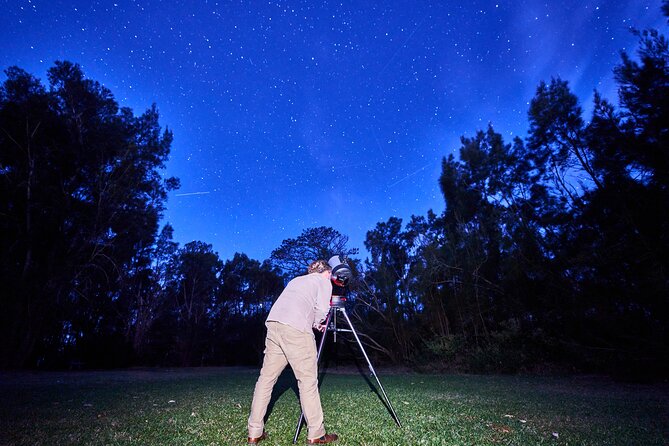
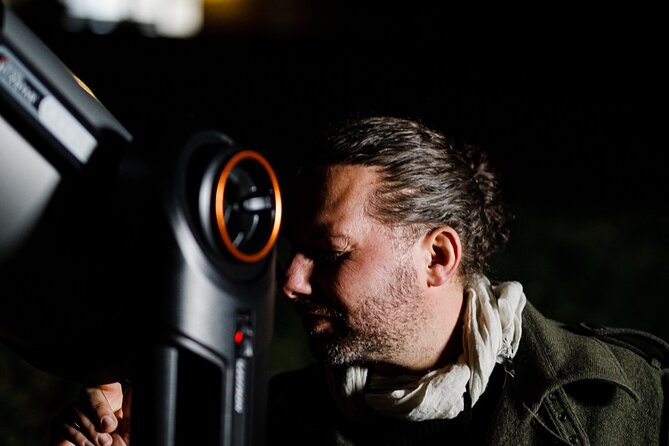
Dimitri is presented as an astrophysicist with a PhD and more than 10 years of experience. His background includes Sydney Observatory, Mount John Observatory in New Zealand, and the Emirates One and Only Wolgan Valley. He is also a TEDx speaker and a cultural astronomer.
That range matters because good stargazing is not only about technical facts. You need someone who can explain unfamiliar ideas in plain language and connect the stars with navigation and storytelling. The format includes time for questions, so you can ask about what you are seeing rather than simply listen to a speech.
A review of one session names Tom as the guide and praises the chance to ask questions in a small group. That suggests the guide for your booking may vary. If meeting a particular guide matters to you, confirm that before paying.
The activity has received Bronze awards at the 2022 and 2023 NSW Tourism Awards. Awards do not guarantee a cloudless sky or a perfect viewing, but they indicate that the operation has earned recognition within the state tourism industry.
Comfort, group size, and timing
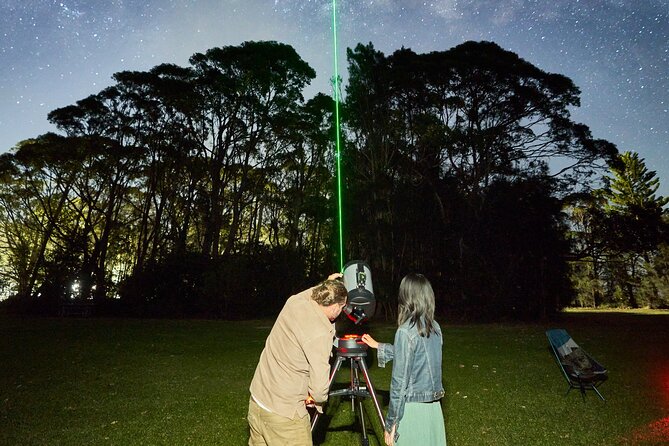
The experience lasts about one hour and 30 minutes. That is long enough for an introduction, telescope viewing, and questions without turning into a full-night commitment. You should still plan for an outdoor evening and dress for the conditions, since the session takes place on a beach.
Chairs and blankets were provided for one booking. They are useful touches, especially when you are looking upward for an extended period, though you should confirm current arrangements if comfort equipment is important to you.
The group maximum is 20 people. That is not a private tour, but it is modest enough for a guide to manage questions and telescope turns. A smaller group can improve the pace, while a full group may mean waiting briefly to look through the telescope.
The activity suits most people, and the provider states that most people can participate. It works for families, couples, groups, locals, and anyone looking for a quieter night out. Young children may enjoy the Moon and the idea of shooting stars, but the late timing and dark beach setting may be tiring for very young ones.
Is $60.97 a fair price?
At $60.97 per person, this sits in the range of a paid evening activity rather than a quick casual stop. I think the value depends on what you want from the night.
You are paying for an astronomer-led explanation, access to a telescope, a planned beach setting, and a structured session that includes both basic and more advanced viewing. The guide’s professional background adds substance, particularly if you have questions or want to understand the Southern Hemisphere sky rather than simply glance at a few bright objects.
The price is less convincing if you expect guaranteed views of a specific planet, a long telescope session, or a private experience. The advertised time is only about 90 minutes, and weather can cancel the whole evening. The natural setting is part of the appeal, but nature also sets the limits.
For a date night or a special family outing, the combination of sea, stars, and a skilled guide makes the cost reasonable. For a casual visitor on a tight budget, you may prefer to enjoy the beach at night independently, though you would miss the telescope and the structured instruction.
Weather is the key risk
Cloud cover is the central practical concern. If the sky is overcast, the experience may be cancelled on the day, with an email notification sent at 3 pm. You may then be offered another date or a refund.
The supplied terms describe a refund for poor weather, with one note stating that a 5 percent merchant and service fee is non-refundable. Another cancellation statement says a full refund is offered when the provider cancels because of poor weather. Since those details do not match perfectly, check the exact refund terms before booking.
If the minimum number of people is not reached, the provider may also cancel and offer another date, another experience, or a full refund. This is normal for a small specialist activity, but it means you should avoid building an inflexible evening around it.
You cannot receive a refund if you cancel for your own reasons or request an amendment. A weather cancellation is treated differently from a personal change of plan, so choose your date carefully.
Who should book this beach stargazing session?
I would choose this experience if you want a guided introduction to astronomy with a strong sense of place. It is especially suitable if you enjoy quiet outdoor activities, want to see Southern Hemisphere objects, or prefer an expert-led night to simply downloading a stargazing app.
Couples get a relaxed date-night setting, and families get a clear activity with plenty of questions and visual highlights. Locals may also find it worthwhile because the guide can reveal features of the Jervis Bay sky that are easy to miss on a normal evening.
It may not suit you if you dislike waiting for weather, need a guaranteed schedule, or want a private telescope session. It is also not the best choice if your main goal is bioluminescence, since glowing water is only a possibility.
Should you book the Jervis Bay Stargazing Tour?
Book it if you can keep your plans flexible and you value explanation as much as the views. The strongest parts are the dark beach setting, the Southern Hemisphere focus, the telescope, and the chance to ask an astronomer direct questions.
Before booking, check the likely session time, current refund wording, and whether a particular guide will lead your date. If the forecast is doubtful, have a backup plan. On a clear night, the mix of waves, stars, telescope targets, and possible glowing water offers a memorable 90 minutes. On a cloudy night, you need to be comfortable with rescheduling or the provider’s stated refund terms.
FAQ
Where does the Jervis Bay Stargazing Tour begin?
It begins at Moona Moona Beach Playground, 7 Tapalla Avenue, Huskisson, New South Wales 2540.
Where does the tour finish?
The activity ends back at the meeting point.
How long does the experience last?
The session lasts approximately one hour and 30 minutes.
Who guides the stargazing session?
Dimitri is the named astronomer. He is an astrophysicist with a PhD and more than 10 years of experience, including work with Sydney Observatory and Mount John Observatory. One session was led by Tom, so the guide may vary by booking.
What might I see through the telescope?
Depending on the season and conditions, you might see the Moon, planets, the Orion Nebula, star clusters, deep-sky objects, and the Milky Way.
Can I see bioluminescence?
The guide checks whether glowing plankton can be seen in the sea, but bioluminescence is a natural event and cannot be guaranteed.
What happens if bad weather cancels the tour?
If poor weather causes cancellation, you will be offered another date or a refund. The supplied terms include a note that a 5 percent merchant and service fee may not be refundable, so check the exact conditions before booking.
Just added around Australia
- Blue Mountains: Stargazing with a Telescope and Astronomer★ 4.4 · 21 reviews
- Vincentia: Jervis Bay Beach Stargazing with an Expert★ 4.9 · 19 reviews
- Gold Coast: Glow Worms, Sunset & Stargazing with BBQ dinner★ 4.5 · 3 reviews
- Kalbarri Stargazing Tour★ 5.0 · 7 reviews
- Kalbarri Skywalk Sundowner and Stargazing Tour★ 5.0 · 6 reviews
- Brisbane: Glow Worms, Sunset, Telescope Stargazing & Dinner★ 4.0 · 15 reviews
- Kalbarri Skywalk: Sundowner and Stargazing Tour★ 4.9 · 9 reviews
- Kalbarri Stargazing Tour★ 5.0 · 2 reviews
Australia Stargazing Tours, compared.
Pinnacles Desert: Sunset BBQ & Stargazing Tour +Sandboarding
Read our review →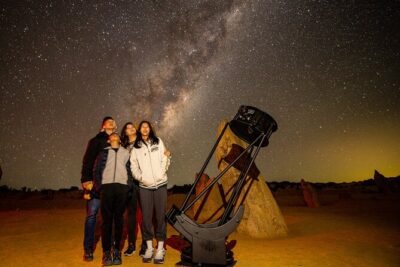
Pinnacles Desert Sunset Dinner and Stargazing Tour
Read our review →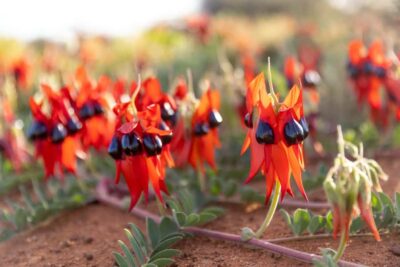
Pinnacles Sunset and Stargazing Tour with Dinner
Read our review →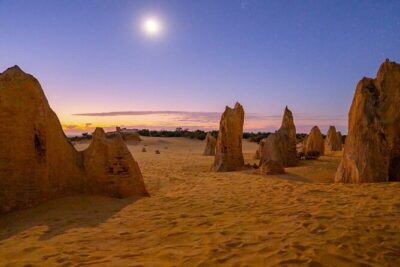
Pinnacles Sunset Stargazing Dinner Experience Small Group Tour
Read our review →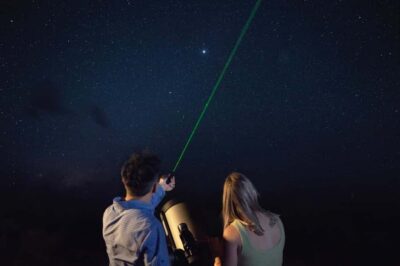
National Park Astronomy Tour with Telescope and Photo
Read our review →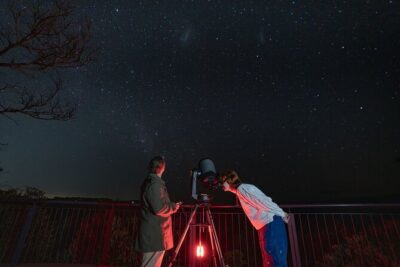
Stargazing with an Astronomer in the Blue Mountains
Read our review →
Pinnacles Desert Sunset & Stargazing with Dinner
Read our review →
Pinnacle Desert Sunset and Night-time Stargazing Tour from Perth
Read our review →Browse the lists this tour appears in