
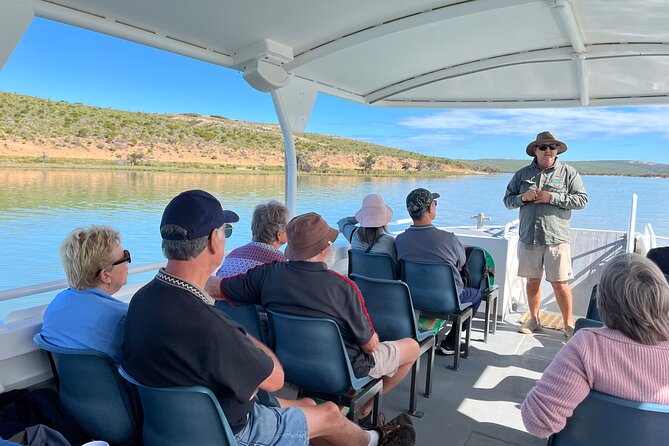
REVIEW · AUSTRALIA
Kalbarri Stargazing Tour
Kalbarri Skywalk becomes a very different place after dark. Instead of red rock and river views, you get a wide, black sky filled with stars, planets, and the Milky Way. Cristina and Guy lead this small-group evening, using a telescope and clear explanations to turn a quiet night into a proper introduction to the southern sky.
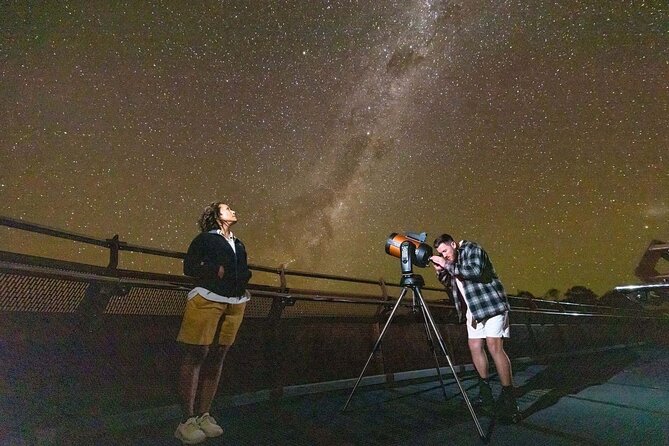
I like two things right away: hotel pickup in an air-conditioned vehicle removes the hassle of driving into the national park at night, and the telescope gives you more than a quick look upward. You’ll also get practical phone photography tips, which means you can try to take home more than a blurry patch of stars.
The main consideration is weather. Clouds can cancel the experience, and the tour does not include dinner. At about three hours, with roughly two hours at the Skywalk, it is best treated as a focused evening activity rather than a full night out.
Key points to know before booking
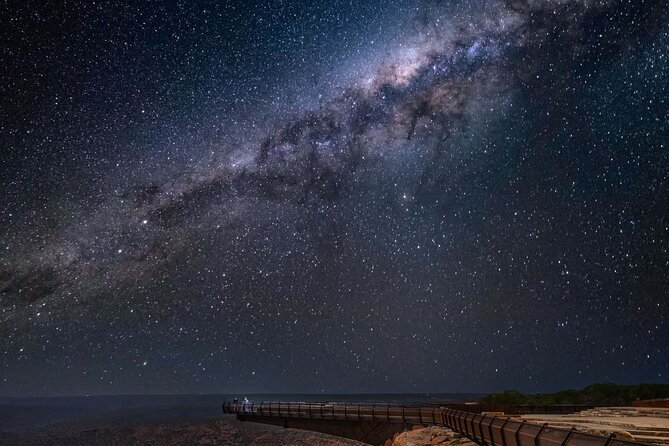
- Kalbarri Skywalk after dark: The popular daytime viewpoint takes on a quieter purpose at night, with open views of the Milky Way and constellations.
- A telescope is included: You can see selected planets and other features with more detail than the naked eye allows.
- Cristina and Guy lead the experience: Their approach includes star explanations, personal help, and phone photography advice.
- Small groups matter: The maximum group size is 10, making it easier to ask questions and use the telescope.
- Pickup and park entry are covered: An air-conditioned vehicle, bottled water, and National Park Pass are included.
- Weather controls the evening: You can receive a full refund or choose another date if poor weather cancels the tour.
Why Kalbarri is a fine place to look at stars
Kalbarri sits far enough from major city lights for the night sky to become the main event. One account of the experience describes a roughly 30-kilometre trip to reach truly dark conditions. That distance is important: star watching depends less on fancy equipment than on getting away from artificial light.
At the Skywalk, you are not simply standing in a car park and pointing at the sky. The site gives you a broad outlook, and the national park setting adds a sense of space to the evening. The exact view will depend on cloud cover and the night’s conditions, but on a clear evening you may see the Milky Way stretching across the sky, along with familiar constellations and planets.
I also like the change in pace. Kalbarri is often visited for its gorges, river scenery, and daytime viewpoints. This tour asks you to stop looking outward for a while and look straight up. It is a simple idea, but the setting makes it feel special.
More Stargazing Tours in Australia:
- Pinnacles Desert: Sunset BBQ & Stargazing Tour +Sandboarding
★ 4.8 · 1,555 reviews - Pinnacles Desert Sunset Dinner and Stargazing Tour
★ 5.0 · 1,034 reviews - From Perth: Pinnacles Sunset and Stargazing Tour with Dinner
★ 4.7 · 803 reviews
From your accommodation to the Skywalk
Pickup is offered from your accommodation, and the drive is handled in an air-conditioned vehicle. That is useful in Kalbarri, where a dark rural road and an unfamiliar national park entrance are not ideal places to navigate after sunset.
The ride also keeps the evening practical. You do not need to arrange a designated driver, find the park entrance in darkness, or work out how to carry a telescope and other equipment. Bottled water is included as well.
The timing can include the transition from daylight into night. One detailed account describes being collected in time for sunset at the Skywalk. This is not presented as a guaranteed part of every departure, so you should confirm the exact timing when booking, but an early arrival can add a scenic opening before the stars appear.
The tour lasts about three hours in total. The main Skywalk stop is listed at approximately two hours, leaving time for pickup, the drive, and returning to your accommodation. That is a useful length for an evening activity: long enough to wait for darkness and use the telescope, but not so long that you are committed to a full late-night outing.
The Skywalk after sunset
The Skywalk is the heart of the experience. In daylight, it is known for its dramatic outlook. At night, the emphasis shifts to the sky above it. Your guide explains the constellations and points out planets and other sights visible without equipment.
This guided part is valuable even if you already know a few stars. A dark sky can be confusing at first. There are more stars than you may be used to seeing, and familiar patterns can be hard to pick out. Having someone identify what you are looking at gives the view some order.
The guide’s explanations also make the night suitable for mixed groups. You do not need to arrive with an astronomy background. If you know only the Southern Cross, or cannot tell a planet from a bright star, you can still follow along. If you already enjoy astronomy, the telescope and the chance to ask questions add more depth than a self-guided look.
Seven published ratings give the experience a perfect five-star average, and the praise focuses on the same points: clear skies, the Milky Way, personal attention, and the setting at the Skywalk. One account also describes a birthday surprise, showing that Cristina and Guy are willing to add a personal touch when the occasion calls for it. That kind of detail is not guaranteed, but it suggests a friendly, hands-on style.
What the telescope adds
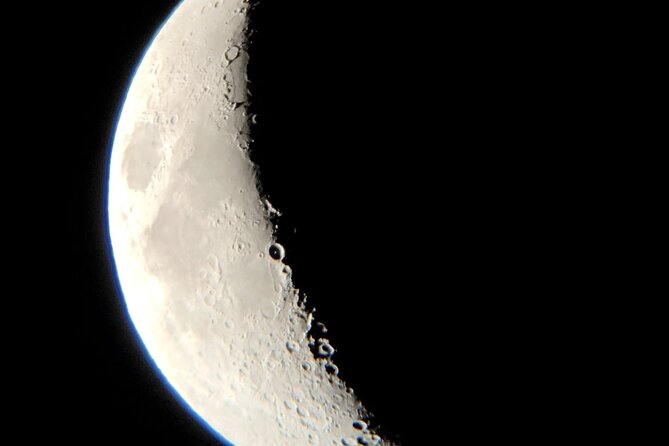
The naked-eye sky is the reason to book this outing, but the telescope changes the experience. It gives you a closer look at selected planets and other objects that would otherwise remain points of light.
You should keep expectations realistic. This is not a professional observatory with a large collection of instruments or a long list of scheduled targets. It is a guided stargazing session built around one telescope, one excellent viewing location, and a small group.
That simplicity is part of its appeal. You can move between the broad view of the Milky Way and the more focused view through the telescope. The guide can explain what you are seeing instead of leaving you to guess.
Group size matters here. The maximum is 10 people, which is small enough for questions and telescope turns to feel manageable. The operator also requires a minimum number of participants, so a booking may be moved or refunded if that minimum is not reached. A solo booking was accommodated in one case, but you should not assume that every departure will run for one person.
Same dark skies, a different way to see them:
- Pinnacles Sunset Stargazing Dinner Experience Small Group Tour
★ 4.5 · 396 reviews - Uluru: National Park Astronomy Tour with Telescope and Photo
★ 4.4 · 357 reviews - Stargazing with an Astronomer in the Blue Mountains
★ 5.0 · 243 reviews - Perth: Pinnacles Desert Sunset & Stargazing with Dinner
★ 4.3 · 215 reviews
Phone photography without special gear
The photography advice is one of the most useful details in this tour. Night-sky photography can be frustrating, especially with a phone. A bright screen, a shaky hand, or the wrong camera setting can turn an impressive sky into a black rectangle.
Your guide offers tips for taking better photos on your phone and for capturing the Milky Way. The guidance will not turn a basic phone into a professional camera, but it can help you understand what your device can do and how to hold or position it.
Bring your phone charged. The provided information does not promise tripods, camera equipment, or professional photographs, so plan to use your own device. The most satisfying part may still be seeing the sky directly, but the advice gives you a better chance of keeping a recognizable image.
The telescope and phone guidance also work well together. You can learn to photograph the wider sky while using the telescope for closer viewing. That gives the evening two distinct parts instead of one long explanation about constellations.
The value at $106.87
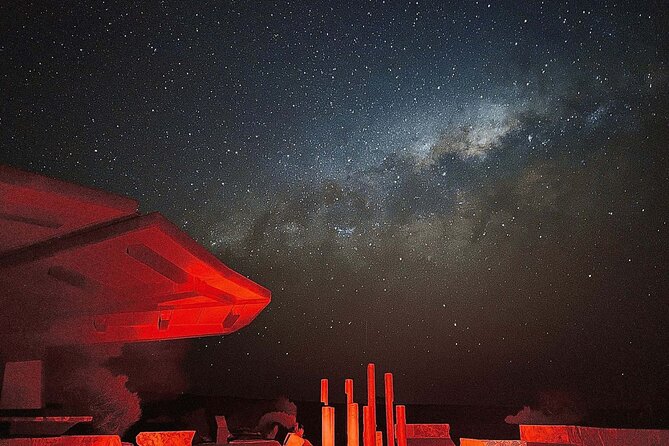
At $106.87 per person, this is not a casual walk outside the hotel. The price includes the guide, transportation, bottled water, National Park Pass, and telescope use. You are paying for access to a dark-sky location and for someone else to handle the driving and planning.
The value is strongest if you would otherwise skip the national park after dark. Pickup saves you from arranging transport, and the park pass removes an extra entry cost. The small group is another useful part of the price because you are less likely to feel lost in a crowd while waiting for the telescope.
The cost may feel high if you already have a car, know the night sky well, and only want to look at stars for a short time. In that case, an independent visit could be less expensive, although it would not include the guide, telescope, transport, or photography help.
The tour also includes no dinner. Eat before pickup or plan food separately. Since the activity lasts about three hours, this is an easy detail to manage, but it is worth remembering when planning your evening.
Who will enjoy this most
I would choose this for anyone who wants a guided first look at astronomy without needing to study beforehand. Families can ask simple questions, couples can make it a quiet evening outing, and solo visitors can join a small group rather than trying to find the dark-sky location alone.
It suits people who value scenery and explanation equally. The Skywalk provides the setting, but the guide is what turns the visit into an experience. If you want only a quick photo stop, the three-hour commitment may be more than you need.
The tour is also a good choice for anyone combining it with other Kalbarri activities. One booking paired the stargazing with a gorges tour, creating a full day of national park scenery followed by the night sky. That makes sense geographically and gives you a stronger reason to spend the evening in the park.
Most people can participate, according to the supplied tour information. Still, you should consider the night setting, the drive into the park, and the time spent outdoors before booking. Specific mobility details are not provided, so ask D’Guy Journeys directly if you have access needs.
Weather, timing, and booking details

Clear skies are essential. If poor weather cancels the tour, you can choose another date or receive a full refund. This is a fair policy for astronomy, since clouds can erase the main reason for the trip.
You can cancel for a full refund up to 24 hours before the start time. Changes or cancellations made inside that period are not accepted and are not refunded. Cutoff times use local Kalbarri time.
The activity is booked about 52 days ahead on average. That does not mean you must reserve exactly that early, but it is a useful warning for holiday periods and tightly planned road trips. The maximum group size is 10, and the operator is D’Guy Journeys, described as Kalbarri’s only licensed stargazing operator.
The best practical approach is to keep one flexible evening in your schedule. If clouds threaten, a little flexibility can save you from losing the experience altogether.
Should you book the Kalbarri Stargazing Tour?
Book it if you want more than a self-guided look at the stars. The combination of dark skies, Kalbarri Skywalk, a telescope, hotel pickup, and patient instruction gives the evening real value, especially for first-time stargazers.
I would think twice if you dislike evening outings, need a meal included, or already have strong astronomy skills and your own transport. For most visitors staying in Kalbarri, though, this is a memorable way to see the national park after the daytime crowds are gone.
Keep your plans flexible for weather, charge your phone, eat before pickup, and bring curiosity. If the sky clears, the Milky Way may be the most striking view you see in Kalbarri.
FAQ
Where does the Kalbarri Stargazing Tour take place?
The main stop is Kalbarri Skywalk in Western Australia, inside Kalbarri National Park.
How long does the tour last?
The experience lasts approximately three hours, with about two hours at Kalbarri Skywalk.
Is hotel or accommodation pickup available?
Yes. Pickup from your accommodation is offered.
What is included in the price?
The price includes an air-conditioned vehicle, bottled water, a National Park Pass, use of an astronomy telescope, and a guide.
Is dinner included?
No. Dinner is not included.
How many people can join the tour?
The maximum group size is 10 people.
Is a telescope provided?
Yes. Use of an astronomy telescope is included.
Will the guide help with phone photography?
Yes. The guide offers tips for photographing the stars and the Milky Way with your phone.
What happens if the weather is poor?
If poor weather causes cancellation, you can receive a full refund or choose a different date.
Can I cancel for a full refund?
Yes. You can cancel at least 24 hours before the experience start time for a full refund. Cancellations made less than 24 hours before the start time are not refunded.
Just added around Australia
- Blue Mountains: Stargazing with a Telescope and Astronomer★ 4.4 · 21 reviews
- Vincentia: Jervis Bay Beach Stargazing with an Expert★ 4.9 · 19 reviews
- Gold Coast: Glow Worms, Sunset & Stargazing with BBQ dinner★ 4.5 · 3 reviews
- Kalbarri Skywalk Sundowner and Stargazing Tour★ 5.0 · 6 reviews
- Brisbane: Glow Worms, Sunset, Telescope Stargazing & Dinner★ 4.0 · 15 reviews
- Kalbarri Skywalk: Sundowner and Stargazing Tour★ 4.9 · 9 reviews
- Kalbarri Stargazing Tour★ 5.0 · 2 reviews
- Exmouth: Summer Sunset Turtle Watching and Stargazing Tour★ 5.0 · 2 reviews
Australia Stargazing Tours, compared.

Pinnacles Desert: Sunset BBQ & Stargazing Tour +Sandboarding
Read our review →
Pinnacles Desert Sunset Dinner and Stargazing Tour
Read our review →
Pinnacles Sunset and Stargazing Tour with Dinner
Read our review →
Pinnacles Sunset Stargazing Dinner Experience Small Group Tour
Read our review →
National Park Astronomy Tour with Telescope and Photo
Read our review →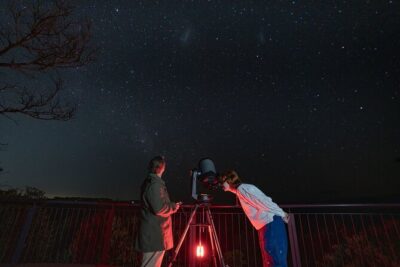
Stargazing with an Astronomer in the Blue Mountains
Read our review →
Pinnacles Desert Sunset & Stargazing with Dinner
Read our review →
Pinnacle Desert Sunset and Night-time Stargazing Tour from Perth
Read our review →Browse the lists this tour appears in