
REVIEW · FRANCE
Astronomy Evening “Rando Astro Fréjus”
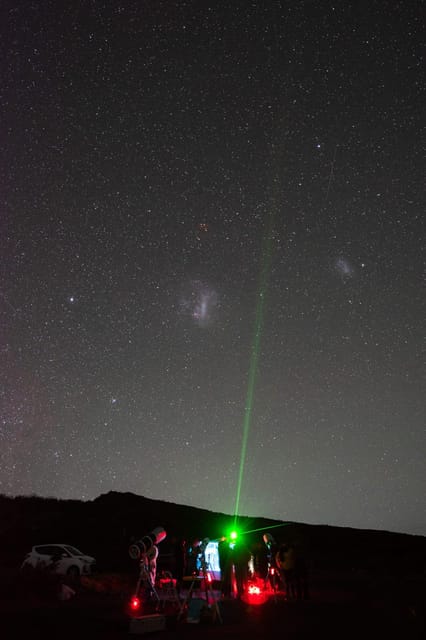
Seeing Saturn’s rings through a telescope is the main event here. You may also look at Jupiter and its moons, lunar craters, constellations, and other night-sky sights during a 90-minute astronomy session near Fréjus. It is a friendly, hands-on way to turn a dark evening into something memorable.
I like the small group of no more than 10 people, which gives the astronomer room to explain what you are seeing. I also like the simple, family-friendly teaching style. Children can take part, but adults on their own or with friends should feel equally welcome.
The main thing to plan for is the cold. You are outside at night, so bring warm clothing and water. This is also a short activity, not a full observatory program, so the exact objects you see will depend on the evening and observing conditions.
Five things to know before looking up
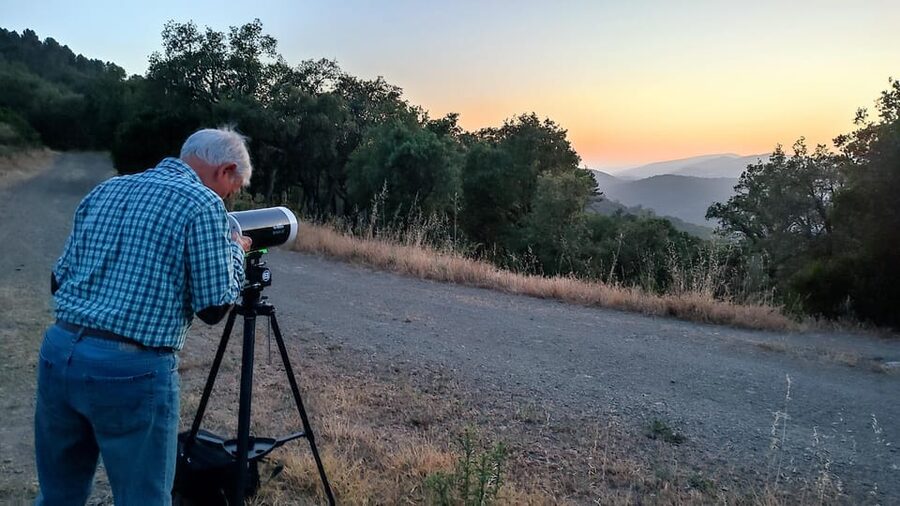
- Saturn through a telescope: The rings are the star attraction, with Jupiter and its moons also on the list.
- A five-minute walk: Meet in front of La Table d’Elena, near the beach. There is no shop or dedicated storefront.
- Edmond may lead the evening: The experience includes a friendly astronomer and past comments specifically praise Edmond’s explanations and guidance.
- A compact 90-minute format: You get a focused introduction without giving up an entire evening.
- French, Italian, or English: The instructor can explain the sky in any of these three languages.
Why this short astronomy evening works
The Côte d’Azur is famous for beaches, restaurants, and polished resort towns. An astronomy evening offers a quieter change of pace. Instead of looking toward the water, you look overhead and learn how to make sense of what you see.
That shift matters. A sky full of stars can be beautiful, but without a little guidance it can also seem like a random scatter of lights. The astronomer helps connect the dots through constellations, the solar system, and the signs of the zodiac. You leave with more than a few telescope views. You gain a basic map of the night sky.
The experience is priced at $33 per person. I consider that fair for a small-group activity with the astronomy equipment included, especially if you are traveling with children and want something beyond another meal or beach walk. The session lasts only an hour and a half, so you are not paying for a long evening program with refreshments or transportation. The value is in the telescope time and the explanations.
More Evening Trips in the world:
- Tenerife: Teide National Park Sunset & Stargazing Tour
★ 4.2 · 3,812 reviews - Tenerife: Sunset and Stargazing at Teide National Park
★ 4.7 · 2,826 reviews - Teide National Park Sunset & Stargazing with Dinner (Star Safari)
★ 5.0 · 2,601 reviews
Meeting at La Table d’Elena
Your meeting point is in front of the beach and restaurant called La Table d’Elena. There is no shop or indoor office to look for. That detail is easy to miss, so give yourself enough time to identify the meeting place and connect with the group.
From there, you walk about five minutes to the observing location. The walk is short, but you should wear sensible shoes and bring a warm layer. The activity ends back at the original meeting point, which keeps the evening straightforward.
You will need to check the available start times when booking. Astronomy depends on darkness, and the starting hour can change with the season. Do not assume the activity begins at the same time every night.
What happens during the 90 minutes
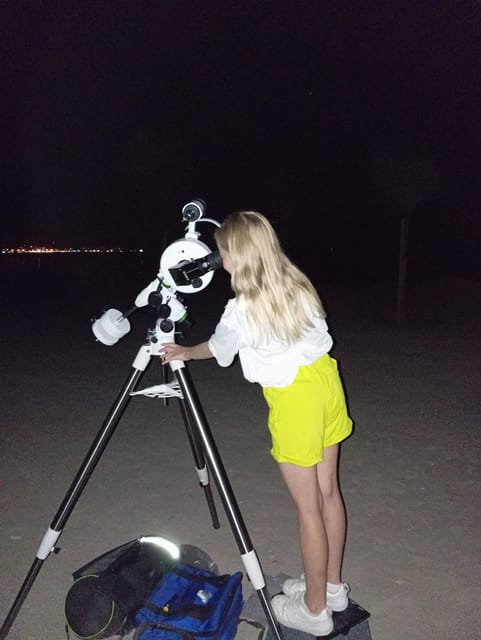
The evening begins with an introduction to the sky and the equipment. You are not expected to arrive already knowing the names of stars or planets. The instructor explains what is visible and helps you understand the difference between planets, stars, constellations, and other objects.
The telescope then becomes the main tool. The program is built around planetary observation, with Saturn, Jupiter, and the Moon as the headline targets. You may also look at other sights in the night sky, depending on what is available during your session.
The pace should suit first-time stargazers. You have time to look, ask questions, and listen to explanations rather than simply moving from one object to the next. A small group makes this easier because the instructor is working with no more than 10 participants.
The evening also covers the zodiac. That does not mean a fortune-telling session. Here, the zodiac refers to the familiar group of constellations associated with the path of the Sun across the sky. For children, this can be an easy way into astronomy. For adults, it adds useful context to names that are often treated as decoration or horoscope symbols.
Saturn, Jupiter, and the Moon
Saturn is the strongest reason to book this activity. Seeing its rings through a telescope gives you a direct sense of distance and scale that photographs cannot quite match. The rings may be familiar from books and screens, but the telescope view makes the planet feel like a real object in space rather than an image from a science lesson.
Jupiter offers a different kind of spectacle. The program includes a chance to see Jupiter with its moons. Those small points beside the planet help show that our solar system is not centered on Earth. They also give you a simple example of moons orbiting another planet.
The Moon is likely to be the most immediately recognizable target. Its craters can be seen through the telescope, turning a bright disk into a rough, marked world. Moon viewing is especially accessible for children because the object is easy to identify before the explanation begins.
The activity includes many other sights, but no fixed list can be guaranteed. What you see depends on the night, the available sky, and the observing conditions. That is normal for astronomy. A cloudy evening or poor visibility can change the program, and you should book this with some flexibility rather than expecting a perfectly fixed sequence.
More Stargazing Tours in the world:
- Dubai Red Dunes ATV, Camels, Stargazing & 5* BBQ Al Khayma Camp
★ 5.0 · 21,620 reviews - Sharm El-Sheikh: Ultimate ATV Quad, Stargazing & BBQ Dinner
★ 4.7 · 4,084 reviews - Dubai: Sunset Camel Trek, Al Khayma Camp, Stargazing & BBQ
★ 4.8 · 2,588 reviews - Dubai: Overnight Safari, Dinner, Stargazing & Al Khayma Camp
★ 4.8 · 2,562 reviews
Explanations that work for families
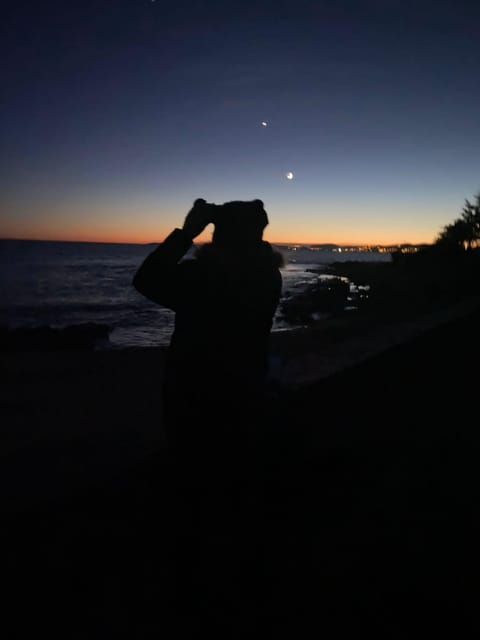
The teaching style is one of the activity’s strongest points. The explanations are designed to be simple enough for children while still giving adults something useful to think about. This matters because a family astronomy evening can easily become too technical for younger participants or too basic for their parents.
The comments specifically praise the activity as educational and fun, with clear explanations. Edmond is singled out for making the evening pleasant and showing the group interesting objects. That suggests a guide who is comfortable handling both the science and the social side of a small group.
You do not need a background in astronomy. The point is to observe first and build understanding as you go. Ask questions if you have them. The format is personal enough for an interactive evening, rather than a silent session where you simply take turns at the telescope.
The activity also works if you are traveling alone or with friends. You are not required to arrive as a family group, and the small size keeps the experience from feeling like a large public event.
The small-group difference
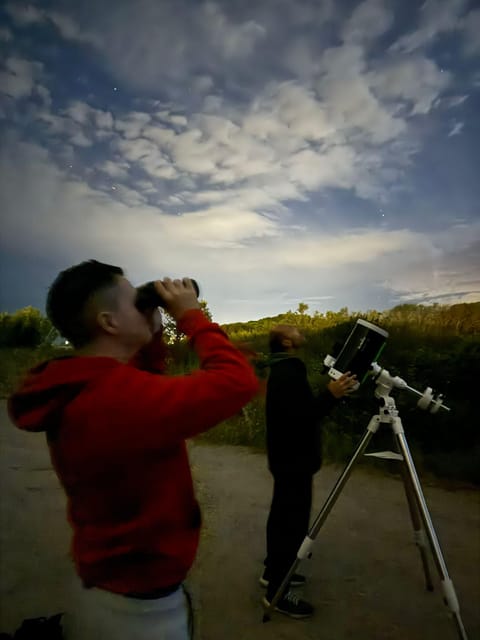
A maximum of 10 participants is a useful limit. Telescope activities can become frustrating when too many people are waiting for one view, especially if the equipment must be adjusted between users. A group of this size gives the instructor a better chance to explain what each person is seeing.
It also creates a more relaxed setting for questions. You can ask about the Moon, planets, constellations, or zodiac signs without needing to compete with a crowd. The experience remains social, but it should not feel packed.
There is a tradeoff. A small group does not mean private service, and you may still need to wait briefly while other people look through the telescope. The listing does not promise private viewing or a personal telescope for every participant. Think of it as a shared astronomy lesson with quality equipment.
What to bring for a comfortable evening
Take warm clothing, even if the afternoon has been mild. Night air can feel much cooler when you are standing still and looking through a telescope. A jacket is the minimum sensible choice, with extra layers useful during cooler periods.
Bring water as well. Drinks are not included, and the activity takes place outdoors. Since the session lasts 90 minutes, you may not need food, but you should not count on refreshments being provided.
There is no mention of transportation, so plan to reach the meeting point independently. The activity starts near La Table d’Elena and finishes there. You should also avoid arriving at the beach area expecting a shop or ticket office. The meeting point is the key detail.
Language and accessibility
The instructor can conduct the activity in French, Italian, or English. Choose the language that lets you follow explanations most easily, especially if children are in your group.
The experience is described as wheelchair accessible. Since the information specifies a five-minute walk from the meeting point to the observing spot, you may want to confirm the exact route and surface if someone in your party has particular mobility needs. The accessibility designation is useful, but the available details do not describe the path in more depth.
The activity is presented as suitable for everybody. That includes children, parents, solo participants, and friends traveling together. The strongest match is someone curious about the sky who is happy to spend an evening outdoors and listen to an instructor.
Is $33 a fair price?
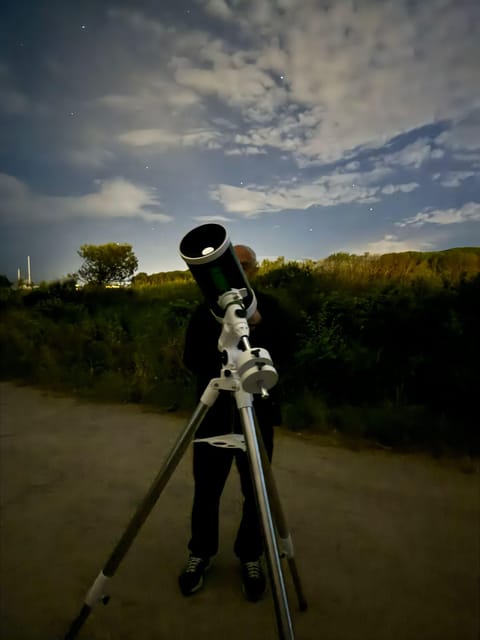
At $33, this is not the cheapest way to spend an evening near Fréjus. You could look at the stars for free from a beach or balcony. That free option, however, will not show you Saturn’s rings, Jupiter’s moons, or lunar craters through quality equipment.
The price makes sense if you value guidance and access to a telescope. You are paying for the instructor’s explanations, the equipment, and the chance to focus on specific objects instead of simply gazing upward. The small group adds to the value.
The short duration keeps the commitment low. You can fit the activity into a holiday evening without giving up a full night. On the other hand, do not expect a meal, drinks, transportation, or a long observatory visit to be part of the price. Bring what you need and judge the cost against the telescope experience itself.
You can reserve now and pay later, which helps if your plans are still changing. Free cancellation is available up to 24 hours before the activity for a full refund. Those terms make it easier to book around weather and changing holiday plans, though you should still check the exact conditions at the time of booking.
Who should book this activity?
I would recommend it to families looking for an activity that is both entertaining and educational. Children often respond well to the direct reward of seeing a planet, while parents get a clear introduction to the science behind it.
It also suits adults who want a quieter break from the usual coastal routine. You do not need to be an amateur astronomer. The program is built for beginners and explains the basics in plain terms.
Solo visitors and couples can book too. The limited group size gives the evening a friendly feel without requiring you to organize a private experience.
I would think twice if you dislike standing outdoors at night or want a highly predictable program. Astronomy cannot promise a fixed view of every planet, and the weather can affect what is visible. You should also bring proper clothing rather than treating this as a casual stop in beachwear.
Should you book Rando Astro Fréjus?
Book it if you want to see Saturn’s rings, Jupiter and its moons, or the Moon’s craters with an instructor who can explain what you are looking at. The 90-minute length, small group, multilingual instruction, and $33 price make this an easy add-on to a stay in Provence.
The best reason to choose it is the mix of wonder and clear teaching. The main caution is simple: you are outside, and the sky decides how much you will see. Bring warm clothes, bring water, arrive at La Table d’Elena ready for a five-minute walk, and you will be prepared for a memorable night under the stars.
FAQ
How long does the astronomy evening last?
The activity lasts 1.5 hours, or 90 minutes. Check availability for the starting time on your chosen date.
Where is the meeting point?
Meet in front of the beach and La Table d’Elena. There is no shop or dedicated storefront. From the meeting point, you walk about five minutes to the observing location.
Where does the activity finish?
The experience ends back at the original meeting point near La Table d’Elena.
What can I see through the telescope?
The program includes Saturn and its rings, Jupiter with its moons, and craters on the Moon. You may also observe other sights in the night sky.
What languages are available?
The instructor can provide explanations in French, Italian, or English.
Is the activity suitable for children?
Yes. The activity is described as suitable for everybody, including children and parents. It is also suitable for people attending alone or with friends.
What should I bring?
Bring warm clothing and water. Astronomy equipment is included, but drinks are not.
Just added around the world
- Blue Mountains: Stargazing with a Telescope and Astronomer★ 4.4 · 21 reviews
- ( canyon hurghada & stargazing )★ 4.9 · 16 reviews
- Zermatt: Outdoor fondue “group experience under the stars”★ 4.7 · 3 reviews
- Doha: Night Desert Safari With Stargazing and Inland Sea★ 5.0 · 9 reviews
- Villajoyosa: Moonlight kayaking and dinner under the stars★ 5.0 · 5 reviews
- Ubud: Romantic Floating Dinner Under the Stars★ 5.0 · 2 reviews
- Vincentia: Jervis Bay Beach Stargazing with an Expert★ 4.9 · 19 reviews
- Vialattea: Night Snowshoeing under the Stars★ 4.5 · 5 reviews
France Stargazing Tours, compared.
Chamonix: Snowshoe Walk Under the Stars with a Private Guide
Read our review →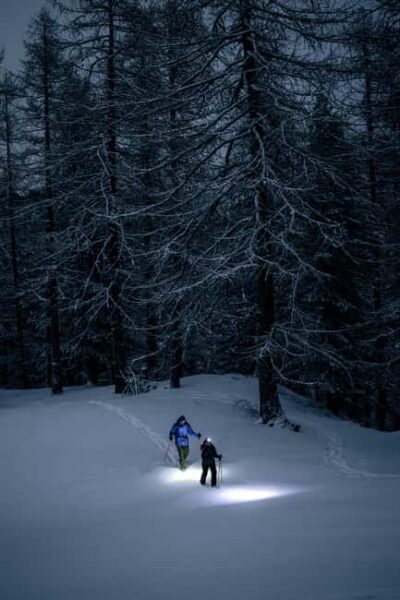
Milky Way: night snowshoe hike with a typical dinner in a mountain hut
Read our review →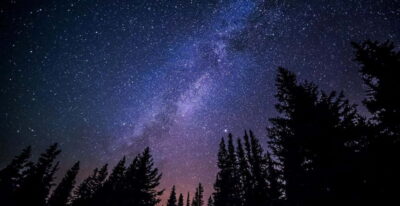
Stroll among the stars : Stargazing and Astronomy Tour
Read our review →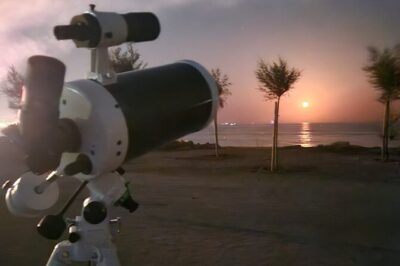
Browse the lists this tour appears in