REVIEW · STARGAZING TOURS
Stargazing Under the Bali Skies
Bali’s best night show may begin after the beach crowds go home. At Munggu Beach, AstroBali sets up several kinds of viewing gear for a private session beneath the open sky. You may see the Moon’s craters, Saturn’s rings, Jupiter’s moons, constellations, and even shooting stars, depending on weather and timing. I like the hands-on approach, since you do more than peer through one telescope.
I also like the personal feel. Gab and Donny explain the sky in plain language, answer questions, and show you how to use the equipment yourself. Coffee brewed under the stars, a short photography session, and take-home astronomy items add real value. The main consideration is weather: clouds can limit the show, and the $191.49 group price is easiest to justify when shared by several people.
Key things to know before booking
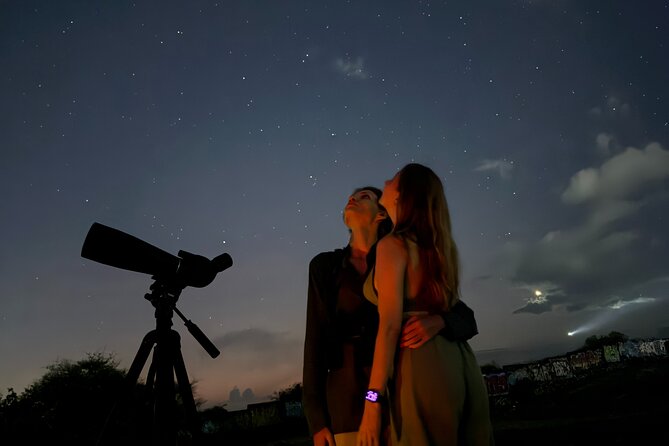
- Several kinds of astronomy gear: Use high-quality telescopes, binoculars, a smart astrophotography camera, and a spotting scope.
- A private group of up to five: You share the session only with your own party, which makes questions and hands-on practice easier.
- A 6:30 pm start at Munggu Beach: The experience lasts about two and a half hours and ends back at the meeting point.
- Coffee and photos are part of the evening: You get a complimentary coffee-brewing experience and 20 minutes of photography and documentation.
- A beginner-friendly lesson: No astronomy background is needed, and the team teaches you how to operate a telescope.
- Weather matters: If poor conditions cancel the session, you can choose another date or receive a full refund.
Why a Bali beach is a fine place to look up
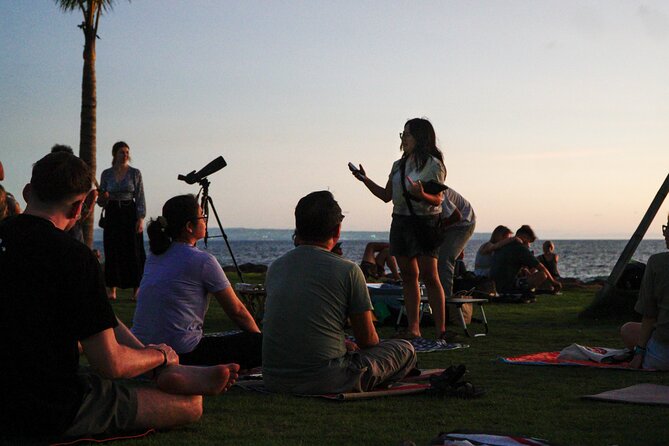
Most Bali evenings are built around food, sunset, music, or water sports. This experience takes a quieter route. You meet at Munggu Beach at 6:30 pm, then settle into a private astronomy session that lasts roughly two hours and 30 minutes.
The beach setting gives the evening a calm rhythm. You are not being rushed from one sight to the next. Instead, you can move between telescopes, listen to the guides explain what is overhead, and stop to ask the questions that come to mind.
The exact view depends on the sky. That point matters. Astronomy is not a fixed stage show, and clouds can hide the Moon or planets. On a clear night, though, the possible sights include lunar craters, Saturn’s rings, Jupiter’s moons, constellations, and shooting stars. The team can also help you understand the larger stories behind the patterns of stars.
I would not book this expecting a guaranteed list of planets. I would book it for the chance to see what the sky offers that evening, with people who can help you make sense of it.
More Stargazing Tours in the world:
- Dubai Red Dunes ATV, Camels, Stargazing & 5* BBQ Al Khayma Camp
★ 5.0 · 21,620 reviews - Sharm El-Sheikh: Ultimate ATV Quad, Stargazing & BBQ Dinner
★ 4.7 · 4,084 reviews - Tenerife: Teide National Park Sunset & Stargazing Tour
★ 4.2 · 3,812 reviews
The 6:30 pm arrival and first look at the equipment
The session begins at Munggu Beach, with the activity ending at the same meeting point. Transportation is not listed as part of the experience, so plan your own way to the beach and allow enough time to arrive before the 6:30 pm start.
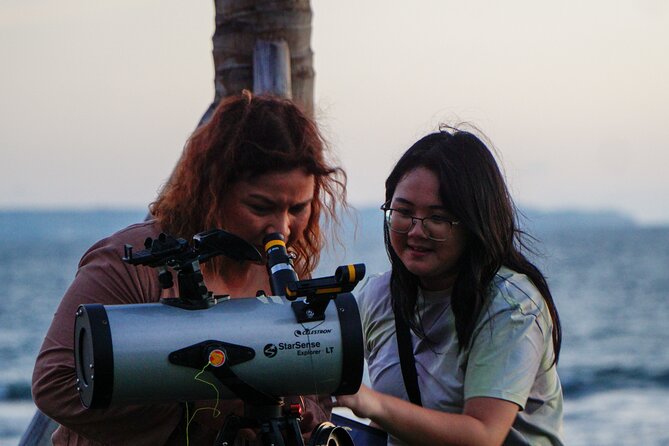
The equipment is one of the strongest reasons to choose this experience over a simple beach stargazing stop. You get access to high-quality telescopes, binoculars, a spotting scope, and a smart astrophotography camera. Each tool gives you a different way to approach the sky.
A telescope can bring the Moon’s surface or a planet into sharp focus. Binoculars offer a wider, less technical view. A spotting scope gives you another way to find distant objects, while the smart camera can help record what you see. The variety keeps the evening active and gives beginners a sense of how different astronomy tools work.
You are not expected to arrive knowing how to focus a telescope or find a planet. The team guides you through the equipment and lets you try it yourself. That practical part is important. After the session, you should understand more than you would from simply looking through an eyepiece while someone else does all the work.
Finding the Moon, planets, and constellations
The viewing portion has no rigid list of stops, because the sky changes with the date, weather, and visibility. The guides may point out constellations, then shift to the Moon or a planet when conditions allow.
The Moon is often a good starting point for beginners. Its craters are easier to understand through a telescope than a distant star, and the changing light across its surface gives you something specific to study. Saturn is another possible highlight, since its rings are among the most recognizable sights in amateur astronomy.
Jupiter and its moons may also be visible. Seeing several small points near the planet can turn a general lesson into something concrete. The team can explain what you are seeing and answer questions as they arise, rather than delivering a one-way talk.
The experience also covers sky stories and general astronomy facts. This gives the session more substance than a few minutes of looking upward. One useful feature is the open question period. You can ask about planets, stars, telescopes, or anything else connected to space without needing to frame the question in technical language.
Clear skies may bring shooting stars into view. That is a welcome bonus, but it is not something the tour can promise. The same is true of each planet and constellation. The evening is best treated as a guided look at the real sky, not a guaranteed planet checklist.
Gab, Donny, and an easygoing astronomy lesson
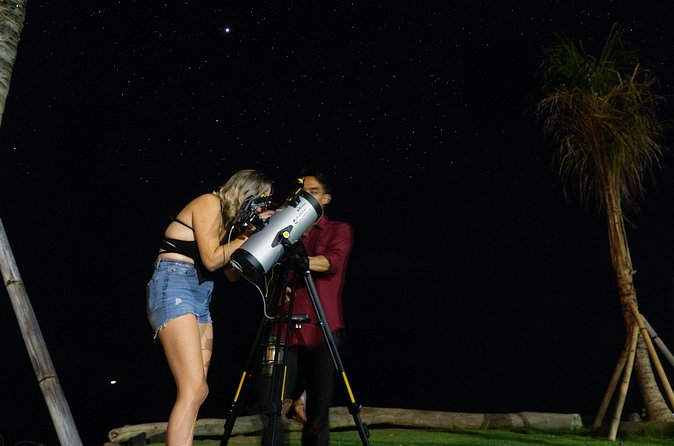
The guides named in the experience are Gab, also referred to as Gabs, and Donny. Their role is not just to point equipment at the sky. They explain what you are seeing, share astronomy facts and sky stories, and encourage questions.
That style suits beginners. You can enjoy the evening without feeling as if you are taking a formal class. At the same time, the session has enough science to keep curious adults interested. The balance is a major part of the experience’s appeal.
Gab can also help with location choices and weather decisions. The experience information notes that the team monitors conditions and may advise on the best location. That is useful in Bali, where clouds can change the quality of an outdoor evening quickly. The listed meeting point is Munggu Beach, so confirm any location guidance before you set out.
I would choose this activity for a couple, family, or small group that enjoys asking questions. It also works for someone who has always wanted to look through a telescope but has never had the chance. Children can participate because no prior knowledge is needed, though the private format is especially useful if your group wants to set its own pace.
Same dark skies, a different way to see them:
- Tenerife: Sunset and Stargazing at Teide National Park
★ 4.7 · 2,826 reviews - Teide National Park Sunset & Stargazing with Dinner (Star Safari)
★ 5.0 · 2,601 reviews - Dubai: Sunset Camel Trek, Al Khayma Camp, Stargazing & BBQ
★ 4.8 · 2,588 reviews - Dubai: Overnight Safari, Dinner, Stargazing & Al Khayma Camp
★ 4.8 · 2,562 reviews
The coffee break that gives the evening a local feel
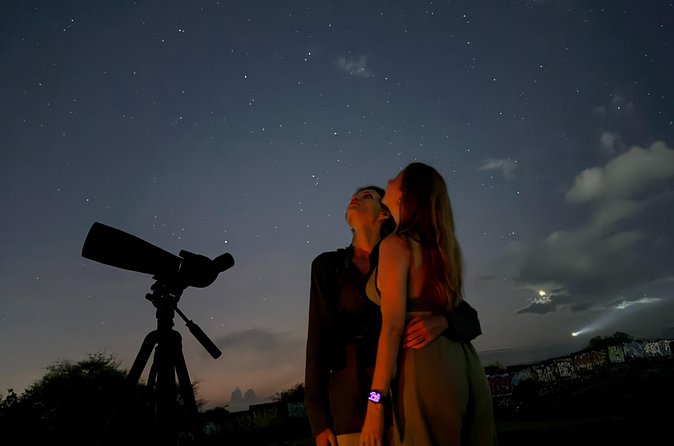
Coffee is brewed during the experience under the stars. This is a small detail, but it changes the mood. Instead of treating the beach as a dark platform for equipment, the session becomes a relaxed evening outside.
I like this part because stargazing involves pauses. A planet may take a moment to find. Someone may need help adjusting a telescope. Clouds may pass through. Coffee gives you something warm to do while the guides reset the equipment or explain the next object.
The coffee-brewing experience is included, while tips and all fees and taxes are not included. The information does not specify the coffee style, serving size, or food options, so do not book this as a full meal. Think of it as a complimentary refreshment and a pleasant part of the atmosphere.
Photography, a starmap, and practical take-home items
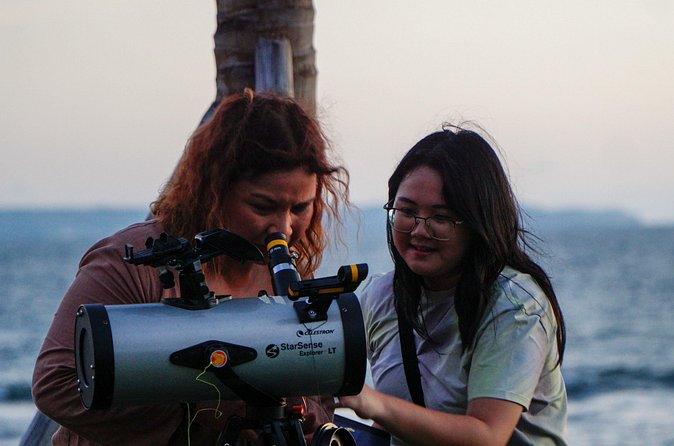
The package includes 20 minutes of photography and documentation under the stars. That gives you a chance to leave with more than a memory of looking through a telescope. The exact photos and format are not specified, so ask the team how the images will be delivered or shared.
Photography can be particularly valuable here because ordinary phone cameras often struggle with dark skies. The smart astrophotography camera is part of the equipment, and the team can use it to show celestial objects in a way that may be difficult with your own phone.
You also receive a starmap, an astronomy pocket guide, and surprise goodies to take home. These items add lasting value. The starmap can help you remember what you saw, while the pocket guide gives you something to read after the evening ends.
Do not expect professional observatory images unless that is confirmed directly. The listed photography session is a useful extra, but the main product remains the guided experience and access to the equipment.
Is $191.49 a fair price for a private group?
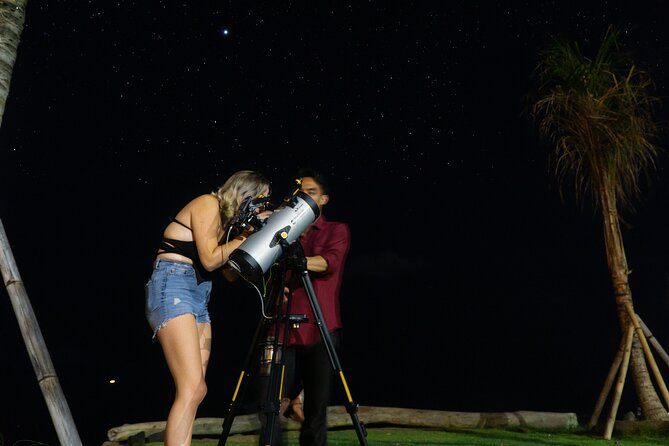
The price is $191.49 per group of up to five people. Split evenly among five, that works out to about $38.30 per person before any fees or taxes. For two people, the cost is much higher per person, so group size makes a real difference.
The value comes from the private format and the number of included elements. You get about two and a half hours, several types of equipment, instruction, coffee, photography, a starmap, a pocket guide, and the chance to ask questions at your own pace. A shared group tour might cost less, but it may not offer the same control over the evening.
The price is easiest to defend if your party is interested in astronomy rather than simply looking for a quick night activity. If you only want a few photographs under the stars, this may feel expensive. If you want an informal lesson, hands-on telescope practice, and a quiet private setting, the package makes more sense.
A portion of the proceeds supports Munggu Village. The overview also refers to support for the local village of Seseh, while the included details name Munggu Village. Since those place names differ, ask the provider which community receives the contribution if that matters to your booking decision.
Weather, cancellation, and the limits of an outdoor activity
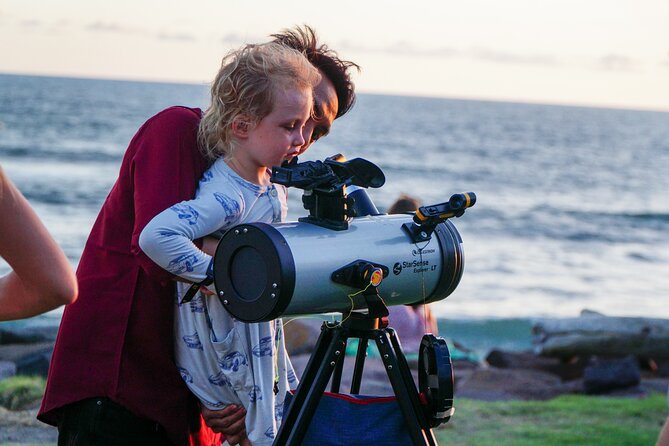
A clear sky is never guaranteed. Clouds can reduce the number of visible stars and may prevent you from seeing the Moon or planets. This is the only major risk built into the experience, but it is not a minor one. Weather should shape your expectations.
The activity requires good weather. If poor conditions cause a cancellation, you are offered another date or a full refund. That protects you from paying for an evening that cannot deliver the main attraction.
You can cancel for a full refund if you do so at least 24 hours before the start time. Cancellations or changes made less than 24 hours before the experience are not accepted for a refund. The cut-off follows local time.
Because the activity is booked, on average, 24 days ahead, it is sensible to reserve early if your Bali dates are fixed. Still, confirmation is only sent within 48 hours of booking and remains subject to availability. Keep the weather policy in mind when planning the rest of your evening.
Who will get the most from this experience
I would recommend this for people who want something quieter and more focused than Bali’s standard evening activities. It suits couples seeking a calm night out, families with curious children, and small groups who want a private experience.
It is also a good match for anyone who lives near bright city lights and rarely sees a dark sky. The setting may remind you how many stars are normally hidden from view. The guides add context, so you are not left guessing at every bright point overhead.
You may want to skip it if your plans cannot handle a weather-related change, if you dislike sitting or waiting outdoors, or if you want guaranteed views of a specific planet. The activity depends on nature, and no guide can change a cloudy sky.
The private format is a real advantage for mixed-interest groups. One person can ask technical questions while another simply enjoys the setting. You are not sharing the session with unrelated people, and the team can spend more time helping your group use the equipment.
Should you book Stargazing Under the Bali Skies?
Book it if you want a private, beginner-friendly night that mixes astronomy with simple comforts. The strongest features are the range of viewing equipment, the chance to operate a telescope yourself, the relaxed guidance from Gab and Donny, and the small extras such as coffee, photos, and take-home guides.
I would book for a group of four or five to make the $191.49 price easier to justify. Keep your expectations flexible, check the weather, and remember that the visible planets and stars depend on the night.
If you want a different side of Bali, this is a thoughtful choice. It replaces noise and crowds with questions, darkness, and a sky that can surprise you.
FAQ
Where does the stargazing experience begin?
It begins at Munggu Beach in Bali, Indonesia.
What time does the activity start?
The scheduled start time is 6:30 pm.
How long does the experience last?
The activity lasts approximately two hours and 30 minutes.
Where does the activity end?
It ends back at the meeting point.
How many people can join the private tour?
The price covers one private group of up to five people.
What equipment can I use?
You can use high-quality telescopes, binoculars, a smart astrophotography camera, and a spotting scope.
Do I need astronomy experience?
No. The experience is designed for beginners, and the guides show you how to operate a telescope.
Is coffee included?
Yes. A complimentary coffee-brewing experience under the stars is included.
What happens if bad weather cancels the session?
You can choose a different date or receive a full refund if poor weather causes the experience to be canceled.
Just added around the world
- Blue Mountains: Stargazing with a Telescope and Astronomer★ 4.4 · 21 reviews
- ( canyon hurghada & stargazing )★ 4.9 · 16 reviews
- Zermatt: Outdoor fondue “group experience under the stars”★ 4.7 · 3 reviews
- Doha: Night Desert Safari With Stargazing and Inland Sea★ 5.0 · 9 reviews
- Villajoyosa: Moonlight kayaking and dinner under the stars★ 5.0 · 5 reviews
- Ubud: Romantic Floating Dinner Under the Stars★ 5.0 · 2 reviews
- Vincentia: Jervis Bay Beach Stargazing with an Expert★ 4.9 · 19 reviews
- Vialattea: Night Snowshoeing under the Stars★ 4.5 · 5 reviews
Stargazing Tours, compared.
Dubai Red Dunes ATV, Camels, Stargazing & 5* BBQ Al Khayma Camp
Read our review →
Teide National Park Sunset & Stargazing with Dinner (Star Safari)
Read our review →
Sunset Camel Trek, Al Khayma Camp, Stargazing & BBQ
Read our review →
Overnight Safari, Dinner, Stargazing & Al Khayma Camp
Read our review →