
REVIEW · MARSA ALAM
Marsa Alam SPACE OBSERVERS ( Desert Stargazing )
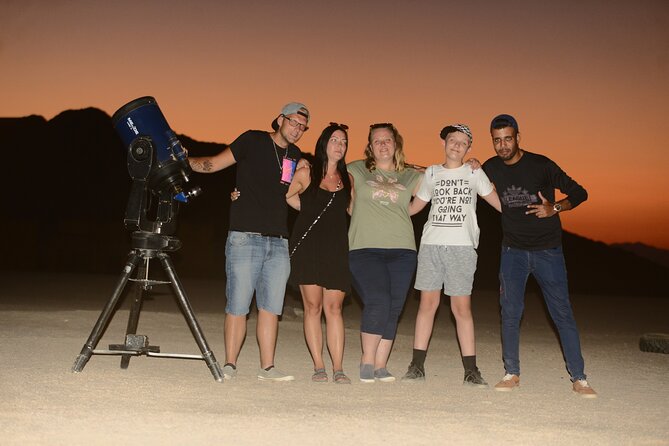
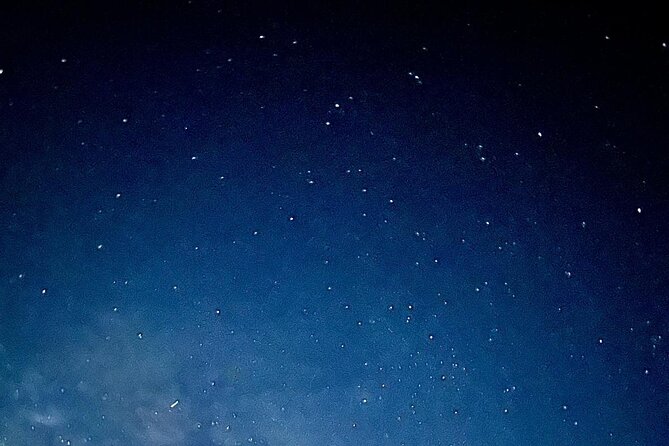
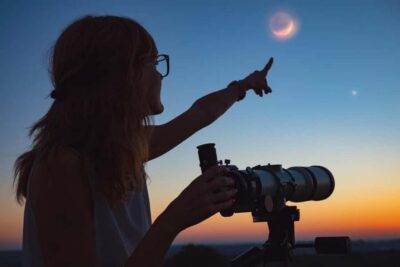
Marsa Alam’s best night show needs no stage. After a desert sunset and a simple Bedouin dinner, you look through a 15-inch Meade telescope at a sky far brighter than anything above a city. The Milky Way and Saturn have both been seen on this outing, and the astronomy session gives the evening a clear purpose.
I like the small maximum group of 12 and the mix of activities: camel riding, bread baked over a campfire, a short climb for sunset, and serious stargazing. I also like that guides such as Harabi and Moussa have been praised for attentive care and language skills. The main consideration is timing: the evening lasts about five and a half hours, and the desert visit is simple rather than polished or luxurious.
Key points at a glance
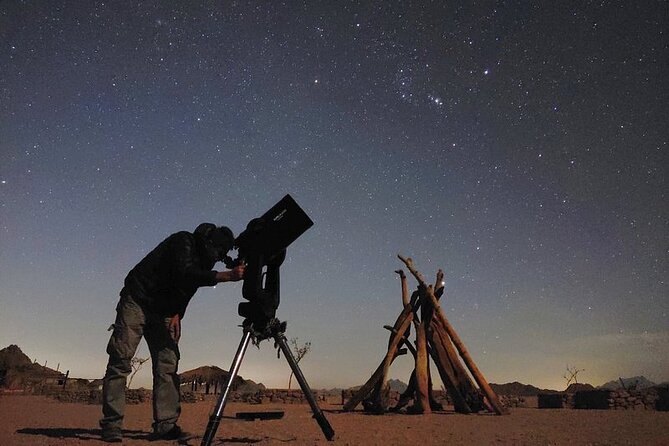
- A 15-inch GPS-directed Meade telescope gives the astronomy portion more substance than a simple star talk.
- The Ababda camp at Padi Valley offers Bedouin tea, bread made over a fire, dinner, and an introduction to local daily life.
- A 30-minute camel ride comes before the evening sky viewing.
- Sunset from a small cliff adds a fine visual moment before darkness arrives.
- Groups are limited to 12 people, which helps keep the astronomy session more personal.
- Pickup is offered from Marsa Alam hotels, with a possible $10 transport supplement for hotels south of Marsa Alam.
Why this desert evening works
This experience succeeds because it combines two kinds of looking. First, you see the desert at ground level: a quiet camp, rough rock, camels, a cooking fire, and the last orange light on the horizon. Later, you look far beyond Earth through a proper observatory telescope.
That change in scale is the point. A standard sunset trip can feel finished once the sun drops. Here, the evening is only halfway done. The darkness becomes the main event.
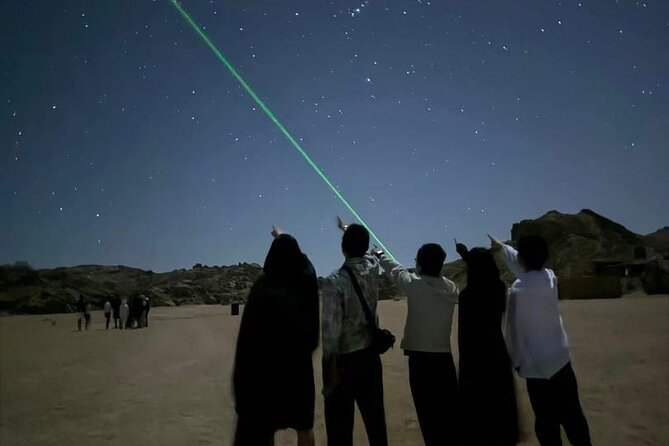
The setting also matters. The camp is away from the bright hotel areas, giving the sky a better chance to show its stars. No astronomy outing can control clouds, haze, or exact visibility, but the desert location is chosen for night-sky viewing. The professional guide explains what you are seeing rather than leaving you to guess at a few bright points.
The company says it has operated since 2008 and uses 10 astronomy-specialized guides who speak different languages. The available guide examples include Harabi, who has provided information about Bedouin life and handled guiding, and Moussa, who was praised for personal care. Specific guide assignments can change, so treat those names as examples rather than a promise.
More Desert Stargazing Trips in Egypt:
- Hurghada: Sea & Desert Horse Tour, Stargazing, Dinner & Show
★ 4.5 · 1,592 reviews - Hurghada: Star Watching Desert Adventure by Jeep with Dinner
★ 4.6 · 879 reviews - Hurghada: Star Stargazing Desert Adventure by Jeep & Dinner
★ 4.7 · 694 reviews
From your hotel to Padi Valley at 4 pm
Pickup is scheduled at about 4 pm in a modern, air-conditioned vehicle. The drive takes you from the Marsa Alam hotel zone toward the Ababda camp at Padi Valley. The stated timing allows roughly an hour for the transfer, though the exact ride depends on your hotel.
This early departure is sensible. You reach camp with time for the camel ride and a proper sunset rather than arriving after dark. It also means you should not plan a late afternoon activity that ends close to 4 pm.
Transport is included for standard Marsa Alam pickups. Hotels south of Marsa Alam may require an extra $10 transportation charge. The vehicle is described as clean and air-conditioned, a useful detail in a region where even a short road transfer can feel tiring after a warm day.
The group limit is 12 people. That is small enough to avoid the feel of a large desert convoy, though the experience is still a shared outing rather than a private excursion. If your priority is a private astronomer and complete control of the schedule, this is not that kind of trip.
Thirty minutes on a camel
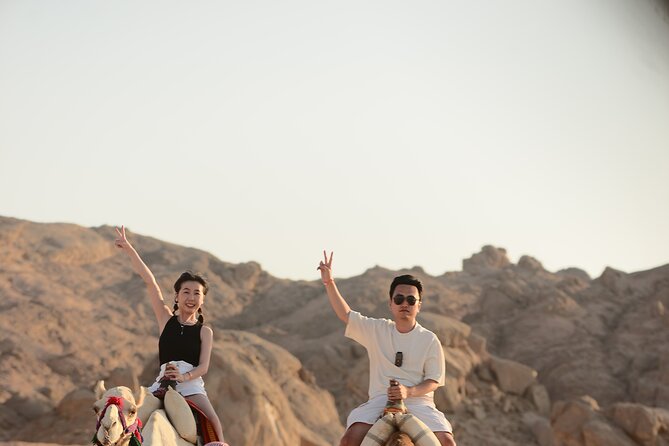
The camel ride lasts about 30 minutes. It is a short introduction rather than a long expedition, which is probably the right length for most people. You get the unusual feeling of crossing the desert from a high saddle, but you do not spend half the evening sitting on a camel.
Afterward, you return to the Bedouin tent and have time to rest. This pause matters. Camel riding can be uncomfortable for first-time riders, and the break gives you a chance to settle before the tea, sunset, dinner, and astronomy sessions.
The ride is included, as is the use of the telescopes later. No special riding ability is listed, and the activity information says most people can participate. Still, anyone with mobility concerns should consider the camel mount, uneven desert ground, and climb to the sunset viewpoint before booking.
Bedouin tea, bread, and a simple camp setting
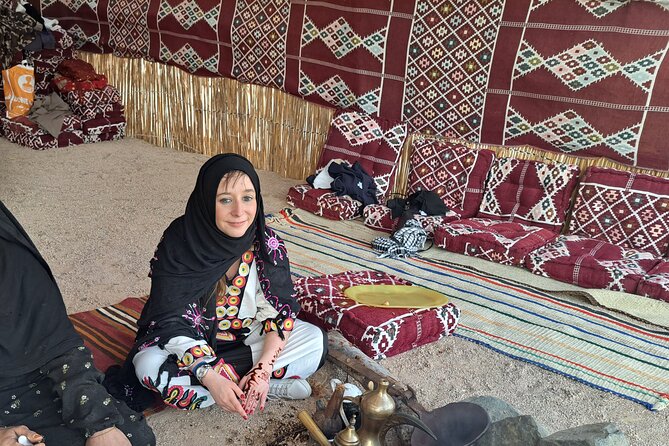
At the tent, you receive Bedouin tea and hear about the simple life of the Ababda people from a professional guide. You can also watch bread being made over a campfire.
This part is best approached as a short cultural introduction, not as a museum visit or a full ethnographic program. The camp is described as simple. That is part of its appeal, but it also sets the right expectation: you are visiting a working-style desert setting prepared for the outing, not a luxury desert resort.
The bread-making demonstration gives the stop a practical touch. Food prepared over a fire helps you understand the camp in a more direct way than a speech alone. You may also have time to look around, take photographs, and enjoy the change from the hotel coast to the open desert.
There is a Bedouin pharmacy and handmade shop listed as not included. You do not need to buy anything there. Treat those stops as optional commercial visits rather than part of the core astronomy experience.
More Stargazing Tours in Egypt:
- Sharm El-Sheikh: Ultimate ATV Quad, Stargazing & BBQ Dinner
★ 4.7 · 4,084 reviews - Hurghada: Sunset Quad Bike, Camel w/ Opt Stargazing and BBQ
★ 4.2 · 1,705 reviews - Hurghada: Quad Bike, Sea, Camel, Safari, Stargazing & Dinner
★ 4.2 · 1,454 reviews - Makadi Bay: ATV, Sea View, Camel, Stargazing, Dinner & Show
★ 4.3 · 1,368 reviews
Sunset from the small cliff
Before dinner, you climb a small cliff to watch the sunset. The climb is not described as difficult, but it is still a climb over desert ground, so sturdy shoes make sense.
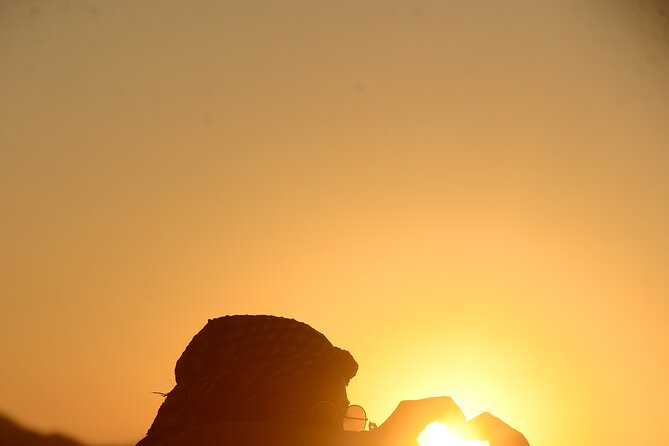
This is one of the strongest parts of the schedule because the light changes quickly. The rock, tent, and surrounding desert take on warmer colors just before the sky turns dark. One of the available accounts singled out the sunset as magical, and that fits the structure of the evening: you arrive in daylight, see the desert change, then stay long enough to watch the stars appear.
Bring a little patience here. The best sunset moments are brief, and the group may need to move together. The view is natural and open rather than arranged around a large platform or elaborate viewpoint.
Dinner by the fire
Dinner is described as a freshly prepared Bedouin meal with barbecue, an open buffet, bottled water, and soft drinks. Tea and coffee are also included.
The menu is not specified, so do not book this expecting a particular dish or a restaurant-style spread. The value is in eating at the camp after the sunset, with the desert darkness arriving around you. Available comments describe the dinner as delicious, but tastes and expectations differ, especially for anyone with dietary restrictions.
Ask about special food needs when booking if they matter to you. The supplied information does not state that vegetarian, vegan, halal, allergy-sensitive, or other special menus are guaranteed.
Dinner also gives the group a useful break before the astronomy portion. You are not rushing from one activity to another. The full evening is planned around the transition from daylight to darkness.
One hour with the astronomer
The astronomy session lasts about an hour. This is the reason to choose this outing over a standard sunset and dinner trip.
The company uses a GPS-directed Meade telescope with a 15-inch aperture. That is a serious piece of equipment for a camp-based excursion. It lets the astronomer point the group toward selected sky objects and explain what you are seeing. The experience is not limited to standing outside and identifying a few constellations by eye.
The guides are described as professionally trained in astronomy, with more than 15 years of tour-operator experience behind the company. You should expect explanations about stars and deep-space objects, though the exact objects depend on the date, weather, and position of the sky.
Saturn has been viewed during this experience, and the Milky Way has also been visible. Those sights are never guaranteed on a specific night. Clouds, haze, moonlight, and seasonal sky position all affect what appears through the telescope. A good guide can adjust the session, but no operator can promise a particular planet or galaxy.
The one-hour length is enough to make the telescope useful without asking you to stand in the cold or darkness for several hours. If you already own binoculars or a small telescope, you may still find the professional equipment worthwhile because the guide handles the pointing and explanation.
For children, the telescope offers a clear hook. Instead of only hearing about space, they get a chance to see an object through an actual observatory instrument. Couples and friends may appreciate the quiet change of mood after dinner. Families should remember that the total outing lasts into the evening and includes desert walking.
What the small group changes
A maximum of 12 people is a real advantage here. The telescope has to be shared, but a small group gives each person a better chance to look without the long wait found on a large coach outing.
It also helps during the explanations. Astronomy works best when you can hear the guide clearly and ask a quick question. The group size should make that easier, though the actual quality depends on the guide assigned that night.
Pickup does not necessarily mean a private vehicle. The information describes transport and a maximum group, but it does not promise a private tour for every booking. If a private driver was important to you, confirm that point before paying.
The return around 8:30 pm
The return drive is scheduled for around 8:30 pm, bringing the total outing to roughly five and a half hours. That makes this a manageable evening rather than a full-night desert camp.
The schedule can feel full: one hour of driving, 30 minutes on a camel, tea and cultural information, bread-making, sunset, dinner, an hour of astronomy, and the return transfer. You will not spend the entire evening quietly watching stars. The outing is designed as a broad desert experience with astronomy as its main feature.
That variety is good for families and mixed-interest groups. One person can enjoy the camels, another the food, and another the telescope. Dedicated amateur astronomers may wish for a longer observing session, but the combination is likely to suit more people.
Is $85 a fair price?
The listed price is $85 per person. Government fees add $5 per person, making the basic total $90 before any possible southern hotel transport supplement.
For that cost, you receive hotel pickup, air-conditioned transport, a guide, a camel ride, tea, the Bedouin visit, dinner, drinks during dinner, and use of the professional telescopes. The telescope and astronomy guide are the parts that give the outing its strongest value. A cheaper sunset trip may offer food and a desert stop, but not necessarily a 15-inch GPS-directed Meade telescope or an astronomy specialist.
The price is less attractive if you care only about the sunset and dinner. It becomes more reasonable if you want a single evening that combines local culture, desert scenery, and real sky observation without arranging separate transport.
Remember the extra charges. The $5 government fee is not included, and hotels south of Marsa Alam may add $10 for transport. Ask for the final total if you are staying outside the central pickup area.
Who should book this experience?
I would point this outing toward families, couples, friends, and anyone curious about astronomy but not ready for a technical observatory program. The 30-minute camel ride is short enough for a first taste, and the food and sunset keep the evening interesting for people who are less focused on space.
It also suits anyone who wants a smaller group. A maximum of 12 is more appealing than a large desert production, especially when everyone needs a turn at the telescope.
You may want another option if you dislike uneven ground, camel riding, outdoor dining, or a fixed group schedule. The cultural portion is modest, and the astronomy time is only about one hour. Serious sky photographers may also want to ask about photography rules and conditions, since those details are not provided.
The cancellation terms are forgiving if your plans change early: cancel at least 24 hours before the start time for a full refund. Cancellations or changes within 24 hours are not refunded or accepted. Confirmation is provided at booking, and most people can participate.
Final call: a strong Marsa Alam night for curious people
Book this tour if you want more than a desert sunset. The best reason to go is the combination of an Ababda camp, a simple meal, a clear desert horizon, and a serious telescope guided by astronomy specialists.
Keep your expectations practical. This is not a luxury camp, a private observatory, or a guaranteed view of Saturn every night. It is a compact, well-rounded evening with a small group and several memorable stages.
For $85 plus the government fee, I think it offers good value for families, couples, and first-time stargazers. If the sky is clear, the final hour can turn an ordinary Marsa Alam excursion into the part of your trip you keep talking about.
FAQ
Where does the tour begin?
Pickup is offered from your hotel in Marsa Alam, with departure scheduled around 4 pm.
Where does the tour go?
The outing travels to the Ababda Bedouin camp at Padi Valley in the desert near Marsa Alam.
How long does the experience last?
The total duration is approximately five hours and 30 minutes. The scheduled return is around 8:30 pm.
Is camel riding included?
Yes. A 30-minute camel ride is included in the tour.
What telescope is used?
The astronomy session uses a GPS-directed Meade telescope with a 15-inch aperture.
Is dinner included?
Yes. The package includes a Bedouin barbecue dinner, open buffet, bottled water, and soft drinks during dinner. Coffee and tea are also included.
How many people can join?
The maximum group size is 12 people.
What extra fees should I expect?
A $5 government fee per person is not included. Hotels in south Marsa Alam may also require an additional $10 transportation charge.
Just added around Egypt
- ( canyon hurghada & stargazing )★ 4.9 · 16 reviews
- Super Safari 5In1quad Camel Ride Dinner African Nubian show star gazing in sharm★ 4.0 · 9 reviews
- Sharm El-Sheikh: Ultimate ATV Quad, Stargazing & BBQ Dinner★ 5.0 · 5 reviews
- Star Gazing Safari Tour by ATV Quad and Dinner in Sharm El Sheikh★ 5.0 · 3 reviews
- Star Gazing & Bedouin Dinner Trip in Sharm El Sheikh Desert★ 5.0 · 10 reviews
- Star Gazing Safari tour By ATV Quad, Bedouin Dinner, telescope – Sharm El Sheikh★ 3.5 · 20 reviews
- Stargazing And ATV Quad Bike And Camel Ride And Dinner With Show★ 5.0 · 18 reviews
- Double Buggy with Dinner, Camel Ride & Stargazing Sharm AlSheikh★ 4.0 · 9 reviews
Marsa Alam Stargazing Tours, compared.
Marsa Alam Bedouin Nights: Jeep Safari, Dinner & Stargazing
Read our review →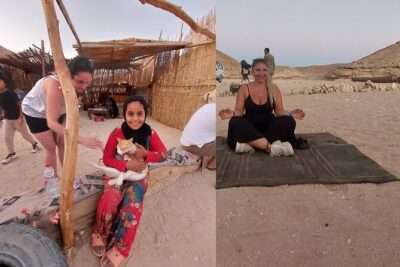
Camel Ride, Bedouin Dinner and Star Gazing in Marsa Alam
Read our review →
Jeep Desert Super Safari, Quad Bike, Camel Ride, Star Watching & Bedouin Dinner
Read our review →Browse the lists this tour appears in