
REVIEW · PRIVATE
Florence: Private Astronomical Tour of the Museo Galileo
Galileo’s original telescope is the star here, but the real pleasure comes from seeing how people once measured the heavens, time, temperature, and distance with ingenious handmade tools. This private visit to Florence’s Museo Galileo brings together astronomy, court politics, art, and the practical problems of early science.
I like the private format, since you can ask questions and set the pace with your guide. I also like the fast-track entry, especially when Florence is crowded and you want to spend your limited museum time looking at instruments rather than waiting at the door.
The main catch is that 90 minutes goes quickly. The guide may focus on Galileo’s life and historical setting, while the museum’s app and videos provide more detailed explanations of how the devices work. If you are passionate about science, plan extra time to explore on your own.
Key Points
- Galileo’s original telescope: See the instrument used for his astronomical studies, along with other original scientific objects.
- A private 90-minute visit: Ask questions freely and receive a tour in English, Spanish, German, Italian, or French.
- Tools for measuring the universe: Examine astrolabes, celestial globes, maps, clocks, thermometers, and armillary spheres.
- A strong historical setting: Learn how the Medici court and later rulers helped build Florence’s scientific collection.
- Useful for families: Children can enjoy the museum’s old scientific games and hands-on-looking displays, even if the deeper science is better suited to older children.
- Plan for a second look: The museum app has scientific videos that can add technical detail after the guided visit.
Meeting Galileo’s Instruments in Florence
The Museo Galileo sits in central Florence, close to the city’s major sights. You meet inside the City Florence Tours office, exchange your voucher at the ticket desk, and should arrive 15 minutes before the start.
That small bit of planning matters. The activity includes reservation fees, a professional guide, headsets, and fast-track entry through express security, but you still need time to find the office and complete the voucher exchange. This is not a meet-your-guide-on-the-sidewalk experience.
Once inside, the museum gives you a different view of Florence. Most people come for Renaissance paintings, churches, and grand palaces. Here, you see the tools that helped people measure and explain the world behind those works of art.
The collection began under Cosimo I de’ Medici in the 16th century and grew under later Medici rulers. The Academy of Assay, founded in 1657, helped continue Florence’s interest in scientific study. The collection was later carried on under Grand Duke Leopoldo of the House of Lorraine.
That background is worth hearing because these objects were not gathered at random. They reflect the ambitions of rulers who wanted Florence to be a center of learning, engineering, astronomy, and technical skill.
More Private Stargazing Tours in the world:
- Floating sessions under the stars in private spas
★ 5.0 · 93 reviews - Sedona Dark Sky Sunset & Night Hike With a Private Guide
★ 5.0 · 86 reviews - Stargazing Experience at Cowan’s Private Observatory
★ 4.0 · 85 reviews
Galileo’s Telescope and the Medici Court
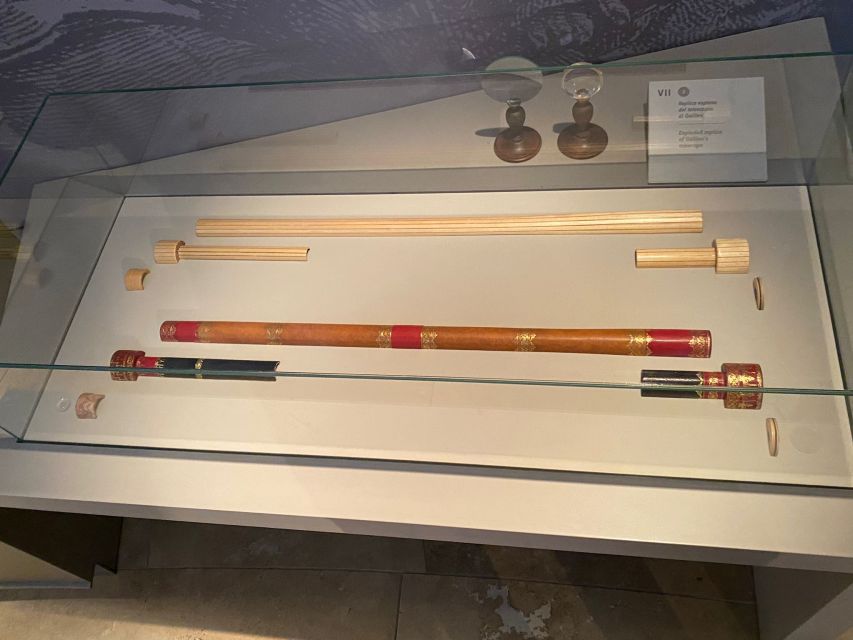
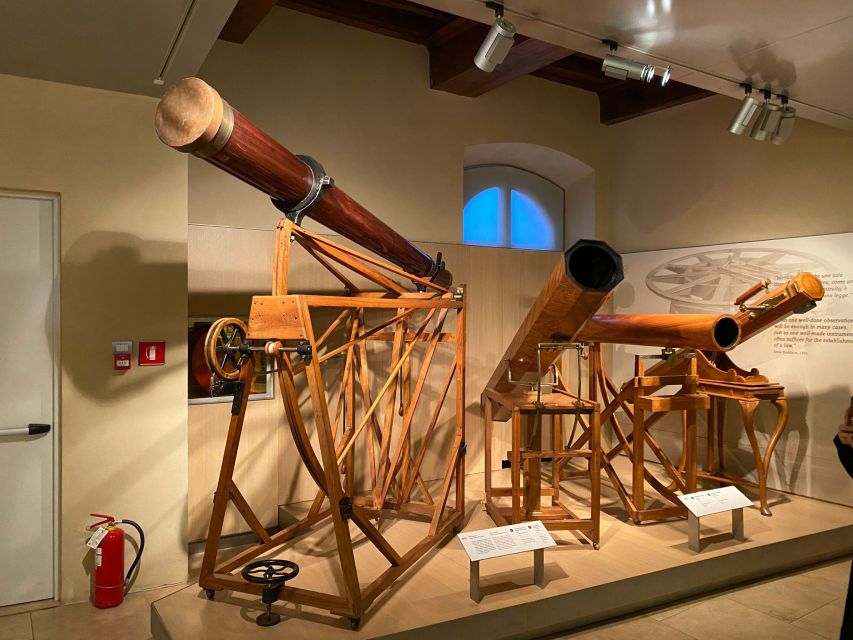
The clearest reason to book this experience is the chance to see Galileo Galilei’s original telescope and other instruments tied to his astronomical work. You are not simply looking at a modern reproduction with a famous name attached to it. The museum preserves original objects connected with the studies that changed how people viewed the sky.
Your guide places Galileo within the court of Cosimo II de’ Medici, where he served as a mathematician and philosopher. This helps explain why science in Florence was tied so closely to power. A court could provide money, protection, status, and a place to display new instruments.
The tour also covers Galileo’s life and discoveries, along with the cultural setting around them. That wider view is important. The museum is not only about one brilliant man pointing a telescope upward. It is about the people who built the instruments, funded the work, used the measurements, and argued over what those measurements meant.
I would pay close attention during this part if you enjoy biography and political history. The guide is likely to make the displays easier to place in time, which is especially helpful when several scientific instruments look similar at first glance.
Astrolabes, Globes, and Measuring Space
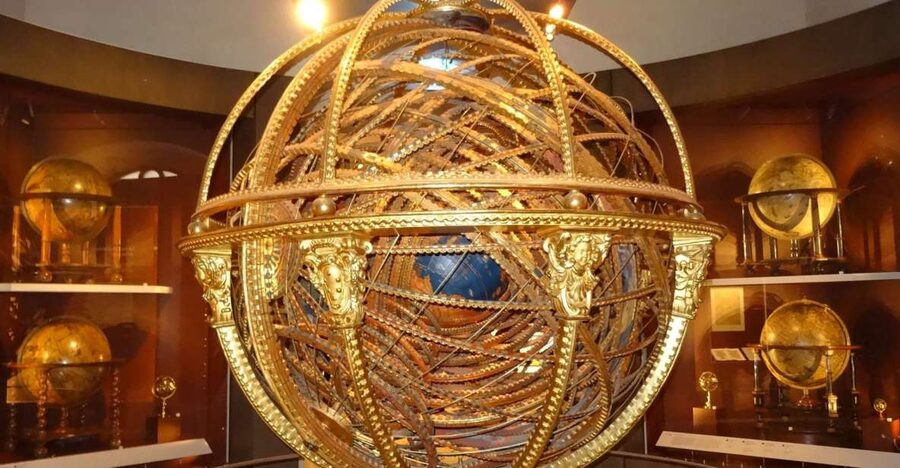
The museum’s collection includes astrolabes, celestial globes, armillary spheres, and maps. These objects show how earlier scientists represented the sky before modern computers and electronic sensors made measurement seem effortless.
An astrolabe is both a measuring device and a model of the heavens. A celestial globe maps the stars onto a sphere. An armillary sphere uses rings to represent celestial circles and the motion of heavenly bodies. These instruments turn abstract ideas into objects you can see and study.
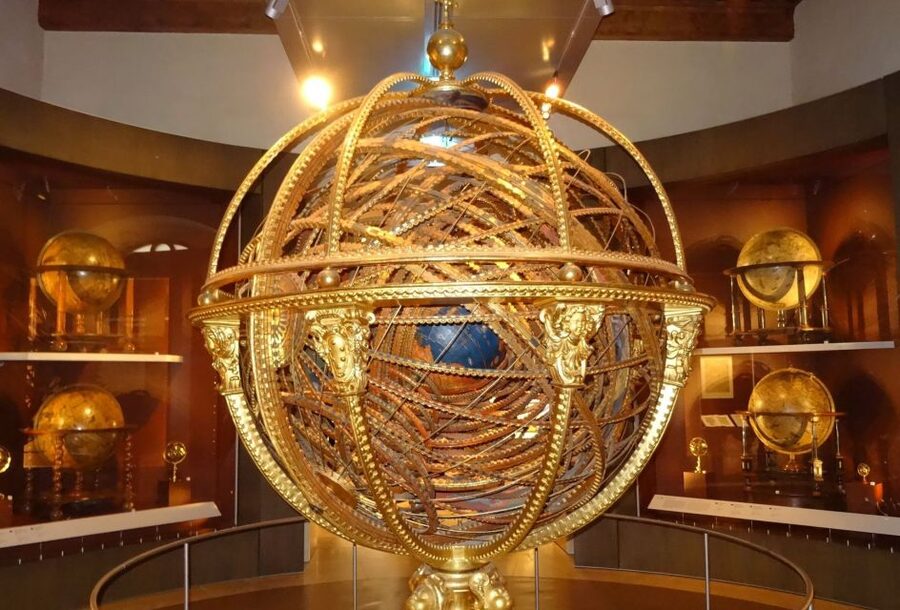
One particularly important piece is Santucci’s Armillary Sphere from 1593. It gives you a strong sense of how cosmology was displayed in the late Renaissance. The rings can look decorative, but they also represent a serious attempt to organize the heavens mathematically.
The guide can explain what these instruments were meant to show and how they fit into the history of astronomy. Do not expect every object to receive a long technical demonstration. With only 90 minutes and a large collection, the visit works best as a focused introduction rather than a full scientific course.
If an instrument catches your eye, ask about it. A private tour gives you a better chance to pause at the displays that interest you most, rather than simply following a fixed talk designed for a large group.
Clocks, Thermometers, and the Problem of Time
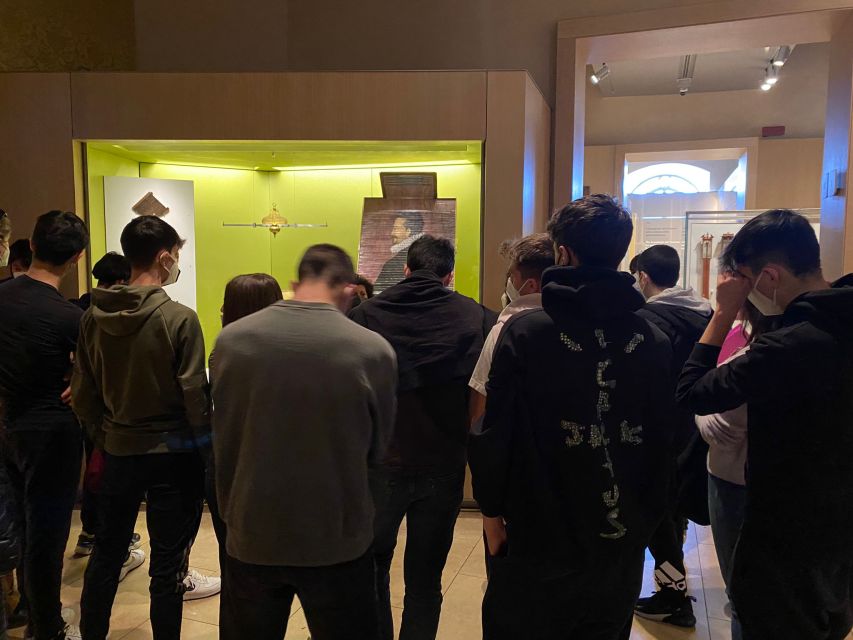
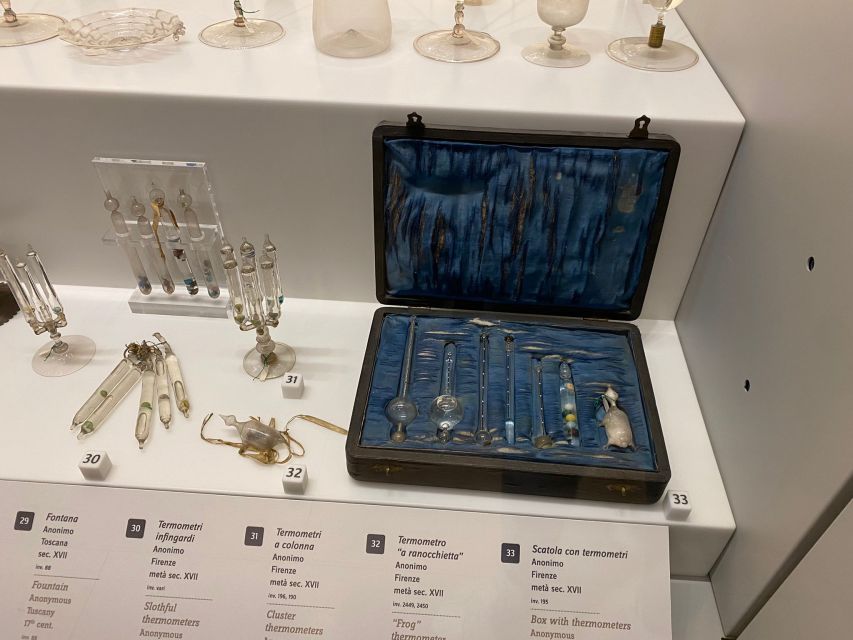
The museum also helps you understand how people measured ordinary things. Antique clocks, thermometers, globes, and maps show the slow process of making time, temperature, and distance reliable.
Timekeeping was not just a household concern. Accurate time mattered for navigation, astronomy, research, and daily life. The displays let you see the physical machinery behind that problem, rather than treating time as an invisible number on a digital screen.
The original Nocturnal by Girolamo della Volpaia, dated 1568, is another useful example. A nocturnal helped determine time at night by using the position of stars. It connects astronomy to a practical task: knowing the hour after sunset.
This is where the museum can appeal to people who do not normally seek out science museums. You see how celestial observation affected navigation and daily routines. The tools are small, physical, and often beautifully made, so the visit has an artistic side as well.
Still, the objects can be difficult to understand at a glance. The guided explanation gives you a framework, but the museum app’s videos may be more useful for seeing exactly how the mechanisms operate. If you care about the technical side, use the tour to understand the story, then spend extra time with the app.
More Stargazing Tours in the world:
- Dubai Red Dunes ATV, Camels, Stargazing & 5* BBQ Al Khayma Camp
★ 5.0 · 21,620 reviews - Sharm El-Sheikh: Ultimate ATV Quad, Stargazing & BBQ Dinner
★ 4.7 · 4,084 reviews - Tenerife: Teide National Park Sunset & Stargazing Tour
★ 4.2 · 3,812 reviews - Tenerife: Sunset and Stargazing at Teide National Park
★ 4.7 · 2,826 reviews
What the Guide Adds, and What the App Adds
The guide’s strongest role is connecting the objects to Galileo, Florence, the Medici family, and the wider development of science. A private guide can help you see why a telescope, a clock, and a celestial globe belong in the same museum.
One detailed piece of feedback about this experience points to an important distinction. The guide provided good historical context, but not enough scientific explanation about how the devices worked. That is a fair concern for a museum built around instruments.
The museum app reportedly offers strong scientific videos for the main displays. You should think of the guided visit and the app as two different tools:
- The guide explains the people, dates, court connections, and cultural setting.
- The app helps show the operation and purpose of the scientific devices.
- The private format lets you ask for clarification when an object seems confusing.
- The 90-minute schedule gives you a clear introduction but not unlimited time for every display.
If you love science, consider giving yourself two stages. Use the tour for orientation and historical context. Then continue independently with the app for about two hours, as one useful suggestion recommends. If you mainly want the story of Galileo and a look at famous instruments, the guided visit may be enough on its own.
Optics, Electrostatics, and Old Scientific Games
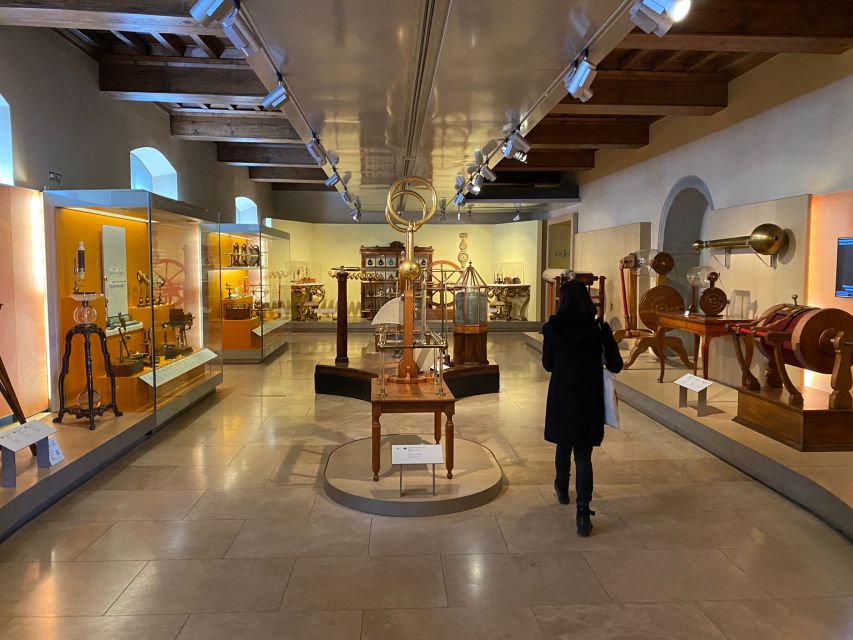
The museum goes beyond astronomy. You also encounter displays about optics and electrostatics, along with objects linked to scientific experimentation.
These subjects can be hard to absorb in a quick walk through a museum. Optics is easier to understand when you can see a demonstration, and electrostatics often makes more sense when you can watch an object react. The available videos and explanations therefore matter if you want more than a name and date.
The displays of old games add a lighter note. They can help children connect with the museum, since the collection is not only a row of serious instruments behind glass. Families can point out the unusual shapes, ask what each item did, and use the visit as an introduction to scientific curiosity.
I would recommend this for families with children who can handle a museum visit, especially if an adult is willing to explain and ask questions. Younger children may enjoy the games and strange-looking devices, while older children may get more from the astronomy and measurement topics.
The private setting helps here. You can ask the guide to keep the explanation simple, or spend a little longer with an object that interests your child. That flexibility is harder to get in a large group.
Is $159 a Good Price for 90 Minutes?
At $159 per person, this is not a cheap museum visit. The price includes a private group, a professional guide, headsets, reservation fees, and fast-track entry. The value depends mainly on how much you want personal explanation.
For a couple or small private group with a strong interest in Galileo, the price can make sense. You are paying for a focused visit in an important Florence museum, not just admission. You also avoid the uncertainty of wandering through technical displays without knowing which pieces matter.
For a solo visitor or budget-minded family, the cost is harder to justify. The museum app offers scientific videos, and an independent visit could give you more time with the displays. You would lose the live historical narrative, but you might gain time to study the mechanisms.
The best value comes when you use the guide actively. Ask about Galileo’s telescope, Santucci’s Armillary Sphere, the Nocturnal, and the tools for measuring time and temperature. If you stay silent and simply follow along, you may not get enough from the private format to support the price.
The fast-track entrance is useful, but it should not be the main reason to book. The strongest reason is access to a guide who can put the collection into context and help you decide what deserves your attention.
Practical Details Before You Go
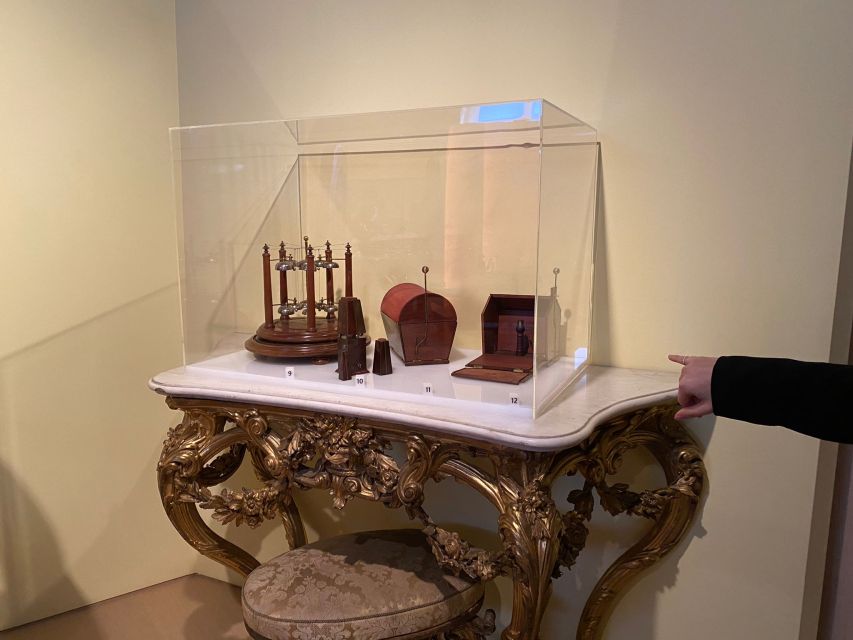
The tour lasts 1.5 hours, and starting times depend on availability. Arrive 15 minutes early at the City Florence Tours office and exchange your voucher at the ticket office before the activity begins.
Wear comfortable walking shoes. You will be inside the museum for the full visit, and the collection rewards steady attention rather than a rushed pass through the rooms.
Photography is allowed without flash. Large bags and backpacks may need to go into the cloakroom, so travel light if you can. Food and drinks are not included.
The museum is described as fully wheelchair accessible, but the activity information also lists the tour as not suitable for people with mobility impairments. Those statements do not fully match. If you have mobility needs, contact the provider before booking and ask about the exact route and any restrictions for your date.
Guiding is available in English, Spanish, German, Italian, and French. Headsets are included, which should help you hear the explanation clearly in the museum rooms.
Free cancellation is available up to 24 hours before the activity for a full refund, and you can reserve now and pay later. Booking ahead is wise during peak periods, particularly if you need a specific language or time.
Who Should Book This Museo Galileo Tour?
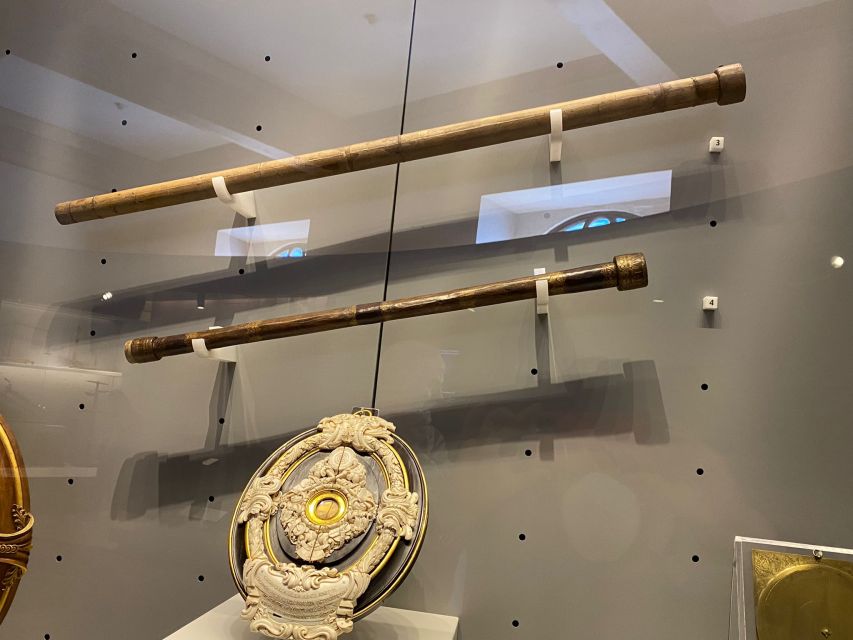
I would choose this tour if you enjoy the meeting point of art, history, and science. It is particularly useful if Galileo is more than a name from a school textbook and you want to understand the instruments, patrons, and ideas around his work.
It also suits first-time visitors who want a clear introduction to the museum. The collection is large enough to feel confusing without a plan, and a guide can point you toward the objects that tell the strongest story.
Families can make good use of the private format, especially with children who like inventions, stars, maps, or old games. The visit is educational without being limited to formal lectures.
I would hesitate if your main goal is a detailed technical study of every device. The 90-minute format is short, and the guide may offer more historical explanation than mechanical demonstration. In that case, pair the tour with extra independent time and the museum app.
Should You Book It?
Book this private Museo Galileo tour if you want Galileo’s telescope, Florence’s scientific history, and a personal guide in one compact visit. It offers a strong introduction and makes the collection easier to read.
Skip it, or choose an independent visit, if you prefer to study every mechanism at your own pace or need the best possible value for your museum budget. Science-focused visitors should plan extra time with the app, since the guided tour may not explain every technical detail.
For most curious visitors, the best plan is simple: take the private tour for the historical story, then stay longer for the science.
FAQ
How long does the Museo Galileo tour last?
The tour lasts 1.5 hours.
What is included in the tour price?
The price includes fast-track entrance tickets, reservation fees, a professional tour guide, and headsets.
Which languages are available?
The live guide is available in English, Spanish, German, Italian, and French.
Where do I meet the guide?
Meet inside the City Florence Tours office. You need to exchange your voucher at the ticket office before the tour begins.
How early should I arrive?
Arrive 15 minutes before the activity starts.
Can I take photographs inside the museum?
Yes. Photography is allowed, but flash photography is not permitted.
Is the museum wheelchair accessible?
The museum is described as fully wheelchair accessible. However, the activity information also says it is not suitable for people with mobility impairments, so confirm the details with the provider before booking.
Can I cancel the tour?
Yes. You can cancel up to 24 hours in advance for a full refund. Reserve now and pay later is also available.
Just added around the world
- Blue Mountains: Stargazing with a Telescope and Astronomer★ 4.4 · 21 reviews
- ( canyon hurghada & stargazing )★ 4.9 · 16 reviews
- Zermatt: Outdoor fondue “group experience under the stars”★ 4.7 · 3 reviews
- Doha: Night Desert Safari With Stargazing and Inland Sea★ 5.0 · 9 reviews
- Villajoyosa: Moonlight kayaking and dinner under the stars★ 5.0 · 5 reviews
- Ubud: Romantic Floating Dinner Under the Stars★ 5.0 · 2 reviews
- Vincentia: Jervis Bay Beach Stargazing with an Expert★ 4.9 · 19 reviews
- Vialattea: Night Snowshoeing under the Stars★ 4.5 · 5 reviews
Private Stargazing Tours, compared.
Floating sessions under the stars in private spas
Read our review →
Sedona Dark Sky Sunset & Night Hike With a Private Guide
Read our review →
Stargazing Experience at Cowan’s Private Observatory
Read our review →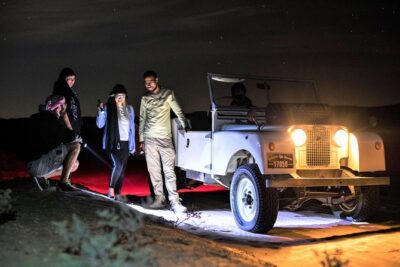
Private Night Vintage Land Rover Desert Safari & Stargazing
Read our review →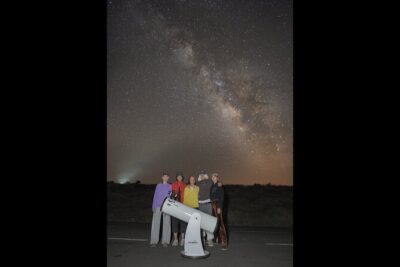
Stargazing Private Tour at Roque De Los Muchachos in La Palma
Read our review →
PRIVATE TOUR Teide National Park: Hiking and Stargazing
Read our review →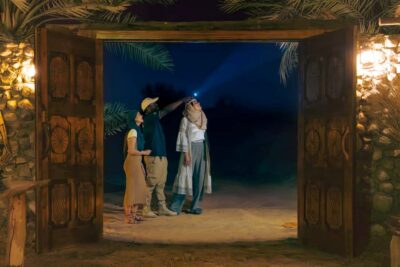
Private Night Safari & Astronomy with 3-Course Dinner
Read our review →
Browse the lists this tour appears in