
REVIEW · NATIONAL PARK STARGAZING
Banff OR Moraine Lake: Night Tour with possible Stargazing
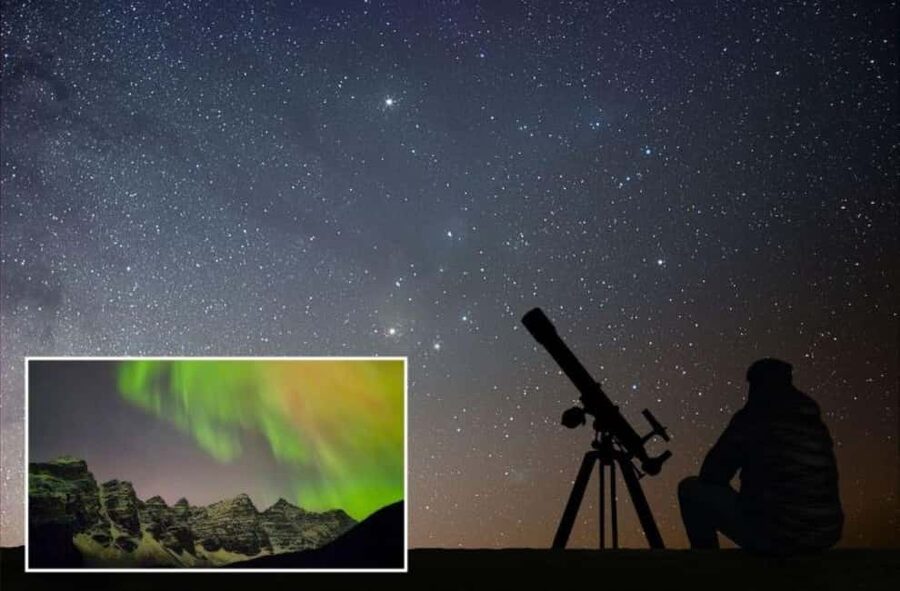
The best part of this Banff night tour is simple: you get away from town lights and let someone else handle the cold-weather logistics. Guides such as Lenka, Denise, Yanik, and Sebastian set up chairs or inflatable loungers, bring blankets and hot drinks, and point a telescope at stars, planets, and other sky objects.
I like the small-group feel and the fact that this is not sold as a hike. I also like the practical extras: headlamps, warm blankets, hot chocolate or tea, and help with night photography. The catch is clear skies are never promised, and the Northern Lights are even less certain.
Key points
- Two tour choices: A 2.5 to 3.5 hour Classic Banff Night Adventure, or a 4.5 to 5.5 hour Moraine Lake outing from June to mid-October.
- About two hours outside: The rest of the time covers hotel pickup, driving, and setup.
- Comfort is part of the plan: Chairs, inflatable loungers, blankets, headlamps, hot chocolate, and tea are provided.
- A telescope adds real value: You might see planets such as Saturn or Mars, along with constellations and other night-sky objects.
- Aurora viewing is possible, not promised: Clouds, weather, and solar conditions can change the evening.
- Not a hike, but not fully effortless: There is some walking, and the Moraine Lake option includes stairs.
A quiet night beyond Banff’s town lights
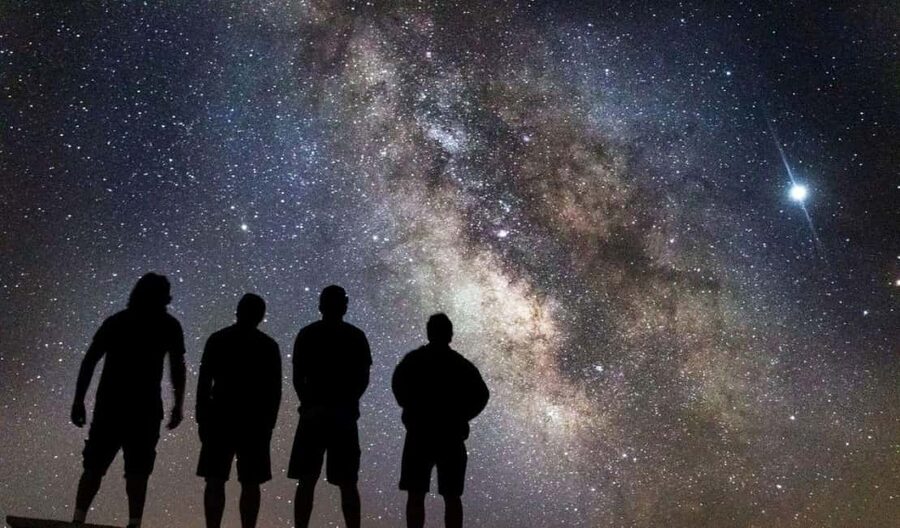
Banff is beautiful after dark, but the town itself is not the place for serious stargazing. This outing takes you to a darker location in Banff National Park, away from the glow of hotels, streets, and shops.
That change matters. In a dark spot, the sky becomes the main event. On a clear night, you might see a much fuller spread of stars, recognizable constellations, shooting stars, or the Milky Way. The tour also keeps the evening social and easy, so you do not need to figure out where to park, how to navigate mountain roads, or how to sit comfortably in the snow.
You are picked up at your hotel in Banff or Canmore. Canmore pickups take place at the beginning of the departure window, while Banff pickups are about 30 minutes later. Be ready 10 minutes early, since the vehicle may arrive a little before or after the stated time.
The vehicle is shared, and the exact departure time changes with the season and available darkness. That is sensible, since a summer night in Alberta begins much later than a winter night. Check the time carefully when booking, then allow some patience during the pickup loop.
More National Park Stargazing in Canada:
- Banff: Guided Sunset and Stargazing Tour
★ 4.9 · 262 reviews - The Banff Stargazing Tour – 2hr Walking Tour
★ 5.0 · 189 reviews - Sunset at Moraine Lake & Stargazing Tour from Canmore/Banff
★ 5.0 · 95 reviews
Classic Banff or the longer Moraine Lake option
The Classic Banff Night Adventure lasts about 2.5 to 3.5 hours, depending on where you start. You spend roughly two hours under the sky, with the rest used for transport and setting up the viewing area.
This is the better choice if you want a focused evening without committing most of your night. It also makes sense if your itinerary already includes daytime sightseeing around Lake Louise or Moraine Lake. You still get the darker setting, telescope time, warm drinks, and guides who can explain what you are seeing.
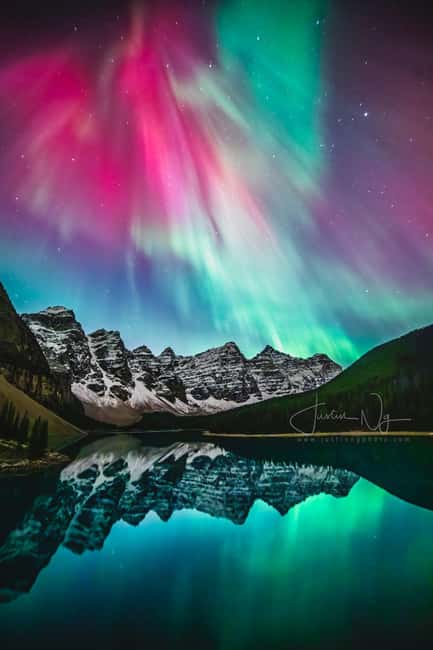
The Moraine Lake Night Adventure runs about 4.5 to 5.5 hours and is offered only from June through mid-October. It includes access fees for Moraine Lake, which helps explain some of the extra time and cost. The longer outing gives you a more dramatic setting, but it also takes a larger piece of your evening.
Moraine Lake access includes stairs, so this option requires more movement than the classic trip. The company is clear that neither tour is a hiking excursion, but you should still wear sturdy, comfortable footwear. If you want only a short walk from vehicle to viewing area, ask about the classic option before booking.
What happens during the two hours outside
Once you reach the chosen location, the guides create a small viewing base. You can sit in a regular chair or stretch out on an inflatable lounger. Headlamps help with the walk and setup, although you should use them thoughtfully so bright light does not spoil everyone’s night vision.
Blankets are supplied, and hot chocolate or tea gives you something warm to hold while you wait for the sky to change. That comfort is not a minor detail. At night, even in summer, the Rockies can feel cold once you stop moving. In winter, the temperature can drop to minus 20 Celsius, and wind can make it feel colder.
The pace is relaxed. You are not rushing from one viewpoint to another. You sit, look up, listen to the night, and let the guides manage the equipment and timing. A surprise activity is also included, though the details are deliberately kept under wraps.
The guides add local facts, mountain stories, and explanations of the stars. Denise and Lenka have been praised for their grasp of both the area and the night sky, while Yanik and Sebastian have helped people manage very cold conditions. Several guides have also helped with camera settings, which is useful if your phone or camera normally produces a black frame instead of a starry sky.
The telescope is more than a nice extra
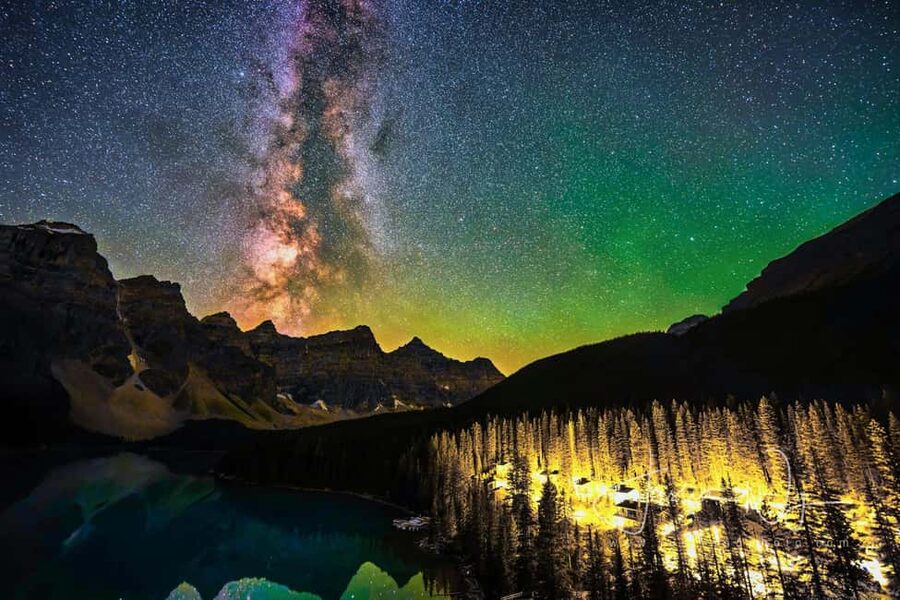
A telescope changes the experience from simply looking up to actively studying the sky. Depending on the conditions and what is visible, you may see planets, constellations, stars, or other night-sky objects at closer range.
Saturn and Mars have been seen through the telescope during past outings. That does not mean either planet will be visible on your particular date, but it shows why the equipment is worthwhile. The moon, clouds, season, and the time of night all affect what can be viewed.
Guides can also help you identify constellations and explain what is overhead. If you are new to astronomy, this gives the evening some shape. Instead of staring at a mass of stars and wondering what you are looking at, you can begin to recognize patterns.
The telescope cannot defeat cloud cover. On partly cloudy nights, you may get short windows of clear sky. On mainly cloudy nights, the telescope may have little to show. The outing can still be peaceful and atmospheric, but you should book it for the night experience, not as a guaranteed astronomy lesson.
More Evening Trips in Canada:
- Sunrise or Sunset/Stargazing Tour at Moraine Lake from Banff
★ 4.7 · 50 reviews - Night Adventure with possible stargazing and Aurora chasing
★ 5.0 · 29 reviews - Canmore: Stargazing and Night Adventure
★ 5.0 · 3 reviews - Banff Night Tour and Stargazing from Canmore or Banff
★ 3.5 · 2 reviews
Aurora chasing without the false promise
The Northern Lights are the tour’s most tempting possibility, but they are not guaranteed. The guides may adjust the location or timing in response to conditions, yet no operator can promise an aurora on a particular evening.
Past outings have included brief aurora displays, shooting stars, and skies clear enough to reveal the Milky Way. Other nights have brought clouds and no aurora at all. That range is normal. A strong forecast can weaken, clouds can roll in after a clear afternoon, and a low aurora forecast can still surprise you.
I would treat the Northern Lights as a bonus. If you make them the sole reason for booking, you may leave disappointed even if the guides do everything right. If you are happy with stars, a telescope, mountain darkness, and a quiet evening outdoors, the tour makes more sense.
The company runs trips in clear, partly cloudy, mainly cloudy, cloudy, and light-snow conditions. Heavy rain or heavy snow is different. In those cases, you may be offered a new date, another service, or a full refund. Cancellations are based on temperature, wind chill, and rain or heavy-snow forecasts, and notification may come on the morning of the tour because mountain weather can shift quickly.
Cold-weather comfort is the real practical test
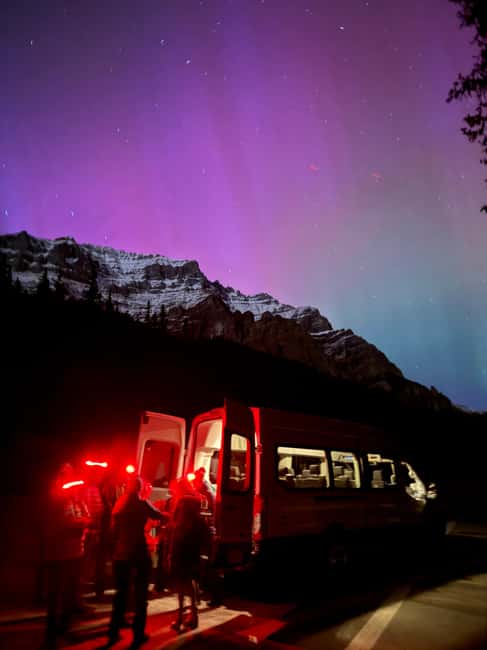
Bring more clothing than you think you need. The supplied blankets help, but they do not replace proper winter gear.
For colder months, wear thermal layers, a winter jacket, snow pants, warm boots, a hat, gloves, and a neck warmer or scarf. Hand and foot warmers are strongly recommended. In summer, you can skip the snow pants, but keep a jacket, hat, and gloves in your bag. A windbreaker is also useful.
The tour operates between minus 20 and plus 20 Celsius. That wide range means the packing advice is not boilerplate. A clear summer night can still feel chilly when you are sitting still on a lounger. A winter night can become uncomfortable quickly if your boots or gloves are not warm enough.
I would also avoid cotton as your main cold-weather layer. The supplied information does not require technical clothing, but thermal clothing and sturdy footwear will make it easier to enjoy the full two hours outdoors.
This is not suitable for children under eight. Older children may enjoy the telescope and the unusual setting, but cold temperatures and a fairly quiet evening can test their patience. Adults and older children who can sit outdoors for a long period are the best fit.
Is $108 a fair price?
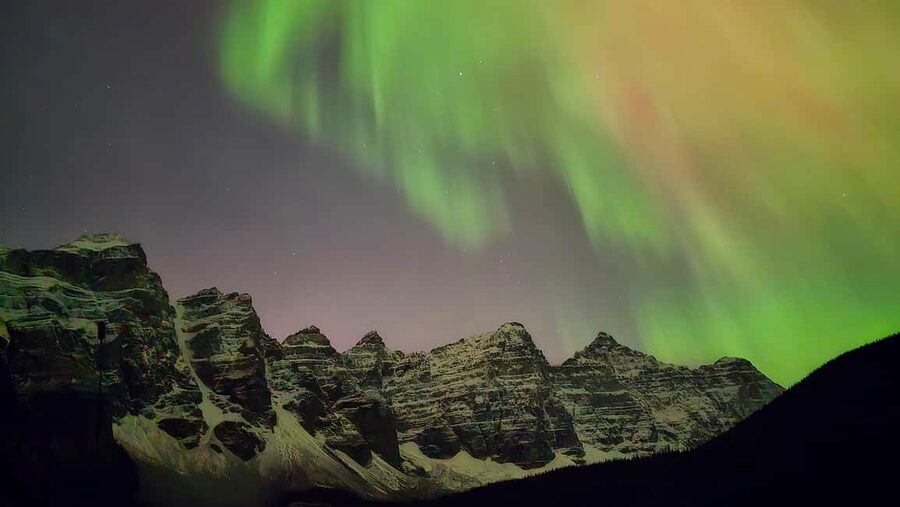
At $108 per person, this is not the cheapest way to look at the night sky. The value comes from the parts that are difficult to arrange on your own.
Your fee includes hotel pickup and return, shared transport, a guide, access to the viewing setup, chairs or inflatable loungers, blankets, headlamps, hot chocolate or tea, and telescope use. The Moraine Lake version also includes access fees for that destination. National park passes are not included, so check whether you need to arrange one separately.
You are also paying for local driving and planning. Going alone means choosing a safe dark location, checking road conditions, bringing enough cold-weather equipment, finding a way to sit comfortably, and deciding what to do when clouds arrive. At night, those details are not trivial.
The price looks strongest for visitors without a car, people who do not want to drive mountain roads after dark, and anyone interested in night photography. It is less compelling if you already have a vehicle, proper outdoor equipment, astronomy experience, and a clear idea of where to go. Even then, the telescope and guide support may justify the cost.
A minimum of four people is needed for the classic tour and five for the Moraine Lake tour. These people do not need to be from the same party. If the minimum is not reached, you can be offered another date, another service, or a refund.
Photography help and the limits of your camera
The guides can help with camera settings, a useful touch if you want more than a few blurry phone shots. Night photography often requires a steady camera, a long exposure, and patience. You should not expect the guides to provide professional equipment, but their practical help can save you from wasting the whole evening on trial and error.
Professional astrophotography images associated with the outing show what is possible under good conditions, but your own results will depend on your camera, skill, clouds, moonlight, and the time available. Do not judge your experience by a polished aurora photograph.
Bring your own camera, phone, and any tripod or accessories you normally use, since those items are not listed as included. Keep your batteries warm in cold weather, and expect battery life to drop faster than usual.
You can also choose to leave the camera in your bag. Sitting on an inflatable lounger with a warm drink and watching the sky directly may be more memorable than spending every minute checking a screen.
Who will enjoy this most
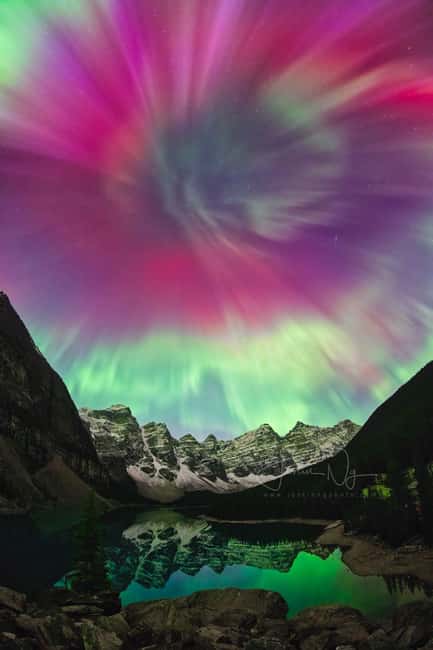
This tour suits you if you want a night in the Rockies but do not feel comfortable finding a dark location alone. It is also a good match for couples, small groups, solo visitors, and photographers who want help with settings.
The atmosphere is social but not loud. You have guides nearby, shared transport, and a planned setup, yet the main activity is still quiet sky-watching. That balance is hard to find on a standard sightseeing trip.
You should think twice if you dislike cold weather, want constant movement, or need a guaranteed aurora. You should also check the Moraine Lake timing carefully if you have a tight evening schedule, since that version can take more than five hours from pickup to return.
Free cancellation is available up to 24 hours before departure, and you can reserve now and pay later. An electronic waiver is required, with the link provided in your booking voucher. Alcohol and drugs are not allowed, and smoking is not permitted in the vehicle.
Should you book the Banff night tour?
Book it if you want a handled, comfortable way to experience the Rockies after dark. The strongest reasons are the dark location, telescope, warm setup, hotel transport, and guides who can help with star identification and night photography.
Choose the classic Banff tour for a shorter evening and the Moraine Lake version for a longer outing tied to one of the area’s famous settings. Book with realistic expectations: stars may be magnificent, clouds may take over, and the aurora may never appear.
The tour is worth $108 when you value convenience and do not have the gear or confidence to arrange a night outing yourself. Dress seriously for the weather, bring patience, and let the Northern Lights be a lucky extra rather than the whole point.
FAQ
How long does the Classic Banff Night Adventure last?
The classic tour lasts about 2.5 to 3.5 hours, depending on your starting point. About two hours are spent under the night sky.
How long does the Moraine Lake Night Adventure last?
The Moraine Lake option lasts about 4.5 to 5.5 hours, depending on your pickup location. It is available only from June through mid-October.
Where can I be picked up?
Pickup is available in Banff or Canmore, with return to Banff or Canmore. Hotel pickup and drop-off are included.
Is this a hiking tour?
No. Some walking is involved, but the tour is not designed as a hike. The Moraine Lake option includes stairs, so comfortable footwear is important.
Are the Northern Lights guaranteed?
No. Aurora and star sightings are not guaranteed. Clouds, weather, and sky conditions can change during the evening.
What happens in bad weather?
The tour can operate in partly cloudy, cloudy, or light-snow conditions. If there is heavy rain or heavy snow, you may be offered a rescheduled date, an alternative service, or a full refund.
What equipment and refreshments are included?
The tour includes transportation, a guide, a telescope, chairs, inflatable loungers, blankets, headlamps, hot chocolate, tea, and a surprise activity. Winter tours also include cleats.
Do I need a Banff National Park pass?
A Banff National Park pass is not included. Access fees for Moraine Lake are included on the Moraine Lake Night Adventure.
Are children allowed?
Children under eight are not permitted. The tour is conducted in English, and all participants must sign an electronic waiver.
Just added around Canada
- Explore the Stars and Universe at Vancouver’s Space Centre★ 3.0 · 4 reviews
- Wildlife Wild Skies: Jasper Planetarium Combo★ 3.0 · 3 reviews
- Banff Night Tour and Stargazing from Canmore or Banff★ 3.5 · 2 reviews
- Canmore: Stargazing and Night Adventure★ 5.0 · 3 reviews
- Jasper: Jasper Planetarium Dark Sky Experience★ 4.2 · 11 reviews
- Jasper: Planetarium Indoor Dome Experience★ 3.9 · 8 reviews
- Night Adventure with possible stargazing and Aurora chasing★ 5.0 · 29 reviews
- Canmore: Stargazing and Nature by Nightfall Walking Tour – 2hr★ 5.0 · 31 reviews
National Park Stargazing, compared.
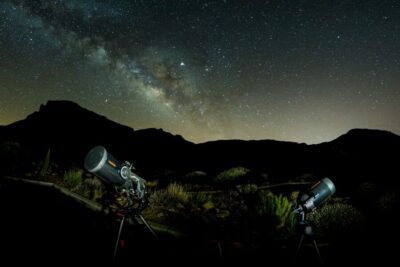
Teide National Park Sunset & Stargazing with Dinner (Star Safari)
Read our review →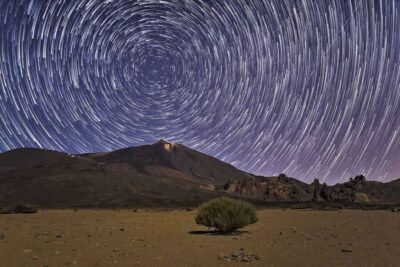
Teide National Park: Sunset & Stargazing Safari with Dinner
Read our review →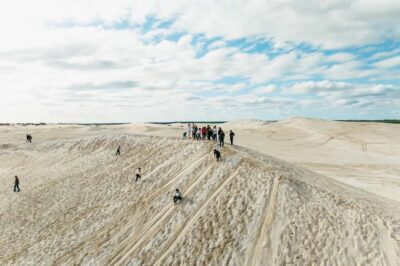
Pinnacles Desert: Sunset BBQ & Stargazing Tour +Sandboarding
Read our review →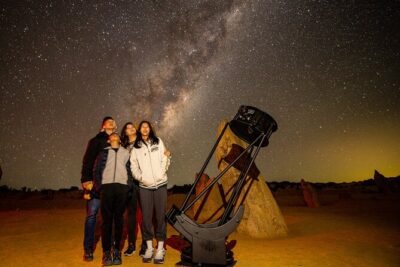
Pinnacles Desert Sunset Dinner and Stargazing Tour
Read our review →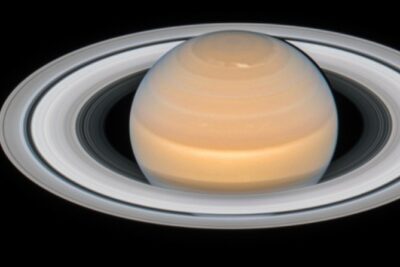
Pinnacles Sunset and Stargazing Tour with Dinner
Read our review →Browse the lists this tour appears in